
Ready for a (Tariff) Refund?
The Latest Regulatory Developments on Economic Security & Geoeconomics
By Paul Nadeau, Visiting Research Fellow, Institute of Geoeconomics (IOG)
Deal Reached on TikTok’s U.S. Operations: On December 18, TikTok agreed to a deal to spin-off its U.S. operations to a group of mostly U.S. investors and will be overseen by a seven-member board of mostly Americans. The new group includes Oracle, private equity firm Silver Lake and United Arab Emirates state-backed investment firm MGX, who will control 45 percent of the new firm, with ByteDance retaining 20 percent control, and ByteDance’s existing investors will control the remaining one-third of the company. Under the agreement, TikTok’s underlying algorithm will continue to be owned by Chinese firm ByteDance though the U.S. algorithm overseen by the new firm will retain American users’ data rather than ByteDance, and the U.S. firm will also set rules regarding content moderation on the U.S. version of the app to alleviate concerns about TikTok become a platform for foreign propaganda.
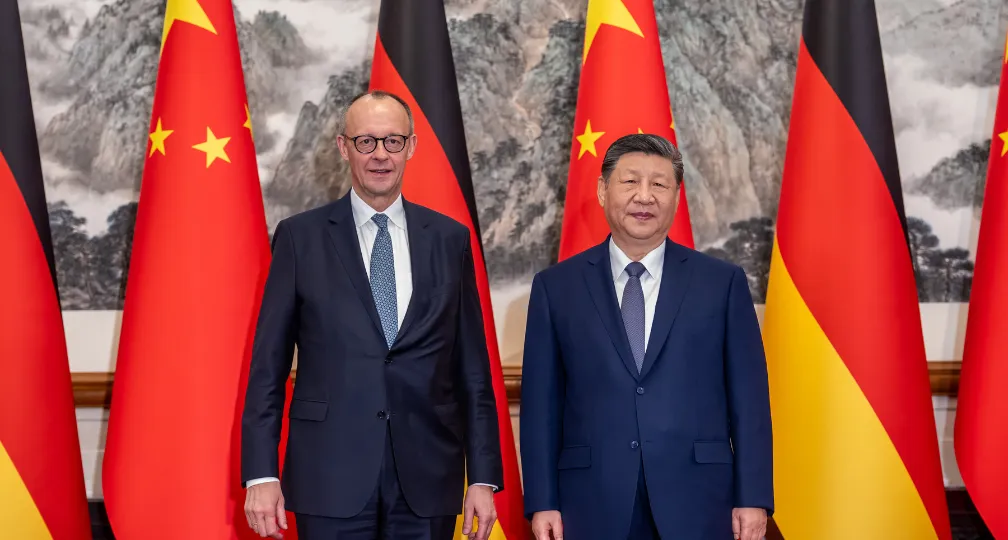
EU Agrees to Ukraine Loan: On December 18, the European Union agreed to provide a €90 billion interest-free loan to Ukraine to support its economy and military effort against Russia’s invasion. While the European Commission had proposed using frozen Russian central bank assets to finance the loan, but this ran into opposition from the governments of the Czech Republic, Hungary, and Slovakia. Instead, reports indicate that the funding would come from borrowing on capital markets secured against the EU budget. German chancellor Friedrich Merz said Ukraine would have to repay the loan only if Russia paid reparations for its war, and that the EU reserved the right to use frozen Russian assets in the EU for repayment if Russia fails to pay compensation.
Canada Removes Syria from State Sponsors of Terrorism: On December 5, the Canadian government announced that it would remove Syria from Canada’s List of Foreign State Supporters of Terrorism under the State Immunity Act, and remove Hay’at Tahrir al-Sham (HTS), an insurgent combatant group during the Syrian civil war that announced it would participate in state institutions, from its list of terrorist entities. The move follows similar actions taken by the United Kingdom and United States.
Trump Allows Nvidia H200 Sale to China: On December 8, the Trump administration announced that it would permit the sale of Nvidia’s H200 AI processors to China, with 25 percent of revenue from the sales going to the U.S. government as a tax. According to reports, one of the motivations of the sale is to prevent Chinese competitor Huawei from dominating China’s market for AI chips, despite concerns about the chips’ potential use in Chinese military applications, and although older and less powerful Nvidia AI chips like the A100 and H100 are still subject to U.S. export controls. Trump has so far declined to allow the sale of Nvidia’s more advanced Blackwell chips.
U.S. Sanctions Colombians for Role in Sudan Conflict: On December 9, the U.S. Treasury Department’s Office of Foreign Assets Control (OFAC) announced sanctions on four Colombian individuals and four Colombian entities for their role in recruiting fighters from Colombia for the Sudanese paramilitary group known as the Rapid Support Forces (RSF), alleging that these fighters provide the RSF with tactical and technical expertise, serving as infantry and artillerymen, drone pilots, vehicle operators, and instructors, with some even training children to fight in the RSF.
UK Sanctions Russian Disinformation Actors: On December 9, the Foreign Office of the United Kingdom announced sanctions against Russian media companies Rybar LLC, the Foundation for the Support and Protections of the Rights of Compatriots Living Abroad (PRAVFOND), Euromore, Golos, media figure Mikhail Sergeevich Zvinchuk, the Centre for Geopolitical Expertise think tank, and public figure Aleksandr Dugin for funding, facilitating, delivering, or promoting Russian information that undermines international support for Ukraine.
U.S. Expands Sanctions on Venezuela Leader’s Family, Others: On December 11, the U.S. Treasury Department’s Office of Foreign Assets Control (OFAC) announced sanctions on three nephews of Maduro’s wife, Cilia Flores; a Maduro-affiliated businessman; six shipping companies operating in Venezuela’s oil sector; and six vessels that continue to provide financial resources to the Venezuelan government.
China Announces Licensing System for Steel Exports: On December 12, China’s Ministry of Commerce announced a licensing system for more than 300 steel exports that will go into effect on January 1, 2026. Exporters will need to apply for licenses on the basis of export contracts and product quality inspection certificates from manufacturers.
U.S. Removes Sanctions on Brazilian Judge: On December 12, the U.S. Treasury Department’s Office of Foreign Assets Control (OFAC) announced that it would delist Brazilian Supreme Court Justice Alexandre de Moraes, his wife, and her legal institute. Justice Moraes had been sanctioned in June with his wife and her institute were sanctioned in September, all under the Global Magnitsky sanctions program.
Australia, Switzerland Update Iran Sanctions: On December 12, Australia and Switzerland each updated their Iran sanctions. The Australian government updated its U.N. sanctions framework on Iran and issued three guidance notes to coincide with the update, while the Swiss federal council implemented U.N. Security Council resolutions to bring Switzerland’s sanctions against Iran back to the 2015 level and introduced additional measures addressing raw materials.
EU Announces Sanctions on Russia’s Shadow Fleet: On December 15, the European Council announced sanctions on five individuals directly or indirectly linked to Rosneft and Lukoil and four entities in Russia, the United Arab Emirates, and Vietnam linked to Russia’s shadow fleet and its value chain. In a different action, the European Council adopted restrictive measures against 12 individuals and 2 entities across foreign policy institutions, think-tanks and universities for advancing Russia’s disinformation, pro-Russian propaganda, and cyber activities.
Canada Sanctions Iranian Individuals for Human Rights Abuses: On December 15, Canada announced sanctions on four Iranian individuals for their role in facilitating and directing human rights violations. Canada has now sanctioned more than 210 Iranian individuals and 254 Iranian entities.
U.S. Treasury Department Expands Sanctions on Iran’s Shadow Fleet: On December 18, the U.S. Treasury Department’s Office of Foreign Assets Control (OFAC) announced that it would target 29 vessels of Iran’s shadow fleet and their respective management firms as well as Hatem Elsaid Farid Ibrahim Sakr, an Egyptian businessman whose companies are associated with seven of the 29 shadow fleet vessels.
U.S. Sanctions ICC Judges: On December 18, U.S. Secretary of State Marco Rubio announced the designation of two International Criminal Court (ICC) judges pursuant to Donald Trump’s executive order to impose sanctions on the ICC. According to the press release from the State Department, “These individuals have directly engaged in efforts by the ICC to investigate, arrest, detain, or prosecute Israeli nationals, without Israel’s consent, including voting with the majority in favor of the ICC’s ruling against Israel’s appeal on December 15.”
UK Expands Sanctions on Russia’s Shadow Fleet: On December 18, the United Kingdom announced 24 actions targeting Russia’s largest remaining unsanctioned oil companies, PJSC Tatneft, PJSC Russneft, LCC NNK-Oil, and LLC Rusneftegaz Group. The UK Government’s press release said that these companies are responsible for bringing in over $20 billion in combined revenue, representing an increasing share of Russia’s oil exports.
Analysis: Ready for a (Tariff) Refund?
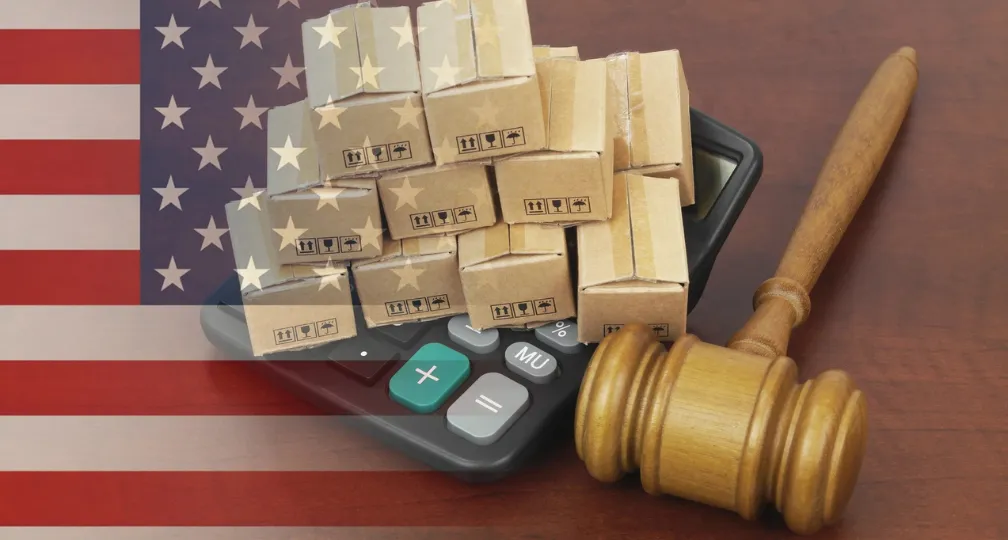
Tariffs are taxes, and as with taxes, refunds are in order if there’s been a mistake. If, as in the case of the April 2 tariffs imposed under the International Economic Emergency Powers Act (IEEPA), the tariffs are found by the U.S. Supreme Court to have been imposed illegally and invalid, then those who paid the tariffs would be eligible for a full refund on what they paid. Getting tariffs refunded isn’t new and there are long-standing processes in place to refund importers who may have been mischarged, which is fairly common. But there have never been tariffs quite like these – so far, the U.S. government has collected $129 billion of tariffs under IEEPA across 34 million entries from more than 300,000 importers according to a December court filing – and the political stakes are high. With most everything with the Trump administration been automatic, straightforward, or linear, but the process of securing tariff refunds may have gotten a degree of clarity this month.
Of course, everything related refunds depends on how the Supreme Court will rule or how refunds will fit into the outcome or the process in which refunds will be paid out. The Supreme Court may order that tariffs should be refunded to importers, allow the Trump administration to keep the money it’s collected but prohibit it from collecting further tariffs, keep the tariffs in place, or offer some other decision. Naturally, the decision, and therefore the scope of the possible refunds, will only extend to tariffs charged under IEEPA and not Section 232, Section 301, or other tariffs that haven’t been legally challenged so far.
Without putting exact odds on an outcome of the Court ruling on IEEPA tariffs, there’s a strong possibility that importers will be in line to receive refunds on the tariffs they’ve paid to this point. There’s precedent for this when the Generalized System of Preferences (GSP), to program intended to encourage economic development in poorer countries by allowing them to export certain products to the United States at lower tariff rates, lapsed from December 2017 to March 2018, retroactive to January and Congress required the government to issue refunds on tariffs paid on merchandise that would have been eligible during the period that the program had lapsed. The difference with the current situation is that the GSP renewal refunds involved far smaller amounts than the $129 billion at stake in the IEEPA tariffs. Supreme Court Justice Amy Coney Barrett acknowledged this during the oral arguments on November 5 when she asked, “tell me how the reimbursement process would work…It seems to me like it could be a mess.”
But for now, the Court of International Trade (CIT) offered a degree of clarity on December 15 when it affirmed that the CIT has the authority to permit refunds for IEEPA tariffs if the Supreme Court finds them unlawful, giving firms the time to wait for the final decision to come down from the Court before filing for refunds on IEEPA tariffs. The proximate decision by the CIT denied a request to suspend the processing (formally known as “liquidation”) of tariff payments after dozens of companies, including the U.S. affiliates of Sumitomo Chemical, Toyota Tsusho, and Ricoh, asked for the liquidation process to be delayed until after the Supreme Court has ruled on IEEPA tariffs. Once liquidation occurs 314 days after the date of importation, companies can no longer challenge payments through the routine customs corrections process and must instead recover their money through litigation or formal protests, which can be expensive and arduous, particularly for smaller firms and offers no guarantee that a refund can be secured.
The CIT denied the request on the grounds that halting the liquidation process wouldn’t be necessary after the Department of Justice said that it wouldn’t oppose issuing refunds and recalculating tariff amounts if the Supreme Court rules against IEEPA. The DOJ itself, in requesting that the liquidation process should continue, has argued that suspending liquidation at this point would offer “no practical relief” for the companies while adding a substantial administrative burden for the government. Customs and Border Protection (CBP) has similarly denied requests to delay finalization of tariff payments and has reportedly even accelerated the liquidation process for some companies. Importantly, the CIT pointed out that the government cannot renege now that it has stated its intention to offer refunds. In practical terms, the DOJ’s position on refunds and the CIT’s decision to hold them to that mean there are two practical options for refund payments: the CBP sets up an administrative process to refund the IEEPA tariffs paid, or importers will have to sue to collect their refunds.
Firms will need to be proactive and on top of the process to secure refunds, which means maintaining careful records on all tariffs paid under IEEPA, tracking liquidation dates and attempting to secure extensions where possible, and being ready to seek a refund once a decision is reached by the Court. This isn’t an administration that handles process in the usual way, clarity is hard to come by, and political considerations can always intervene. But for now, the CIT has helped provide firms a degree of clarity if the Supreme Court rules against IEEPA tariffs.
(Photo Credit: iStock)
Disclaimer: The views expressed in this IOG Economic Intelligence Report do not necessarily reflect those of the API, the Institute of Geoeconomics (IOG) or any other organizations to which the author belongs.
API/IOG English Newsletter
Edited by Paul Nadeau, the newsletter will monthly keep up to date on geoeconomic agenda, IOG Intelligence report, geoeconomics briefings, IOG geoeconomic insights, new publications, events, research activities, media coverage, and more.
Visiting Research Fellow
Paul Nadeau is an adjunct assistant professor at Temple University's Japan campus, co-founder & editor of Tokyo Review, and an adjunct fellow with the Scholl Chair in International Business at the Center for Strategic and International Studies (CSIS). He was previously a private secretary with the Japanese Diet and as a member of the foreign affairs and trade staff of Senator Olympia Snowe. He holds a B.A. from the George Washington University, an M.A. in law and diplomacy from the Fletcher School at Tufts University, and a PhD from the University of Tokyo's Graduate School of Public Policy. His research focuses on the intersection of domestic and international politics, with specific focuses on political partisanship and international trade policy. His commentary has appeared on BBC News, New York Times, Nikkei Asian Review, Japan Times, and more.
View Profile