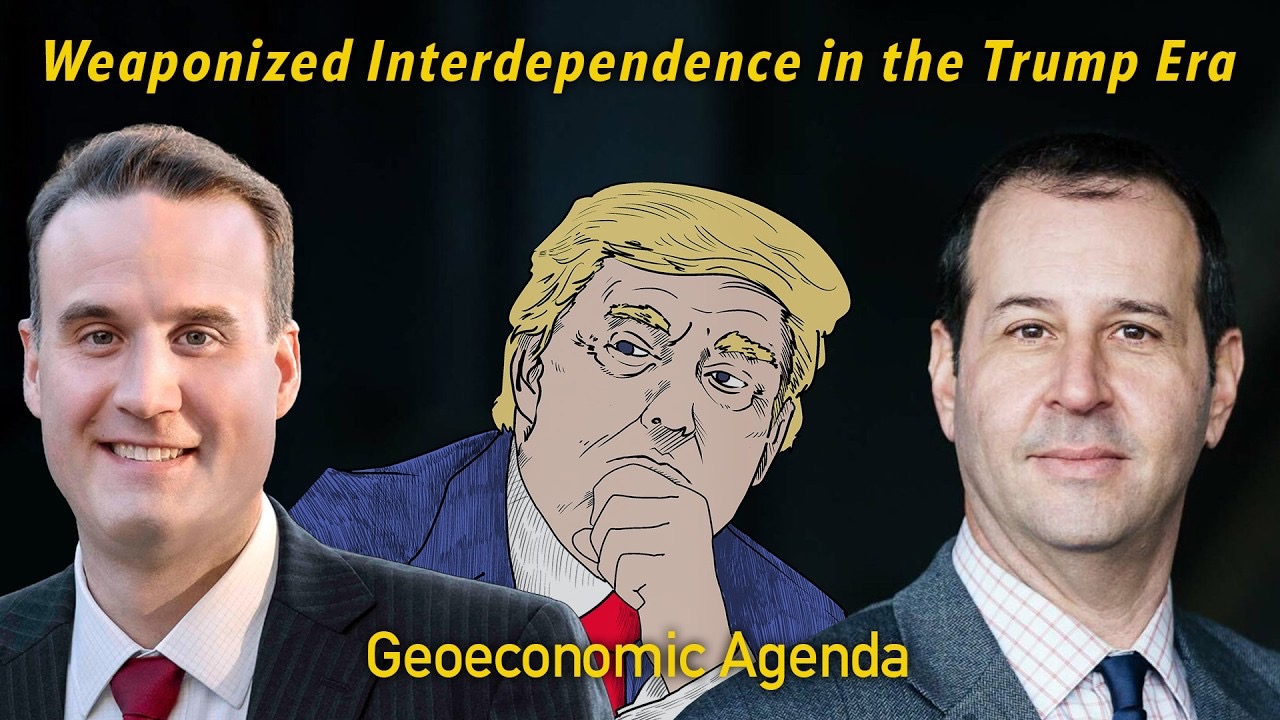

When Is a Tariff Threat Not a Tariff Threat?
The Latest Regulatory Developments on Economic Security & Geoeconomics
By Paul Nadeau, Visiting Research Fellow, Institute of Geoeconomics (IOG)
Trump Signs Outbound Investment Law: On December 18, 2025, Donald Trump signed into law the Fiscal Year 2026 National Defense Authorization Act (NDAA), which includes the Comprehensive Outbound Investment National Security Act of 2025 (COINS Act). The COINS Act expands the Outbound Investment Security Program of 2025 to include high-performance computing and supercomputing and hypersonic systems and changes the definition of “covered foreign person” by limiting the 50 percent rule to direct or indirect ownership rather than tying it to revenue, net income, or capital or operating expenditure. The language also authorizes (but does not require) the president to use the International Economic Emergency Powers Act (IEEPA) to impose targeted sanctions on certain foreign persons connected to China (including Hong Kong and Macau) that are knowingly engaged in “significant operations in the defense and related material sector or the surveillance technology sector” of China’s economy.
USTR Declines Section 301 Tariffs on China’s Semiconductors: The Office of the U.S. Trade Representative (USTR) announced on December 23 that it had concluded its Section 301 investigation into China semiconductor industry, determining that China’s policies towards its semiconductor industry are “actionable” but did not recommend immediate tariffs in response, recommending instead the imposition of tariffs on June 23, 2027 and would announce the amount of the increase in a Federal Register notice 30 days prior.
China Sanctions U.S. Defense Firms: On December 26, China’s Ministry of Foreign Affairs announced sanctions on 10 individuals and 20 U.S. defense firms, including Boeing, in response to an $11 billion U.S. arms package to Taiwan on December 19. The move freezes any assets the companies and individuals hold in China and bars domestic organizations and individuals from doing business with them and sanctioned individuals are barred from entering China, though the announcement is largely symbolic since the sanctioned firms do almost no business with China, though Boeing has been in discussions with China regarding the purchase of civilian aircraft.
China Cuts Tariffs on Healthcare, Renewable Energy Products, More: On December 29, China announced the Tariff Adjustment Plan for 2026, under which it would reduce import duties on 935 items to levels below Most-Favored-Nation rates beginning January 1. The tariff reductions will focus particularly on goods related to advanced and emerging technologies, renewable energy, and healthcare.
U.S. Beef Quota Gets Shuffled: On December 31, the United States formally established a 13,000 metric ton quota on beef imports from the United Kingdom, following through on a commitment in the UK – U.S. agreement signed earlier in 2025. The announcement allows UK farmers to export to the United States at a reduced tariff rate between 4 and 10 percent while U.S. farmers may export the same amount of beef tariff-free as long as it comes from cattle raised without the use of artificial growth hormones. At the same time, Brazil’s quota was reduced from 65,000 to 52,000 since the British quota was allocated from four countries (Argentina, Australia, New Zealand and Uruguay) with a distinct tariff allocation and Brazil had traditionally filled other countries’ beef export quotas.
Trump Postpones Wood Products Tariffs: On December 31, Donald Trump announced that tariffs on wood products like kitchen cabinets, upholstered furniture, and vanities, which were due to take effect on January 1 would be postponed for one year. Under the original order issued in September, duties on “certain upholstered wooden products” were scheduled to rise to 30 percent, while tariffs on kitchen cabinets and vanities were set to rise to 50 percent.
China Bans Dual-Use Exports to Japan: On January 6, China’s Ministry of Commerce announced a ban on all dual use item exports to Japan effective immediately as part of its response to Japanese Prime Minister Takaichi Sanae’s comments about Japan’s potential role in a conflict in the Taiwan Strait. The Ministry did not specify which specific items would be subject to stricter controls, but its roughly 800-item catalogue of items includes rare earths, advanced electronics, aviation components, and more. Beijing is also reportedly considering stricter licensing controls for certain medium and heavy rare earth–related items.
OFAC Sanctions Muslim Brotherhood: On January 13, the U.S. Treasury Department’s Office of Foreign Assets Control (OFAC) announced sanctions against the Egyptian and Jordanian branches of the Muslim Brotherhood for their material support to Hamas as Specially Designated Global Terrorists. Concurrently, the U.S. Department of State designated the Lebanese Muslim Brotherhood as both a Foreign Terrorist Organization and an SDGT, as well as its secretary general as an SDGT.
U.S. Seizing Venezuelan Oil Tankers: On January 13, Reuters reported that the U.S. government filed for court warrants to seize dozens more tankers linked to the Venezuelan oil trade. The United States had already seized five vessels in international waters carrying Venezuelan oil that were either under U.S. sanctions or part of a shadow fleet.
Trump Issues Proclamation Addressing Risk from Critical Mineral Shortages: On January 14, 2025, Donald Trump issued a presidential proclamation implementing Section 232 measures to address national security risks associated with imports of processed critical minerals and their derivative products by directing the U.S. Commerce Department and the Office of the U.S. Trade Representative to negotiate agreements that “ensure the United States has adequate critical mineral supplies and to mitigate the supply chain vulnerabilities as quickly as possible.”
OFAC Sanctions Iranian Leaders Over Protest Crackdown: On January 15, the U.S. Treasury Department’s Office of Foreign Assets Control (OFAC) announced sanctions against figures in the Iranian government that they called responsible for the violent crackdown in the ongoing protests in Iran. These include Ali Larijani, the Secretary of the Supreme Council for National Security (SCNS), and 18 other individuals and entities involved in Iran’s “shadow banking” system including the networks of sanctioned Iranian financial institutions Bank Melli and Shahr Bank.
U.S., Taiwan Reach Trade Agreement: Taiwan and the United States reached an agreement on January 16 that lowers U.S. tariffs on goods from Taiwan from 20 percent to 15 percent and see Taiwanese semiconductor companies increase their financing for U.S. operations by $500 billion and includes at least $250 billion in direct investments to expand advanced semiconductor, energy and artificial intelligence operations in the United States and an additional $250 billion in credit guarantees for further investment in the U.S. semiconductor supply chain. Companies building U.S.-based operations would be able to import 2.5 times their current capacity tariff-free during construction which would be lowered to 1.5 times once production operations are complete, with a lower rate applied to shipments above that quota.
Analysis: When Is a Tariff Threat Not a Tariff Threat?
Donald Trump has made two tariff threats this January that didn’t come to pass. The first, secondary tariffs on countries trading with Iran amidst its violent crackdown on protests, was threatened on January 13 “effective immediately” and “final conclusive” but has not been followed up and it’s not clear if Iran or its trading partners changed their behavior because of the threat. The second was a threat of tariffs of up to 25 percent on eight European Union states in response to the dispute over Greenland which was later dropped on January 21 with the announcement that a framework of an agreement had been reached over the territory.
This isn’t unusual. There have been a number of threats over the past year that Trump has floated but never carried out, including tariffs on foreign films, on the BRICS countries, on Canada over a TV ad that ran during the World Series, on European wine, and more. That doesn’t include “balks” where a process to impose tariffs was started but weren’t actually imposed, such as the Section 301 investigation into China’s semiconductor industry or the Section 232 investigation into kitchen cabinets and vanities where both sets of tariffs have been postponed until 2027.
Running through the list might remind how Robert Armstrong of the Financial Times sardonically called this phenomenon TACO, short for “Trump Always Chickens Out”, making loud threats only to back off once markets get jittery. The best example for TACO would be in the aftermath of the April 2 “Liberation Day” global tariffs that were scaled back considerably after U.S. equities and bonds started to crash. It’s a term that’s been referred to often, recently following the Greenland ordeal, but it’s not necessarily a good way to predict Trump’s behavior.
The conventional explanation for the tariff threats is that they’re a way of building leverage, an escalation to deescalate. The ordeal with the Greenland tariffs is the latest example of this, where Trump would probably argue that he was only able to get a framework agreement because he issued a threat of economic harm to the countries that were holding out against his demands. Some threats may be left on the table for a later time to leave the door open to future escalation, some threats may be issued as a signal of Trump’s engagement with an issue, and some he simply seems to lose interest in.
Of course, Trump doesn’t always chicken out either – after all, Trump followed through on his threats to impose global baseline tariffs, fentanyl tariffs, tariffs targeting a Brazilian judge, and more (pending a Supreme Court ruling for a few of them). And sometimes it’s good to chicken out – adapting to conditions is important, especially when moves put the economy at risk, as was the case with bond markets following the April 2 tariffs. Sometimes it may be to avoid inflationary pressure in a midterm election year where voters are still concerned about inflation, which may explain the punt of kitchen cabinet tariffs.
Often the motivations work together, such as with the April 2 tariffs where a major initiative was announced, Trump stepped back from the initiative as originally designed when markets reacted negatively but was able to use the following pause to secure a variety of trade frameworks with U.S. partners. It’s not clear how enduring those frameworks will be, but they probably wouldn’t have happened without the initial threat.
Trump’s social media use shouldn’t be entirely discounted, though. Even though Truth Social posts have no statutory authority, the size and wealth of the U.S. market gives Trump’s posts outsized importance when he uses them to float threats. They also have a bit more credibility when Trump can rely on the International Economic Emergency Powers Act (IEEPA) for tariffs since he only needs to issue an executive order to follow through on the threat. Even if the Supreme Court rules against using IEEPA for future tariffs, the initiation of a Section 301 or Section 232 investigation would signal a follow through of his threat, even if the process is more time-consuming.
That doesn’t necessarily make the threats a “good” strategy. Where there are some achievements that may not have happened without them, like the emerging critical minerals network in the Asia Pacific, in many more cases the agreements are thin, aren’t legally binding, are mostly uncompleted, might collapse at the fall of the Supreme Court’s gavel, created significant distrust along the way for only marginal gains, or introduced unnecessary risk into markets.
The final factor gets to the risk that emerges when TACO becomes TAPAS – a new acronym from Bloomberg for “TACO’s Already Priced, Amplifying Shocks”. The term builds off the ideas of UMass-Amherst Economist Alin Dube, who argued that markets have begun to update about TACO and are learning to buy the dip, so it will take ever-greater action to convince markets that he won’t TACO this time – and it’s not hard to see how the logic could be applied to negotiating partners in other capitals. The tariff threat over Greenland almost led to a trade war with Europe and the collapse of NATO. After a year of threats and TACO, it would be hard to imagine that markets and leaders wouldn’t begin to adjust their expectations.
For countries and firms, the best advice would be to pay attention to what the Trump administration does rather than what it says. In many ways, Trump’s announcement of tariffs or deals or agreements is the start of the negotiation rather than the conclusion of it as usual. The process that follows is much more fluid but staff at the Office of the U.S. Trade Representative, Commerce Department, Treasury Department, and others have done extensive work to fill in the details of the agreements that have been reached so far. It might be too much to say there’s a method to the madness and the situation is neither stable nor predictable, but it’s also not as complicated it might seem.
(Photo Credit: iStock)
Disclaimer: The views expressed in this IOG Economic Intelligence Report do not necessarily reflect those of the API, the Institute of Geoeconomics (IOG) or any other organizations to which the author belongs.
API/IOG English Newsletter
Edited by Paul Nadeau, the newsletter will monthly keep up to date on geoeconomic agenda, IOG Intelligence report, geoeconomics briefings, IOG geoeconomic insights, new publications, events, research activities, media coverage, and more.
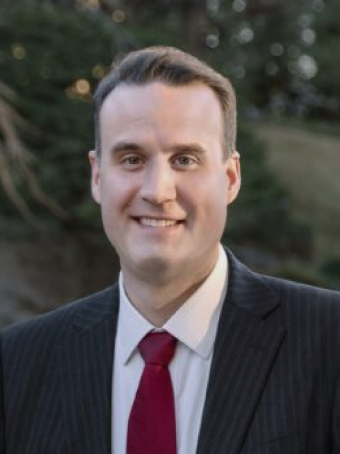
Visiting Research Fellow
Paul Nadeau is an adjunct assistant professor at Temple University's Japan campus, co-founder & editor of Tokyo Review, and an adjunct fellow with the Scholl Chair in International Business at the Center for Strategic and International Studies (CSIS). He was previously a private secretary with the Japanese Diet and as a member of the foreign affairs and trade staff of Senator Olympia Snowe. He holds a B.A. from the George Washington University, an M.A. in law and diplomacy from the Fletcher School at Tufts University, and a PhD from the University of Tokyo's Graduate School of Public Policy. His research focuses on the intersection of domestic and international politics, with specific focuses on political partisanship and international trade policy. His commentary has appeared on BBC News, New York Times, Nikkei Asian Review, Japan Times, and more.
View Profile-
 India's Indo-Pacific Pivot2026.08.07
 -
 Merz’s China Policy: Adjustment Under Constraint – From De-Risking Rhetoric to Managed Engagement2026.08.07
 - What Ukraine and Iran Teach Us About Deterrence2026.08.03
- USMCA Renewal Is a Pothole, Not a Cliff – Right?2026.07.30
-
 Trump’s new world order and what it means for Japan2026.07.30
 Why Pax Silica Is About More Than AI Chips2026.07.15
 Japan and India: Historic Strategic Convergence2026.07.07
- China’s Rare Earth Export Controls: “International Rules” Orientation and the Avant-Garde Use of Security Exceptions2026.07.03
- USMCA Renewal Is a Pothole, Not a Cliff – Right?2026.07.30
- Sovereign AI After Fugu: From Vertical Dominance to Horizontal Resilience2026.06.24