
India and EU Sign Mother of All Deals
India and EU Sign Mother of All Deals
2026 marked a decisive moment in India’s external economic strategy. On India’s Republic Day (26th January) came the announcement of the India-EU comprehensive strategic agreement. It was quickly (within a week) followed by the announcement of a trade deal with the United States, that was stuck at the White House and was considered imminent for a long time. New Delhi also hosted the UAE president, articulating its role as a pivotal geoeconomic hub connecting Europe, the Gulf, and Asia.
Yet beneath the diplomatic momentum, structural concerns (jobless growth patterns dampening the robust headline growth and stability numbers, and tax uncertainty for exiting foreign investors) persist.
India–EU Comprehensive Strategic Pact
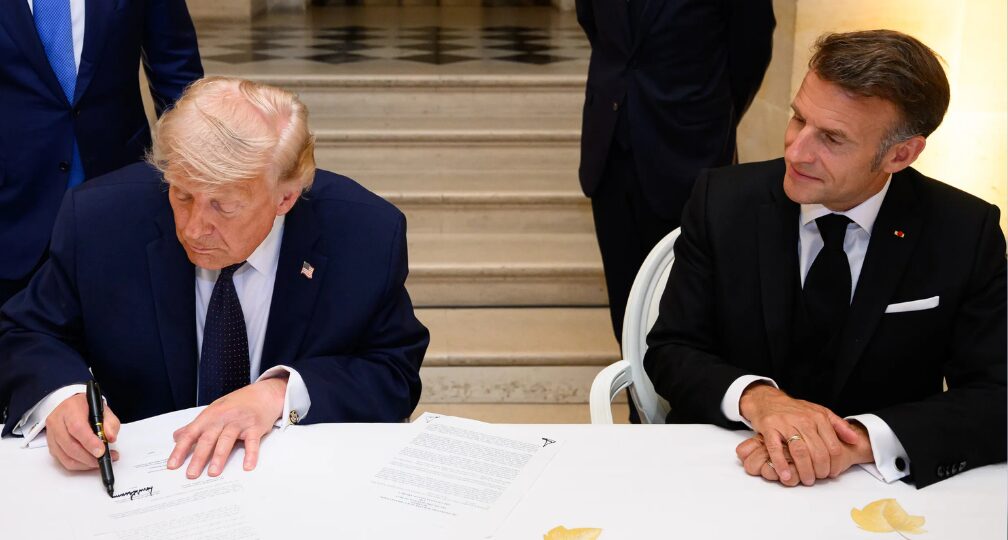
In late January 2026, India and 27 nation European Union concluded a broad-based pact that includes long-anticipated Free Trade Agreement (FTA) after nearly two decades of negotiations (the most comprehensive trade pact New Delhi has ever struck). Dubbed the “mother of all deals” by leaders on both sides, the agreement signals a strategic deepening of trade and defence ties between the world’s fourth-largest economy and the EU.
FTA: mechanics and content
The India–EU FTA is a watershed moment in India’s economic diplomacy—unlocking preferential access to a market covering ~2 billion people, nearly one third of worldwide trade and ~25 % of global GDP, with potentially transformative effects on Indian exports and supply-chain integration.
The pact envisages phased tariff elimination on a vast majority of goods, and improved services access. Over 93 % of Indian exports by value will receive zero-duty access into the EU market, and tariffs on a broad swath of European goods (machinery, chemicals, medical equipment, plastics, iron and steel) will be progressively eliminated. On autos, India has offered a carefully calibrated quota-based regime that cuts duties from over 100 % to as low as 10 % over time.
The FTA enhances India’s access to advanced markets and embeds India deeper into global commerce. It may also serve as a template for high-standard trade pacts with other partners.
The pact also explicitly covers services trade, professional mobility, and regulatory cooperation, signaling a more integrated economic relationship beyond traditional goods trade.
Other agreements
Beyond the much-heralded FTA, India and the European Union announced a number of parallel agreements that collectively signal a shift toward a deeper, rules-based economic partnership.
Most notable is the conclusion of a Security and Defence Partnership, which institutionalises cooperation in maritime security, cyber resilience, counterterrorism and defence-industrial collaboration. While modest in immediate deliverables, the pact carries geoeconomic weight: it embeds trade integration within a broader strategic framework at a time when the EU is actively reducing over-dependence on China and seeking reliable partners in the Indo-Pacific. For India, the agreement reinforces its positioning as a security provider in the Indian Ocean while anchoring economic ties with Europe in strategic trust rather than purely transactional trade.
Equally significant are the financial services and mobility-related agreements. A dedicated Financial Services Annex commits both sides to improved market access and regulatory cooperation in banking, insurance, fintech and digital payments. India has agreed to allow a limited but structured expansion of EU bank branches and to lock in full foreign ownership in insurance, while the EU has offered clearer pathways for Indian financial institutions and payment platforms to operate in European markets. Complementing this is a mobility and migration framework aimed at easing visas and professional movement for Indian students and skilled workers, an area long seen as the missing link in India-EU economic relations.
Geoeconomic fine prints
A. Market integration: By providing near duty-free access to a $20 trillion economic bloc, the FTA materially enhances export opportunities for Indian textiles, leather, footwear, engineering goods, chemicals, and seafood, helping narrow the competitiveness gap with low-cost Asian exporters.
B. Strategic diversification: The timing of the pact (amid elevated U.S. tariff tensions) reflects India’s pragmatic pursuit of trade diversification. Delhi is explicit that the EU deal stands on its own legs and is not merely a reaction to U.S. pressure, but the recent U.S. trade dispute undoubtedly accelerated momentum.
C. Supply-chain resilience and technology: The deal’s inclusion of services, regulatory cooperation, and mobility frameworks strengthens India’s position in global value chains and provides a blueprint for future agreements with other partners.
D. Risks and domestic concerns: Despite broad enthusiasm, there are domestic anxieties: some industry groups fear erosion of competitiveness in sensitive sectors (e.g., wine, autos), and political voices question whether “Make in India” priorities are fully safeguarded.
E. Implementation remains conditional on ratification by EU institutions and domestic approvals in India, with full effect expected only after legal vetting and parliamentary consent on both sides (likely in 2027).
India–US Trade Deal
On 2 February 2026, the United States and India announced a trade deal that would slash U.S. tariffs on Indian goods from 50 % to 18 %, in exchange for commitments by India to reduce certain barriers and halt purchases of Russian oil — an arrangement seen as a political and commercial reset to a relationship strained by tariff disputes and disparaging statements since early 2025.
Core components
・Tariff cuts: Tariffs on Indian goods cut to 18 % from punitive levels of up to 50 %.
・Market access: India to reduce import taxes on U.S. goods, potentially to zero, and increase purchases of U.S. petroleum, defense equipment, aircraft, and pharmaceuticals, with headline figures discussed in the hundreds of billions.
・Agricultural protections: India retains protections for sensitive sectors like rice, dairy, sugar and soybeans, similar to carve-outs in the EU deal.
Uncertainties and caveats
Despite celebratory announcements, few details have been formally published, and key elements (legal text, phase-in schedules, dispute settlement mechanisms, and verification frameworks) are still under negotiation. Markets reacted positively (equities and the rupee strengthened), but analysts caution that the political hype may outpace substance until the deal’s final terms are published and implemented.
From a geoeconomic standpoint, the deal provides tactical relief from tariff burdens and offers commercial stability after a period of tariff/verbal escalation and reflects mutual interest in maintaining strong economic ties.
UAE President’s Visit
On 19th January 2026, UAE President Sheikh Mohamed bin Zayed Al Nahyan visited India, marking a milestone in a deepening bilateral partnership. The visit yielded a $3 billion LNG supply agreement, cementing the UAE as a major energy supplier to India, and included a letter of intent on strategic defence collaboration. The visit also reaffirmed commitments to double bilateral trade to $200 billion by 2032 and expand cooperation in science, technology, AI, and infrastructure under the existing Comprehensive Economic Partnership Agreement (CEPA).
Geoeconomic implications
While the India–UAE axis does not yet constitute a formal bloc, the engagement reflects:
・Gulf realignment: Strengthened ties with India as Saudi-UAE dynamics evolve and Gulf states diversify partnerships beyond traditional Western security umbrellas.
・Energy security calculus: Long-term LNG deals reduce India’s dependence on volatile supplies elsewhere and anchor India in the Asia-Gulf energy corridor.
・Strategic depth: The defense cooperation framework hints at broader security linkages that could influence Indian Ocean and Indo-West Asia stability considerations.
・Multipolar strategic orientation of the two sides.
India’s Structural Challenges
At home, India’s growth model faces critical structural hurdles: the challenge of generating enough quality employment to match output expansion, and the imperative to reassure global capital through predictable legal and tax regimes.
Jobless growth concerns
India’s growth remains robust but worries about employment (especially for youth) persist. Labour participation has not kept pace with output growth, and services-led expansion has not yet translated into commensurate job creation in manufacturing and formal sectors. This structural issue is being flagged by economists and former policymakers as one of the most pressing long-term challenges.
Tax uncertainty (caused by Supreme Court judgment)
A landmark Supreme Court ruling held that Tiger Global is liable to pay taxes in India on gains from its Flipkart stake sale to Walmart, a decision with far-reaching implications for how capital gains from offshore transactions (Mauritius route, in this case) are treated under Indian tax law. This has triggered investor concern over legal and treaty unpredictability, potentially dampening the appeal of India as an investment destination until clarity and a stable tax interpretation regime emerge.
API/IOG English Newsletter
Edited by Paul Nadeau, the newsletter will monthly keep up to date on geoeconomic agenda, IOG Intelligence report, geoeconomics briefings, IOG geoeconomic insights, India Roundoup, new publications, events, research activities, media coverage, and more.

Visiting Research Fellow
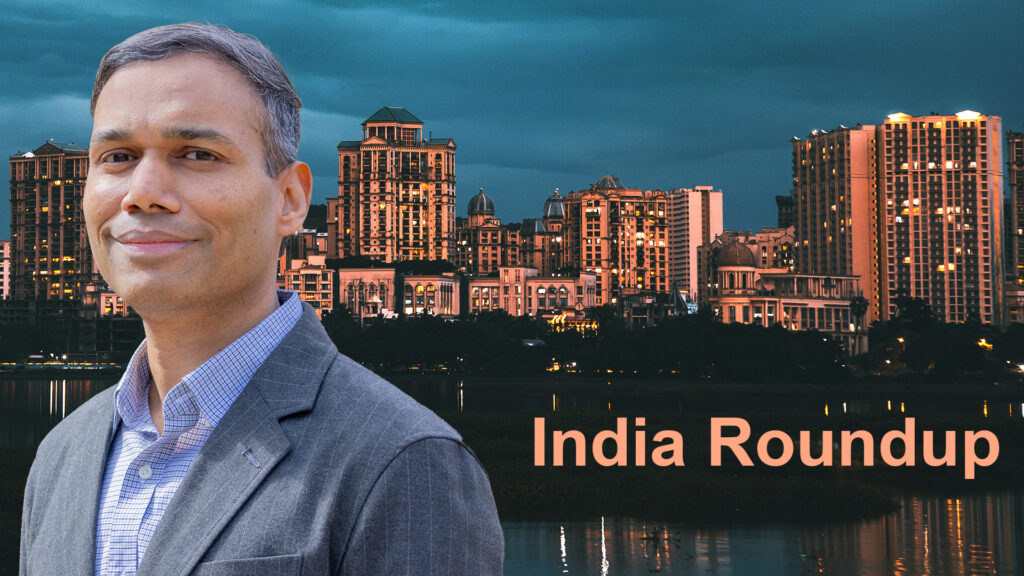
Manish Sharma is an ex-investment banker, with over two decades of experience spanning academia, consulting, think tank and corporate finance. His academic journey includes research and teaching positions at renowned institutions including Jawaharlal Nehru University, University of Tokyo, London School of Economics, and Doshisha Business School. Currently, he is a professor of economics, at Hosei University in Tokyo. Until 2012, Dr. Sharma served as Director (M&A) in the Corporate Finance Department at Daiwa Capital Markets' Tokyo headquarters, providing strategic financial guidance to major corporations. He subsequently transitioned to full-time academia, bringing his extensive practical knowledge to universities across Asia. His other notable experiences include 13 years of radio newscasting with NHK World, and running an investment advisory. His teaching and research interests cover Indian/ASEAN markets, tech sector, corporate finance, investments, valuation, geoeconomics and day-trading. Dr. Sharma holds a Ph.D. in Financial Economics.
View Profile-
 Can Germany become a reliable pillar of European security?2026.07.23
 - Sustained Denial and Strategic Depth: Policy Recommendations for Japan’s Next Strategic Documents2026.07.21
- As shared values shift, what's next for U.S.-Japan relations?2026.07.17
- Why Pax Silica Is About More Than AI Chips2026.07.15
- The Case for Underground Defense: Japan's Military Lessons from the Iran War2026.07.14
 Why Pax Silica Is About More Than AI Chips2026.07.15
- China’s Rare Earth Export Controls: “International Rules” Orientation and the Avant-Garde Use of Security Exceptions2026.07.03
- The Iran-U.S. MOU Offers a Reprieve, but Not Relief2026.07.02
 Japan and India: Historic Strategic Convergence2026.07.07
- Sovereign AI After Fugu: From Vertical Dominance to Horizontal Resilience2026.06.24