
Economic Security Survey for 100 Japanese Companies in 2021
Asia Pacific Initiative (API) is pleased to announce that we conducted a survey of 100 companies in Japan to gather their views on issues of economic security and how it is impacting their businesses. The main survey results are available here.
For this survey, API selected 100 companies (including research organizations) in Japan that we thought would both play a critical role in the realm of economic security, as well as be susceptible to changing economic security dynamics.
The survey covered topics including what companies believed to be risks or challenges in their business in regards to economic security, as well as what they hoped the government would provide in terms of support or intervention. Specific questions asked companies about their level of awareness regarding economic security, if and how they are tackling any issues related to economic security, as well as any potential impact of the ongoing U.S.-China tensions on their business.
These respondents included major firms from the following industries: telecommunications, manufacturing, finance, transport, real estate, and trading companies. The full list of respondents can be found here. The survey was sent to each firm’s respective office that handles economic security issues. The questionnaire was sent to target respondents via email in mid-November and survey results were collected and aggregated in mid-December.
The survey results
(i) When asked about their most pressing concern regarding economic security, 75.0% of companies cited “uncertainty in U.S.-China relations”, and 60.8% of companies cited U.S.-China tensions had actually affected their company. Nearly all respondents (98.0%) indicated they were “aware of economic security” as an issue or felt the effects of it in their business. In addition, 86.9% of respondents stated they were already making some effort to address economic security issues.
(ii) When asked about future sales targets in the U.S. and Chinese markets, 33.3% of respondents stated they would aim to increase sales in China, while 41.9% of respondents said the same for the U.S. Companies, however, did express concern with the U.S.-China row, with 59.5% of them citing an increase in costs due to tightening regulations in the U.S. The juxtaposition of concern and the zeal for market opportunity in responses indicate that even in the midst of the U.S.-China dilemma, companies are striving for business growth in both markets.
(iii) Respondents cited a number of items they would like to see from the new Economic Security Minister, including “establishing a clear policy for Japan on how to respond to new regulations by the U.S. and China” as well as “clarifying policy decisions and regulatory scope that balance U.S. and Chinese business.” There is an overwhelming
perception that a clear delineation must be drawn regarding how much concern businesses should give to the issue of economic security.
This survey provides rare insight into the reality of Japanese companies that operate worldwide: not only are they forced to navigate a delicate balance between the U.S. and China, but they must also strike a balance between economic opportunity and security.
API has been exploring how Japan should position its own economic security through its own projects such as the “API Geoeconomic Briefing” and the “API Symposium on Geoeconomics.” The results of this survey reiterated a clear need for public-private partnership and dialogue in the realm of economic security. API will continue its mission to build a community between the public sector, private sector, and academia in search of a “most optimal solution” on this challenging issue facing Japan.
Click here for the main survey results
Seminar
On March 3, 2022, Yoichi Funabashi, Chairman of API, gave a presentation on API’s Economic Security Survey of 100 Japanese Companies at a seminar co-organized by the Society of International Business and Legal Studies and The Japanese Association of International Business Law.
During the seminar moderated by Munetaka Horiguchi, Chairman of the Society of International Business and Legal Studies / Adjunct Professor at Kyoto University, API Chairman Funabashi delivered his presentation titled “Japan’s Economic Security Challenges: What does the survey of 100 companies tell us?” The presentation was followed by a Q&A session with the 53 participants, most of whom are practitioners or members of the academic community.
In addition to presenting the perceptions of Japanese companies when the survey was conducted in November-December 2021, Chairman Funabashi also discussed more recent developments such as (1) the beginning of deliberations in the Japan’s Diet over the government’s economic security legislation, and (2) the economic sanctions imposed on Russia in the wake of the war in Ukraine. He highlighted the increasingly difficult task of balancing economic activities and national security amid such circumstances. He also emphasized that Japan must not only remain “defensive” but also become more “proactive” in formulating its economic security strategy, emphasizing the need for more targeted government support and clearer scope of regulations. Chairman Funabashi and the participants also discussed possible exit strategies for the Russia-Ukraine conflict, the possible emergence of global economic blocs, and the importance of issues such as energy, transportation, food, medical care, and human rights related to economic security.

Senior Research Fellow,
COO, LLC future mobiliTy research
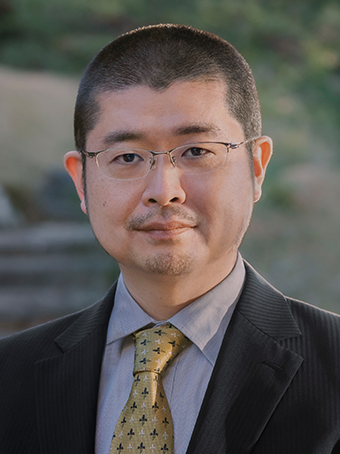
Hitoshi Suzuki (PhD) was Associate Professor at the Graduate School of International Studies and Regional Development, University of Niigata Prefecture, Japan. He received his Ph.D. in History and Civilization from the European University Institute in December 2007 and has focused on Japan’s relations with the EC/EU, as well as Japan’s auto and aero-space industry in Europe. He was visiting fellow at the Monash European and EU Centre, the London School of Economics and Political Science. After serving as Deputy Director at the Economic Partnership Division, Economic Affairs Bureau of the Ministry of Foreign Affairs of Japan, and as a Research Committee Member of the Europe Study Group at the 21st Century Policy Institute of Keidanren (Japan Business Federation), he founded Mirai Mobility Research LLC in 2021. He currently serves as a Visiting Senior Research Fellow at the Makihara Laboratory, Research Center for Advanced Science and Technology (RCAST), the University of Tokyo, and as an Adjunct Lecturer at Ferris University. As of December 2021, he serves as a Visiting Fellow & Staff Director, CPTPP Project, Asia Pacific Initiative. His publications include "Thatcher and Nissan Revisited in the Wake of Brexit" (Palgrave Macmillan), “The New Politics of Trade: EU-Japan” Journal of European Integration 39(7), “Post-Brexit Britain, the EU and Japan” Europe and the World 4(1), and Suzuki et.al. “Japan and the European Union,” Oxford Encyclopedia of European Union Politics.
View ProfileVisiting Research Fellow
Mariko Togashi has been a Visiting Research Fellow at the Institute of Geoeconomics (IOG) since January 2024. Prior to IOG, Mariko was a Research Fellow for Japanese Security and Defence Policy / Matsumoto-Samata Fellow at the International Institute for Strategic Studies (IISS) in London for two years, focusing on Japan’s economic security policy. She also worked as a research assistant to Dr. Kent Calder at Edwin O. Reischauer Center for East Asian Studies, as well as a research intern at CSIS’ Economics Program, focusing on the economic security of the U.S., Japan, and China. Before taking her master’s degree, Mariko worked as an equity analyst in the Japanese machinery sector at Deutsche Bank and Bank of America Merrill Lynch (currently BofA Securities) for more than five years. Mariko earned her master’s degree in international economics and strategic studies from Johns Hopkins University School of Advanced International Studies and her bachelor’s degree in international law from Keio University, Tokyo.
View Profile-
 The Geopolitics of Ports and Pipelines: The Case of The Strait of Hormuz -The Struggle Over Chokepoints-2026.04.06
 -
 India's Semiconductor Moment2026.04.03
 - Redesigning U.S.-Japan security in a ‘two-peer’ nuclear era2026.04.02
- Don’t Count on U.S. Domestic Politics to Constrain Trump on Iran2026.03.27
- War in the Persian Gulf means volatility in the global energy market2026.03.26


 Is the Iran Operation Really About China?2026.03.12
- Orbán in the Public Eye: Anti-Ukraine Argument for Delegitimising Brussels2026.02.04
- India's Rising Gravitational Pull2026.03.06
- War in the Persian Gulf means volatility in the global energy market2026.03.26
- The Supreme Court Strikes Down the IEEPA Tariffs: What Happened and What Comes Next?2026.02.27