
Oil, Debt, and Dollars: The Geoeconomics of Venezuela
Analysis: Oil, Debt, and Dollars: The Geoeconomics of Venezuela
By Andrew Capistrano, Visiting Research Fellow, Institute of Geoeconomics (IOG)
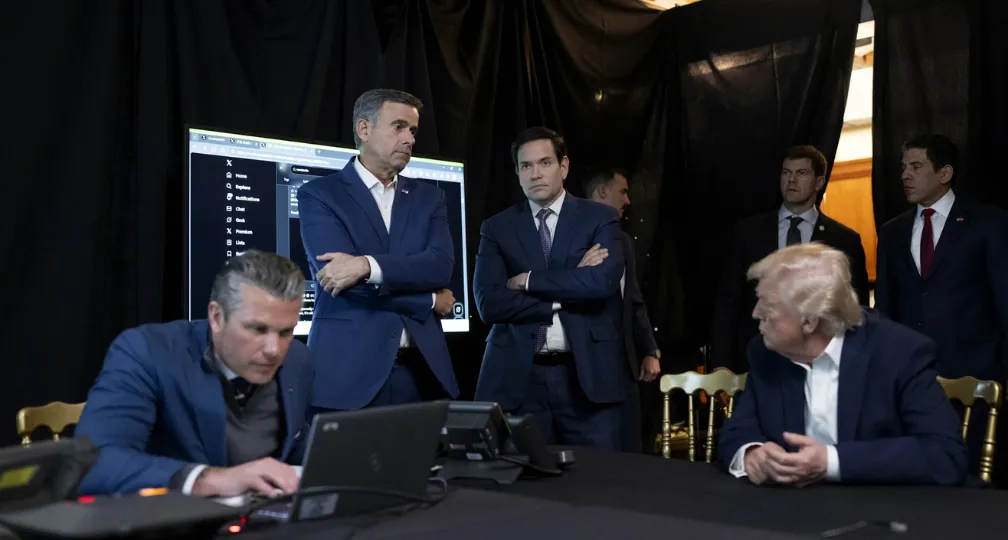
The US extraterritorial arrest of Venezuelan President Nicolas Maduro on 3 January is the clearest manifestation yet of the “Trump Corollary to the Monroe Doctrine” — or as Trump calls it, the “Donroe Doctrine”. There are several layers of justification for this policy. Geopolitically, Secretary of State Marco Rubio has emphasized that the US will not tolerate the Western Hemisphere being “a base of operation for adversaries, competitors, and rivals”. From a legal standpoint, the implication is that US “domestic law” supersedes “international law” in the region, as the Maduro arrest ostensibly stemmed from his designation as a cartel leader and “narcoterrorist”, and therefore not a legitimate head of state. And economically, Trump’s assertion that US oil companies would rebuild Venezuelan energy infrastructure to boost production has led to a perception that the operation, like the Iraq War, was actually cover for a resource grab.
Yet these public justifications are incomplete, for there was also a geoeconomic logic behind the Venezuela operation. To understand why, it is necessary to see Venezuela not primarily as an oil producer, but as a node in a broader geoeconomic system linking commodities, currency settlement, and adversarial economic influence in the Western Hemisphere.
When the “oil grab” explanation for the Venezuela operation is examined beyond the surface level, it does not hold up well. The US is already the world’s largest oil producer, and recent statements implying that Venezuelan production could be rapidly expanded have been widely discounted by oil industry specialists. Venezuela’s infrastructure has suffered from years of underinvestment, sanctions, and mismanagement; even optimistic assessments suggest that any meaningful expansion of production would take years and require large-scale capital commitments. Historically, year-on-year increases in Venezuelan crude output have rarely exceeded a few hundred thousand barrels per day (bpd), while declines during periods of stress have been much sharper. In short, while rebuilt Venezuelan oil supplies will matter in the 2030s, there will not be an immediate effect on global market prices.
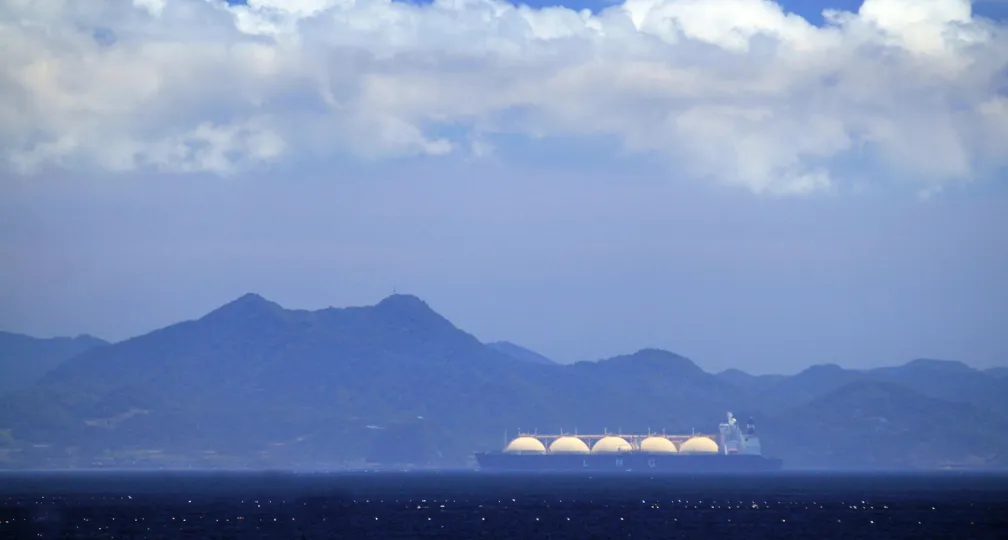
This points to a key distinction: the difference between bringing new oil supplies online and controlling existing flows. Venezuela’s 2024 production was estimated at roughly 800,000-900,000 bpd, the majority of which was exported. About three-quarters of that export volume went to China, often at discounted prices due to sanctions, and frequently used to pay interest on loans rather than for normal sales. Therefore, the significance of Venezuelan production after the US operation is not that this oil could dramatically change supply balances, and hence global prices, but because it had hitherto anchored a sanctions-evading energy corridor outside US financial control.
In this context, the most important short-term US benefit from the operation would be immediate leverage over current production and the existing export infrastructure, not future production. Sanctions enforcement — boarding and seizing tankers carrying sanctioned crude, as occurred in mid-December with a China-bound shipment and which Rubio stated will continue — targets routing, counterparties, and settlement rather than volumes alone. Control of export terminals, shipping insurance, and payment channels determines who can access Venezuelan oil and on what terms. Even if global prices barely move, the strategic effect on counterparties can be significant, which could eventually be translated into future bargaining leverage.
And China is not the only potential target from US control over Venezuela’s current oil production, as it currently possesses ample strategic reserves. For Canada, the prospect of Venezuelan heavy crude re-entering US-aligned channels weakens its leverage ahead of the July 2026 USMCA renewal talks by somewhat reducing US refineries’ dependence on Canadian crude supplies. The Cuban economy can also be targeted, as its subsidized Venezuelan oil has become essential for meeting domestic energy demand.
There is also a structural energy-system logic underpinning this focus. Most US shale output is light crude, while many refineries in Texas and Louisiana are configured to process heavier grades. Venezuelan heavy crude, like Canada’s oil sands output, fits these refineries well. For years, US dependence on Canadian heavy crude has been a feature of North American energy integration, but there is excess refining capacity available that could absorb current Venezuelan production. Redirecting even modest quantities of current output levels into US-aligned channels would strengthen refinery resilience while expanding US leverage over both suppliers and buyers.
Seen in this light, Venezuelan oil functions less as a prize than as a denial weapon. China has been the dominant buyer of Venezuelan crude under sanctions, even though Venezuelan crude only accounted for roughly 5% of China’s total oil imports in recent years. Crucially, as noted above, a significant portion of these flows have been tied to oil-for-debt arrangements stemming from roughly two decades of Chinese lending to Venezuela, estimated at around $60 billion in total (between $13 to $20 billion is still owed). Oil production thus became, in effect, a debt-servicing operation that locked it into a Chinese financial ecosystem with energy sales in non-dollar currencies. Disrupting the status quo forces China to replace “guaranteed” discounted supply with purchases on the global market, increasing its exposure to dollar settlement and sanctions enforcement.
This “denial” logic extends beyond oil. Venezuela offered US adversaries a rare convergence of economic and security footholds in the Western Hemisphere. Russia and Iran had military cooperation and defense manufacturing arrangements with Venezuela that cannot be discounted, although the discussion below will focus on China’s interests in natural resources.
Chinese firms have been deeply involved in extractive industries, from hydrocarbons to critical minerals. Venezuela sits on some of the densest untapped rare earth supplies, known as the Orinoco Arc, from which elements essential for electric motors, quantum sensors, and AI deployment can be mined. In fact, more than the lure of increased oil supplies, the US may have its eye on accessing these raw materials to lessen its dependence on Chinese-controlled supply chains, or at least to deny China further opportunities to monopolize global mining operations.
As Rubio put it: “We’ve seen how our adversaries all over the world are exploiting and extracting resources from Africa, from every other country. They’re not going to do it in the Western Hemisphere”. Oil, in this context, is best understood as the enabling asset rather than the core acquisitive objective. Indeed, from the US perspective, perhaps more provocative than Chinese involvement in extracting Venezuelan natural resources was that they were used to fund the emergence of a multi-adversary platform operating close to US territory. Energy revenues, infrastructure, and state control over production provided the financial and logistical foundation for these broader alignments against US security interests. Beyond disrupting oil flows, removing Maduro — the keystone of this arrangement — disrupts the wider architecture of adversarial cooperation in the hemisphere. To again quote Rubio: “The US doesn’t need Venezuela’s oil, we have plenty. What we won’t allow is Venezuelan oil being controlled by China, Russia, and Iran”. Though unstated, the same argument applies even better to critical minerals, where the US has far greater deficiencies than in oil.
There are actually clear limits to any economic payoff the US could extract from Venezuelan oil production. At oil prices around $50 per barrel, current exports generate between $14 to $18 billion per year, depending on volume. This, Venezuela’s main source of revenue, must then pay for operating and service costs, other imported goods, government expenses, and outstanding debts. Such low revenues cast doubt on the idea that US oil companies will be incentivized to invest in Venezuela by expectations of a major fiscal windfall, even if Trump has suggested these revenues might compensate US firms for their previously nationalized Venezuelan assets. And political risk remains high: once infrastructure is rebuilt, the incentives for future re-nationalization increase. These constraints reinforce the view that “control and denial”, rather than expansion and profit maximization, are the dominant US motives with respect to oil.
Further weakening the prospects of vast oil gains for US firms is the fact that China will certainly push for Venezuelan debt repayment, since it faces meaningful balance-sheet exposure. Venezuela’s banks and state-owned enterprises were among the largest recipients of Chinese lending in Latin America, and a flagship example of oil-backed finance. Failure to collect on these outstanding debts could erode the viability of the larger Belt and Road Initiative project. Although China’s worst-case scenario might be a Venezuelan default that shakes BRICS cohesion, a more moderate scenario would also be bad — one where oil-for-debt repayment slows, Brazil and Colombia hedge their overreliance on Chinese investment, and its overall influence in Latin America is reduced.
Moreover, for China, Venezuela represents a politically aligned supplier that had been partially insulated from dollar enforcement. It has become one of the more visible experiments in non-dollar commodity settlement, including attempts to price or settle oil in currencies such as the RMB and to use alternative payment infrastructure. While these experiments were limited in scale, their symbolic value was high, as they fed into broader narratives of “de-dollarization” promoted by China, Russia, and the BRICS grouping. If the post-Maduro government even just balances between Washington and Beijing, much less shifts toward US cooperation, it would undermine China’s energy security strategy as well as its efforts to build alternative commodity-finance networks.
The dollar dimension is important. By claiming to control Venezuelan oil flows, the US is not merely asserting influence over supply channels to its adversaries, it is reasserting the dollar’s role as the global energy settlement currency. It could be argued that control over settlement is at least as important as control over production: dollar pricing brings transactions within US jurisdiction, enables sanctions enforcement, and reinforces global demand for dollar liquidity. From this perspective, the operation looks less like an “oil grab” than an effort to refurbish the credibility of the petrodollar system at a moment when it has shown signs of strain.
However, this does not mean a return to a rigid, 1970s petrodollar model. The objective instead appears to be adaptation. After Maduro’s arrest, Patrick Witt, Deputy Director of the Office of Strategic Capital (OSC) — a key Pentagon vector for rebuilding the US defense industrial base and financing economic security projects — stated that Venezuela should consider adopting the US dollar and dollar-backed stablecoins as “legal tender”, arguing that the country is already “de facto dollarized” and that formalization would “attract foreign investment and bring much-needed price stability”. The implication is that dollar primacy can coexist with new financial rails, including blockchain-based settlement, as long as the dollar’s role expands in the Western Hemisphere while remaining the unit of account and collateral anchor for energy transactions.
Dollar-priced oil also has indirect financial benefits for the US, though these should not be overstated. Controlling oil prices helps control inflation, as lower and more stable energy prices can expand the Federal Reserve’s room to cut interest rates without reigniting price pressures, and pricing commodities in dollars increases global demand for dollar liquidity and balance sheets. While recycling the dollars earned in energy transactions into US assets such as Treasury bonds is not automatic, it is facilitated by institutional structures and market depth. In the long run, proponents of this strategy might imagine a Venezuela that becomes a “Western Hemisphere Saudi Arabia”: exporting oil within a dollar framework and reinvesting part of the proceeds into US financial assets. If realized, geoeconomic enforcement abroad would feed directly into macroeconomic management at home. But such benefits remain a longer-term vision, not a near-term reality.
More concretely, the Venezuela operation signals a broader shift in how commodity power is exercised. In the era of geoeconomics, pricing power is increasingly derived not from production alone but from enforcement capacity. Supply chains have been “weaponized”, meaning that control over factors once taken for granted in the era of interdependence, like shipping, insurance, finance, and legal jurisdiction, will have a greater influence on commodity prices.
But production still matters. As the battle for resources intensifies, the Venezuela operation may be a signal that, in this new era, the US sees resource sovereignty as conditional. States in the Western Hemisphere that leave resources idle, mismanage them, or sell them to adversaries risk coercive “re-stewardship” — not outright theft, but forceful realignment with US national security priorities and the dollar system.
These signals are being directed at adversaries as well as neutral states and partners. For countries in the Western Hemisphere, the message is that economic and security alignment will be more explicitly enforced. Sovereign heads-of-state can be designated as “criminals” or “cartel leaders” to create legal pathways for pressure, and logistics chokepoints such as ports and canals are being treated as strategic assets.
Consider that following the Venezuela operation, Trump and Rubio singled out Columbian President Gustavo Petro with threats of similar “narcoterrorist” treatment, and Mexican President Claudia Sheinbaum was again urged to accept US military assistance in rooting out cartel influence. Yet although Columbia and Mexico are more important in the narcotics supply chain than Venezuela, such counternarcotics framing is not the entire picture; the US’s parallel aim is to undercut Chinese geopolitical and geoeconomic influence in the region. Similarly, the issue of Chinese-owned ports on both sides of the Panama Canal has quieted down from Trump’s initial flurry of activity in early 2025, but one cannot assume it has gone away. After all, annexing Greenland has again come up as “necessary for US national security” amid perceived challenges from Russia and China in the Arctic.
For adversaries like China, Russia, Iran, and especially Cuba, as well as the broader BRICS grouping (most of all Brazil, due to its Western Hemisphere location), the message is starker. Venezuela was a test case for commodity-based de-dollarization, and a strategic outpost to hedge against US pressure in other regions. Its removal would impose a ceiling on such strategies. BRICS ambitions to challenge the dollar through alternative energy settlements may suffer a credibility blow when such a prominent experiment is forcibly reversed, and the investments spent cultivating an ally in the US’s home region may become more difficult to recoup.
Venezuela, then, is best understood not as an “oil grab” story in the narrow sense, but as a case study in contemporary geoeconomics. The US cannot rapidly flood the market with new oil supply, so its objectives likely have more to do with controlling existing flows, reasserting dollar-centric settlement, reversing the leverage from debt diplomacy, and denying adversaries strategic footholds in the Western Hemisphere.
The rhetoric of the “Donroe Doctrine” explains where and why this is happening. But the logic of geoeconomics explains how it is happening, and why it is happening now.
(Photo Credit: Photo by Molly Riley/The White House via Getty Images)
Disclaimer: The views expressed in this IOG Economic Intelligence Report do not necessarily reflect those of the API, the Institute of Geoeconomics (IOG) or any other organizations to which the author belongs.
API/IOG English Newsletter
Edited by Paul Nadeau, the newsletter will monthly keep up to date on geoeconomic agenda, IOG Intelligence report, geoeconomics briefings, IOG geoeconomic insights, new publications, events, research activities, media coverage, and more.

Visiting Research Fellow
Andrew Capistrano is Director of Research at PTB Global Advisors, a Washington DC-based geopolitical risk consulting firm. Specializing in economic competition between the US/EU and China, he analyzes how trade, national security, and industrial policies impact markets, and his firm’s clients include Japanese corporations and government agencies. He previously worked in Tokyo at the US Embassy’s American Center Japan and as a research associate at the Rebuild Japan Initiative Foundation / Asia-Pacific Initiative. Dr Capistrano holds a BA from the University of California, Berkeley; an MA in political science (international relations and political economy) from Waseda University; and a PhD in international history from the London School of Economics. His academic work focuses on the diplomatic history of East Asia from the mid-19th to the mid-20th centuries, applying game-theoretic concepts to show how China's economic treaties with the foreign powers created unique bargaining dynamics and cooperation problems. During his doctoral studies he was a research student affiliate at the Suntory and Toyota International Centres for Economics and Related Disciplines (STICERD) in London.
View Profile-
 Don’t Count on U.S. Domestic Politics to Constrain Trump on Iran2026.03.27
 - War in the Persian Gulf means volatility in the global energy market2026.03.26
- Is the Iran Operation Really About China?2026.03.12
- China’s long-range DF-27 missiles are a game changer2026.03.09
-
 India's Rising Gravitational Pull2026.03.06

 Orbán in the Public Eye: Anti-Ukraine Argument for Delegitimising Brussels2026.02.04
- Is the Iran Operation Really About China?2026.03.12
- The Supreme Court Strikes Down the IEEPA Tariffs: What Happened and What Comes Next?2026.02.27
- India's Rising Gravitational Pull2026.03.06
- War in the Persian Gulf means volatility in the global energy market2026.03.26