
It’s Now or Never: India’s Ambitious Reform Push
It’s Now or Never: India’s Ambitious Reform Push
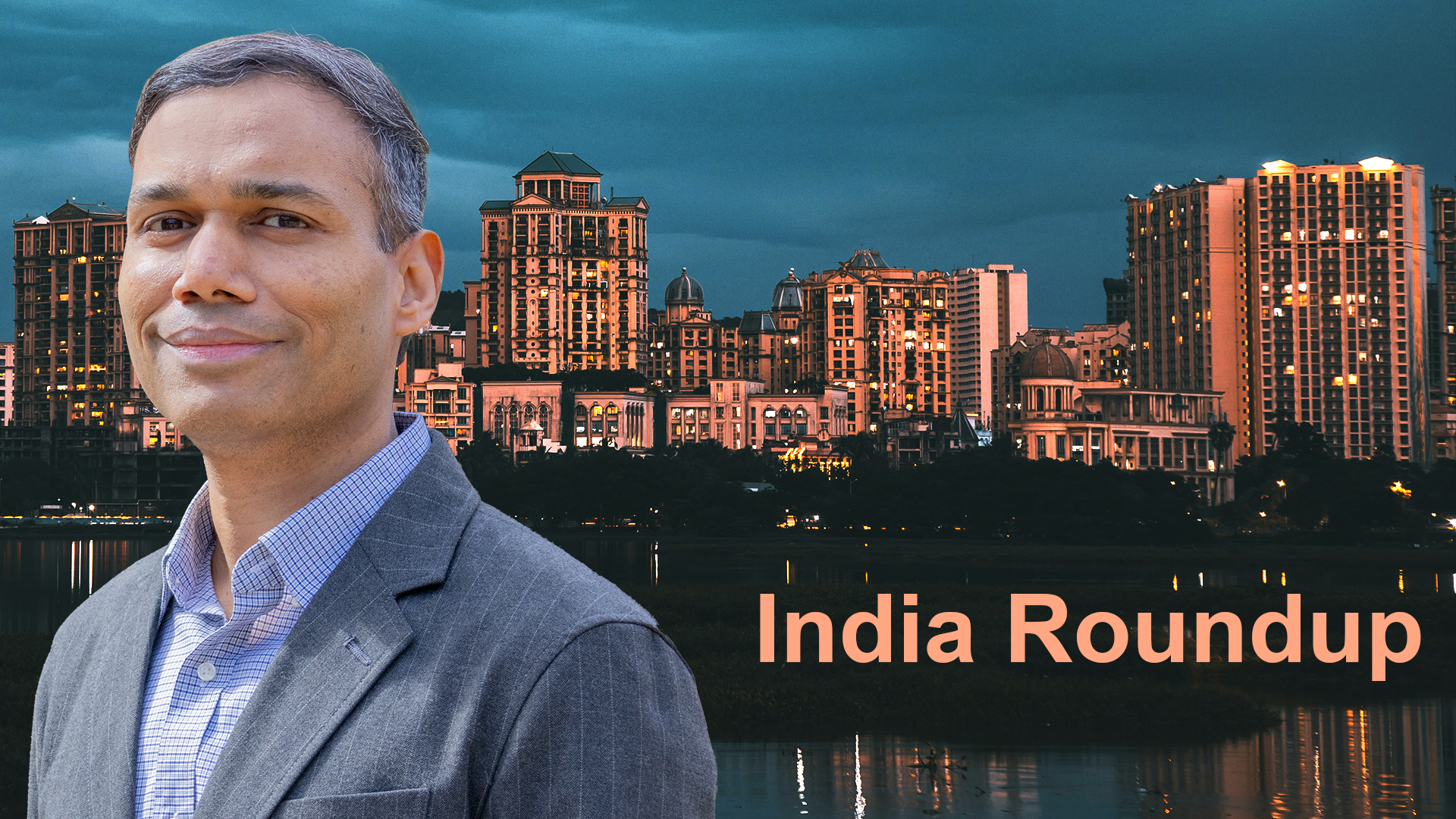
2025 marked a clear inflection point in India’s reform trajectory. After years of incrementalism and political caution, the government has launched a cluster of long-pending, politically difficult reforms, catalyzed in part by external pressure from U.S. tariffs and a changing global environment.
It is worth noting that more substantive reforms have been formalized in the last quarter of 2025, than in the entire previous decade.
The reform spree of 2025
・Income tax cuts to boost household disposable income
・GST rationalization, lowering rates and simplifying slabs
・New labor laws, easing hiring, compliance, and formalization
・Insurance sector reforms, expanding participation and capital access
・Nuclear energy law changes, opening the sector to greater private and foreign involvement
・Rural employment and income support adjustments, aimed at demand stabilization
Overarching objectives of the reforms
1. Ease of entry: expanding the number of economic players
2. Ease of doing business: aggressive red-tape reduction
・Rationalization of Quality Control Orders (QCOs)
・Expansion of the Jan Vishwas framework (decriminalizing minor technical / procedure offenses)
・Mass reduction of regulatory provisions (almost 90%)
・Simplification and unification of overlapping laws
3. Household income and employment focus:
・GST and labor reforms to raise take-home pay and job creation
・Rural employment measures to stabilize consumption
On paper, these reforms meaningfully lower friction in the economy and should unlock private investment over time. That said, execution risks remain.
A notable example is nuclear energy: despite successive legislative push, nuclear still accounts for less than 3% of India’s energy mix. The reform is strategically important, but near-term economic impact will be modest.
Economy and the Market
India enters 2026 with strong macro fundamentals, having just become the fourth largest economy on the final day of 2025. The momentum reflects several years of policy emphasis on fiscal discipline, inflation control, and public-investment-led growth. Real GDP growth remains among the highest in major economies, inflation has moderated sharply, and public capex continues to anchor demand.
Juxtaposed to the Goldilocks phase, important stresses are worth noting:
1. Rupee weakness: a mixed blessing?
The Indian rupee has weakened significantly. This reflects two factors:
1. a deliberate recalibration by the Reserve Bank of India (RBI), which has allowed greater currency flexibility to preserve reserves and competitiveness; and
2. external pressure from U.S. tariff threats, which have raised risk premia on emerging- market currencies.
While a weaker rupee improves export competitiveness at the margin, the downside dominates: India remains a large importer of energy, fertilizers, and capital goods. Higher fuel import costs raise input prices, compress margins, and act as a tax on growth. Over time, this becomes a macro headwind rather than a stimulus.
2. Inflation down, but questions remain
Headline inflation has fallen sharply, while growth momentum appears turbo-charged. This combination is unusual and raises questions. The disinflation owes much to base effects, food-price normalization, and administrative interventions, while growth is still heavily public-capex-driven. The durability of this mix (especially if global conditions tighten) remains an open question for investors.
3. Record capital flows: in and out
India has seen record FDI inflows alongside unusually high FDI outflows, as Indian firms globalize aggressively and multinational capital simultaneously re-optimizes supply chains. Portfolio inflows (FPIs) have also been elevated but volatile, contributing to currency swings. This two-way surge reflects confidence in India’s long-term story, but it also signals capital mobility risk and greater sensitivity to global shocks.
4. Equity markets: Up yet dithering
Despite strong macro data, equity markets have lagged behind several emerging market indices, reflecting valuation concerns, earnings downgrades in export-linked sectors, and uncertainty around global trade. For corporates, this divergence underscores the gap between macro stability and market sentiment.
5. Visible structural imbalances
India’s recent growth has been increasingly dichotomous, with a disproportionate share of gains accruing to affluent households and large, capital-intensive firms, while wage growth and consumption at the lower end remain subdued. At the same time, youth unemployment remains elevated — a global phenomenon, but more acute in India given its young demographic profile. The manufacturing sector, despite policy support, has yet to generate jobs at the scale required, reinforcing concerns that growth is becoming less employment-intensive.
Geopolitics: Putin’s Visit to India
In early December, Russian President Vladimir Putin arrived in Delhi on state visit.
The visit was high on symbolism and low on substantive deliverables.
The optics were carefully choreographed to signal that India retains independent diplomatic space and will not be coerced into alignment. India’s engagement of Russia is primarily driven by energy security, defense ties, and geostrategic balancing. Beyond reaffirming existing ties, the visit produced limited new economic or strategic commitments.
The visit was a tough balancing act for New Delhi, between showing the strength and independence and avoiding big ticket defense purchases that can further aggrieve Washington, and cause consternations in Brussels.
2025 in Perspective: India’s Strategic Trajectory
Looking across the year, several structural themes stand out:
1. Strong and deepening ties with Japan, spanning investment, technology, and economic
security
2. India becoming the world’s fourth-largest economy, reinforcing its market gravity
3. Macro resilience, sustaining high growth despite tariff threats
4. Trade diversification, reducing reliance on any single export market
5. Implementation of data protection rules, reshaping the digital economy
6. Defense-industrial expansion, with growing domestic manufacturing
7. Acceleration of private capex, complementing public investment
8. Reduced inflation pressures, creating space for reform and growth
The Finer Points
2026 highlights a turning point. India is leveraging macro stability to push through long-delayed reforms while navigating a harsher external environment. On paper the economy looks resilient. Besides existing constrains like currency weakness, trade friction, and capital-flow volatility; Indian economy is suffering from a deformed dual economy that poses medium-term risks to social stability, consumption momentum; yet considering the electoral strength of the Modi government at the center and in the majority of states, the reform push is likely to sustain.
In sum, India represents
・Near-term uncertainty, especially in export-linked and energy-intensive sectors
・Medium-to long-term opportunity, as reforms lower entry barriers, simplify regulation, and expand domestic demand
India’s policy stance suggests a recognition that the global environment has changed, and that pragmatic adaptation and unleashing the economic potential will define the next phase.
Disclaimer: This report is based on information available as of December 2, 2025, and represents an analysis of geoeconomic trends. It is intended for informational purposes only and should not be construed as business advice. The views expressed in this India Roundup do not necessarily reflect those of the API, the Institute of Geoeconomics (IOG) or any other organizations to which the author belongs.
API/IOG English Newsletter
Edited by Paul Nadeau, the newsletter will monthly keep up to date on geoeconomic agenda, IOG Intelligence report, geoeconomics briefings, IOG geoeconomic insights, India Roundoup, new publications, events, research activities, media coverage, and more.
Visiting Research Fellow
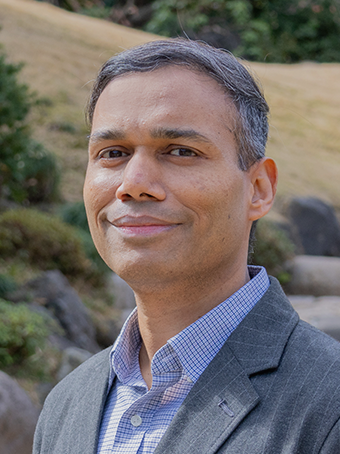
Manish Sharma is an ex-investment banker, with over two decades of experience spanning academia, consulting, think tank and corporate finance. His academic journey includes research and teaching positions at renowned institutions including Jawaharlal Nehru University, University of Tokyo, London School of Economics, and Doshisha Business School. Currently, he is a professor of economics, at Hosei University in Tokyo. Until 2012, Dr. Sharma served as Director (M&A) in the Corporate Finance Department at Daiwa Capital Markets' Tokyo headquarters, providing strategic financial guidance to major corporations. He subsequently transitioned to full-time academia, bringing his extensive practical knowledge to universities across Asia. His other notable experiences include 13 years of radio newscasting with NHK World, and running an investment advisory. His teaching and research interests cover Indian/ASEAN markets, tech sector, corporate finance, investments, valuation, geoeconomics and day-trading. Dr. Sharma holds a Ph.D. in Financial Economics.
View Profile-
 Redesigning U.S.-Japan security in a ‘two-peer’ nuclear era2026.04.02
 - Don’t Count on U.S. Domestic Politics to Constrain Trump on Iran2026.03.27
- War in the Persian Gulf means volatility in the global energy market2026.03.26
- Is the Iran Operation Really About China?2026.03.12
- China’s long-range DF-27 missiles are a game changer2026.03.09


 Orbán in the Public Eye: Anti-Ukraine Argument for Delegitimising Brussels2026.02.04
- Is the Iran Operation Really About China?2026.03.12
- India's Rising Gravitational Pull2026.03.06
- The Supreme Court Strikes Down the IEEPA Tariffs: What Happened and What Comes Next?2026.02.27
- War in the Persian Gulf means volatility in the global energy market2026.03.26