
The Supreme Court Strikes Down the IEEPA Tariffs: What Happened and What Comes Next?
The Latest Regulatory Developments on Economic Security & Geoeconomics
By Paul Nadeau, Visiting Research Fellow, Institute of Geoeconomics (IOG)
Top News:
U.S. Supreme Court Blocks IEEPA Tariffs: In a 6-3 decision announced on February 20, the U.S. Supreme Court blocked Donald Trump from imposing tariffs under the International Economic Emergency Powers Act, which includes the “reciprocal” tariffs announced on April 2, 2025. The “Analysis” section will cover the decision and its implications in greater detail below.
Japan, The United States Announce Three Investment Projects: On February 20, Japan and United States announced the first three projects that will begin Japan’s $550 billion investment package in the United States. The projects are a synthetic diamond plant constructed in Georgia with diamond tool manufacturer Asahi Diamond Industrial Co. and Noritake Co. both expressing interest in participating, a gas-fired thermal plant in Ohio to power data centers supporting the development of artificial intelligence with Softbank, Toshiba, and Hitachi expressing interest, and a petroleum export project on the Gulf Coast of Texas with Mitsui O.S.K. Lines, Nippon Steel, JFE Steel, and Modec have expressed interest. The three investments will total roughly $36.5 billion, or 6 percent of the total investment package.
News:
U.S. State Department Expands Sanctions against Iran’s Energy Sector: On February 6, the U.S. Department of State announced sanctions against 14 shadow fleet vessels, 15 entities, and 2 individuals for their involvement in the transportation and trade of Iranian petroleum, crude oil, and petrochemical products.
Trump Tariffs Target Countries Trading with Iran: On February 6, Donald Trump signed an executive order reaffirming the ongoing national emergency with respect to Iran under the International Economic Emergency Powers Act (IEEPA) and establishing a process to impose tariffs on countries that import any goods or services from Iran.
U.S. to Quadruple Beef Imports from Argentina: On February 6, Donald Trump signed an executive order to quadruple beef imports from Argentina as part of a trade agreement between the South American country and the United States, allowing the United States to buy an additional 20,000 metric tons of beef per quarter. The move is intended to help lower record-high beef prices in the United States as concerns about inflation continue.
Congress Issues Trump Tariff Rebuke: On February 11, six Republicans in the House of Representatives joined Democrats in a vote to overturn Trump’s tariffs against Canada under IEEPA. This followed an earlier vote where three Republicans opposed an effort by Republican Speaker of the House Mike Johnson to block the vote from taking place. While there are likely not enough votes to overcome a veto of the provision by Trump, it marks a rebuke of Trump’s tariff policy by his own party. House Democrats are expected to call up three more resolutions on Trump’s tariffs in the coming weeks, setting the stage for further votes on Trump’s tariffs.
OFAC Authorizes Certain Venezuelan Oil Transactions: On February 13, the U.S. Treasury Department’s Office of Foreign Assets Control (OFAC) issued a general license authorizing negotiations of and entry into contingent contracts for certain investments in Venezuela, and another authorizing certain transactions related to oil or gas sector operations in Venezuela. On February 18, OFAC issued an amended general license authorizing transactions related to oil or gas sector operations in Venezuela for certain U.S. and European oil companies.
More Countries Sanction Iran, IRGC: On February 14, Global Affairs Canada announced sanctions on seven individuals for their direct or indirect participation in “Iran-directed activities that undermine international peace, security or stability”. On February 19, the European Council added Iran’s Islamic Revolutionary Guard Corps (IRGC) to the EU terrorist list, as a result of which its funds will be frozen and there is a prohibition for EU operators to make funds and economic resources available to the group.
Regulatory Council Targets Semiconductor Procurement: On February 17, the U.S. Federal Acquisition Regulatory Council, a body comprised of the secretary of defense, the administrator of the General Services Administration (GSA), and the NASA administrator responsible for the set of rules covering government procurement in the United States, proposed a rule that would prohibit executive agencies from procuring or obtaining electronic products and services that contain covered semiconductor products or services, including from certain Chinese entities, effective December 23, 2027.
Canada Lifts Syria Sanctions: On February 18, the Canadian government lifted the broad economic prohibitions that were linked to the former Assad regime that had been in place since May 2011, which include easing restrictions related to the import and export of goods, investment activities and the provision of financial and other services, including those linked to telecommunications monitoring and petroleum-related transactions. The changes also remove 24 entities and one individual from Canada’s Syria regulations to reduce barriers to economic activity and to enable transactions with state-affiliated entities relevant to Syria’s economy.
OFAC Sanctions Sudan’s RSF: On February 19, the U.S. Treasury Department’s Office of Foreign Assets Control (OFAC) announced sanctions three commanders of the Rapid Support Forces, a Sudanese paramilitary group, for their actions in the siege and ensuing massacre of El-Fasher, Sudan.
Analysis: The Supreme Court Strikes Down the IEEPA Tariffs: What Happened and What Comes Next?
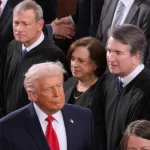
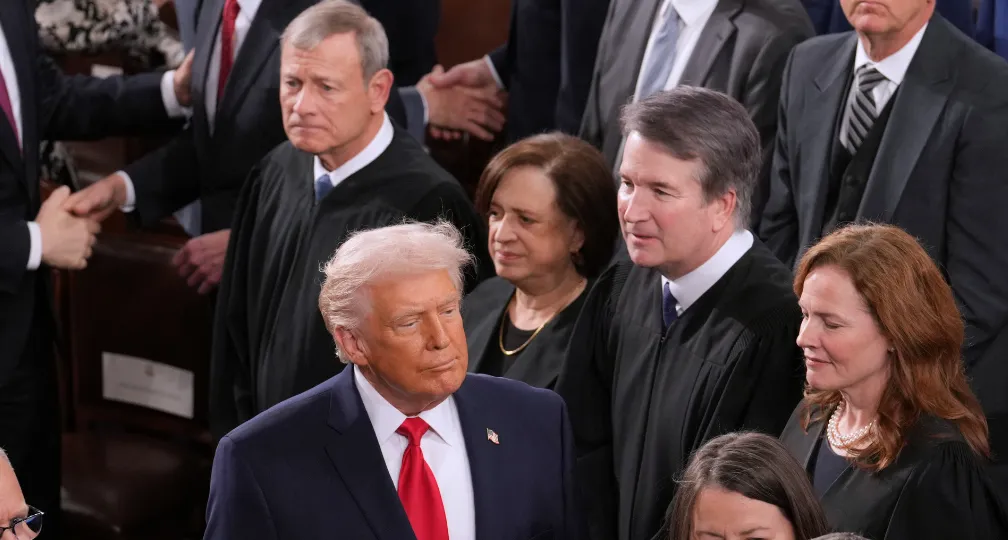
Almost a year of legal uncertainty ended on February 20 when the U.S. Supreme Court ruled in a 6-3 decision that Donald Trump cannot impose tariffs under the International Economic Emergency Powers Act (IEEPA). Republican-appointed justices John Roberts, Neil Gorsuch, and Amy Coney Barrett joined the Court’s three Democrat-appointed justices in ruling against the tariffs, and the three remaining Republican-appointed justices Samuel Alito, Brett Kavanaugh, and Clarence Thomas dissented. The decision was a clear rebuttal of Trump’s expansive claim of executive authority to impose tariffs without the input of Congress. It’s also a clear rebuke of his signature tariff initiative, the “reciprocal” tariffs that he announced on April 2, 2025, so-called “Liberation Day”. IEEPA was also the authority under which he had tariffs imposed on Canada, China, and Mexico related to fentanyl trafficking as well as tariffs placed on Brazil and India for different reasons. It’s a consequential decision that should be welcomed as an expression of the constitutional system of checks & balances but only marks a turning point in Trump’s economic statecraft, rather than the end of tariffs.
The first takeaway is that there’s no going back to the way things were before where tariffs levels were low and their use was limited. Tariffs imposed under Section 232 (to address threats to national security) like those on steel & aluminum and automobiles are untouched by the decision and tariffs imposed under Section 301(to respond to unfair trade practices) like those that make up the bulk of U.S. tariffs against China are also unaffected. Trump almost immediately pivoted to his “Plan B” after the decision when he announced a global baseline tariff of 10 percent to be implemented under Section 122 of the Trade Act of 1974 (later raised to 15 percent the following day) which permits him to impose tariffs of up to 15 percent for 150 days to correct balance of payments deficits, putting these tariffs into effect until July 23. Any extension beyond that time period would require an affirmative vote by Congress, but it may be enough time to open up a procedural window to advance the process on tariffs under Section 301 or Section 232 which require investigations, reports, and public comment periods. Most goods that had been exempt from IEEPA tariffs, such as goods covered by the U.S.-Mexico-Canada Agreement (USMCA) will continue to be exempt from Section 122 tariffs. While Section 122 tariffs may face their own legal challenges, those challenges will almost certainly not work their way through the system and up to the Supreme Court by the time the 150 day window expires. The “de minimis” rule, which would exempt parcels under $800 from tariffs remains suspended following a February 20 executive order and these packages will be tariffed at the 15 percent rate.
The legal fate of the various agreements reached in response to IEEPA tariffs is unclear – while the Trump administration issued an executive order on February 20 withdrawing the IEEPA tariffs, the executive order establishing the national emergencies under which IEEPA tariffs were imposed remains in force. An analysis by Mona Paulsen of the London School of Economics suggests that this may mean the deals themselves may remain in force as long as the national emergency itself is in force. These agreements, like Japan’s, saw negotiations over reciprocal tariffs used to address sectoral tariffs, such as securing a reduction on auto tariffs imposed under Section 232 in Japan’s case. Given that Japan’s auto sector employs 8.3 percent of Japan’s workforce and constitutes 21.5 percent of its total exports, reopening the agreements on the basis that the reciprocal tariffs are void risks snapping the original auto tariffs back into place, even at a higher level (neither of the executive orders implementing the agreements with Japan were mentioned in the executive order withdrawing the IEEPA tariffs). Some countries that have been more willing to confront Trump, like Brazil, Canada, or France may be willing to try their hand at renegotiation having already accepted a degree of risk in their relationship with the United States or understanding that domestic politics in their countries will be more favorable. For countries that have been more conciliatory, like Japan or South Korea, it may be safer to live with the agreements as they are while waiting to see which countries take the first plunge at renegotiation and see how it goes.
While the Supreme Court’s decision effectively invites Congress back into the process of tariffs, it’s politically risky for members to put their votes on record in a midterm election year. There was already a possible crack in the dam which six Republicans broke with Trump to vote in favor of withdrawing the IEEPA tariffs against Canada, and getting members in close races to affirm support for tariffs is a difficult ask when inflation is still a key concern among voters. While there might be some slack for members who wish to support tariffs given their economic impact has been more muted than expected and the not-bad-not-great state of the economy in general, it’s still risky there’s an economic downturn or the tide turns against Trump more generally.
The Court’s decision did not address the issue of tariff refunds apart from Justice Brett Kavanugh writing that the process could be “mess” and the details will be left to lower courts. A process already exists for securing refunds from tariffs, though the system has never had to process refunds of this scale, estimated to be roughly $170 billion, or roughly half of the revenue generated by tariffs to this point. In December, the Court of International Trade (CIT) affirmed that importers would be in line for refunds if the Supreme Court struck down the IEEPA tariffs and the Department of Justice said that it wouldn’t oppose issuing refunds and recalculating tariff amounts. In practical terms, the DOJ’s position on refunds and the CIT’s decision to hold them to that mean there are two practical options for refund payments: Customs & Border Protection (CBP) sets up an administrative process to refund the IEEPA tariffs paid, or importers will have to sue to collect their refunds. Firms interested in refunds will probably need to self-initiate the process and have full paperwork and documentation ready to demonstrate their case, ensure that the contractual obligations of the importer and supplier are clear as to who has paid the tariffs, and also recognize that the process will take months, if not years.
There are a few possibilities for how Trump could rebuild his tariff infrastructure. While there’s no other existing authority that allows Trump to set tariffs at any level on any entity whenever he wants and for whatever reason as he did with IEEPA, there are still authorities to impose tariffs. The Office of the U.S. Trade Representative’s website has already announced the initiation of several new Section 301 investigations, signaling that this authority will be central in rebuilding tariffs going forward. Section 301 is analogous to IEEPA in the sense that it can be used to respond to apparently unfair trade practices but is procedurally more complicated and requires more staff work to compile the reports necessary to impose tariffs. Section 232, which may be imposed in response to national security threats arising from trade, is a tool that successive U.S. administrations have turned to, including Trump’s second administration. The Trump administration may choose to impose further Section 232 tariffs on products “downstream”, or derivative products that are further along the supply chain, of goods that are already subject to Section 232 tariffs. Either of these authorities could be used as a means to encourage reindustrialization and reorder investment flows by placing barriers on the U.S. market as well as raise revenues. As IOG’s Andrew Capistrano noted in the last Economic Intelligence Report, greater coordination between the Federal Reserve and Treasury Department to address structural imbalances in the U.S. economy will increasingly become a feature of U.S. economic statecraft, and tariffs should be considered in this context as well, regardless of what authority is used to impose them.
A question that might be more ominous for America’s foreign partners is where Trump might turn now when he decides it’s time to build leverage or punish adversaries. This might be the greatest question going forward. IEEPA tariffs were used to leverage investment agreements with foreign governments to solid effect, but that tool is now gone. The fact that future tariffs will be on more solid legal ground will make future threats more credible, but all lack the immediacy of raising tariffs through executive order as Trump thought he could through IEEPA and it’s harder to manipulate leverage when building leverage requires a report and a public comment period. Though Trump never had the authority to make the various tariff threats he would issue over social media, the threats still had the effect of raising the stakes and focusing minds just in case he eventually decided to follow through. Access to the dollar might be one way to manipulate leverage, capital controls may be in play, and he already pointed to the possibility of embargoes as a tool at his disposal. Negotiating leverage may now shift from negotiations with U.S. partners to negotiations with firms seeking exemptions from tariffs. Leverage is central to Trump’s bargaining strategy, and it’s an open question how he’ll build that leverage going forward.
There is no doubt that tariffs are here to stay. But the Supreme Court’s decision meaningfully changes the direction of Trump’s tariff policies in ways that will change the nature of how governments and firms deal with the Trump administration. What exactly that will look like is an uncertain, leaving the world with a new set of uncertainties to grapple with.
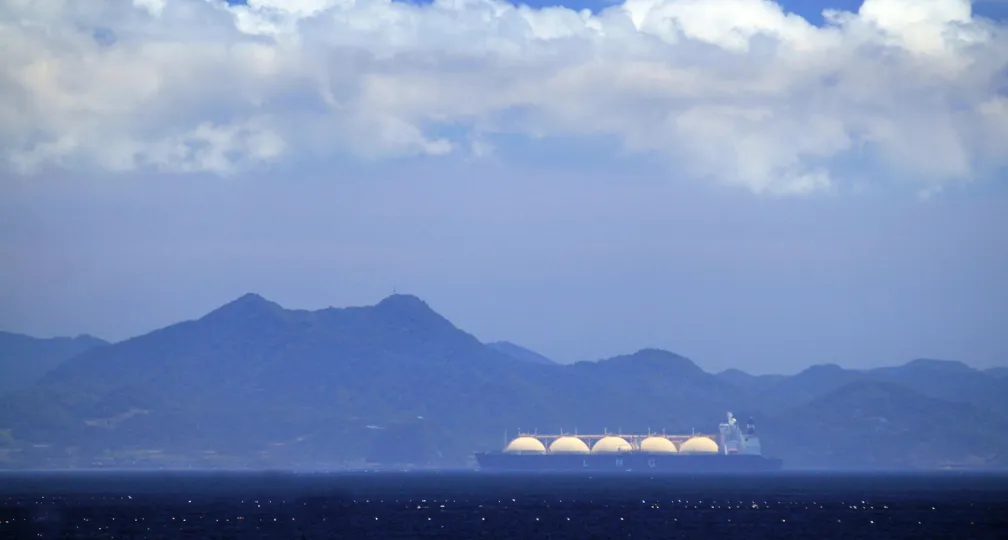
(Photo Credit: Aflo)
Disclaimer: The views expressed in this IOG Economic Intelligence Report do not necessarily reflect those of the API, the Institute of Geoeconomics (IOG) or any other organizations to which the author belongs.
API/IOG English Newsletter
Edited by Paul Nadeau, the newsletter will monthly keep up to date on geoeconomic agenda, IOG Intelligence report, geoeconomics briefings, IOG geoeconomic insights, new publications, events, research activities, media coverage, and more.

Visiting Research Fellow
Paul Nadeau is an adjunct assistant professor at Temple University's Japan campus, co-founder & editor of Tokyo Review, and an adjunct fellow with the Scholl Chair in International Business at the Center for Strategic and International Studies (CSIS). He was previously a private secretary with the Japanese Diet and as a member of the foreign affairs and trade staff of Senator Olympia Snowe. He holds a B.A. from the George Washington University, an M.A. in law and diplomacy from the Fletcher School at Tufts University, and a PhD from the University of Tokyo's Graduate School of Public Policy. His research focuses on the intersection of domestic and international politics, with specific focuses on political partisanship and international trade policy. His commentary has appeared on BBC News, New York Times, Nikkei Asian Review, Japan Times, and more.
View Profile


 Orbán in the Public Eye: Anti-Ukraine Argument for Delegitimising Brussels2026.02.04
- Fed-Treasury Coordination as Economic Security Policy2026.02.13
- The Supreme Court Strikes Down the IEEPA Tariffs: What Happened and What Comes Next?2026.02.27
- Is the Iran Operation Really About China?2026.03.12
- India's Rising Gravitational Pull2026.03.06