
India’s Rising Gravitational Pull
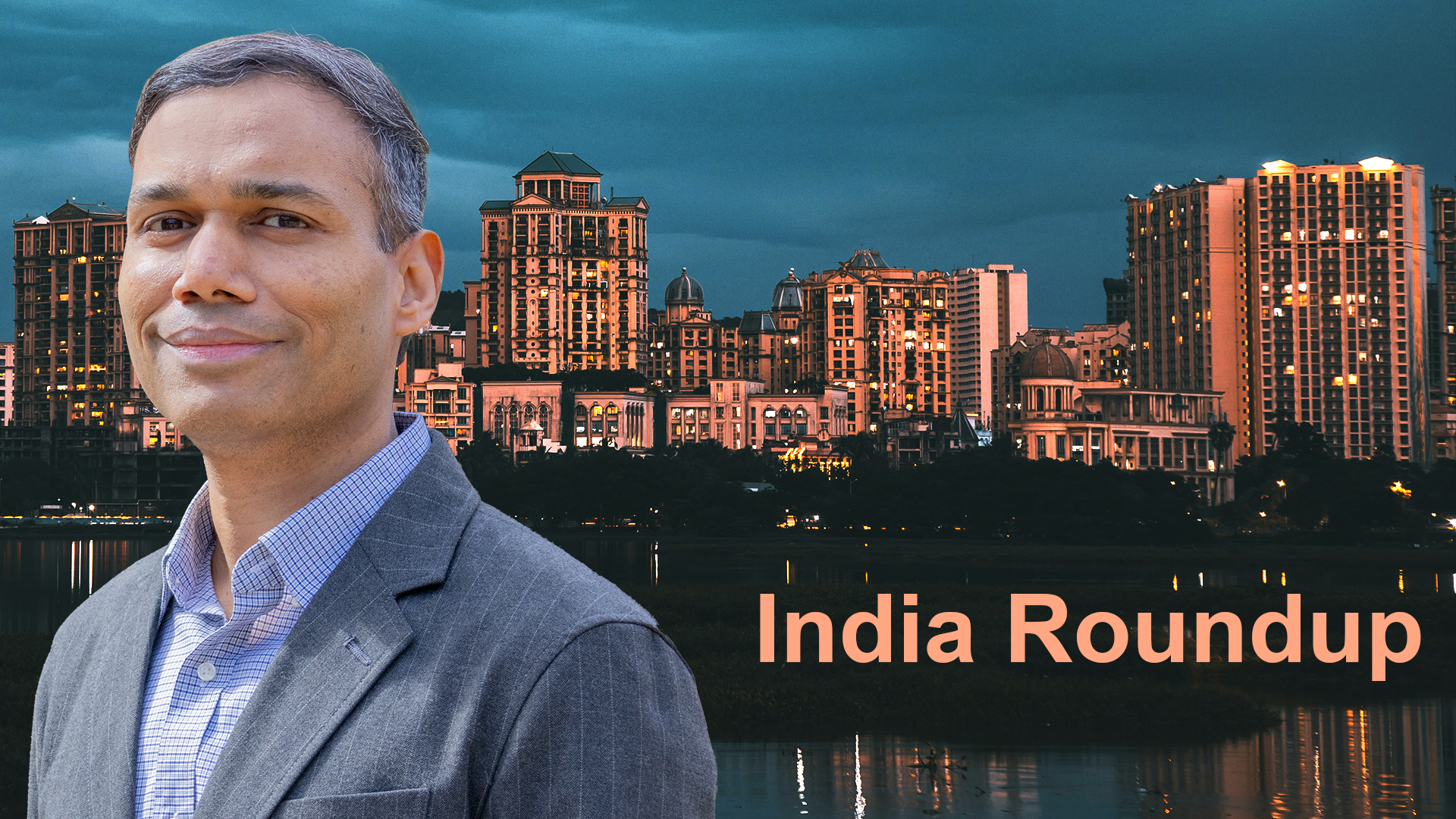
As trust erodes in old certainties of unfettered globalisation, stable U.S. trade policy, China-centric supply chains, India offers something increasingly rare: scale, democracy, strategic autonomy, and optionality.
Since early 2026, India has emerged as a geoeconomic focal point for advanced economies, emerging powers, technology partners, and energy suppliers alike. A remarkable concentration of high-level diplomatic engagements — from Europe, the Americas, the Middle East, and Asia — has signalled the world’s strategic recalibration toward India. At the same time, India’s evolving policy positions illustrate a nation asserting strategic autonomy, particularly in trade, technology governance, and regulatory frameworks. The net effect is a fundamental shift in global calculations: India’s economy, market scale, rule-making aspirations, and geoeconomic agency are now compelling partners to revise strategies long anchored in U.S.- or China-centric world orders.
1. High-Profile Visits and India’s Multipolar Appeal
A. Europe’s Strategic Pivot
The invitation extended to European Commission President Ursula von der Leyen and European Council President António Costa as Chief Guests at India’s 77th Republic Day sent a powerful diplomatic signal. Republic Day chief guest invitations are among India’s most carefully curated gestures, reserved for partners of exceptional strategic significance.
By pairing their visit with the India–EU Summit, Europe effectively acknowledged India as a systemic partner — a recalibration driven by active de-risking from China and deepening uncertainty over the durability of U.S. commitments. For India, the optics reinforced its role as a long-term pillar of European economic and strategic diversification.
Europe’s two most influential national leaders quickly followed.
German Chancellor Friedrich Merz chose India for his first official visit to Asia, signaling Berlin’s intent to embed India within German supply-chain, green-transition, and advanced-manufacturing strategies. Germany’s focus on skills, standards, and industrial ecosystems aligns closely with India’s own ambition to move from scale to sophistication.
French President Emmanuel Macron visited in mid-February, opening the India AI Impact Summit and underscoring France’s view of India as a partner in strategic technologies, defence co-production, nuclear energy, and space. France’s model of deep technology sharing — rather than arms-length trade — reflects a genuine trust in India’s long-term trajectory.
Taken together with leadership visits from Spain, Italy, and Poland, these engagements illustrate a broader European calculation that now positions India as a core strategic anchor.
B. The Americas and the Global South
Canadian Prime Minister Mark Carney’s late-February visit marked a pragmatic reset in India-Canada relations, following a prolonged period of political strain. The emphasis on trade, clean energy, critical minerals, and education signaled a recognition on both sides that economic alignment must be insulated from political volatility. For Canada, India offers scale and diversification; for India, Canada offers resources, capital, and technology. The two sides agreed to fast-track a trade deal by year-end.
Brazilian President Luiz Inácio Lula da Silva’s state visit reinforced the bilateral axis in a Global South context. A critical minerals and mining pact was signed, and both governments agreed to explore conducting bilateral trade in their own currencies.
C. Japan and Strategic Continuity
Japan’s engagement was sustained through the visit of Deputy Foreign Minister Iwao Horii. While lower in headline visibility, such engagements are critical for maintaining the policy scaffolding of the India–Japan partnership — particularly in technology, standards, and economic security.
D. Regional Partnerships
UAE President Sheikh Mohamed bin Zayed Al Nahyan’s January visit reaffirmed the deepening India-Gulf economic corridor, spanning energy, logistics, finance, and food security.
Visits from the leaders of Seychelles, Bhutan, Sri Lanka, and Guyana underline India’s continued focus on its immediate neighbourhood and the Indian Ocean — regions where economic development, technology transfer, and security are increasingly intertwined.
Collectively, these engagements reflect India’s intent to function as a multilateral hub, engaging partners across diverse and simultaneous strategic fronts.
2. Modi’s Visit to Israel
Prime Minister Narendra Modi’s visit to Israel was among the most consequential diplomatic developments of early 2026, both for its symbolism and its substantive advances in technology and security cooperation.
Key Take-Away
DEEP TECHNOLOGY COOPERATION
India and Israel agreed to broaden collaboration in cybersecurity, artificial intelligence, defence systems, and space technologies — domains critical to both national security and economic competitiveness.
INNOVATION ECOSYSTEM LINKAGES
Israel’s expertise in start-ups, venture capital, and high-intensity research complements India’s expanding digital economy and human capital base, laying the groundwork for joint innovation corridors.
STRATEGIC SIGNALLING
The visit reinforced India’s intent to engage partners across security spectra, not merely through economic or trade alignments. It also signalled to other countries that India’s foreign policy choices are driven by technology and national interest rather than ideological alignment.
3. Cancellation of Trade Talks with the U.S.
In February 2026, New Delhi abruptly cancelled a planned visit by its trade negotiating team to Washington, D.C. The delegation had been expected to finalise an interim trade agreement that would roll back punitive U.S. tariffs imposed since 2025 and codify reduced duties agreed in principle earlier.
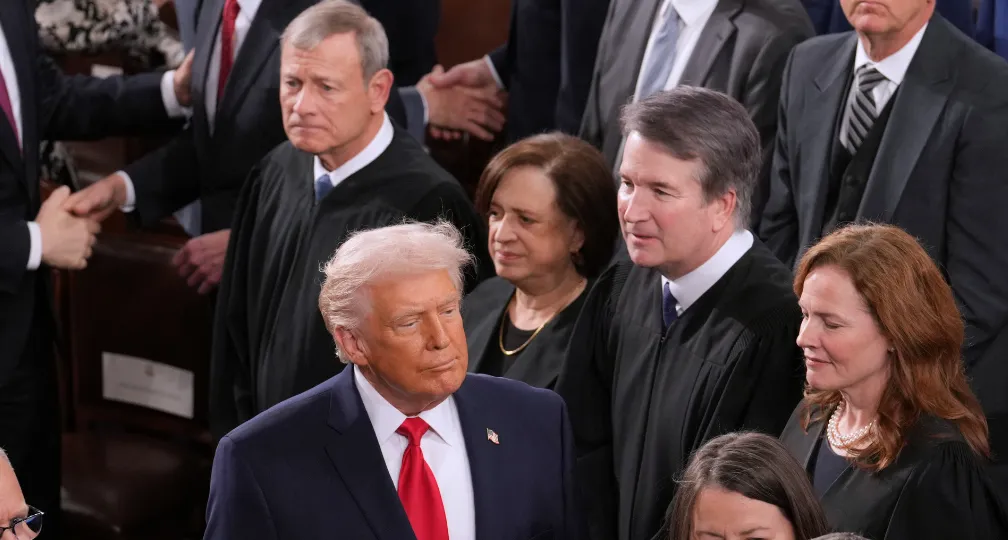
The cancellation was catalysed by a U.S. Supreme Court ruling on 20 February that struck down wide-ranging tariffs previously imposed under emergency powers, followed by the imposition of a new global tariff regime. This policy turbulence rendered the foundations of the prospective interim deal uncertain, prompting New Delhi to postpone engagement until greater legal clarity and stability in U.S. trade policy could be established.
India’s Commerce Minister has since described the situation as “evolving” and in a “wait-and-watch mode,” emphasising that the joint understanding with the U.S. contains provisions to “rebalance” terms should circumstances change.
4. India–AI Impact Summit
The AI Summit (16–20 February) crystallised India’s ambition to become a global norm-setter. By convening leadership from more than a hundred countries alongside the heads of several major technology companies (Google, OpenAI, Anthropic, and Microsoft), India positioned itself as a bridge between the United States’ innovation-first model and Europe’s regulation-first approach.
India has signalled that it intends to shape AI governance in ways that balance innovation, democratic accountability, and inclusive participation — a framework that may prove compelling to economies underserved by either of the dominant models.
5. Four Structural Themes
Across these events, four structural themes emerge that together define India’s evolving geoeconomic posture.
A STRATEGIC AUTONOMY
India is engaging widely without tying itself exclusively to any single alliance or power bloc.
B TECHNOLOGY AS ANCHOR
India is vying to be a rule-shaper in technology governance (AI) and a co-producer in strategic technologies (defence, space, cybersecurity).
C ECONOMIC DIVERSIFICATION
By strengthening trade and investment links with multiple blocs simultaneously, India reduces its vulnerability to procurement shocks, policy shifts, and geopolitical disruption.
D MULTI-VECTOR MARKET PULL
The clustering of high-level visits reflects demand-side interest from advanced markets, emerging economies, and resource-rich nations alike.
Final Word
India is shaping a multidimensional geoeconomic footprint. As trust erodes in old certainties (such as unfettered globalisation, stable U.S. trade policy, China-centric supply chains), India offers scale, democracy, strategic autonomy, and optionality.
For multinational corporations, this means India is far more than a growth market. It is fast becoming a strategic platform where trade, technology, regulation, and geopolitics increasingly intersect.
API/IOG English Newsletter
Edited by Paul Nadeau, the newsletter will monthly keep up to date on geoeconomic agenda, IOG Intelligence report, geoeconomics briefings, IOG geoeconomic insights, India Roundoup, new publications, events, research activities, media coverage, and more.
Visiting Research Fellow
Manish Sharma is an ex-investment banker, with over two decades of experience spanning academia, consulting, think tank and corporate finance. His academic journey includes research and teaching positions at renowned institutions including Jawaharlal Nehru University, University of Tokyo, London School of Economics, and Doshisha Business School. Currently, he is an associate professor of economics, at Hosei University in Tokyo. Until 2012, Dr. Sharma served as Director (M&A) in the Corporate Finance Department at Daiwa Capital Markets' Tokyo headquarters, providing strategic financial guidance to major corporations. He subsequently transitioned to full-time academia, bringing his extensive practical knowledge to universities across Asia. His other notable experiences include 13 years of radio newscasting with NHK World, and running an investment advisory. His teaching and research interests cover Indian/ASEAN markets, tech sector, corporate finance, investments, valuation, geoeconomics and day-trading. Dr. Sharma holds a Ph.D. in Financial Economics.
View Profile
 Orbán in the Public Eye: Anti-Ukraine Argument for Delegitimising Brussels2026.02.04
- Is the Iran Operation Really About China?2026.03.12
- The Supreme Court Strikes Down the IEEPA Tariffs: What Happened and What Comes Next?2026.02.27
- India's Rising Gravitational Pull2026.03.06
- Fed-Treasury Coordination as Economic Security Policy2026.02.13