
Don’t Count on U.S. Domestic Politics to Constrain Trump on Iran
The Latest Regulatory Developments on Economic Security & Geoeconomics
By Paul Nadeau, Visiting Research Fellow, Institute of Geoeconomics (IOG)
USTR Announces Section 301 Investigations: On March 11, the Office of the U.S. Trade Representative initiated investigations into possible structural excess capacity and production in manufacturing sectors in a variety of countries under Section 301 of the Trade Act of 1974 which allows the United States to pursue retaliatory tariffs in response to unfair trade practices. The economies currently under investigation are China, the European Union, Singapore, Switzerland, Norway, Indonesia, Malaysia, Cambodia, Thailand, Korea, Vietnam, Taiwan, Bangladesh, Mexico, Japan, and India. A comment period is open until April 15 and the Office of USTR will hold a hearing in connection with these investigations starting on May 5
In a separate announcement on March, the Office of USTR announced it had initiated investigations under Section 301 in acts, policies, and practices of 60 countries including Canada, China, the European Union, Japan, and Mexico, related to “the failure to impose and effectively enforce a prohibition on the importation of goods produced with forced labor.” The Office of USTR will hold a hearing on this investigation from April 28 to May 1 and a public comment period is open until April 15.
OFAC Issues New DPRK Sanctions: On March 12, the U.S. Treasury Department’s Office of Foreign Assets Control (OFAC) designated six individuals and two entities for their roles in North Korea’s government-orchestrated information technology worker schemes that defraud U.S. businesses and generate revenue to fund North Korea’s WMD programs.
U.S. State Department Sanctions Sudanese Muslim Brotherhood: On March 16, the U.S. Department of State designated the Sudanese Muslim Brotherhood as a Specially Designated Global Terrorist and said it intends to designate the group as a Foreign Terrorist Organization, effective March 16, 2026, for its role in fueling the conflict in Sudan.
EU Expands IRGC Sanctions: On March 16, the European Council imposed restrictive measures on 16 persons and three entities responsible for serious human rights violations in Iran, targeting a variety of individuals and entities, particularly local branches of the Islamic Revolutionary Guard Corps (IRGC) and their commanders, that played a key role in the suppression of street protests in January 2026.
EU Sanctions Actors Connected to Cyberattacks: On March 16, the European Council designated one Iranian company, two Chinese companies, and two Chinese individuals responsible for cyberattacks carried out against EU member states and EU partners, as well as restrictive measures against four individuals responsible for Russia’s continued hybrid activities, including foreign information manipulation and interference against the EU and its member states and partners. It also sanctioned nine individuals who played a major role in the Ukraine War’s Bucha massacre of February and March 2022, including the most senior Russian military officer on the ground in Ukraine at the outset of the full-scale invasion.
OFAC Grants Venezuela Oil, Gold Licenses: The U.S. Treasury Department’s Office of Foreign Assets Control (OFAC) issued a series of actions related to Venezuela’s oil industry, including three general licenses authorizing certain activities involving Venezuelan-origin oil or petrochemical products, the supply of certain items and services to Venezuela, and the negotiations of and entry into contingent contracts for certain investment in Venezuela and a general license authorizing certain transactions involving Petróleos de Venezuela. On March 6, the Treasury Department issued a license authorizing certain activities involving Venezuelan-origin gold.
U.S. Grants Sanctions Exemption on Iranian, Russian Oil: On March 20, the U.S. Treasury Department issued a sanctions exemption allowing U.S. citizens to participate in the trade of already-loaded barrels of Iranian oil, similar to the exemption granted to the trade in Russian oil that was issued on March 12.
Analysis: Don’t Count on U.S. Domestic Politics to Constrain Trump on Iran
The Israeli and U.S. attacks on Iran would be a regional a crisis on their own, but the closure of the Strait of Hormuz, through which 20 percent of global energy flows, risks turning the conflict into a global catastrophe – but one that could be mitigated with a quick resolution to the conflict. There are many factors that will determine when the leaders of the conflict decide to end fighting and presumably reopen the Strait, and for Donald Trump and the United States, their urgency to end fighting may depend on Americans’ willingness to absorb the military and economic costs. But global observers may be disappointed if they are hoping that those forces will compel a conclusion – and the release of a critical chokepoint – sooner rather than later.
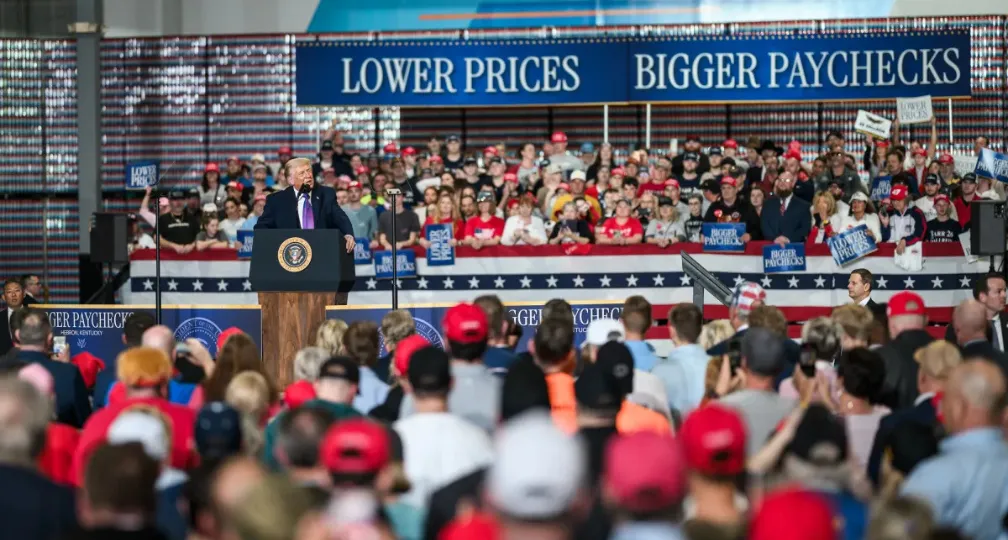
There are good reasons to think that domestic politics will pressure the Trump administration to avoid letting the conflict drag on. The war is already unpopular and causing rifts among Trump’s MAGA movement that wanted to see an end to U.S. involvement in protracted Middle East conflicts. Maybe most of all would be the inflationary impacts of the disruption of trade through the Strait which has created a classic energy shock and the question is how far the shock may reach. Fatih Birol, executive director of the International Energy Agency, provided some context on the scale, reminding that 5 million barrels of oil per day were lost in each of the oil shocks in the 1970s, 75 billion cubic meters of gas was lost after Russia’s invasion of Ukraine, and the current crisis threatens to disrupt 11 million barrels of oil per day and 140 billion cubic meters of gas. Brent crude is already over $100 per barrel and West Texas crude is not far behind. Some have even predicted oil prices rising to $200 per barrel which would be a pitchforks-and-torches moment for American consumers, who get constant reminders of the price of gas every time they drive (the average price for a gallon of gas is up roughly a dollar, or 25 percent compared to before the conflict began). Inflationary pressures are already being felt across agriculture and food which rely on the region for fertilizer, commercial shipping, and more. Central banks are shelving plans to ease policy, a frustrating move after banks and policymakers had started to finally get a hold on inflation and may now have to deal with stagflation.
For someone elected (partly) to address affordability and to avoid conflicts in the Middle East, Trump has undercut both in a single swoop. There have been efforts to address energy and prices, like the move to grant exemptions in the trade of sanctioned oil or releases from strategic reserves. None of the efforts so far have come close to replacing the 20 percent of global supply that pass through the Strait but at least have the dual purpose of alleviating the pressure on global supply and signaling to markets that decision makers are on top of the issue. But that might also prove to be counterproductive if the war drags on – signaling that the Strait will reopen shortly and that prices will return to normal makes political sense in the short term, but reduces the incentive to shift investments to alternative energy sources like shale or solar that would reduce the centrality of this chokepoint in global energy supply.
As if all of that wasn’t enough, it’s a midterm election year where Trump’s Republicans need to defend narrow leads in the House of Representatives and Senate. Polling and seat projections are difficult seven months away for the election, but Democrats have already caused a few upsets in local races, offering a possible signal of how things might go in November. Concerns over affordability has already led to cracks in support for Trump’s tariffs, even among his own party, and were increasingly seen by Americans as a key contributor to rising prices. Last month and shortly before the Supreme Court’s decision to overrule IEEPA tariffs, six Republicans in the House of Representatives joined Democrats in voting to overturn the IEEPA tariffs on Canada. A protracted conflict that contributes to affordability pressures, if not a full blown economic crisis, would only make Republicans’ prospects in the midterms more difficult, to put it gently.
But it still might not be so easy to reach a point where domestic political pressure is the critical factor in whether Trump continues the conflict or not. Yes, the war is unpopular with Americans, but Trump’s approval rating seems stable, hovering around the usual 41 percent and reflecting the low-ceiling-high-floor that characterizes presidential approval ratings over the last decade. That might change as the engagement becomes prolonged or significant U.S. ground forces invade Iran or if the Strait remains closed, but for now, Trump has the domestic political space with his supporters to stay the course for now. Seven months passes slowly in Trump-time, where decades are packed into weeks, and the long period before the election might give markets enough space to readjust into a new statis that might be more expensive than the status quo ante but has learned to price in the risks ins in a way that creates a certain stability and makes inflation less salient than it might be now.
This leaves aside the fact that Congress could block authorization for the conflict under the War Powers Resolution at any point or the fact that Trump could end the conflict with a negotiated settlement that reopens the Strait. None of those seem likely in the short term, and it seems that U.S. domestic politics won’t be constraining for now, either. It should be startling that a crisis that never needed to happen like this has so few countervailing constraints – especially when the global economy is at risk.
(Photo Credit: The White House)
Disclaimer: The views expressed in this IOG Economic Intelligence Report do not necessarily reflect those of the API, the Institute of Geoeconomics (IOG) or any other organizations to which the author belongs.
IOG English Newsletter
Subscribe to the English IOG Newsletter to stay up to date on IOG’s activities across various briefings, op-eds, YouTube videos, podcasts, as well as new publications, events, research activities, and more.
-
 Don’t Count on U.S. Domestic Politics to Constrain Trump on Iran2026.03.27
 - War in the Persian Gulf means volatility in the global energy market2026.03.26
- Is the Iran Operation Really About China?2026.03.12
- China’s long-range DF-27 missiles are a game changer2026.03.09
-
 India's Rising Gravitational Pull2026.03.06

 Orbán in the Public Eye: Anti-Ukraine Argument for Delegitimising Brussels2026.02.04
- Is the Iran Operation Really About China?2026.03.12
- The Supreme Court Strikes Down the IEEPA Tariffs: What Happened and What Comes Next?2026.02.27
- India's Rising Gravitational Pull2026.03.06
- Fed-Treasury Coordination as Economic Security Policy2026.02.13