
Takaichi’s Strengths and the Need for ‘Strategic Signaling’
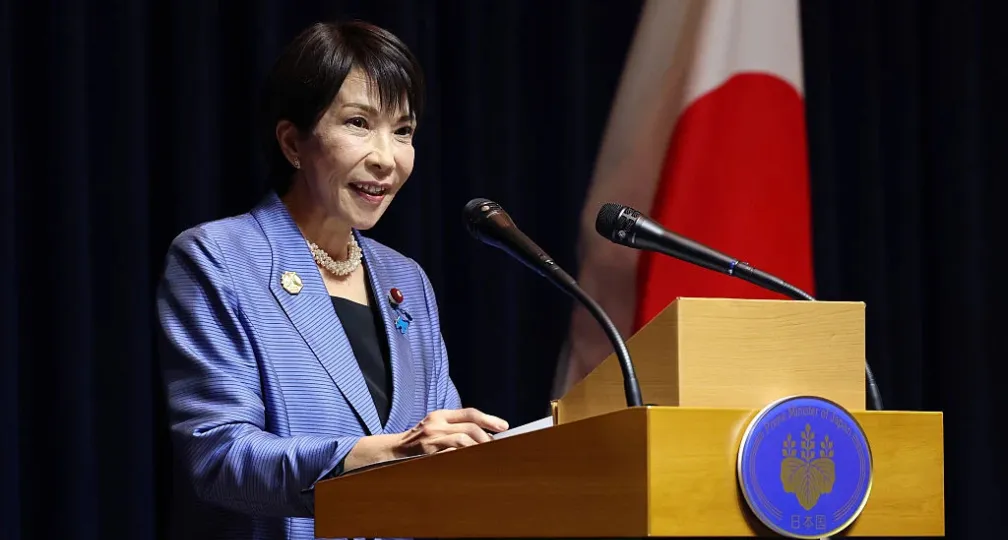
Prime Minister Sanae Takaichi rocketed to a high-velocity start on the diplomatic front when she took office in October......(continues below)
Prime Minister Sanae Takaichi rocketed to a high-velocity start on the diplomatic front when she took office in October. Within weeks, her administration used major multilateral and bilateral platforms — including the East Asia Summit, a Japan-U.S. leaders’ meeting and APEC — to hold successive summit-level talks with South Korea and China.
This rapid sequence of diplomacy projected continuity and predictability in Japanese foreign policy and helped underpin strong domestic approval ratings. By swiftly reestablishing direct channels with key international actors, the new administration signaled that Japan would remain an active and reliable diplomatic presence despite growing global instability.
At the same time, the Takaichi government experienced a major transformation in domestic politics that would significantly reshape its security agenda. The dissolution of the longstanding LDP-Komeito coalition initially raised concerns about political instability.
Yet the subsequent formation of a coalition with the Japan Innovation Party (JIP) generated a markedly different dynamic. Eager to demonstrate its relevance as a governing partner, the JIP strongly favored advancing security reforms, aligning closely with Takaichi’s strategic outlook. As a result, domestic political incentives became a driving force accelerating Japan’s security policy.
This shift was reflected clearly in the LDP-JIP policy agreement. Measures that had previously faced resistance were now placed on the agenda, including accelerated revisions to the three core national security documents, the removal of the five-category restriction on defense equipment transfers, the promotion of next-generation submarine capabilities, and intelligence reform. Coalition restructuring went beyond parliamentary arithmetic, reorienting Japan’s security policymaking away from cautious consensus-building toward forward momentum.
However, this acceleration in security policy, combined with the new coalition structure, also made Japan’s diplomacy more prone to friction — particularly in relations with China. Tensions escalated after Takaichi stated that a national “survival-threatening situation” could, in principle, apply to Taiwan. China’s response hardened sharply and more forcefully than the Prime Minister’s Office appears to have anticipated, with little sign of short-term de-escalation.
Importantly, the remark did not represent a substantive shift in Japan’s Taiwan policy. Subsequent government actions reaffirmed that Japan’s official position remained unchanged. Nevertheless, the episode narrowed Japan’s diplomatic maneuvering room, constraining options regardless of original intent.
A similar pattern emerged following an off-the-record comment by a senior government official suggesting the possibility of nuclear armament. The remark was not intended to overturn Japan’s longstanding nuclear policy, which remains anchored in the Three Non-Nuclear Principles and extended deterrence under the Japan-U.S. alliance. Yet once the comment entered the public domain, debate over Japan’s nuclear posture spread rapidly, raising questions about the coherence and credibility of Japan’s commitment to nonproliferation.
What unites these episodes is not their substantive content — which may be legitimate subjects of discussion from a security realism perspective — but insufficient attention to how such statements function as diplomatic signals. Diplomacy is not simply about asserting policy rationality; it is about anticipating how others interpret words and how those interpretations shape subsequent behavior.
At its core, the challenge facing Japanese diplomacy under the Takaichi administration lies in strategic signaling: how to communicate intentions and capabilities in an increasingly unstable international environment; how to deter adversaries without foreclosing policy flexibility; and how to secure understanding from like-minded partners. At present, this signaling remains insufficiently refined.
Strategic signaling refers to the deliberate communication of intentions, capabilities, and behavioral boundaries to shape how others perceive and calculate their actions. Deterrence, for example, requires not only capability and resolve, but that both be conveyed in a credible form and incorporated into an adversary’s strategic calculus.
Signaling extends well beyond verbal statements. It is constructed through a combination of laws, strategy documents, alliance practices, force posture, and historical behavior. Strong rhetoric unsupported by institutions lacks credibility, while expanding capabilities accompanied by ambiguous language invites worst-case interpretations. The key is neither strength nor ambiguity per se, but internal consistency between words, capabilities, and actions.
Equally important, strategic signaling is neither a technique of isolated message control nor risk avoidance. It is a comprehensive design, encompassing policy direction, institutional arrangements, capability development, alliance management, sequencing of statements, and even deliberate silence. Especially during periods of change or capability enhancement, decisions about what is said, by whom, and in what order — and what is left unsaid — can decisively shape how signals are received.
The frictions encountered by the Takaichi administration illustrate how diplomatic and security language operates within an interactive process, eliciting reactions that shape subsequent phases of engagement. Strategic signaling is not about eliminating misperception altogether; rather, it is about managing unintended reactions and regaining initiative through calibrated follow-on actions.
From this perspective, the issue is not whether to speak less, but how to structure communication under clear guiding principles. Three operational principles stand out.
First, policymakers must recognize that the meaning of diplomatic and security-related statements depends less on content than on their policy positioning and level of officialness. Diet testimony and remarks by senior officials can be read as indicators of policy change. Establishing internal baselines—defining core positions and acceptable margins of expression, supported by shared talking points—reduces accidental signaling while preserving space for debate.
Second, policy domains should not overlap in the same signaling space. Taiwan-related contingencies fall within deterrence logic, while nuclear policy has long been embedded in normative and institutional frameworks of nonproliferation and arms control. Blurring these domains risks undermining both deterrence credibility and normative trust. This underscores the need for routine coordination between foreign and defense authorities within the National Security Council, even in peacetime.
Third, strategic signaling must account for the entanglement of domestic politics and diplomacy. In the age of social media, separation is unrealistic. The task is to anticipate how domestically oriented remarks may be read externally and to prepare second- and third-order responses in advance. Rather than suppressing communication, governments should manage phases through timely clarification, reframing, and repositioning.
The year 2026 will mark a critical juncture for Japanese diplomacy. Revisions to the national security documents are scheduled, the Free and Open Indo-Pacific concept will reach its 10th anniversary, and two decades will have passed since the reaffirmation of the Japan-China “strategic and mutually beneficial relationship.” These frameworks remain central pillars of Japan’s external strategy. Yet the international environment has changed profoundly, marked by power diffusion, eroding norms, and the weaponization of economic interdependence.
Repeating established concepts in familiar language is no longer sufficient. What is required is a redefinition of these ideas within a new conception of order—and a careful design of how they are communicated.
Here, strategic signaling will be decisive. Strategies and principles matter, but their impact depends on sequencing, messengers, and deliberate silences as much as substance. Leadership in a disorderly world is less about grand visions than about ensuring those visions are understood as credible, disciplined, and actionable.
What is demanded of the Takaichi administration, therefore, is not rhetorical restraint, but the maturation of strategic signaling as a governing craft — one that reconnects ideals with operational reality and conveys Japan’s intentions to the world with neither excess nor deficiency. This will determine whether Japanese diplomacy can retain agency and coherence in an era of deepening uncertainty.
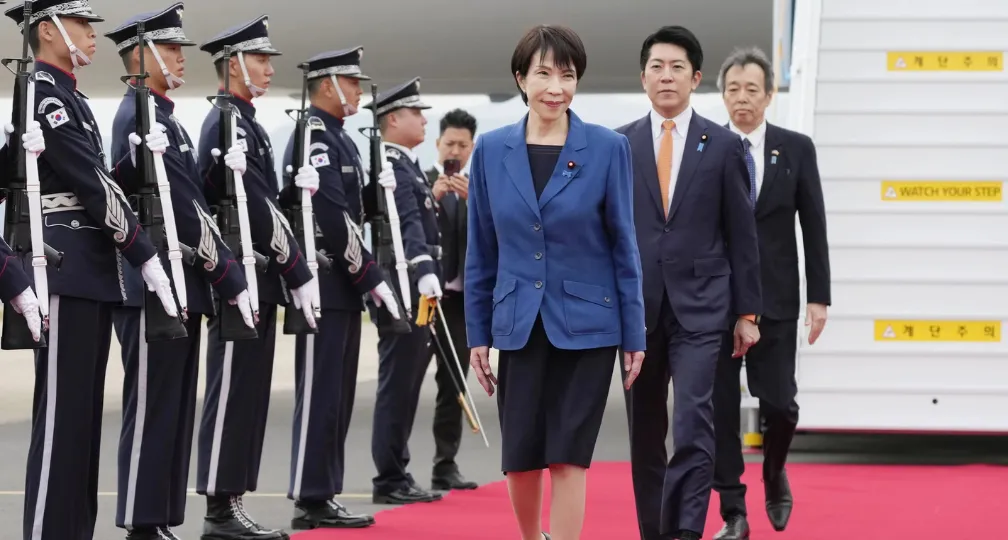
(Photo Credit: Chung Sung-Jun / Getty Images)
[Note] This article was posted to the Japan Times on Jan 22, 2026:

Geoeconomic Briefing
Geoeconomic Briefing is a series featuring researchers at the IOG focused on Japan’s challenges in that field. It also provides analyses of the state of the world and trade risks, as well as technological and industrial structures (Editor-in-chief: Dr. Kazuto Suzuki, Director, Institute of Geoeconomics (IOG); Professor, The University of Tokyo).
Disclaimer: The opinions expressed in this Geoeconomic Briefing do not necessarily reflect those of the International House of Japan, the Institute of Geoeconomics (IOG) or any other organizations to which the author belongs.

Managing Director (Representative Director), International House of Japan,
Director, Research Institute for Advanced Innovation and GeoStrategy (RAIS)
JIMBO Ken is Professor at the Faculty of Policy Management, Keio University. He served as a Special Advisor to the Minister of Defense, Japan Ministry of Defense (2020) and a Senior Advisor, The National Security Secretariat (2018-20). His main research fields are in International Security, Japan-US Security Relations, Japanese Foreign and Defense Policy, Multilateral Security in Asia-Pacific, and Regionalism in East Asia. He has been a policy advisor for various Japanese governmental commissions and research groups including for the National Security Secretariat, the Ministry of Defense and the Ministry of Foreign Affairs. His policy writings have appeared in NBR, The RAND Corporation, Stimson Center, Pacific Forum CSIS, Japan Times, Nikkei, Yomiuri, Asahi and Sankei Shimbun. [Concurrent Position] Professor, Faculty of Policy Management, Keio University
View Profile-
 Can Japan build a defense-startup ecosystem?2026.10.07
 - Economic security in health and medicine through strategic alignment2026.10.06
- National Security and the Stakes of ‘Technology Sovereignty’2026.09.24
- From Racing China to Pacing the AI Frontier2026.09.17
- The Takaichi Administration’s High-Stakes Growth Gamble2026.09.15