
Trump, Takaichi and Japan’s Strategic Crossroads
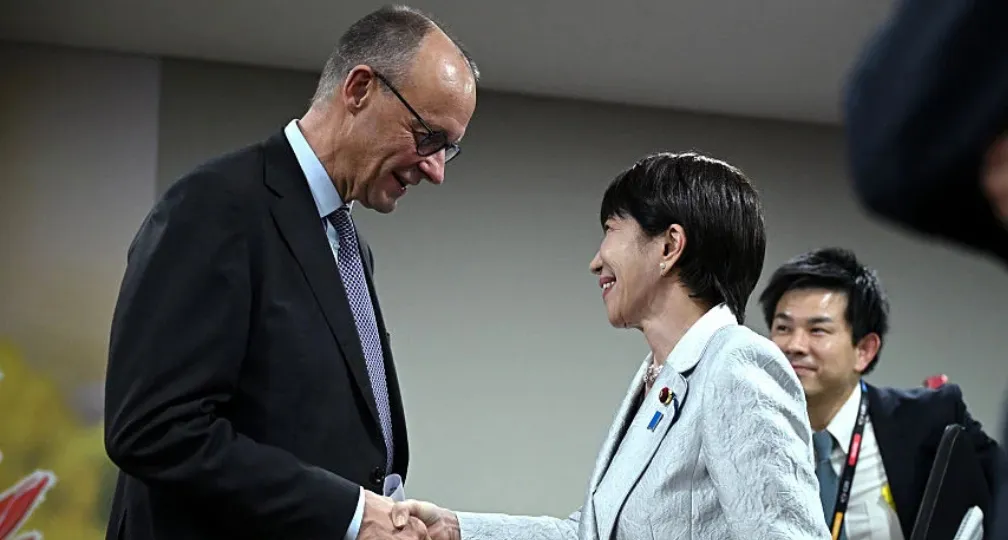
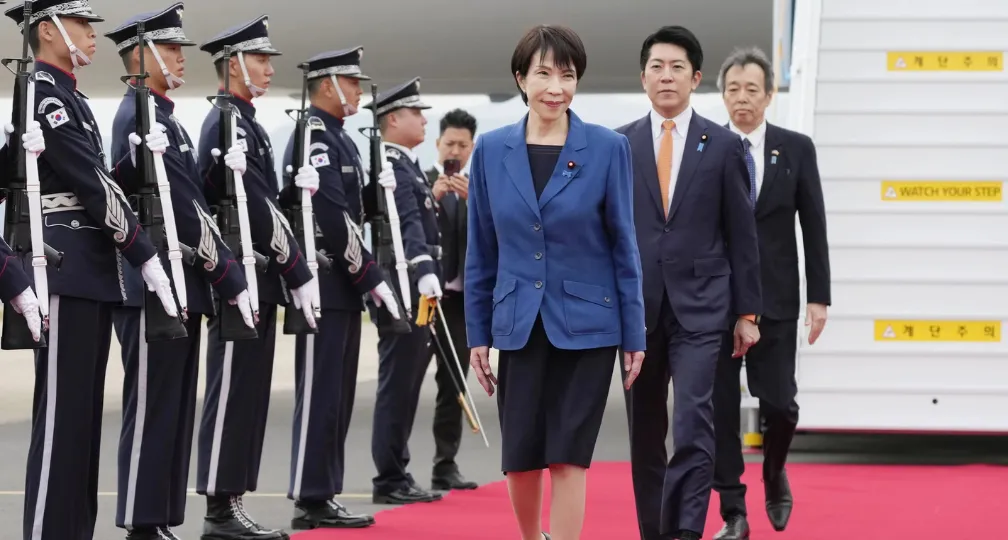
Prime Minister Sanae Takaichi entered office with strong domestic approval, yet her administration’s launch coincided with a moment of widening fracture among key democratic partners.
What distinguishes today from earlier periods is the depth of European disillusionment with the United States — particularly among NATO members — where sentiment has shifted from frustration to what some now describe as outright estrangement. For Japan, whose geoeconomic strategy begins with the U.S.-Japan alliance, the erosion of trilateral coordination among the United States, Europe and Japan places longstanding frameworks such as the Group of Seven at unprecedented crossroads.
Last October, in her first policy speech, Takaichi reaffirmed the centrality of the U.S.-Japan alliance and outlined her domestic growth strategy. She mentioned Donald Trump’s tariffs only twice: once in connection with combating inflation and achieving real wage growth and again in relation to support for small- and medium-sized enterprises affected by rising costs. But although Japan’s national interest begins with the alliance, Tokyo now faces increasing economic burdens imposed by Washington, forcing the government to emphasize domestic compensation measures. Takaichi highlights economic security and crisis-management investment as engines of growth, but the diplomatic environment needed to realize that growth is becoming far more uncertain.
Policy priorities
The foreign-policy passages of a prime minister’s inaugural policy speech often reveal their diplomatic orientation. For instance, in 2013, ahead of Japan’s entry into Trans-Pacific Partnership negotiations, former Prime Minister Shinzo Abe framed participation as a “once-in-a-century” national project and stressed the strategic importance of rulemaking with like-minded democracies. Although his speech at the beginning of his long tenure devoted limited time to foreign affairs, Abe set a clear direction: Japan would pursue a values-based diplomacy with a “bird’s-eye view” global perspective — an approach later embodied in the “Free and Open Indo-Pacific” (FOIP) vision.
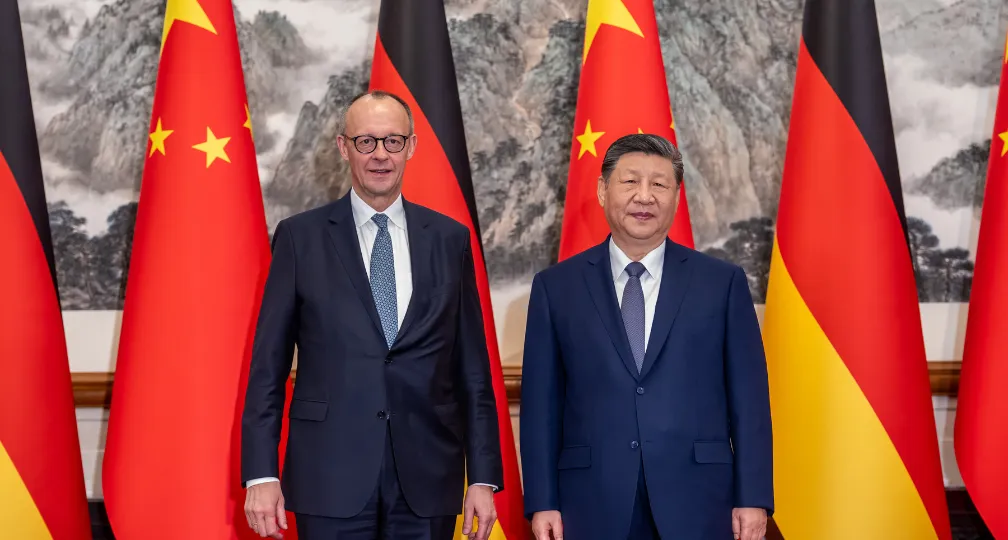
Takaichi, aiming to position herself as the inheritor of Abe’s diplomatic legacy, began with the U.S.-Japan alliance before listing America’s Asia-Pacific allies — South Korea, the Philippines and Australia — and then highlighted “the Quad” and FOIP respectively. She stressed engagement with the Association of Southeast Asian Nations and the Global South and mentioned the Comprehensive and Progressive Agreement for Trans-Pacific Partnership. Yet any mention of the United Kingdom, France, Germany, the European Union and even the G7 framework was conspicuously absent at a time when the Japan-U.S.-Europe trilateral partnership is showing signs of stress. Given Europe’s growing role in economic security and strategic supply-chain policy, this omission was even more notable.
Just over a month later, on Dec. 3, the EU released its new “Joint Communication” on economic security, which strikingly mirrors many of the priorities articulated by the Takaichi government. It elaborated on six policy pillars stemming from the EU’s 2023 economic security strategy: 1) Strengthening supply-chain resilience and counteracting high-risk dependencies in critical goods and services; 2) attracting value-added inbound investment that reinforces the EU’s economic security; 3) supporting a vibrant defense and space industrial base and other high-risk industrial sectors; 4) developing and maintaining leadership across critical technologies; 5) preventing access to sensitive information and data that could undermine the EU’s economic security; 6) preventing and mitigating disruptions to EU critical infrastructure affecting the EU economy.
The most significant elements are a new framework for critical minerals and semiconductors — an EU action plan called RESourceEU — and updated investment-screening guidelines. Drawing inspiration from the Japan Organization for Metals and Energy Security (formerly the Japan Oil, Gas and Metals National Corporation), the EU will establish a European Critical Raw Materials Centre in 2026 to accelerate efforts to reduce dependence on critical minerals from China.
From Japan’s perspective, these policy changes appear familiar. Indeed, European officials openly acknowledge learning from Tokyo’s economic security practice. But what is not written in the document is more consequential: a deep cultural and political shift in Europe’s view of the United States. During my recent research trip to Europe, one message repeatedly surfaced: Europe no longer expects the U.S. to be a future partner, but rather a country it might still make agreements with.
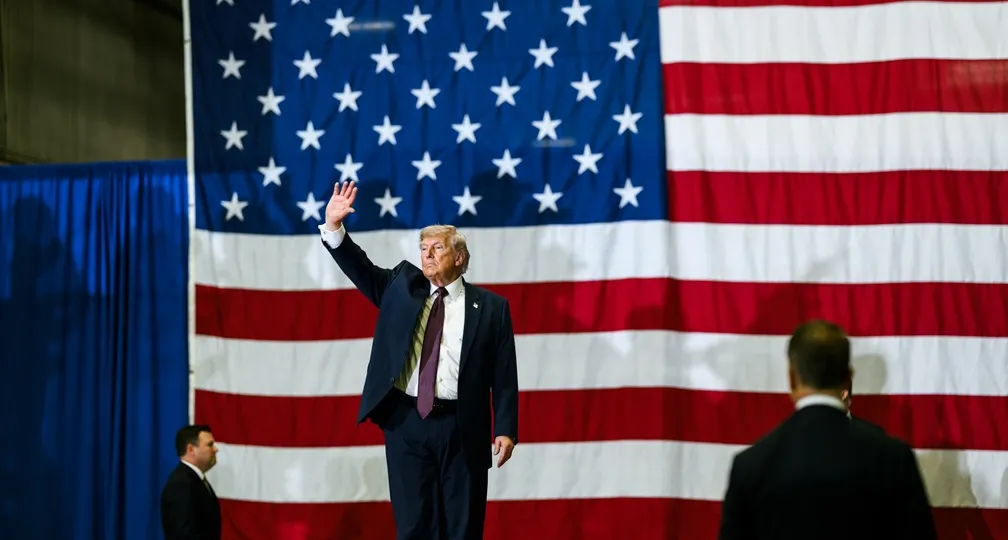
While Trump’s skepticism toward NATO is not new, his administration’s willingness to negotiate a Ukraine ceasefire directly with Russia — sidestepping European interests — has triggered discussions about Europe becoming its own “arsenal of democracy.” Ironically, the term originates in early U.S.-European cooperation of World War II mentioned by Jean Monnet, but is now being invoked to justify a future with diminished U.S. security leadership.
At the same time, European policymakers increasingly frame economic security, particularly reducing dependence on Chinese rare-earth elements, as a core defense issue. But the gaps between policy rhetoric and corporate behavior, such as BASF’s decision to expand investment in China, reinforce the urgency felt across Europe. Some in the EU seemingly hope to use defense-sector logic to discipline private-sector overreliance on China, even if doing so moves the bloc away from its long-standing advocacy of WTO-based multilateralism.
Historic shift
On Dec. 4, just one day after the EU released its Joint Communication, the United States unveiled its 2025 National Security Strategy. Washington now openly prioritizes military repositioning within the Western Hemisphere, criticizes Europe’s regulatory burdens and demands greater regional responsibility from allies such as Japan and South Korea. The document rejects the liberal economic order as misguided and faults allies for offloading the costs of their defense onto the United States.
This rhetoric signals a historic shift: The U.S. no longer aspires to lead the democratic world as the steward of global public goods, but instead presents itself as a “normal state” putting U.S. national interests first.
For more than half a century — since the 1970s oil shocks and the creation of the G7 — the Japan-U.S.-Europe trilateral framework has managed global crises, lowered tariffs under the GATT/WTO system and incorporated security coordination. That foundation is now under strain. The 2026 G7 meeting will be hosted by France in Evian, but the 2027 summit in the United States raises real uncertainty about whether the format will hold.
Many in China increasingly describe the world order as a “Three Kingdoms” structure among the U.S., China and Russia. Yet Chinese analysts acknowledge a more realistic “four-pole” configuration in which the EU remains indispensable — highlighting China’s deep trade dependence on Europe. This dependence, combined with Europe’s accelerated turn toward economic security, is reshaping Beijing’s strategic calculations.
European officials now emphasize the need for trilateral and “G7-plus” coordination on rare earth procurement, alongside stronger regulatory alignment to prevent companies from circumventing expectations involving dependency on China. Japan’s business community traditionally favors voluntary industry-led adjustments rather than heavy regulation, but the EU — comprising 27 member states — sees stricter mandates as necessary to leverage the economic weight of the single market.
Fragmenting order
Japan and the EU are now converging more closely than before in their approach to reducing dependency on China, particularly in rare-earth supply chains — an area where practical cooperation could demonstrate real strategic value. In January 2026, China announced hardened export restrictions on rare earths to Japan. In these domains, even a transactional Trump administration may find alignment with Japan and Europe mutually beneficial.
Rather than insisting on trilateral cooperation where divergence is greatest — such as on tariffs — Japan could lead a new agenda focused on feasible, high-impact issues: avoiding redundant regulations, coordinating procurement in defense-related supply chains and promoting industry-government-academic cooperation across the three regions.
The Takaichi administration thus faces a dual challenge. Domestically, it seeks to advance both growth strategy and economic security. Internationally, it must sustain engagement with both the United States and Europe — two partners moving in increasingly different directions. Navigating this divergence while opening a new chapter for Japan-U.S.-Europe cooperation may define the strategic legacy of the Takaichi prime ministership.
(Photo Credit: Leon Neal / Getty Images)
[Note] This article was posted to the Japan Times on Feb 2, 2026:
https://www.japantimes.co.jp/commentary/2026/02/02/world/japans-strategic-crossroads/

Geoeconomic Briefing
Geoeconomic Briefing is a series featuring researchers at the IOG focused on Japan’s challenges in that field. It also provides analyses of the state of the world and trade risks, as well as technological and industrial structures (Editor-in-chief: Dr. Kazuto Suzuki, Director, Institute of Geoeconomics (IOG); Professor, The University of Tokyo).
Disclaimer: The opinions expressed in this Geoeconomic Briefing do not necessarily reflect those of the International House of Japan, the Institute of Geoeconomics (IOG) or any other organizations to which the author belongs.
Senior Research Fellow,
COO, LLC future mobiliTy research
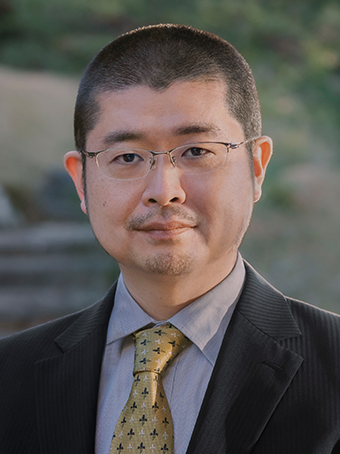
Hitoshi Suzuki (PhD) was Associate Professor at the Graduate School of International Studies and Regional Development, University of Niigata Prefecture, Japan. He received his Ph.D. in History and Civilization from the European University Institute in December 2007 and has focused on Japan’s relations with the EC/EU, as well as Japan’s auto and aero-space industry in Europe. He was visiting fellow at the Monash European and EU Centre, the London School of Economics and Political Science. After serving as Deputy Director at the Economic Partnership Division, Economic Affairs Bureau of the Ministry of Foreign Affairs of Japan, and as a Research Committee Member of the Europe Study Group at the 21st Century Policy Institute of Keidanren (Japan Business Federation), he founded Mirai Mobility Research LLC in 2021. He currently serves as a Visiting Senior Research Fellow at the Makihara Laboratory, Research Center for Advanced Science and Technology (RCAST), the University of Tokyo, and as an Adjunct Lecturer at Ferris University. As of December 2021, he serves as a Visiting Fellow & Staff Director, CPTPP Project, Asia Pacific Initiative. His publications include "Thatcher and Nissan Revisited in the Wake of Brexit" (Palgrave Macmillan), “The New Politics of Trade: EU-Japan” Journal of European Integration 39(7), “Post-Brexit Britain, the EU and Japan” Europe and the World 4(1), and Suzuki et.al. “Japan and the European Union,” Oxford Encyclopedia of European Union Politics.
View Profile-
 Trump Faces a Reckoning in the Midterms, but it Might Not Matter for Tariffs2026.10.09
 -
 BRICS in India2026.10.09
 - Can Japan build a defense-startup ecosystem?2026.10.07
- Economic security in health and medicine through strategic alignment2026.10.06
-
 Inside Japan’s New Growth Strategy: The Economic Security Implications2026.10.01

 From Racing China to Pacing the AI Frontier2026.09.17
- Sizing Up the New Tariff Wall2026.08.28
- Trump Faces a Reckoning in the Midterms, but it Might Not Matter for Tariffs2026.10.09
 India’s Multi-alignment Play2026.09.11
- Orbán in the Public Eye: Anti-Ukraine Argument for Delegitimising Brussels2026.02.04