
U.S. LNG and Japan’s Sea Lanes: Towards Diversification and Stabilization of the Maritime Transportation Routes
By Yuki Goto, Visiting Research Fellow
The second Trump administration has been promoting the export of U.S. energy resources, under the policy of “Energy Dominance.” The 2025 U.S. National Security Strategy (NSS 2025) , published in December 2025, also outlines a policy to leverage the energy sector as one of America’s leading export industries. [1]
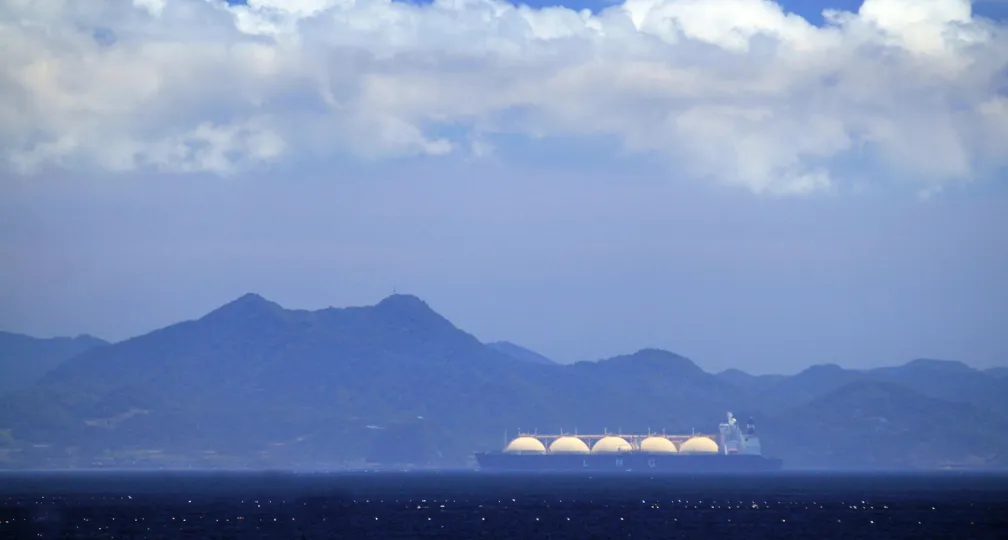
The United States has already emerged as the world’s largest exporter of liquefied natural gas (LNG), surpassing Qatar and Australia in 2023. Furthermore, the export capacity of the U.S. is expected to continue to expand in the future. According to the International Energy Agency’s Gas 2025 medium-term outlook, published in October 2025, the United States and Qatar together account for 70 percent of the new LNG liquefaction capacity that is expected to come online globally by 2030.
For Japan, U.S. LNG has rapidly expanded its presence since the first imports in January 2017, accounting for approximately 9 percent of total LNG imports in fiscal year 2023. While U.S. LNG could be positioned as one of the sources that can diversify supply sources of Japan, from the perspective of risk reduction, it is necessary to focus not only on supplier countries, but also to the maritime transport routes (sea lanes), or sea lines of communication (SLOCs).
What routes are used for the maritime transportation of U.S.-produced LNG to Japan, and what challenges do they face? This article will analyze the current state and challenges of Japan's energy sea lanes, focusing on U.S. LNG.
U.S. LNG Transportation to Japan: Not through the Pacific Ocean
A defining feature of U.S. LNG exports is that most export terminals are located not on the Pacific coast, but along the Gulf of Mexico. Therefore, the options for transportation routes to Japan will be through the Panama Canal, the Suez Canal, the Cape of Good Hope, or the Strait of Magellan.
In terms of transit time, the Panama Canal route is the shortest, at approximately 25 days. Yet in recent years, shipments via the Cape of Good Hope have become increasingly common. According to the Institute of Energy Economics, Japan, although 76 percent of U.S. LNG shipments to Japan transited the Panama Canal between 2017 and 2023, that figure dropped to 22 percent in the first half of 2024. This shift reflects risks and constraints associated with each route.
The Panama Canal faces operational issues as a result of droughts. Due to the elevation difference of approximately 26 meters between the Gulf of Mexico and the Pacific Ocean, the canal draws water from lakes within Panama, such as Gatún Lake. By opening and closing the gates, the Panama Canal regulates the water level for operation [2]. However, since the early 2020s, the canal has been facing operational issues due to the declining water levels of Gatún Lake. The situation worsened in 2023, when low rainfall even during the rainy season led to the restriction of drawing water from the lake, forcing authorities to impose limits to the transit of vessels. While the Panama Canal Authority has explored countermeasures, including damming the Indio River to create new reservoirs and artificial rainfall, implementation remains uncertain.
Meanwhile, the Suez Canal route has been destabilized by security risks in the Red Sea. Since the Israel-Hamas conflict, which began in October 2023, the Houthi forces in Yemen have conducted missile and drone attacks, as well as seizures against commercial vessels that pass the Red Sea. Although some media outlets suggest that the Houthis have indicated that they have halted attacks following a ceasefire, it remains uncertain whether the ceasefire between Israel and Hamas will continue, leaving a persistent risk for the transit of the Suez Canal and Red Sea.
The Strait of Magellan route requires approximately 50 days to reach Japan, which is significantly longer than other routes, such as the Panama Canal, (25 days) the Suez Canal, (42 days), and the Cape of Good Hope, (45 days). Therefore, The Strait of Magellan route is commercially unattractive except in extreme contingency scenarios, such as armed conflicts or maritime disasters.
As a result, a substantial share of U.S. LNG destined for Japan is likely to continue transiting around the Cape of Good Hope. This route passes through areas such as the South China Sea, waters near Taiwan, and the East China Sea[3], in which China is expanding its maritime presence.
The Risk of Overlapped Sea Lanes
The fact that much of the U.S. LNG is imported via maritime routes south of Japan holds significant implications for Japan’s sea lane security: sea lanes for energy resources from different production areas are overlapped.
Routes through the Indian Ocean, the Malacca Strait, the South China Sea, the Bashi Channel between Taiwan and the Philippines, and the East China Sea overlap with Japan’s sea lanes of oil and LNG imports from the Middle East. The Middle East continues to account for a significant share of Japan’s crude oil imports. In fiscal year 2023, crude oil imported from the Middle East accounted for 94.7 percent of Japan’s total oil imports. LNG imports are currently more diversified, with Middle Eastern suppliers accounting for 9.4 percent, but IEA projections suggest the Middle East may regain prominence as a major gas producer between 2035 and 2050.
From a maritime security perspective, this means that the stability of the Indo-Pacific region, especially in the area noted above, critical to Japan’s energy security.
To mitigate maritime transport risks, two strategies are required: the diversification of sea lanes, and strengthening the stability of existing routes.
Diversify Energy Sea Lanes
Among Japan’s energy transport routes, trans-Pacific sea lanes are the routes with the lowest risks of war or conflicts. Therefore, improving passage through the Panama Canal, which is a bottleneck for U.S. LNG shipments to Japan, is an effective approach to diversifying sea lanes.
While the proposal to dam the Indio River within Panama and construct a new reservoir face significant challenges, one realistic area where Japanese could cooperate lies in Panama’s planned liquefied petroleum gas (LPG) pipeline project.
Besides LNG, the United States also exports LPG to Asia. Panama is exploring a project to receive U.S.-produced LPG on the Atlantic side, transport it via pipeline to the Pacific coast, and reload it onto vessels[4].
Although this project does not directly involve LNG, reducing LPG tanker traffic through the Panama Canal would free capacity for LNG carriers. Such a development could benefit Japan, by increasing the number of vessels capable of transiting the canal and crossing the Pacific. Taiwan and South Korea, which are facing common vulnerabilities regarding sea lanes, may also benefit from participation.
Furthermore, if the Alaska LNG project, for which the Trump administration has sought Japanese participation, may have a positive impact for Japan, Taiwan, and South Korea in terms of diversifying energy supply routes if it is realized. It is said that the project may be incorporated into the $550 billion U.S.-Japan investment framework agreed in September 2025[5].
However, the Alaska LNG project faces major uncertainties in total project costs, due to the need to construct a 1,300-kilometer pipeline from northern Alaska to the south and build LNG export facilities. Regarding participation of Japanese companies, each company would likely need to make a decision based on commercial viability, in addition to perspectives of diversifying energy sea lanes.
Stabilize Current Sea Lanes
In addition to diversification, efforts to enhance the stability of current maritime routes, are also essential.
Since World War II, sea lane security in the Indo-Pacific region has been guaranteed by U.S. naval dominance. While this has benefited the U.S. itself through maritime trade, it can also be understood as the provision of an international public good by the hegemonic power. However, the second Trump administration has not prioritized providing international public goods as a hegemonic power, which is bringing uncertainty to the current international order.
In response, two parallel approaches are required. First, Japan should not take U.S. security engagement in the Indo-Pacific region as granted. Tokyo should continuously reaffirm the strategic importance of U.S. security commitments in the region.
Although the second Trump administration defines the U.S.’ vital interests in a narrow way compared to previous administrations[6], it still finds importance in preserving freedom of navigation in the Indo-Pacific region. For example, in the NSS 2025 documents, it is stated that “keeping the Indo-Pacific free and open, preserving freedom of navigation in all crucial sea lanes” is a core foreign policy interest of the U.S.
Based on the “Free and Open Indo-Pacific” vision proposed under the Abe administration, Japan should share values, align understandings, and coordinate closely with the U.S. government.
Second, amid concerns over a decline in U.S. commitments and presence in the Indo-Pacific region, Japan might have to play a more proactive role in securing stability of the sea lanes. To that end, in addition to strengthening Japan’s own defense capabilities, deepening cooperation with like-minded partners such as the Philippines and Australia will be an important factor.
Conclusion
The fact that the majority of U.S. LNG shipments to Japan transit via the Cape of Good Hope implies key takeaways: diversification of supply sources does not automatically reduce risks of sea lanes. Therefore, when evaluating Japan’s energy import sources, it is necessary to examine which sea lanes will be used for transportation. On the other hand, the geographical distribution of energy resources poses constraints on the diversification of routes. In order to ensure stable transportation of energy resources, Japan should consider two perspectives, which are the diversification and stabilization of sea lanes.
Notes
- [1]
This policy stance stands in sharp contrast to the 2022 National Security Strategy (NSS2022) formulated under the Biden administration, which showed recognition that long-term energy security will be achieved primarily through the transition to clean energy. By contrast, NSS2025 states “We reject the disastrous ‘climate change’ and ‘Net Zero’ ideologies that have so greatly harmed Europe, threaten the United States, and subsidize our adversaries,” and outlined the policy to achieve affordable energy supply through the utilization of oil, natural gas, coal, and nuclear power.- [2]
In 2016, the Panama Canal was expanded, enabling the passage of larger vessels known as “Neo-Panamax” ships.- [3]
Under condition that the shortest route via the Cape of Good Hope are taken, which is from the Gulf of Mexico through the Cape of Good Hope and into the Indian Ocean. LNG shipments from the United States traveling along this route benefit from relatively limited threats from both state and non-state actors. In particular, this route avoids the Gulf of Aden off the coast of Somalia, where piracy remains a concern, as well as the Strait of Hormuz, which carries persistent risks of blockades.- [4]
Elida Moreno and Marianna Parraga, “Panama Canal starts process to select firms to build, operate LPG pipeline,” Reuters, September 19, 2025; “Pipeline to be built along Panama Canal to bypass LPG shipments from the U.S. to Asia,”
Nikkei Asia, November 4, 2025.- [5]
“Japan’s ¥80 trillion investment to support U.S. infrastructure,” interview with U.S. Commerce Secretary Howard Lutnick, Nikkei Asia, October 27, 2025.- [6]
Satoshi Mori, “Confronting Trump’s Post-Values Diplomacy,” Diplomacy (Gaikō), Vol. 91, May 2025.
(Photo Credit: AFLO)
Disclaimer: The views expressed in this IOG Commentary do not necessarily reflect those of the API, the Institute of Geoeconomics (IOG) or any other organizations to which the author belongs.
Geoeconomic Briefing
Geoeconomic Briefing is a series featuring researchers at the IOG focused on Japan’s challenges in that field. It also provides analyses of the state of the world and trade risks, as well as technological and industrial structures (Editor-in-chief: Dr. Kazuto Suzuki, Director, Institute of Geoeconomics (IOG); Professor, The University of Tokyo).

Visiting Research Fellow
Yuki Goto is a Visiting Research Fellow at the Institute of Geoeconomics. He has led the intelligence of external affairs at Japan Petroleum Exploration, Co., Ltd. His research focuses on security risks associated with the maritime transportation of energy resources. He holds a Bachelor of Arts in Policy Management from Keio University. He completed the Senior Executives in National and International Security program at Harvard Kennedy School in December 2025. He has held his current position since October 2025.
View Profile-
 Iran: A ‘War of Choice’ No Longer Worth the Cost2026.08.21
 - Why the Strait of Hormuz Is a Warning for Japan2026.08.18
- Tariff Tracker: A Guide to Tariff Authorities and their Uses2026.08.17
- FX Statecraft: Another Explanation for the Yen Intervention2026.08.14
- Why Takaichi Can’t Be the Next Shinzo Abe2026.08.13