
Event Report: The United Nations at a Crossroads: Challenges, Declining Authority, and Future Prospects
The Harsh Realities Facing the United Nations
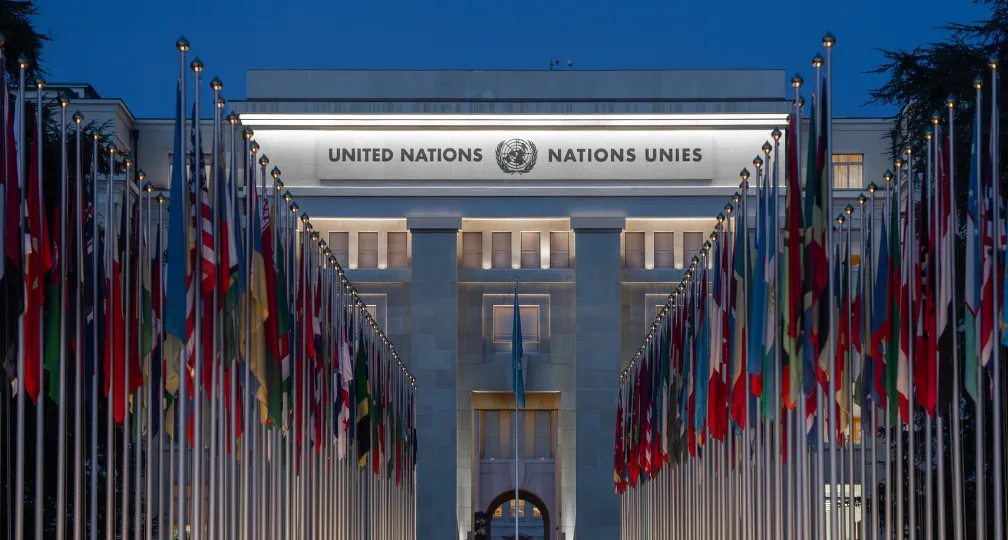
In recent years, concerns about the declining effectiveness of the United Nations (UN) have become increasingly pronounced. During the Russia–Ukraine war and the conflict in Gaza, it was the United States—not the UN—that exercised decisive influence. Despite its foundational mission to maintain international peace and security, the UN has been unable to prevent or halt major conflicts, raising fundamental questions about its relevance.
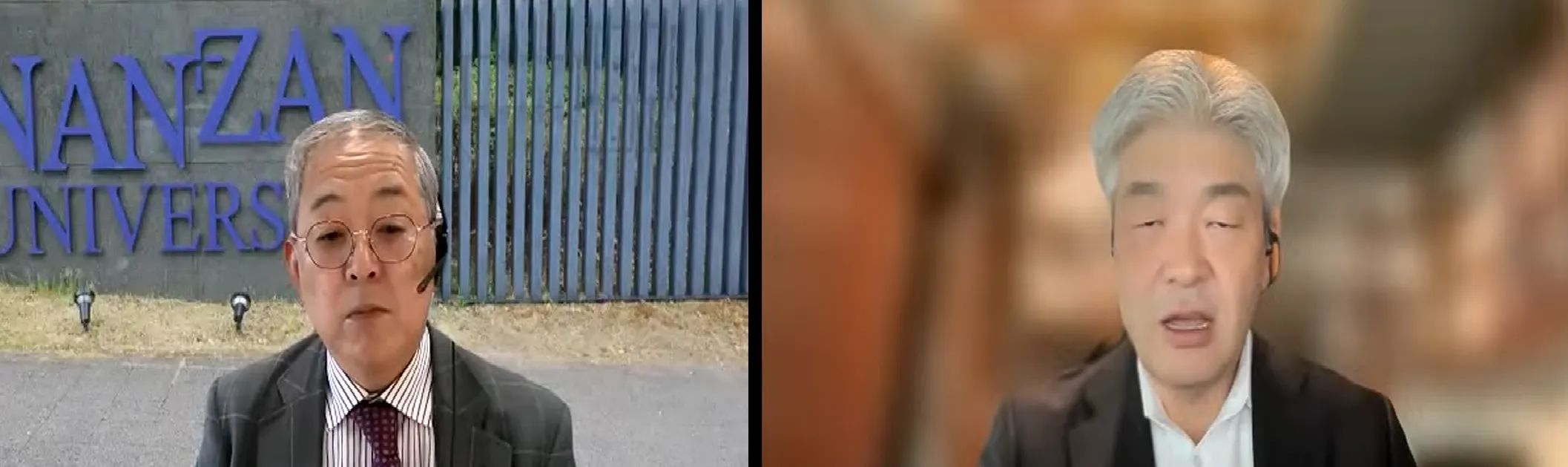
According to Suzuki, historically, the UN has played meaningful roles as a mediator and monitor in various conflicts. Yet its authority, once recognized across the international system, has eroded significantly. This stands in contrast to Japan, where public expectations for the UN remain consistently high—especially significant as the organization marks its 80th anniversary this year.
Beyond peace and security, the UN has also been expected to promote economic development and protect human rights. However, Suzuki argues that confidence in UN specialized agencies has declined, exemplified by widespread criticism of the World Health Organization (WHO) during the COVID-19 pandemic. Financial pressure—including U.S. cuts to assessed contributions—has led to staff reductions and weakened institutional capacity. While the UN once had meaningful influence on transnational issues, it now appears increasingly vulnerable to rising waves of nationalism and “my-country-first” politics.
Peace and Security: The UN’s Foundational Mission Under Strain
A discussion of UN failures must begin with the structure of the Security Council and the meaning of the veto power held by its five permanent members (P5). The veto system traces back to lessons from the League of Nations, where the unanimity rule prevented effective action. It also reflected Western willingness to accommodate Soviet concerns during the founding of the UN. However, Yamada makes the point that, although the veto often leads to paralysis, removing it could create even larger problems—for example, enabling states to authorize the use of force too readily.
Even in the context of UN-led peacekeeping operations (PKO), the threshold for the use of force remains intentionally high, based on the fundamental principle that sovereign states retain final authority over decisions of war and peace. As a result, meaningful action through the UN requires consensus among the P5, a condition rarely met in today’s polarized geopolitical environment.
Some observers view the Secretary-General’s diminishing visibility as evidence of the UN’s declining authority. However, this trend also reflects the overwhelming influence of P5 members such as the United States and Russia, whose rivalry leaves little room for independent leadership at the top.
Why Major Powers Are Failing to Uphold International Peace and Security
Participants noted several reasons why major powers—especially the United States—appear increasingly unwilling or unable to shoulder responsibility for global stability. The U.S. has become fatigued and overstretched, while broader shifts in international order have undermined the foundations of post-Cold War leadership. The Trump administration accelerated these trends by weakening multilateral commitments and questioning alliances.
Despite these setbacks, it was emphasized that sanctions—as instruments of collective security—have played important roles. The Security Council has imposed significant sanctions on states such as North Korea and Iran, the latter showing partial success. The UN still contributes to preventing further escalation—for example, through its role in nuclear nonproliferation efforts.
The Future of the United Nations: Constraints, Opportunities, and Necessary Rethinking
Although criticisms of UN dysfunction are not new, the organization has historically demonstrated creativity—for example, through the development of peacekeeping operations (PKOs). Today, however, such innovation appears to have stalled. In the aftermath of failed state-building efforts in Iraq and Afghanistan, the UN seems increasingly reluctant to assume ambitious roles, instead potentially reverting to more restrained, monitoring-focused missions reminiscent of the 1950s and 1960s, Yamada argues.
A central issue is the need to reconsider the meaning of UN authority—namely, what it means for states to “follow” the UN. While the Security Council is often immobilized, shifting debates to the General Assembly can still produce meaningful, if non-binding, outcomes. For smaller states, Yamada notes, the Assembly provides an important platform, and its resolutions can help shape international public opinion.
Some argued that the narrative of “UN failure” stems partly from excessive expectations. The UN has never been omnipotent, but recent disillusionment reflects a mismatch between what the organization is capable of and what the international community expects of it.
As U.S. influence declines, China is showing greater willingness to lead aspects of global governance, particularly in development issues where it positions itself as a voice for the Global South. Now the second-largest financial contributor to the UN, China increasingly emphasizes budget efficiency and organizational management—priorities historically associated with Western states.
A major topic of discussion was how Japan can enhance its influence within the UN system. It was argued that Japan should make visible the work it already undertakes through the UN, and that such efforts should be pursued strategically to demonstrate sustained commitment to multilateralism.
Another question concerned whether bureaucratic siloing contributes to stagnation within the UN. Yamada acknowledged that the organization’s inefficiency and bureaucratic expansion have long been recognized. Projects proliferate as a result of member states’ political interests, leading to organizational growth without corresponding reform; yet addressing these structural problems remains exceedingly difficult.
Another question concerned whether bureaucratic siloing contributes to UN stagnation. Yamada has acknowledged that the UN’s inefficiency and bureaucratic expansion have long been acknowledged. Projects proliferate as a result of member states’ political interests, leading to organizational growth without corresponding reform—yet addressing these structural problems remains exceedingly difficult.
IOG English Newsletter
Subscribe to the English IOG Newsletter to stay up to date on IOG’s activities across various briefings, op-eds, YouTube videos, podcasts, as well as new publications, events, research activities, and more.
-
 Can Japan build a defense-startup ecosystem?2026.10.07
 - Economic security in health and medicine through strategic alignment2026.10.06
- National Security and the Stakes of ‘Technology Sovereignty’2026.09.24
- From Racing China to Pacing the AI Frontier2026.09.17
- The Takaichi Administration’s High-Stakes Growth Gamble2026.09.15