
USMCA Renewal Is a Pothole, Not a Cliff – Right?
The latest regulatory developments on economic security & geoeconomics
By Paul Nadeau, Visiting Research Fellow, Institute of Geoeconomics (IOG)
Strait of Hormuz Update: Iran and the United States continue to engage in hostilities, disrupting the flow of shipping traffic through the Strait of Hormuz. As of Sunday, July 19, the seven-day moving average of ships passing through the Strait is 12 according to the International Monetary Fund’s Portwatch. The seven-day moving average at this time last year was 113.
United States Sanctions Financier for IRGC: On July 10, the U.S. Treasury Department’s Office of Foreign Assets Control (OFAC) announced that it had designated a Dubai-based Iranian financier, Ali Ansari, and his holding company, the Saint Kitts and Nevis-based Smart Global Limited, as well as three Iranian currency exchange houses and their controlling partners, and two front companies for facilitating financial transactions for Iran’s Supreme Leader’s Office, the IRGC, and U.S.-sanctioned Iranian banks.
UK Sanctions Iran-Linked Group Responsible for Antisemitic Attacks: On July 13, the United Kingdom’s Foreign, Commonwealth, and Development Office announced sanctions on an Iran-linked criminal group, the Islamic Movement of Companions of the Right (IMCR, or HAYI) that publicly claimed responsibility for multiple attacks across the UK targeting Jewish and Israeli communities. On July 17, the UK’s Foreign, Commonwealth, and Development Office formally designated the IMCR, the Islamic Revolutionary Guard Corps (IRGC), and Russia’s GRU Volunteer Corps under the National Security (State Threats) Act 2026, making it a criminal offense to express support for or assist these bodies.
EU, UK Target Russian Cyber Activities: On July 13, the European Union and United Kingdom announced new sanctions on Russian cyber activities. The British government sanctioned 23 individuals and one entity, including senior Russian intelligence officers and malware operators, for orchestrating cyberattacks and disinformation campaigns targeting Europe, while the European Council announced that it had imposed restrictive measures on nine Russian individuals and four entities responsible for carrying out and enabling cyberattacks against the EU, its member states, and international partners.
U.S. Targets Ransomware Actors in Belarus & Ukraine: On July 13, the U.S. Treasury Department’s Office of Foreign Assets Control (OFAC) announced that it had designated two individuals and one entity in Ukraine and Belarus for providing tools and services that enable ransomware actors’ and other cybercriminals’ activities.
EU Sanctions Human Rights Violators in Russia: On July 13, the European Council announced that it had imposed sanctions on four individuals and five entities responsible for serious human rights violations in Russia, notably the repression of civil society and democratic opposition, and for undermining democracy and the rule of law.
U.S. Adds Further Sanctions to Cuba: On July 13, the U.S. Department of State announced that it had designated ten Cuban government entities and state-owned enterprises for their direct roles in carrying out, enabling, and financing the Cuban regime’s activities in Cuba and throughout the Western Hemisphere. On July 23, the State Department designated nine entities and two individuals to continue to limit the Cuban regime’s access to illicit funds, including those gained through the alleged exploitation of medical workers and sanctions evasion efforts.
EU, UK Sanction Gold Funding War in Sudan: On July 13, the European Council introduced new sectoral measures concerning Sudan that restrict trade in Sudanese gold and limit access to chemicals used for gold mining and gold exploitation. On July 16, the United Kingdom’s Foreign, Commonwealth, and Development Office announced similar sanctions targeting 11 individuals and entities suspected of being linked to financing, procurement, and commercial networks fueling the Sudan conflict.
U.S. Sanctions Iranian Illicit Shipping Network: On July 14, the U.S. Treasury Department’s Office of Foreign Assets Control (OFAC) announced that it had sanctioned 54 individuals, entities, and vessels that form part of the illicit shipping and evasion network of a U.S.-sanctioned Iranian oil shipping magnate, Mohammad Hossein Shamkhani.
U.S. Sanctions Individuals for IRGC Procurement Efforts: On July 15, the U.S. Treasury Department’s Office of Foreign Assets Control (OFAC) announced that it had sanctioned seven individuals and entities involved in an international network supporting weapons procurement efforts on behalf of Iran’s Islamic Revolutionary Guard Corps (IRGC).
EU Sanctions Russia’s Drone Makers: On July 17, the European Council sanctioned one individual and five entities in Russia that develop and manufacture electronic and radio-electronic components needed for drone warfare and automated control systems for the Russian energy sector.
U.S. Applies Unprecedented Tariffs on Canada: On July 20, the United States announced that it would impose 50 percent tariffs on Canada under Section 338 of the Tariff Act of 1930, also known as Smoot-Hawley, in response to what it alleges is Canada’s discriminatory treatment of U.S. imports. The tariffed sectors include autos, dairy, alcoholic beverages, and a broader list of items including hockey sticks, cement, plywood, furniture, fishing rods, seeds, clothing, wigs, swimming pools totaling $20 billion or roughly 5.2 percent of the $382 billion in goods the United States imported from Canada in 2025. The tariffs will apply regardless of whether the targeted products are covered under the U.S.-Canada-Mexico Agreement (USMCA, CUSMA in Canada, or the T-MEC or Tratado entre México, Estados Unidos y Canadá in Mexico) but will not apply to goods covered under Section 232 tariffs and certain other goods, such as fish or critical minerals. The tariffs are set to take effect within 30 days of the announcement, or August 19.
U.S. Targets Brazil with Tariffs: On July 22, the United States imposed tariffs of 25 percent on Brazil following an investigation under Section 301 of the Trade Act of 1974 into what it alleged are “Brazil’s acts, policies, and practices to be unreasonable and burden or restrict U.S. commerce” including in digital trade, electronic payment systems, preferential tariffs, ethanol market access, intellectual property violations, and more. The tariffs will apply to imports of furniture, ethanol, machinery, footwear, sugar and other goods.
EU Adopts 21st Sanctions Package against Russia: On July 23, the European Council adopted the 21st package of sanctions against Russia for its invasion of Ukraine. The package imposes sanctions on 218 individuals and entities, the EU’s largest batch of listings in the last four years, extends transaction bans, and introduces for the first time the possibility of a full third-country ban for crypto-asset services, among other measures.
U.S. Sanctions Mexican Cartel Figures: On July 23, the U.S. Treasury Department’s Office of Foreign Assets Control (OFAC) sanctioned over 50 Mexican individuals and entities involved in money laundering, fentanyl and cocaine trafficking, and other criminal activities linked to the Cartel de Jalisco Nueva Generacion (CJNG).
U.S. Sanctions Egyptian Muslim Brotherhood Official: On July 23, the U.S. Treasury Department’s Office of Foreign Assets Control (OFAC) designated a senior Egyptian Muslim Brotherhood official, along with three individuals and three entities that have provided material support to Hamas, including its military wing.
U.S. Announces New Tariff Package:
・On July 24, the United States implemented a new set of tariffs following an investigation under Section 301 of the Trade Act of 1974 by the Office of the U.S. Trade Representative into the burden placed on U.S. commerce resulting from forced labor practices. The new tariffs were announced the day the previous tariffs imposed under Section 122 of the Trade Act of 1974 expired and will cover 59 trading partners and the European Union. The tariff breakdown is as follows:
・Countries that “have made commitments to adopt, and effectively enforce, forced labor import prohibitions” will be subject to a 10 percent flat rate, including Canada, Mexico, the United Kingdom and 17 other countries.
・Countries that “have failed to adopt a forced labor import prohibition” will face a 12.5 percent additional rate, including China, Vietnam, and 38 other countries.
・Countries that committed to a ban on forced labor in an Agreement on Reciprocal Trade (ART) or similar arrangement face a 10 percent rate net of MFN tariffs, including the European Union, Taiwan, and 28 other countries.
・Countries that have not committed to a ban on forced labor in an Agreement on Reciprocal Trade (ART) or similar agreement will face a 12.5 percent rate net of MFN tariffs, which includes Japan, South Korea, and four other countries.
・The new duties apply in addition to existing Section 301 duties on China and Brazil.
・Goods that enter the United States under U.S.-Canada-Mexico Agreement (USMCA, CUSMA in Canada, or the T-MEC or Tratado entre México, Estados Unidos y Canadá in Mexico) and textile and apparel goods imported under the Dominican Republic–Central America–United States Free Trade Agreement (CAFTA-DR) are exempt from the announced tariffs.
・Bangladesh, Cambodia, Indonesia and Malaysia are subject to a three-year tariff rate quota under which a set volume of textiles and apparel enter free of the Section 301 duty.
・USTR added 471 new exemptions under the Harmonized Tariff Schedule (HTSUS) following public comment, covering items including raw materials, supply-chain-critical goods, and products that cannot be domestically sourced in sufficient quantities.
For Japan, the 12.5 percent rate is currently lower than the 15 percent cap for tariffs on Japanese goods which was agreed upon in July 2025 following negotiations with the United States. It is likely that this rate (along with those on other countries) will be raised beyond those announced on July 24 following the conclusion of USTR’s Section 301 investigation into structural excess capacity in manufacturing.
Analysis: USMCA Renewal Is a Pothole, Not a Cliff – Right?
After working together to run a mostly successful World Cup, Canada, Mexico, and the United States now begin the six-year review process on the U.S.-Canada-Mexico Agreement (USMCA, CUSMA in Canada, or the T-MEC or Tratado entre México, Estados Unidos y Canadá in Mexico) after the United States opted not to pursue a clean 16-year renewal of the agreement. Since the agreement states that “the Commission shall meet to conduct a joint review every year” until 2036, it’s an encouraging sign that the Trump administration has made the expiration the beginning of a negotiating process with meetings, timelines for deliverables, and identified issues already set out. NAFTA/USMCA has been one of the most successful economic integration efforts of the last thirty years so it’s hard to imagine that the United States could actually terminate the agreement – but it’s not unthinkable, either, especially if Trump overreaches in the negotiations or misuses his leverage.
Those discussions may be more complicated given Trump’s history of antagonizing Canada, not just through tariffs but maybe even more especially because of his talk of annexing Canada and making it “51st state” or the ways members of his administration have openly supported separatists in Alberta. According to the International Trade Association, Canada was the only country besides China (and European Union) to impose retaliatory tariffs against the United States following the “reciprocal” tariffs imposed on April 2, 2025, a measure that Trump himself retaliated against by imposing 50 percent tariffs even on goods covered by USMCA on July 20. Canada’s broader response to U.S. pressure has been a combination of deepening its domestic market, expanding agreements with new international partners, and trying to position itself as a global hub between Asia, Europe, and the United States. The One Canadian Economy Act, for example, attempts to build Canada’s domestic market by removing barriers to inter-provincial trade, an important step since the International Monetary Fund (IMF) estimates that removing nongeographic barriers to domestic trade could improve GDP per capita by 3.8 percent.
The dilemma, at least for the United States, seems to be between a “Fortress North America” approach where an integrated North American market produces at sufficient scale to compete with China, and the Trump administration’s determination to relocate as many manufacturing jobs as possible to the United States. This is why the discussions on rules of origin will be central, just as they were during the talks that turned NAFTA into USMCA/CUSMA/T-MEC in 2019. The reported U.S. proposal is to secure 50 percent U.S. content in all North American-built cars and trucks by value, bringing the overall total of North American automobile content to 82 percent. The current agreement requires 75 percent regional content to qualify for preferential tariff treatment, which itself was a significant increase from the 62.5 percent requirement under NAFTA. There are also currently no requirement to separate the parts content between Canada and the United States, but one would need to be established to require this distinction under the proposed rules. The United States already has the world’s strictest rules of origin for automobiles, and an analysis by U.S. Federal Reserve Bank has found that compliance costs under the agreement’s existing automotive rules of origin add an additional 2 percent in costs to cross-border trade.
While everyone understands that the future of the North American auto industry is particularly high stakes given the growing flood of electric vehicles from China, pushing rules of origin too far may undermine the entire goal of “Fortress North America”. Tariffs on autos under Section 232 and Section 301 undercut Canadian and Mexican access to the U.S. market, which by extension undercuts an integrated North American supply chain, since vehicles from Japan, South Korea, and United Kingdom are tariffed at 15 percent. As Sam Lowe of the Most Favoured Nation newsletter explains, there may come a point when complying with stricter rules of origin becomes more expensive than paying the tariff. He suggests that to square the circle, the Office of the U.S. Trade Representative would have to tighten the nonpreferential rules of origin from other countries like Japan, South Korea, or the United Kingdom (and others), meaning that the final rules of origin agreed to in the new agreement will likely be applied to agreements the United States has with other partners.
It’s a plausible scenario that could have significant meaning for Japan. Many Japanese automakers and parts manufacturers have facilities in all three countries to take advantage of the integrated market, but a 50 percent procurement rule would mean being subject to Section 232 tariffs as they move across the border into the United States. This is a major reason behind Toyota Motor’s recent announcement that it would relocate production of one of its midsize trucks from Mexico to Texas. Moreover, Japanese made outside of North America would be subject to tighter rules of origin as well if USTR chooses to try closing gap between the different rules. The uncertainty over the possible rules, as well as the outcome of negotiations more broadly, is its own risk for Japanese firms.
These are complicated issues with jobs and welfare at stake which should focus negotiators’ minds on achieving a favorable outcome. Public opinion in the United States overwhelmingly supports the agreement, particularly large portions of the business sector. The current agreement represents roughly $2 trillion in trilateral trade and domestic pressure from states, firms, unions, associations will encourage Trump restore the agreement. One-third of all U.S. manufacturing inputs originate in Canada and Mexico and the U.S. Chamber of Commerce estimates that North American trade supports 13 million jobs, while the National Association of Manufacturers (NAM) calculates that roughly 71 percent of U.S. imports from Canada and 64 percent from Mexico are industrial inputs. Some of the most competitive Senate races in the upcoming midterm elections are in trade-dependent states like Alaska, Iowa, Maine, Michigan, New Hampshire, Ohio, and Texas.
All of that should matter, but it might not. It’s highly unlikely that Trump would completely abandon the agreement, but he seems determined to get exactly what he wants regardless of potential collateral damage. Two of Trump’s biggest points of leverage in the negotiations – withdrawal from the agreement and tariffs like the announced Section 338 tariffs on Canada – can be threatened and pulled back without much consequence to the United States and might create enough of a stir to extract some concessions that wouldn’t have otherwise happened (legally, Trump can’t withdraw from the agreement without the consent of Congress, something Canada and Mexico would do well to remember. While reports indicate that U.S. negotiators will attempt to secure technical changes to the agreement that won’t require putting the agreement before Congress, any attempt by the White House to withdraw without congressional ascent would almost certainly be challenged in court).
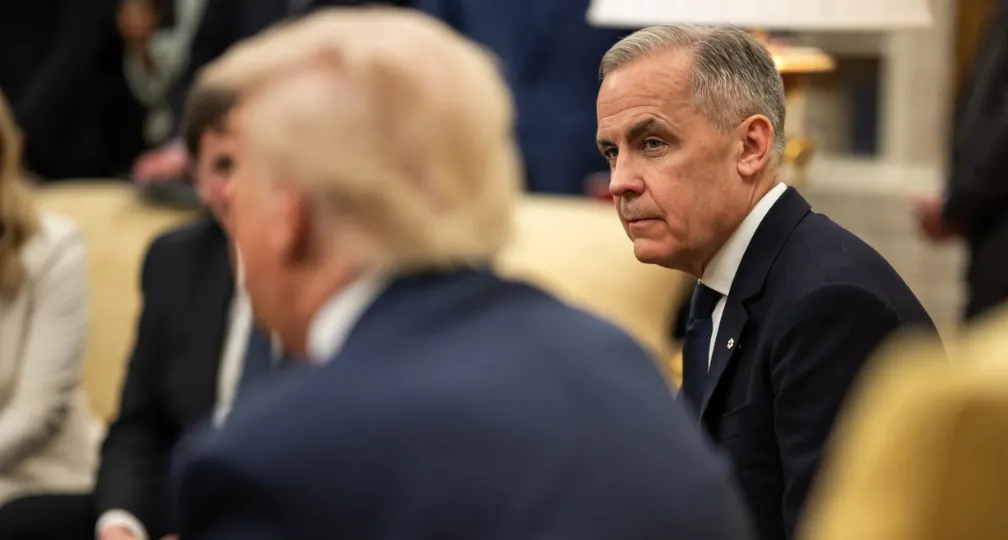
The problem with coerced concessions is that what might be a short-term win in the negotiations may set back the United States in the long run because in Trump’s negotiating style, the line between negotiations and dominance is very thin. Trump has made a consistent mistake of overestimating his leverage or underestimating the resolve of his targets, with the ongoing war with Iran being the most vivid example. He may have overreached in the renewal process already – tariffing goods that are compliant with the agreement, as he has done with the announced Section 338 tariffs against Canada, should raise questions about the willingness of the United States to abide by its own agreements, while the domestic backlash in Canada reduces the political space for Prime Minister Mark Carney to reach an agreement.
The next step to watch out for is whether Mexico and the United States reach their own agreement which observers expect to see this fall. That will be the first indicator of the final rules of origin and external barriers (and other issues) will look like and if U.S. negotiators were successful on securing tighter rules of origin. While U.S. Trade Representative Jamieson Greer has said that he expects an agreement with both Mexico and Canada at the end of the year, negotiations with Mexico are much further along and there’s speculation that the United States will present their agreement with Mexico as a take-it-or-leave it proposal for Canada. That will remain to be seen, but Canada and the United States will negotiate amidst heightened trade tensions and political unease in Canada which will make the negotiations high stakes. For those reasons, the process will probably be long and protracted – and there’s every possibility that Trump will use the renewal process to extract as much as he can from the talks in whatever way he can but leave the final decision on a more permanent renewal to his successor. But for Trump, uncertainty might even be a risk he’s willing to take if he assumes that firms want to invest in the United States anyway.
Keeping negotiations effectively in a holding pattern through the annual renewal process might help Trump build leverage with his northern and southern neighbors, but businesses in the trading states will want more certainty than what could come from an annual renewal. This includes Japanese firms, particularly auto and auto parts manufacturers, who will need to follow the negotiations closely, recognizing that the North American market could look very different by the time there’s a new agreement. Since the Trump administration’s goal is to relocate manufacturing to the United States, Toyota’s decision to relocate one its facilities to San Antonio may set a precedent if firms decide to move more quickly than the negotiations. While the integrated North American market has benefited Japan’s firms that have operated there, uncertainty will persist for a time.
Photo Credit: (WhiteHouse.gov)
Disclaimer: The views expressed in this IOG Economic Intelligence Report do not necessarily reflect
those of the Institute of Geoeconomics (IOG) or any other organizations to which the author belongs.
IOG English Newsletter
Subscribe to the English IOG Newsletter to stay up to date on IOG’s activities across various briefings, op-eds, YouTube videos, podcasts, as well as new publications, events, research activities, and more.

Visiting Research Fellow
Paul Nadeau is an adjunct assistant professor at Temple University's Japan campus, co-founder & editor of Tokyo Review, and an adjunct fellow with the Scholl Chair in International Business at the Center for Strategic and International Studies (CSIS). He was previously a private secretary with the Japanese Diet and as a member of the foreign affairs and trade staff of Senator Olympia Snowe. He holds a B.A. from the George Washington University, an M.A. in law and diplomacy from the Fletcher School at Tufts University, and a PhD from the University of Tokyo's Graduate School of Public Policy. His research focuses on the intersection of domestic and international politics, with specific focuses on political partisanship and international trade policy. His commentary has appeared on BBC News, New York Times, Nikkei Asian Review, Japan Times, and more.
View Profile-
 Connecting Europe and the Indo-Pacific: Why Japan and Germany Need Stronger Space Security Cooperation2026.10.20
 - China’s Calculus Behind the State Visit to the U.S.: Different Visions of “Stability”2026.10.16
- Trump Faces a Reckoning in the Midterms, but it Might Not Matter for Tariffs2026.10.09
-
 BRICS in India2026.10.09
 - Can Japan build a defense-startup ecosystem?2026.10.07