
Economic security has become central to America’s National Security Strategy
Instead, the strategy reorients U.S. security around homeland defense and a Western Hemisphere-focused approach described as a “Trump corollary to the Monroe Doctrine.” U.S. President Donald Trump has dubbed this the “Donroe Doctrine,” signaling a prioritization of hemispheric stability.
Within this framework, the primary threats to the U.S. homeland are identified as illegal migration and narcotics flows from Latin America. Stabilizing the Western Hemisphere is thus positioned as essential to mitigating these risks.
At the same time, the strategy places unprecedented emphasis on economic security. It sets objectives that include deterring foreign actors that harm the U.S. economy, building stable and trusted supply chains, and ensuring that U.S. technologies and standards continue to shape the global economy.
Economic security is elevated as a central priority, encompassing the correction of trade imbalances, securing access to critical supply chains and resources, reindustrialization, revitalizing the defense industrial base, and maintaining strength in energy and finance.
No previous U.S. national security strategy has incorporated economic security to this extent. Why, then, has it become so prominent during President Trump’s second term?
The consequences of Trump’s tariff policy
The strategy’s emphasis on economic security is particularly evident in its chapter on Asia. Before addressing deterrence in East Asia, including the Taiwan Strait, it foregrounds economic issues and underscores the need to “rebalance” relations with China.
This shift reflects the experience of the second Trump administration’s tariff policies. Shortly after taking office, the administration imposed a 10% tariff on Chinese imports — later raised to 20% — citing China’s role in exporting fentanyl precursors.
On “Liberation Day” in April 2025, so-called reciprocal tariffs on China were set at 34%. China responded with countermeasures, including tightening export controls on rare earths and raising tariffs on U.S. goods. In response, Trump escalated tariffs to 84%, ultimately raising total tariffs on Chinese goods to 145%.
By May, however, ministerial-level negotiations in Geneva and London led to de-escalation. U.S. tariffs were reduced from 145% to 30%, while China lowered its tariffs from 125% to 10%.
These exchanges revealed a critical reality: China’s countermeasures were highly effective. The United States recognized its heavy dependence on China for critical minerals such as rare earths — dependencies that, if disrupted, could severely affect key industries, including defense.
The administration’s tariff strategy was premised on the indispensability of the U.S. market. While the United States remains the world’s largest economy with strong consumer demand, China has adapted.
Since the first Trump administration, Beijing has enhanced its strategic autonomy by diversifying imports — including shifting soybean sourcing to Brazil — while leveraging its own form of indispensability through control over critical materials.
This contrast highlights a deeper asymmetry. China has systematically built both strategic autonomy and indispensability, while the United States has lagged in geoeconomic adaptation.
As a liberal economy, the United States faces structural constraints in mobilizing private-sector resources or enforcing industrial policy. The private sector continues to source heavily from China due to cost efficiency, in contrast to China’s state-led model, which can mobilize national resources under Communist Party direction.
The prominence of economic security in the strategy reflects Washington’s growing recognition of these vulnerabilities.
The transformation of tariffs and investment agreements
The use of tariffs as a tool of geoeconomic power was partially constrained by a February 2026 Supreme Court ruling that found reciprocal tariffs under the International Emergency Economic Powers Act unconstitutional.
While this limits the administration’s flexibility, other legal mechanisms remain available, and the use of tariffs as leverage is likely to continue — albeit with reduced scope.
At the same time, tariff-investment agreements with countries such as Japan and South Korea are expected to endure. Although the ruling invalidated parts of these agreements, maintaining reduced tariffs under Section 232 of the Trade Expansion Act — particularly for automobiles and auto parts — creates a strong incentive to preserve them.
Importantly, the nature of these agreements has evolved. Initially framed as efforts to reduce the U.S. trade deficit and revitalize domestic manufacturing, they increasingly resemble joint efforts to address U.S. vulnerabilities and strengthen geoeconomic power.
This shift is reflected in the first set of Japan-U.S. investment projects announced in February 2026: a gas-fired power plant in Ohio, crude oil export infrastructure in Texas, and a synthetic diamond manufacturing facility in Georgia.
The Ohio project supports energy supply for AI data centers — critical to competition with China in artificial intelligence — while synthetic diamonds are essential for next-generation semiconductor technologies, an area where Japan retains strengths.
These projects are less about traditional industrial revitalization and more about enhancing U.S. economic security and competitiveness. At the same time, their rapid rollout raises concerns about insufficient feasibility studies, suggesting they are as much political initiatives as economic ones.
How should Japan respond?
U.S. dependence on China in critical supply chains poses risks not only to economic resilience but also to deterrence. If Washington lacks strategic autonomy, it may find it difficult to confront China, as supply disruptions could undermine its defense industrial capacity and sustained warfighting capability.
Recognizing this, Secretary of State Marco Rubio convened a ministerial meeting on critical minerals in February 2026, bringing together 54 countries and the European Commission. The initiative aims to strengthen supply chains through coordinated public-private investment.
While not an immediate solution, it represents a necessary step toward addressing structural vulnerabilities.
Prime Minister Sanae Takaichi has already demonstrated Japan’s commitment by launching a growing number of U.S.-based investment projects, including gas-fired power plants and small modular reactors using next-generation nuclear technology.
These and other joint projects focus on deeper strategic cooperation — enhancing both countries’ strategic autonomy and building mutual indispensability to counter China, particularly in artificial intelligence.
Although Japan’s $550 billion investment commitment has drawn domestic criticism, it should be understood as part of a broader geoeconomic strategy. Leveraging this framework to address U.S. vulnerabilities is essential.
Ultimately, Japan’s foremost strategic priority is to anchor the United States in East Asia, maintain the balance of power with China, and deter potential aggression against Taiwan.
Strengthening U.S.-Japan cooperation in economic security — thereby reducing U.S. vulnerabilities and reinforcing deterrence — will be critical to stabilizing U.S. strategy in an increasingly uncertain era.
[Note] This article was posted to the Japan Times on April 19, 2026:
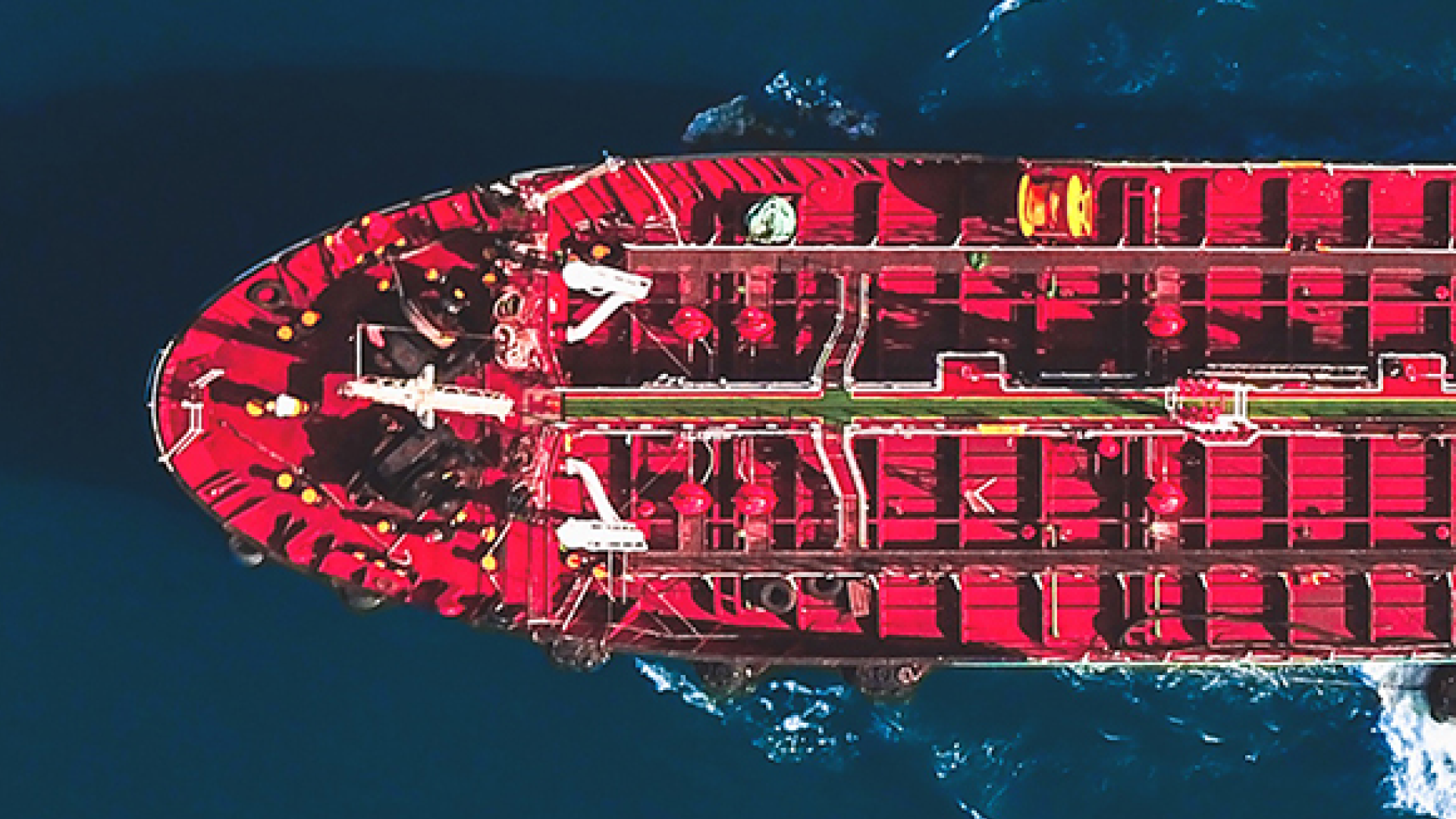
(Photo Credit: Anadolu / Getty Images)
Geoeconomic Briefing
Geoeconomic Briefing is a series featuring researchers at the IOG focused on Japan’s challenges in that field. It also provides analyses of the state of the world and trade risks, as well as technological and industrial structures (Editor-in-chief: Dr. Kazuto Suzuki, Director, Institute of Geoeconomics (IOG); Professor, The University of Tokyo).
Disclaimer: The opinions expressed in this Geoeconomic Briefing do not necessarily reflect those of the International House of Japan, the Institute of Geoeconomics (IOG) or any other organizations to which the author belongs.
Director & Group Head, Economic Security
Kazuto Suzuki is Professor of Science and Technology Policy at the Graduate School of Public Policy at the University of Tokyo, Japan. He graduated from the Department of International Relations, Ritsumeikan University, and received his Ph.D. from Sussex European Institute, University of Sussex, England. He has worked for the Fondation pour la recherche stratégique in Paris, France as an assistant researcher, as an Associate Professor at the University of Tsukuba from 2000 to 2008, and served as Professor of International Politics at Hokkaido University until 2020. He also spent one year at the School of Public and International Affairs at Princeton University from 2012 to 2013 as a visiting researcher. He served as an expert in the Panel of Experts for Iranian Sanction Committee under the United Nations Security Council from 2013 to July 2015. He has been the President of the Japan Association of International Security and Trade. [Concurrent Position] Professor, Graduate School of Public Policy, The University of Tokyo
View Profile