
FX Statecraft: Another Explanation for the Yen Intervention
The latest regulatory developments on economic security & geoeconomics
By Paul Nadeau, Visiting Research Fellow, Institute of Geoeconomics (IOG)
Strait of Hormuz Update: While Iran and Oman are attempting to reach an agreement on transit through the Strait of Hormuz, U.S. support for the agreement remains unclear. As of Sunday, August 9, the seven-day moving average of ships passing through the Strait is 4 according to the International Monetary Fund’s Portwatch. The seven-day moving average at this time last year was 90.
U.S. Plans Tariff on Generic Drug Imports: On July 21, Donald Trump announced a plan to impose a 100 percent tariff on generic drug imports to the United States beginning in August 2028, after which the tariff would rise to 200 percent in 2029. According to the White House, the tariffs would be imposed under Section 232 of the Trade Expansion Act of 1962 which is used to address national security concerns arising from imports. Generic drugs are currently exempted from the 100 percent tariffs imposed on pharmaceuticals in April 2026, also under Section 232.
U.S. Sanctions Network that Evades Iran Sanctions: On July 24, the U.S. Treasury Department’s Office of Foreign Assets Control (OFAC) designated four individuals and nine entities that form key components of the broader sanctions evasion network of U.S.-designated Iranian businessman Babak Zanjani.
EU Adds Further Iran Sanctions: On July 24, the European Council imposed sanctions on five judges of Iran’s regional revolutionary courts and a hacker for human rights violations in Iran. In a separate announcement on July 30, the European Council sanctioned an Iranian businessman for transferring funds from the sale of Iranian oil abroad and purchasing real estate in the European Union and United Kingdom on behalf of Iranian officials including Supreme Leader Mojtaba Khamanei, as well as a company controlled by the Iran Ministry of Energy, a significant part of whose revenues fund Iran’s Islamic Revolutionary Guard Corps (IRGC).
U.S. Issues Sanctions for Violation of Military Export Laws: On July 24, the U.S. State Department’s Bureau of Political-Military Affairs banned 13 individuals and one company from all activities regulated by the International Traffic in Arms Regulations (ITAR), including exporting or importing defense articles, brokering deals, and transferring technical data for three years because they violated U.S. military export laws.
U.S. to Block Robots from China: On July 28, the U.S. Federal Communications Commission (FCC) announced measures that would block imports from China of new humanoid and quadruped robots and power inverters which enable renewable energy sources and batteries to connect to grids and data center equipment. The measures are intended to safeguard U.S. artificial intelligence supply chains from threats of disruption, data theft and cyberattacks from China, while also stimulating U.S. domestic manufacturing in these activities.
U.S. Sanctions Iran’s Hormuz Toll Collectors: On July 29, the U.S. Treasury Department’s Office of Foreign Assets Control (OFAC) sanctioned two firms connected to Iran’s Islamic Revolutionary Guard Corps (IRGC) involved with the establishment of tolls through the Strait of Hormuz, as well as several vessels that transported Iranian crude oil and petrochemical products and their owners or operators.
EU Issues Sanctions for SE Asia Scam Centers: On July 30, the European Council announced sanctions on seven people and three entities responsible for serious human rights violations in relation to the operation of scam centers in Southeast Asia.
U.S. Sanctions Iran Airline for IRCG Links: On July 30, the U.S. Treasury Department’s Office of Foreign Assets Control (OFAC) sanctioned six entities and individuals in China, India, Russia, and Iran, including multiple companies serving as general sales agents for the U.S.- and EU‑sanctioned Iranian airline Mahan Air, as well as a front company affiliated with Iran’s IRGC.
U.S. Issues Tariff Rate Quota on Quartz Countertop Imports: On July 31, the Trump administration issued a proclamation establishing a four-year tariff-rate quota on imports of quartz surface products like kitchen countertops. The quota will allow 140 million square feet of quartz surfaces to enter the United States at a 25 percent duty, with out-of-duty imports facing 40 percent tariffs. Both rates will fall over the four-year period while the quota level will rise. The tariffs were imposed under Section 201 of the Trade Act of 1974, which allows the U.S. government to impose tariffs in response to an article being imported in such increased quantities that it is a substantial cause of serious injury to domestic manufacturers of like or competitive products.
U.S. Issues Sanctions for WMD Control Violations: On August 4, the U.S. State Department sanctioned 13 individuals and nine entities in several countries for the transfer to Iran, North Korea, and Syria of goods, services, or technology controlled under multilateral control lists or otherwise having the potential to contribute to the development of weapons of mass destruction (WMD) or cruise or ballistic missile systems pursuant to the Iran, North Korea, and Syria Nonproliferation Act (INKSNA).
U.S. Removes Sanctions on Iraqi Airline: On August 5, the U.S. Treasury Department’s Office of Foreign Assets Control (OFAC) removed sanctions from Iraq’s Fly Baghdad Airlines (FBA) and two aircraft that were imposed in 2024 over links to Iran’s Islamic Revolutionary Guard Corps (IRGC) Quds Force. Reuters quoted an unnamed U.S. Treasury Department official who said that “FBA has demonstrated major changes to their operations such that their listing is no longer warranted…They have addressed sanctionnable conduct” but did not provide details on the specific FBA changes that warranted the lifting of sanctions and the official said that sanctions could be reimposed at any time.
China Announces New Restrictions on U.S. Firms: On August 5, China’s Ministry of Commerce announced sanctions on seven U.S. companies, export controls on drones and related technologies, and an investigation into imported office equipment with foreign system software. When announcing the measures, a Commerce Ministry spokesman said that the moves are in response to recent U.S. measures banning 43 Chinese firms over alleged human rights abuses of Uyghur and other minority groups, and the U.S. Federal Communications Commission (FCC) ban on imports of humanoid and quadruped robots and power inverters from China. China’s State Administration for Market Regulation also announced that companies in the United States that conduct follow-up factory inspections on behalf of Chinese entities for CCC certifications to ensure electronic products meet basic safety standards can no longer provide these certifications, meaning that U.S. makers of certified electronics are required to hire auditors based outside of the United States or to rely on other non-U. S. designated bodies for such certifications.
U.S. Places Restrictions on Polysilicon Imports: On August 6, the Trump administration issues a proclamation establishing a series of price floors (minimum import prices) and a 15 percent tariff on products made from polysilicon, the raw material used in semiconductors and solar panels which is primarily produced by China. The measures have been imposed under Section 232 of the Trade Expansion Act of 1962 and are intended to support domestic chip and solar energy supply chains. The restrictions are set to take effect on December 4. Additionally, the proclamation notes that firms found to be accelerating or potentially stockpiling goods ahead of the enactment date now risk import restrictions for the firm and its affiliates.
UK Announces New Russia Sanctions: On August 6, the United Kingdom’s Foreign, Commonwealth, and Development Office sanctioned 19 individuals and businesses supporting Russia’s invasion of Ukraine, including Russian, newly acquired shadow fleet tankers, and companies that import rare metals critical for producing military equipment used in the invasion.
U.S. Issues New Cuba Sanctions: On August 6, the U.S. State Department designated five entities and eight individuals, including state-owned entities, military enterprises, and Ministry of the Revolutionary Armed Forces officials, involved in foreign military cooperation and the procurement of military equipment intended for the Cuban government.
U.S. to Make $3 Billion Investment in Domestic Mining: On August 7, the Trump administration announced that it would spend $3 billion in a series of critical minerals and mining projects intended to increase domestic production of these materials in the United States and support supply chain security. Specific projects include a $1.4 billion conditional loan from the U.S. Defense Department’s Office of Strategic Capital for Sila Nanotechnologies which makes lithium-ion battery parts to build a facility in Washington state, a $400 million conditional loan to scandium miner Sunrise Energy Metals, and a $150 million conditional loan to magnet developer Niron Magnetics for a rare earth magnet facility in Minnesota, a $58 million loan from the U.S. Import-Export Bank to Westwater Resources, Global Advanced Metals and 5E Advanced Materials, the U.S. Department of Energy announced $100 million in grants to support educational programs with the goal of doubling the number of mining-related graduates in two years while the Defense Department would invest $80 million in projects at three U.S. mining schools. Trump also said the U.S. Export-Import Bank is “working to provide” more than $1 billion to finance Ivanhoe Electric’s copper mine in Arizona and would also seek to support an Alabama graphite project and a California boron facility.
Analysis: FX Statecraft: Another Explanation for the Yen Intervention
By Andrew Capistrano, Visiting Research Fellow, Institute of Geoeconomics (IOG)
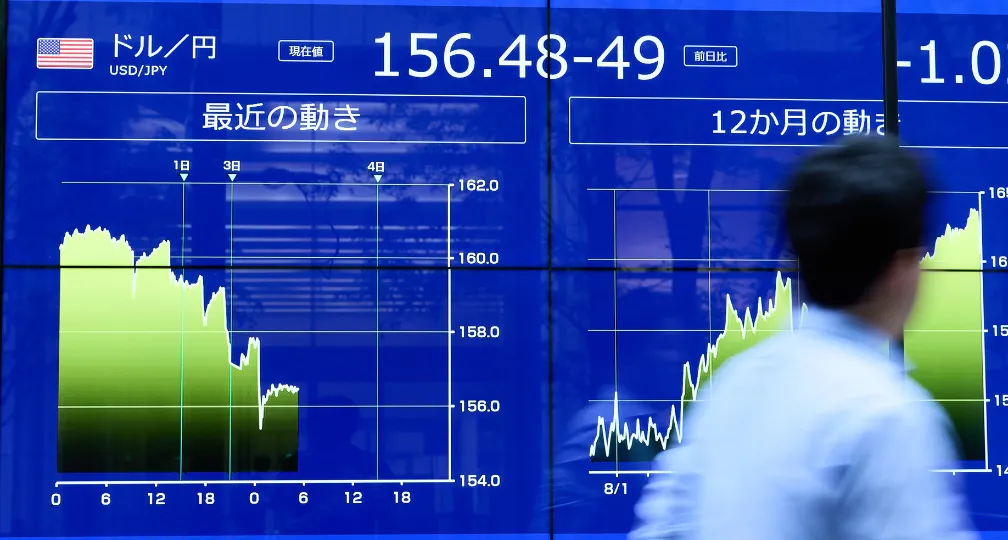
The US rarely intervenes directly in foreign-exchange (FX) markets. But when it does, the rationale is usually described in financial terms: disorderly trading, excessive FX volatility, interest-rate differentials, and the risk of destabilizing capital flows. That explanation fits the coordinated US-Japan yen intervention at the end of July, when the yen had fallen to a 40-year low of nearly ¥164 to the dollar, and Japanese authorities entered the market on a large scale. The US then joined the operation through the New York Fed, reportedly selling euros to purchase yen. It was the first coordinated US-Japan currency intervention since the 2011 Great East Japan Earthquake (although in that case, the two countries had acted in the opposite direction to weaken the yen), and the first documented US participation in a yen-buying intervention since 1998.
A market explanation for this rare US yen intervention is persuasive, and indeed, it can be explained solely in those terms. Yet it may only be part of the story.
Most commentary on the intervention has focused on the following logic. Japan’s large interest-rate differential with the US had encouraged investors to borrow cheaply in yen and invest in higher-yielding assets elsewhere. The resulting “carry trade” reinforced downward pressure on the yen, while speculative FX positioning threatened to make the movement increasingly disorderly. According to this analysis, the key point is that a sudden reversal could be destabilizing in the other direction: rapid unwinding of leveraged positions can transmit volatility from the yen into equities, bonds, and other currencies. The intervention therefore aimed to break that momentum and buy time for monetary policy—particularly further normalization by the BOJ—to address the underlying interest-rate differential.
There was also a US financial incentive, since Japan is the largest foreign holder of US Treasuries. Large and repeated Japanese intervention could require the mobilization or outright sale of these dollar-denominated assets, potentially adding pressure to a Treasury market already sensitive to long-term yields. This helps explain the attention given to the Fed’s Foreign and International Monetary Authorities (FIMA) Repo Facility, which allows foreign official institutions to obtain dollar liquidity against Treasury collateral without having to sell those securities. (Japan did not draw on FIMA during the intervention, but Treasury Secretary Scott Bessent subsequently called for expanding the facility.) Moreover, the fact that the US reportedly sold euros rather than dollars to buy yen similarly suggests careful attention to the wider market consequences of the operation, including avoiding unnecessary downward pressure on the dollar.
Compelling as that “financial market logic” is, however, it may not fully capture the significance of the yen intervention. Posting on X, Bessent explicitly connected the operation to market stability as well as economic security and Japan’s strategic importance; Finance Minister Satsuki Katayama likewise emphasized the alliance dimension of the coordination. Their language suggests that yen weakness is being treated as more than a financial market problem—the intervention also reflects a broader transformation in the US-Japan economic relationship.
Another explanation for the intervention becomes clearer when the yen is considered alongside the economic security policies being pursued in both Washington and Tokyo. Exchange rates have a unique ability to cut across industrial policy, supply-chain security, trade, strategic investment, and energy security because they influence the relative prices and financial conditions through which all of them operate.
In the case of the yen, there are four main reasons for this economic security significance: Japan’s domestic capacity, its importance in the allied industrial supply chain, its trade agreement with the US, and its role in the wider Asian financial system. Together, the four reveal a delicate equilibrium in the alliance: the US benefits from a resilient and productive Japan, even as the two economies compete over the location of production, investment, and trade, while Japan’s role as a major creditor and financial intermediary gives the relationship a wider regional dimension.
First, yen depreciation affects Japanese resilience and strategic purchasing power by increasing the cost of imported energy, raw materials, and industrial inputs that cannot readily be substituted through domestic production. Japanese companies have increasingly complained that while extreme yen weakness may strengthen exports and increase the yen value of overseas earnings, it also squeezes domestic demand through higher import costs.
That has direct consequences for economic security. Under Prime Minister Sanae Takaichi, Japan is trying to simultaneously rebuild capacity in semiconductors, manufacturing, advanced batteries, defense-related industries, and other key industrial sectors. And since these programs require imported fuel, machinery, materials, and other inputs whose yen cost rises as the currency falls, persistent depreciation can make industrial rebuilding more expensive—while also intensifying household inflation and the political pressure it creates. Bessent’s emphasis on Japan’s economic resilience and the yen’s undervaluation points to the same concern: persistent yen weakness can erode the purchasing power needed to finance Japan’s wider economic renewal.
Second, Japan itself represents a strategic industrial node amid US efforts to “de-risk” supply chains from China, reinforcing its importance to the US-led technology ecosystem. Japanese firms occupy vital positions in semiconductor manufacturing equipment, specialty chemicals and materials, advanced machinery, robotics, and other areas that are difficult to replace quickly. American reindustrialization and supply-chain diversification will, in many cases, depend on Japanese firms, technologies, and inputs.
For this reason, yen stability also has implications for the supply chains supporting US reindustrialization and other economic security objectives. A disorderly depreciation would not immediately disrupt Japanese production, but it could alter the economics of capacity expansion, corporate investment decisions, and the domestic environment in which major industrial and defense commitments must be sustained. The US therefore has an interest in the resilience of Japan’s productive system that goes beyond the traditional concern that the yen should simply find its market-clearing level: supporting the yen can indirectly help preserve the economic capacity that underpins both Japan’s wider strategic role and the Trump administration’s reindustrialization goals.
Third, the exchange rate influences how production and investment are allocated between Japan and the US under their 2025 trade agreement and its associated strategic investment commitments. On the one hand, the Trump administration imposed tariffs and pursued industrial policies partly to improve the competitive position of production and investment in the US, yet exchange rates alter the same relative prices that tariffs are designed to influence. A sufficiently large depreciation of the yen can improve the price competitiveness of Japanese production, reduce the relative attractiveness of private investment in US reindustrialization, and partially offset the effect of US trade measures.
On the other hand, in exchange for a 15% tariff, the US got Japan to help finance a major expansion of American productive capacity—a $550 billion investment framework oriented toward strategically important sectors. The exchange rate affects the economics of fulfilling such commitments. Consider that when the yen trades at ¥160 to the dollar rather than ¥150, the yen equivalent of $550 billion rises by approximately ¥5.5 trillion. Much of this investment can in practice be financed through dollar borrowing or US-based financing rather than a simple conversion of yen into dollars, but that qualification reinforces rather than eliminates the broader point. In short, exchange rates shape where projects are commercially attractive, how they are financed, and how politically difficult large outward investment commitments become when Japanese households are already suffering from a weak currency.
Fourth, the yen has a regional financial and monetary role. Japan is not only a manufacturing power but a large creditor economy whose banks, corporations, insurers, pension funds, and other institutional investors hold enormous overseas assets. The behavior of these institutions can either support or counter official currency policy through repatriation, hedging, portfolio allocation, and cross-border lending. This is one reason Katayama has called for Japanese pension funds to increase their investment in domestic assets, potentially supporting the yen through capital flows rather than relying entirely on reserve-funded intervention.
The regional implications extend further. A sharp depreciation of the yen changes competitive conditions for Korean and other Asian exporters and can transmit pressure through regional currency markets; as Bessent has warned, substantial yen undervaluation could contribute to competitive devaluations elsewhere. Japanese financial institutions also play an important role in supplying capital—particularly dollar financing—across Asia, giving Japan’s financial stability consequences beyond its domestic economy or the US-Japan alliance. As alternative financial channels expand elsewhere in Asia, including through greater use of RMB-denominated lending, Japan’s role as a stable source of industrial capacity, capital, and dollar financing becomes correspondingly more important to the US-led economic architecture in the region.
None of these four reasons displaces the market explanation for the yen intervention, which remains essential for understanding both its urgency and the mechanisms through which it might succeed. The point is that the economic security explanation adds another layer: the resulting exchange rate was beginning to affect objectives that the US and Japan increasingly regard as strategic.
The yen intervention may also not be an isolated case. Recall that in October 2025, the US Treasury purchased Argentine pesos and established a $20 billion swap framework as President Javier Milei’s reform program came under financial pressure. The two episodes were different and together do not constitute a new monetary doctrine, yet both suggest the Trump administration is increasingly willing to use its financial power when the stability of a partner’s currency has strategic implications.
This emerging form of economic statecraft could be referred to as “FX statecraft”: the use of exchange-rate policy and its supporting financial infrastructure in pursuit of wider strategic economic objectives. FX statecraft begins from the recognition that FX market movements have consequences extending far beyond currency trading, especially in an era when economic security has become a core national interest.
In the US-Japan intervention, financial stability, trade policy, and alliance strategy converged around the dollar-yen exchange rate. So while the “market story” explains the yen intervention’s logic, the “economic security story” helps explain why the US judged that exchange rate important enough to intervene.
(Photo Credit:アフロ)
Disclaimer: The views expressed in this IOG Economic Intelligence Report do not necessarily reflect
those of the API, the Institute of Geoeconomics (IOG) or any other organizations to which the author belongs.
IOG English Newsletter
Subscribe to the English IOG Newsletter to stay up to date on IOG’s activities across various briefings, op-eds, YouTube videos, podcasts, as well as new publications, events, research activities, and more.


Visiting Research Fellow
Andrew Capistrano is a geopolitical risk consultant based in Tokyo, and Director of Research at PTB Global Advisors in Washington, DC, where he specializes in industrial policy, international trade and capital flows, and US-China relations. He is also a visiting scholar at the Waseda Institute of Political Economy and a visiting lecturer at the School of Political Science and Economics, Waseda University. Previously, he worked at the US Embassy’s American Center Japan, and as a research associate at the Rebuild Japan Initiative Foundation/Asia-Pacific Initiative. Dr Capistrano holds a BA from the University of California, Berkeley; an MA in political science (international relations and political economy) from Waseda University; and a PhD in international history from the London School of Economics. His academic work focuses on the diplomatic history of East Asia from the mid-19th to the mid-20th centuries, applying game-theoretic concepts to show how China's economic treaties with the foreign powers created unique bargaining dynamics and cooperation problems. During his doctoral studies he was a research student affiliate at the Suntory and Toyota International Centres for Economics and Related Disciplines (STICERD) in London.
View ProfileVisiting Research Fellow
Paul Nadeau is an adjunct assistant professor at Temple University's Japan campus, co-founder & editor of Tokyo Review, and an adjunct fellow with the Scholl Chair in International Business at the Center for Strategic and International Studies (CSIS). He was previously a private secretary with the Japanese Diet and as a member of the foreign affairs and trade staff of Senator Olympia Snowe. He holds a B.A. from the George Washington University, an M.A. in law and diplomacy from the Fletcher School at Tufts University, and a PhD from the University of Tokyo's Graduate School of Public Policy. His research focuses on the intersection of domestic and international politics, with specific focuses on political partisanship and international trade policy. His commentary has appeared on BBC News, New York Times, Nikkei Asian Review, Japan Times, and more.
View Profile