

About Geoeconomics
—Its Origins, Key Areas of Focus, and Future Prospects
Whereas geopolitics examines the influence of geography on international relations, geoeconomics is a framework that integrates geopolitical analysis with international economics. In short, it analyzes how states pursue their geopolitical objectives via economic means.
The Approach of Geoeconomics
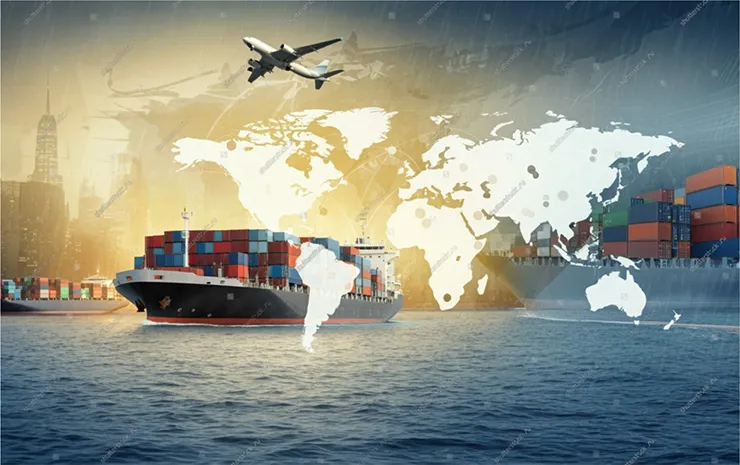
The utility of the geoeconomic approach stems from its focus on how economic power—particularly the power derived from monopolies over specific goods, technologies, and products—is wielded in international competition, and the economic impact of such confrontations. In the post-Cold War era, globalization led international economics and geopolitics to become increasingly interconnected. But more and more countries are pursuing what is commonly referred to as the “weaponization of the economy”—using economic interdependence as a tool to advance their national interests.
This trend runs counter to the idea that international politics and economics can be separated, either analytically or in practice. Moreover, it presents a challenge for businesses that have built their operations and supply chains around the assumption that market efficiency would be the principal factor in determining how globalized economic relations would develop.
In this environment, traditional forms of hard power, such as military and economic might, and soft power, including diplomatic and cultural influence, are not the only strategic capabilities that states deploy to advance their national interests. Geoeconomic analysis offers additional insight by considering two others:
• Strategic autonomy: a nation’s ability to implement its policies independent from external economic influence;
• Strategic indispensability: the ability of a nation to become essential to other countries’ economies, thereby gaining influence over them.
Why is Geoeconomics Important Now?

Until recently, geopolitical risks were largely viewed as the concern of governments and militaries. However, recent events such as Russia’s invasion of Ukraine, the U.S.-China rivalry, and the disruption of crude oil shipping caused by the blockade of the Strait of Hormuz have shown how such risks directly impact private companies and individuals. These conflicts affect the economy in tangible ways, including through price hikes, supply chain disruptions, and threats to critical infrastructure that support daily life.
But these are not always side effects. National governments, recognizing the links between economics and geopolitics, are now more willing to use economic means to obtain leverage in international disputes. This means that the lines between politics and economics, and between the public and private sectors, have been blurred. For governments as well as international businesses, the current strategic environment cannot be fully understood without a combined geopolitical and economic perspective.
Geoeconomics in Practice
Although geopolitics may seem abstract, it is deeply embedded in our daily lives and economic activities. Below are some concrete examples:
 Energy

In response to joint U.S. and Israeli military strikes on Iran, Iran retaliated by imposing a naval blockade of the Strait of Hormuz. The strait is an extremely important waterway through which crude oil and liquefied natural gas from the Persian Gulf region are shipped, and the disruption has generated economic turmoil on a global scale, including prolonged spikes in crude oil prices and shortages of naphtha, which is used in the production of a variety of products.
Semiconductors

Amid escalating U.S.-China strategic competition, semiconductors—which are vital to advanced technologies—have become a geoeconomic flashpoint. Concerned about the potential military use of advanced semiconductors by China, the U.S. has imposed export restrictions on both semiconductors and related manufacturing equipment. China has countered by restricting exports of rare metals essential to semiconductor production.
Critical Minerals

Competition over minerals is intensifying worldwide—from the lithium, manganese, and graphite needed for batteries to the rare earths required to produce permanent magnets and motors. Although these critical minerals are deposited across a variety of regions, the processes for refining them are concentrated in China. Because the critical minerals that underpin so many industries are concentrated in a single country, other nations have become increasingly dependent on China. By using that dependence as leverage to deploy tools such as export restrictions strategically, China has gained greater opportunities to exercise geoeconomic power.
AI

AI technology holds the potential to bring innovation not only to the creation of new businesses but also to the very foundations of the nation-states—from managing the infrastructure that supports people’s daily lives, such as electricity and gas, to applications in defense and security. As the United States and China have pulled ahead in global AI development, other countries are intensifying efforts to develop their own AI capabilities in order to avoid dependence on foreign technologies. This competition is also reshaping the race to secure critical components for AI development, including semiconductors, energy and talent. In Japan, efforts to advance its own "sovereign AI” have been accompanied by growing discussions of “AI sovereignty”, understood as securing reliable access to the frontier AI models.
The Future of Geoeconomics
As geopolitical tensions mount across the international community, countries are intensifying their efforts to strengthen the foundations of their defense industries and dual-use technologies. In Japan, strengthening the production and technological base for civilian goods and technologies with potential defense applications is increasingly seen as a key priority of economic security policy.
As uncertainty in the international environment continues to rise, understanding the relationships between global affairs and economies is indispensable. At the same time, countries will seek to enhance their strategic autonomy and strategic indispensability in pursuit of geoeconomic power. Against this backdrop, careful analysis is needed to understand what is happening in the world and how it affects Japanese companies. The Institute of Geoeconomics will continue to strive to build robust networks across think tanks overseas as well as with government, business, and academic actors both in Japan and abroad, as we work to share insights and deliver analysis.
Institute of Geoeconomics
As a private, independent think tank,
the IOG aspires to make significant global impact and become a hub for intellectual exchange in the Asia-Pacific region.
Follow Us



