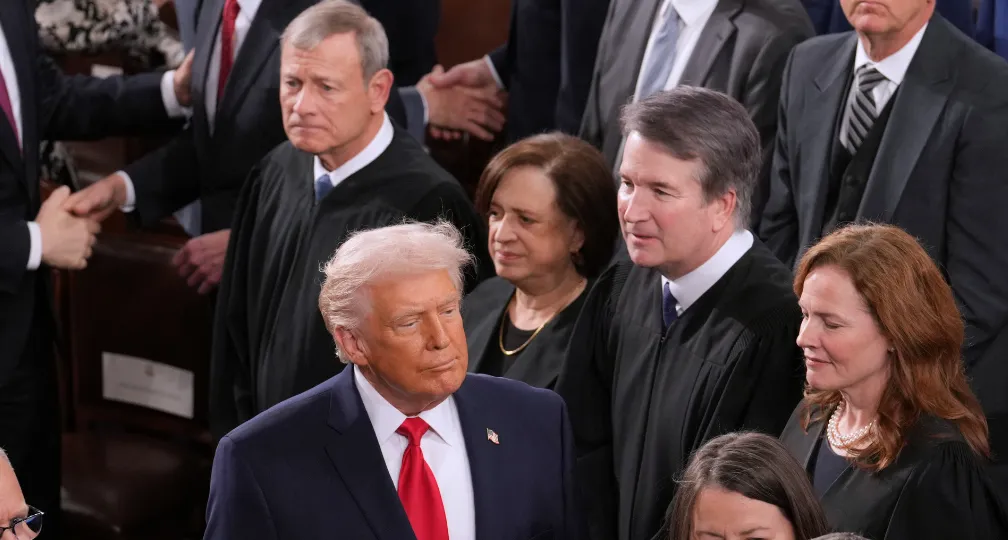

China, Rare Earths and ‘Weaponized Interdependence’
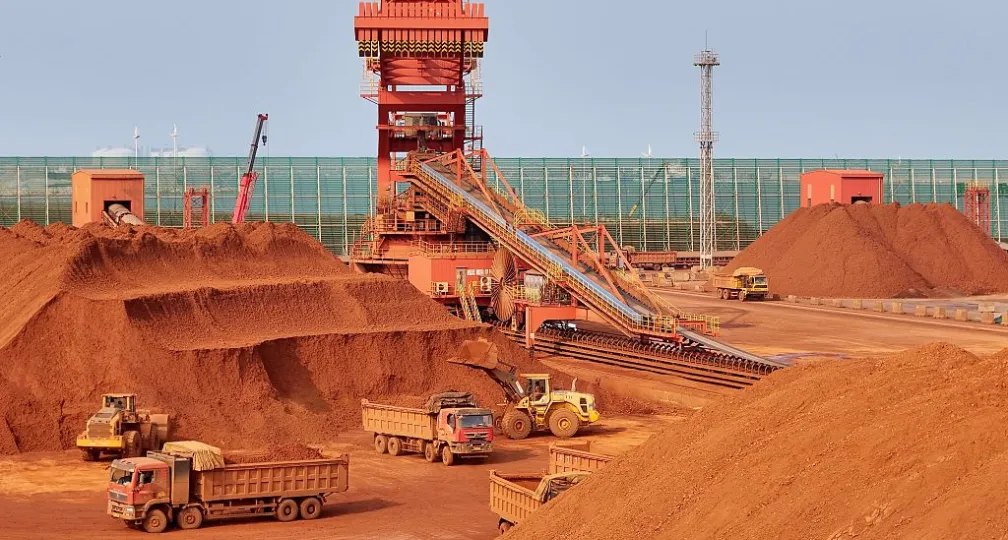
In early September, just days after China marked the 80th anniversary of the end of World War II, Berlin hosted IFA 2025 — one of the world’s most prominent consumer electronics exhibitions....(continues below)
In early September, just days after China marked the 80th anniversary of the end of World War II, Berlin hosted IFA 2025 — one of the world’s most prominent consumer electronics exhibitions. Walking through the venue, the scale of China’s industrial footprint was unmistakable. Of the roughly 1,900 companies exhibiting, more than 700 were Chinese ranging from major global players such as TCL, Hisense and DJI to a large number of little-known provincial manufacturers. Chinese brands also stood out among the winners of the IFA Awards, including device makers like Anker and Laifen.
This commercial presence reflects the international economic order that took shape after 1945 — one built on free trade and multilateral institutions such as the World Trade Organization. Goods and capital flowed across borders regardless of political systems, enabling multinational companies to disperse production globally in pursuit of lower costs. China became “the world’s factory,” attracting foreign investment, building industrial clusters, upgrading its technological capabilities and ultimately growing into a manufacturing superpower that now accounts for nearly 30% of global value added.
Against this backdrop, it is unsurprising that Beijing now casts itself as a defender of free trade in response to the second Trump administration’s imposition of “reciprocal tariffs” on U.S. imports and broader efforts to exclude Chinese firms.
Yet, as I wrote in a previous column, China currently lacks the capacity to build an alternative economic order of its own though it has ambitions. The more pressing question is how Beijing intends to reshape its domestic economy and its relationship with the global trading system. Its recent tightening of export controls on rare earth elements offers important clues.
Strategic value
China has long understood the strategic value of its dominance in REE production. As reflected in the 1992 Deng Xiaoping quote, “The Middle East has oil, China has rare earths,” China had an early recognition of these minerals as geopolitical assets. Beijing has on multiple occasions wielded its near-monopoly as a diplomatic tool — most notably in 2010 when it halted exports to Japan following the collision between a Chinese fishing vessel and a Japan Coast Guard ship near the Senkaku Islands.
China’s rise as a rare earth powerhouse was itself a product of global specialization. Compared with base metals such as copper or zinc, REE markets are small, volatile and environmentally costly, particularly during refining, which can release radioactive waste. Advanced economies opted to outsource extraction and refining to China, where environmental regulations were looser and production costs lower while they concentrated on high-value downstream manufacturing of motors, magnets and so on.
Beijing, however, never left the sector to market forces. Since the early 2000s, China has tightened controls by restricting export volumes, consolidating domestic producers and emphasizing “appropriate pricing and appropriate quantities.” When China’s earlier system was ruled inconsistent with WTO rules in 2014, Beijing replaced it with a licensing regime — maintaining rather than relaxing its grip on supply. By 2021, the state had consolidated domestic production into four major firms.
Since 2023, China has expanded export controls on gallium, graphite, tungsten and multiple categories of rare earths, including adding five types of REEs and associated refining technologies to its control list in October. While these measures clearly function as counter-responses to U.S. technology and investment restrictions, they also represent a long-term tightening of Beijing’s strategic management of critical minerals. Notably, China agreed to partially delay implementation during the late-October Donald Trump-Xi Jinping meeting — a sign that these measures were not urgent and announced with political intentions.
Beijing’s aims
China’s leaders must be acutely aware that export restrictions are a double-edged sword. The 2010 halt in rare earth shipments to Japan triggered widespread diversification efforts, accelerated the development of alternative materials and caused numerous Chinese REE companies to fail. Similar trends are visible today as the U.S., Europe, Japan and others expand non-Chinese mining, recycling and substitution research. Yet Beijing is proceeding, suggesting the calculus has changed. Several motivations stand out.
First, China is accelerating industrial upgrading. Export controls send a clear signal inside China: Low-value, environmentally damaging industries — such as REE extraction and refining — will no longer be supported by the Chinese government. The state wants labor and capital redirected toward higher-value segments of the supply chain.
Second, China is using supply-chain disruption as leverage. By tightening controls, China can create short-term instability for downstream manufacturers abroad while simultaneously promoting its own rare earth-based products, improving domestic processing capabilities and encouraging foreign firms to source value-added components directly from China.
Third, China is attracting high-end manufacturing. Access to REEs remains indispensable for advanced technologies, from EV motors to defense systems. Beijing appears prepared to use its dominance to entice global manufacturers to localize more production in China — on China’s terms.
Beijing does not intend to abandon its REE industry. But its leadership now expects that sectors where China enjoys a structural advantage will move further up the value chain. This confidence reflects the broader transformation of China’s export profile from the “old three” (textiles, furniture, home appliances) to the “new three” (EVs, lithium-ion batteries, solar panels).
Historically, China’s economic coercion has been bilateral, targeting specific countries. Now, with greater confidence in its industrial strength, China is willing to use economic tools against the global market as a whole. A notable shift is that Beijing’s recent export controls apply globally, not only to the U.S. If the purpose were merely retaliation, country-specific measures — as in December 2023 — would send a clearer signal.
Now its message is direct: China will no longer accept a global division of labor in which it bears environmental costs while others enjoy the value added. By imposing export controls with extraterritorial reach — requiring Chinese approval even for products manufactured overseas if they contain controlled REEs — Beijing is pressuring foreign governments and industries to remain aligned with its security interests and political preferences.
Although implementation has been delayed for one year, the underlying intent is unmistakable: China seeks not only a more favorable role within global supply chains but also greater political leverage over countries that depend on its critical minerals.
Implications for Japan
The United States is already reshaping global production by using tariffs to secure additional investment commitments, demanding onshore manufacturing and reducing reliance on foreign supply chains. Japan has responded by pledging large-scale investment in the U.S., clearly indicating Tokyo will follow Washington.
The Japanese government must now prepare for China’s parallel shift. Beijing’s growing confidence in weaponizing economic interdependence requires Japan to take action. This includes diversifying supply sources for critical minerals and components; accelerating development of domestic REE resources, including deposits near the Japanese island of Minamitorishima; promoting the adoption of rare earth-free technologies; and strengthening cooperation with trusted partners on critical minerals, recycling and technological innovation.
At the same time, China’s own constraints — such as weak domestic demand and dependence on foreign technology in key sectors — mean Japan should avoid treating the existing global division of labor as fixed. Rather than simply decoupling, Tokyo should adopt a strategic posture: reducing vulnerabilities while selectively leveraging China’s industrial capacity where advantageous. Doing so will not only strengthen Japan’s position vis-a-vis Beijing but also reinforce cooperation with the U.S. as Washington reshapes global supply chains.
(Photo Credit: CFOTO/Getty Images)
[Note] This article was posted to the Japan Times on Dec 23, 2025:
https://www.japantimes.co.jp/commentary/2025/12/23/world/china-weaponized-rare-earths/

Geoeconomic Briefing
Geoeconomic Briefing is a series featuring researchers at the IOG focused on Japan’s challenges in that field. It also provides analyses of the state of the world and trade risks, as well as technological and industrial structures (Editor-in-chief: Dr. Kazuto Suzuki, Director, Institute of Geoeconomics (IOG); Professor, The University of Tokyo).
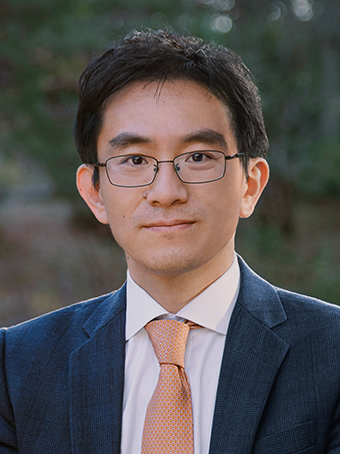
Visiting Senior Research Fellow
MACHIDA Hotaka is a visiting senior research fellow in Institute of Geoeconomics at International House of Japan. He joined the Institute in October, 2022. Prior to leaving his role in government, he served as a career diplomat in Japan’s Ministry of Foreign Affairs from 2001 to 2022, focusing on Japan-China relations. He studied at Nanjing University in China and Harvard University in the United States, followed by working at Embassy of Japan in China as second secretary from 2006-2008. After that, he was posted in China-Mongolia division in the Ministry and completed the negotiations with China over the issues of launching the “High-Level Consultation on Maritime Affairs” as well as finalizing the “Maritime Search and Rescue (SAR)” agreement. He also worked in Status of Forces Agreement (SOFA) division in the North America Bureau in the Ministry leading the negotiations with the US on SOFA-related issues. He was counsellor in the Permanent Mission of Japan to the United Nations (2017-2020) and Embassy of Japan in China (2020-2022) covering the Security Council reform and Japan-China economic relations respectively. He holds a M.A from the Graduate School of Arts and Science at Harvard University, and a Bachelor from Law Faculty at Tokyo University.
View Profile


 Orbán in the Public Eye: Anti-Ukraine Argument for Delegitimising Brussels2026.02.04
- Fed-Treasury Coordination as Economic Security Policy2026.02.13
- The Supreme Court Strikes Down the IEEPA Tariffs: What Happened and What Comes Next?2026.02.27
- India and EU Sign Mother of All Deals2026.02.09
- Oil, Debt, and Dollars: The Geoeconomics of Venezuela2026.01.07