
China’s long-range DF-27 missiles are a game changer
Long before Prime Minister Sanae Takaichi drew Beijing’s ire by stating the obvious — that a Chinese military assault on Taiwan could be seen as an existential threat to Japan under the 1951 U.S.-Japan security agreement — Washington and its allies had been weighing the risks of just such an assault and China’s overall military capabilities.
Toward that goal, the U.S. Department of Defense’s annual Report to Congress on Military and Security Developments Involving the People’s Republic of China is among the most comprehensive and detailed assessments of China’s military posture. The 2025 report, released in December, states clearly that, for a quarter century, “these reports have chronicled the development of China’s military capabilities and strategy.”
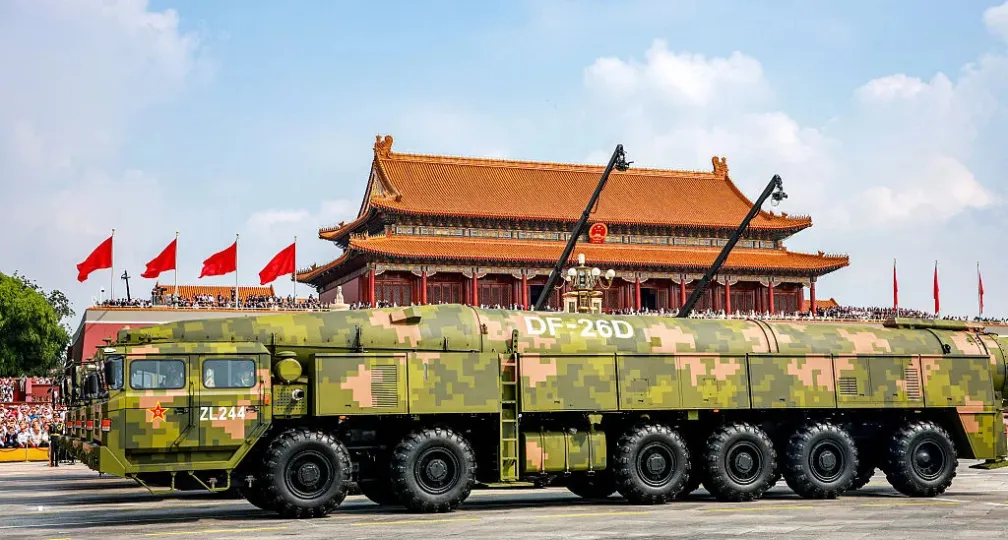
While the Trump administration’s new report contains several noteworthy findings, one assessment has drawn particular attention: the conclusion that China deployed the DF-27 intercontinental ballistic missile (ICBM) armed with a conventional (rather than nuclear) warhead in 2024. As discussed below, the deployment of the DF-27 appears to significantly complement China’s anti-access/area-denial (A2/AD) posture, but this might have paradoxical effects on the credibility of U.S. extended deterrence.
Before China introduced the DF-27 missile, its military “deterrence” strategy worked in two main ways: conventional A2/AD and nuclear deterrence. The former is basically China’s way of saying if you come near our territory we can make it very dangerous for you, and the latter is saying if you attack us we may respond with nuclear weapons.
What is also clear is that, following the Third Taiwan Strait Crisis in 1996, the People’s Liberation Army (PLA) has pursued a consistent force-development objective: to acquire the capability to invade Taiwan while preventing large-scale U.S. military intervention, since the outcome of a Taiwan contingency would depend not only on combat with Taiwan’s forces but also on whether U.S. reinforcements could be kept at bay.
This Chinese objective, which has long been obvious to both U.S. and Japanese military strategists, gave rise to China’s A2/AD strategy that seeks to deny adversaries access to the theater and constrain their freedom of action once inside it. To operationalize this concept, the PLA has fielded missile systems and other capabilities designed to neutralize U.S. bases in Japan and Guam, as well as U.S. carrier strike groups.
In contrast to the buildup of conventional forces, China’s strategic nuclear modernization proceeded more slowly. For decades, Beijing adhered to a doctrine of “minimum deterrence,” maintaining only a survivable retaliatory capability sufficient to deter a nuclear first strike.
Around 2020, however, China embarked on a rapid expansion of its nuclear forces. While the official rationale remains opaque, a widely held interpretation is that China seeks to establish mutual vulnerability with the United States. Such a posture could induce extended deterrence failure by forcing U.S. presidents to weigh the catastrophic damage to the American homeland against the defense of allies — tilting decision-making toward restraint and thereby deterring U.S. intervention altogether.
China’s efforts have yielded tangible results. Its nuclear warhead stockpile, estimated at roughly 200 in 2020, is projected to exceed 1,000 by 2030 — well beyond the bounds of minimum deterrence. At the conventional level, China has steadily shifted the balance of power in the Western Pacific in its favor.
Yet structural limitations remain. Strategic nuclear weapons, by their nature, carry extremely high thresholds for use, making credible threats difficult. China’s apparent move toward more alert postures, including possible launch-on-warning concepts, reflects the challenge of ensuring nuclear deterrence credibility.
Moreover, A2/AD capabilities are generally designed to protect China’s territories in the Western Pacific, not to project power globally. While they have raised the risks faced by U.S. forces operating within the region, they have not compelled the United States to reduce its forward presence. Instead, Washington and its allies are developing longer-range missiles, increasing the threat to critical PLA assets deep inside China, including command centers and satellite ground stations.
Crucially, China also lacks the ability to secure air superiority beyond its A2/AD envelope. As a result, it cannot prevent the United States from conducting long-range strike operations using bombers and aerial refueling aircraft operating from Hawaii and the continental United States.
In short, strengthening nuclear forces and A2/AD alone proved insufficient to block U.S. reinforcement and long-range strikes, creating demand for an additional layer of capability.
Deep strike
Beijing’s deployment of the long-range DF-27 missile with conventional warheads — with an estimated range of some 8,000 kilometers, sufficient to reach California from mainland China — appears designed to mitigate these shortcomings. Its ability to conduct conventional strikes against the U.S. homeland represents a qualitative shift in China’s deterrence toolkit.
By targeting bases in the continental United States or Hawaii that host aerial refueling aircraft — critical enablers of long-range bomber operations — the PLA could severely constrain U.S. power projection from outside the A2/AD zone. Disrupting bomber support in the opening phase of a conflict could have outsized effects on the overall campaign. Given the limited combat endurance capability of Japan and Taiwan in a high-intensity conflict, the ability to delay U.S. reinforcements by striking U.S. bases could increase China’s prospects of forcing allied capitulation before full U.S. intervention materializes.
In this sense, the DF-27 adds a third layer to China’s anti-intervention strategy: Beyond A2/AD and nuclear deterrence, it enables deep conventional strikes against the reinforcement base itself.
U.S.-Japan alliance
How should the United States and Japan respond? For the United States, countering the DF-27 must be a priority in designing the “Golden Dome” multilayer missile defense system. Base hardening efforts should extend beyond Guam to include facilities along the U.S. West Coast.
For Japan, the risk that U.S. reinforcements could be delayed poses a direct threat to national survival. Accordingly, Japan must prepare not only to defend against short-range ballistic missiles, but also to conduct counterstrike operations against systems such as the DF-27.
The DF-27 also raises questions about U.S. resolve. With the U.S. homeland no longer a sanctuary but part of the battlespace, there is concern that Washington could be deterred from intervening. This risk underscores the urgency of mitigating vulnerabilities through missile defense.
At the same time, the effect may be paradoxical. If the U.S. homeland is struck by conventional weapons, a conflict would no longer be framed solely as the defense of allies but as the defense of the United States itself — potentially lowering the threshold for decisive intervention. In such a scenario, the logic of “defending allies to defend America” becomes more explicit.
These dynamics carry particular significance at a moment when the Trump administration has prioritized homeland defense and Western Hemisphere dominance, raising doubts about alliance credibility. The DF-27’s deployment may thus create an opportunity for Japan and other allies to demonstrate their strategic value in U.S. homeland defense — and, in doing so, to reinforce U.S. engagement in the Western Pacific.
In this sense, the DF-27 does not merely challenge the alliance; it also provides new leverage to draw the United States more deeply into the region’s security architecture, a fact that has serious implications for Tokyo and Washington. For these reasons, it should be high on the agenda during Prime Minister Takaichi and U.S. President Donald Trump’s summit meeting, scheduled for March 19, in the White House.
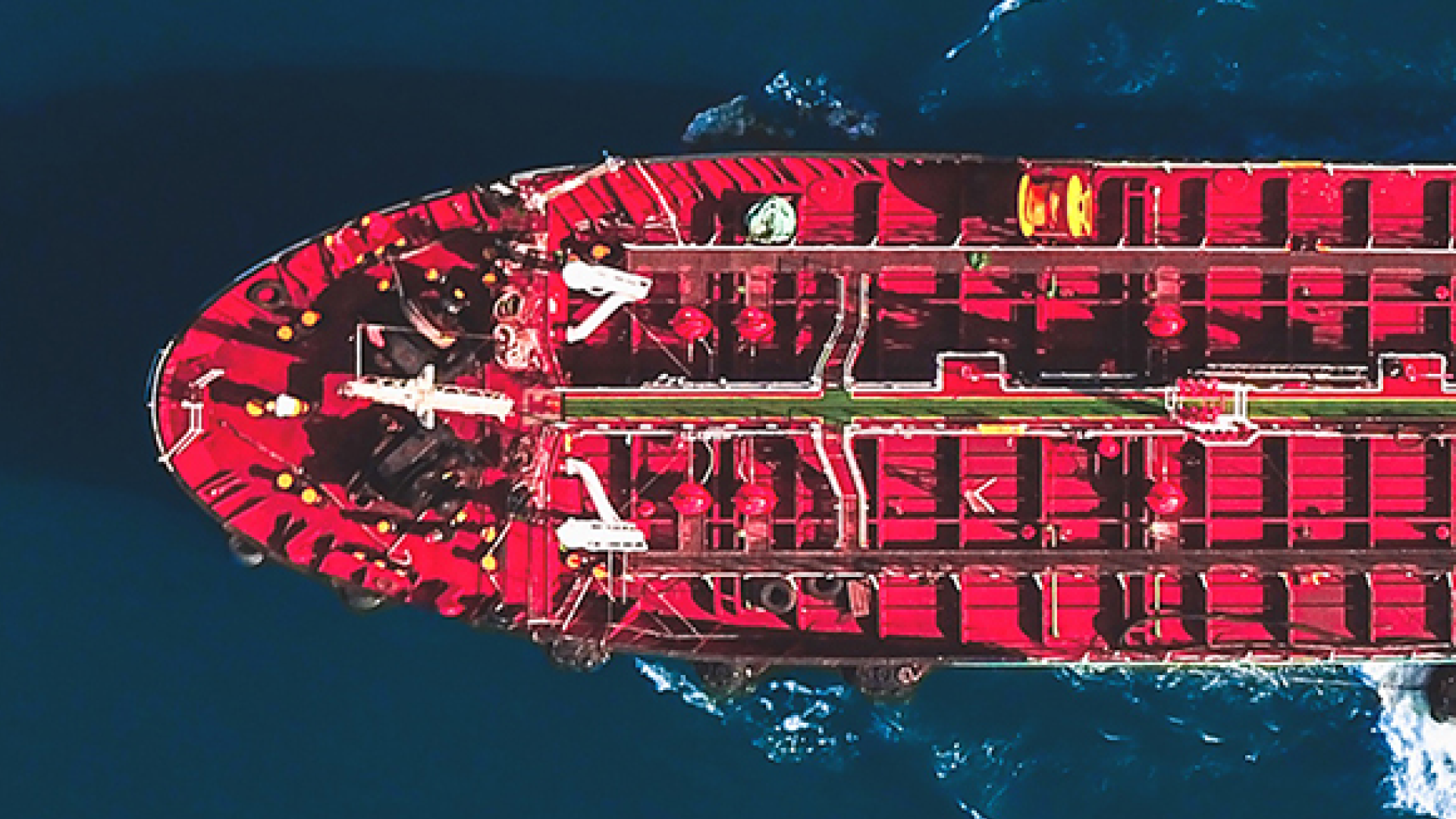
(Photo Credit: VCG / Getty Images)
[Note] This article was posted to the Japan Times on Mar 8, 2026:
https://www.japantimes.co.jp/commentary/2026/03/08/world/chinas-nuke-buildup/
Geoeconomic Briefing
Geoeconomic Briefing is a series featuring researchers at the IOG focused on Japan’s challenges in that field. It also provides analyses of the state of the world and trade risks, as well as technological and industrial structures (Editor-in-chief: Dr. Kazuto Suzuki, Director, Institute of Geoeconomics (IOG); Professor, The University of Tokyo).

Research Fellow
Rintaro Inoue is a Research Fellow at the Asia Pacific Initiative (API) & the Institute of Geoeconomics (IOG), the International House of Japan (IHJ), a Tokyo-based global think-tank, where he focuses on U.S. security policy, the U.S.-Australia alliance, Japanese defense policy, and economic statecraft including defense industrial base policy. Prior to assuming his current position, he joined the Asia Pacific Initiative (API) as an intern and contributed to multiple projects including the Japan-U.S. Military Statesmen Forum (MSF). He is currently researching defense industrial policies of other countries in the International Security Order Group. He received his BA and MA in law from Keio University and is now a PhD student.
View Profile-
 Don’t Count on U.S. Domestic Politics to Constrain Trump on Iran2026.03.27
 - War in the Persian Gulf means volatility in the global energy market2026.03.26
- Is the Iran Operation Really About China?2026.03.12
- China’s long-range DF-27 missiles are a game changer2026.03.09
-
 India's Rising Gravitational Pull2026.03.06



 Orbán in the Public Eye: Anti-Ukraine Argument for Delegitimising Brussels2026.02.04
- Is the Iran Operation Really About China?2026.03.12
- The Supreme Court Strikes Down the IEEPA Tariffs: What Happened and What Comes Next?2026.02.27
- India's Rising Gravitational Pull2026.03.06
- War in the Persian Gulf means volatility in the global energy market2026.03.26