
Takaichi is right to call for a ‘new technology-driven nation’
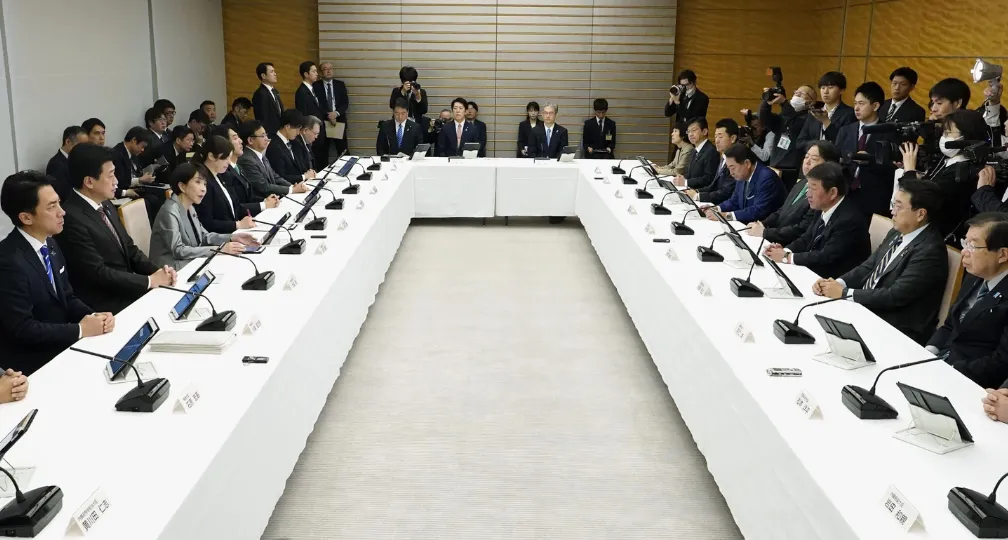
Since taking office, Prime Minister Sanae Takaichi has placed investment in science and technology at the center of Japan’s economic and security strategy. In an early policy speech, she called for a “new technology-driven nation” to accelerate the deployment of technologies in which Japan holds competitive advantages, while providing strategic support to priority industries to boost global competitiveness and cultivate talent.
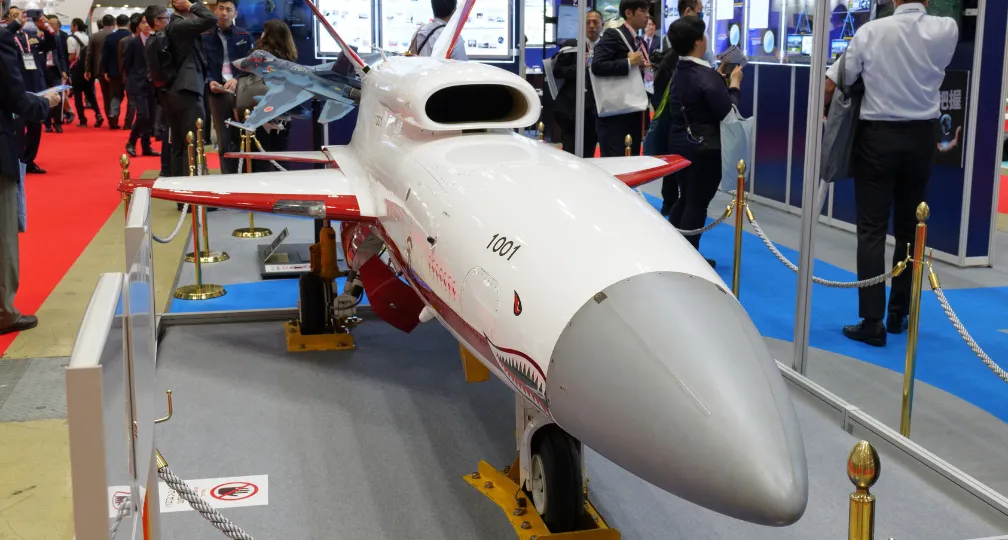
As this newspaper recently reported, the Takaichi government has “identified dozens of products and technologies as priority targets for investment,” including physical artificial intelligence systems, regenerative medicine, quantum computing and marine drones. The policy emphasizes revitalizing science, providing seamless support from basic research to commercialization and integrating science and technology with national security and diplomacy.
Positioning science and technology at the core of national strategy is not new. Previous administrations invested heavily in the goal of becoming a “science and technology nation,” but those efforts produced uneven results in both basic research and commercialization. As a result, science policy has not consistently functioned as an effective tool of statecraft. Takaichi’s approach aims to address those shortcomings with a more needs-driven strategy.
The concept of a “science and technology nation” appeared in Japan’s Science and Technology White Paper as early as 1980, but it has largely remained aspirational. Three structural constraints help explain why.
First, fiscal pressures following the economic stagnation of the 1990s constrained science budgets. The 2004 corporatization of national universities reduced operational subsidies by more than 10 percent. Research conditions deteriorated, and Japan’s global competitiveness in basic science declined, as measured by publication output and highly cited papers.
Second, a gap persisted between academic research and national priorities, particularly in economic and security policy. Universities traditionally emphasized knowledge production and were cautious about industrial or military applications. While resistance to industry-academia collaboration has eased, military-related research long remained socially sensitive.
Third, Japan’s science diplomacy evolved within a constrained international context. Although the country participated in international research collaboration, it was often reluctant—even within alliance frameworks—to translate research outcomes into military-strategic assets. Its participation in the Strategic Defense Initiative and debates over military-academic collaboration in the 2010s illustrate this tension.
Political Will
The Takaichi government’s “new technology-driven nation” initiative repackages elements of earlier policies but is shaped by major shifts at home and abroad.
Globally, intensifying U.S.-China competition has elevated the importance of technological statecraft. Emerging technologies increasingly shape diplomatic leverage and national vulnerability. Japan now recognizes the need to develop unique capabilities that strengthen its strategic autonomy and deepen cooperation with other middle powers.
Domestically, dual-use technologies are more openly accepted as policy tools. Although some resistance remains, the stigma surrounding security-related research has eased. Universities’ participation in the Security Technology Research Promotion Program rose sharply in fiscal 2025, underscoring this shift.
Takaichi—who has held key roles in economic security and science policy—has also demonstrated clear political commitment. For a resource-constrained country such as Japan, targeted investment in critical technologies is a practical necessity.
While the new policy emphasizes needs-driven investment, it does not neglect basic research. The draft “Seventh Science, Technology and Innovation Basic Plan” highlights both scientific revitalization and strategic investment. The challenge will be to avoid worsening the long-standing trade-off between short-term industrial priorities and long-term scientific inquiry.
Basic research plays a distinct strategic role. Investment in foundational science expands future options and hedges against uncertainty. Fields such as artificial intelligence and quantum science developed for decades without clear geopolitical purpose but are now central to global competition—underscoring the unpredictable value of sustained scientific capacity.
At the same time, in deep-tech sectors—where scientific breakthroughs can quickly translate into industrial and military advantage—the gap between discovery and application has narrowed. This convergence increases the strategic value of scientific investment.
Incentive Structures
The central question is whether Japan can rebuild its scientific base to sustain a “new technology-driven nation.” Funding and talent remain key constraints.
Although research funding—including university subsidies and competitive grants—has increased, it remains below early-2000s levels. The “Fifth Science and Technology Basic Plan” set a target of R&D spending at 4 percent of GDP, but that goal was not met, in part because of weak private-sector investment.
Human capital challenges are even more severe. Years of underinvestment in research infrastructure have weakened the pipeline of researchers. Japan’s share of STEM graduates remains below the OECD average, and efforts to improve labor mobility across universities, research institutes and industry have yielded limited results.
Rebuilding incentive structures is therefore critical. In commercially viable sectors, government-led demand creation can improve predictability and encourage private investment and hiring. Talent policies must better align education with strategic industrial goals, promote cross-sector mobility and link technological “seeds” with national “needs.”
At the same time, public funding should focus on areas less responsive to market forces, particularly long-term basic research and workforce development. Clarifying the roles of public and private actors in science funding will be essential.
Takaichi has also articulated a long-term vision extending to the “22nd century,” emphasizing sustained support for basic research. The ultimate test of the “new technology-driven nation” will be whether current political momentum can be translated into durable institutions that outlast electoral cycles. Whether Japan can embed long-term scientific investment into national strategy will determine the success of this effort.
(Photo Credit: Kyodo News via Getty Images )
[Note] This article was posted to the Japan Times on March 31, 2026:
https://www.japantimes.co.jp/commentary/2026/03/31/japan/japan-a-technology-driven-nation/

Geoeconomic Briefing
Geoeconomic Briefing is a series featuring researchers at the IOG focused on Japan’s challenges in that field. It also provides analyses of the state of the world and trade risks, as well as technological and industrial structures (Editor-in-chief: Dr. Kazuto Suzuki, Director, Institute of Geoeconomics (IOG); Professor, The University of Tokyo).

Visiting Senior Research Fellow
SAITOU Kousuke is a professor at the Faculty of Global Studies, Sophia University, Japan. He received his Ph.D. in International Political Economy from the Graduate School of Humanities and Social Sciences, University of Tsukuba, Japan. Prior to joining Sophia University to teach international security studies, he was an associate professor at Yokohama National University, Japan. [Concurrent Position] Professor, Faculty of Global Studies, Sophia University
View Profile-
 Takaichi is right to call for a ‘new technology-driven nation’2026.04.07
 - The Geopolitics of Ports and Pipelines: The Case of The Strait of Hormuz -The Struggle Over Chokepoints-2026.04.06
-
 India's Semiconductor Moment2026.04.03
 - Redesigning U.S.-Japan security in a ‘two-peer’ nuclear era2026.04.02
- Don’t Count on U.S. Domestic Politics to Constrain Trump on Iran2026.03.27




 Is the Iran Operation Really About China?2026.03.12
- Orbán in the Public Eye: Anti-Ukraine Argument for Delegitimising Brussels2026.02.04
- India's Rising Gravitational Pull2026.03.06
- War in the Persian Gulf means volatility in the global energy market2026.03.26
- The Supreme Court Strikes Down the IEEPA Tariffs: What Happened and What Comes Next?2026.02.27