
How should Japan respond to China’s nuclear threat?
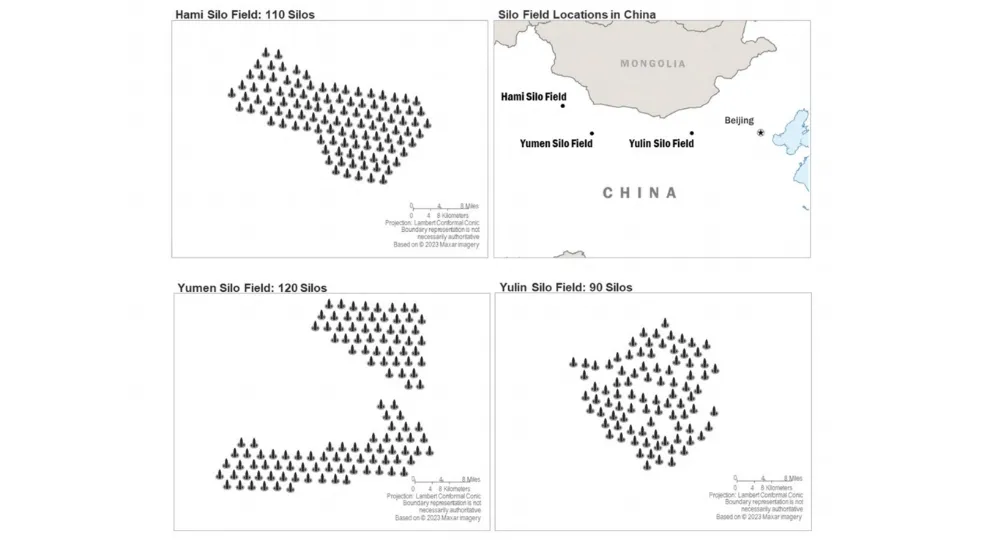
The U.S. Department of Defense assesses that China could possess more than 1,000 nuclear warheads by 2030. It is modernizing its intercontinental ballistic missiles (ICBMs), including MIRV-capable DF-41s and a possible successor, the DF-61; constructing large numbers of missile silos; and developing hypersonic delivery systems to enhance survivability and penetrative capability. Even so, it remains unclear how Beijing intends to position and potentially employ its nuclear forces in a Taiwan crisis.
For Japan — likely to be directly affected by any Taiwan contingency — this question is not abstract. As a nonnuclear state, Japan’s options for responding to Chinese nuclear coercion are inherently constrained. Although many experts acknowledge the need for more serious debate on nuclear issues, discussion has rarely advanced in concrete military terms. The first step toward such a debate should be to address the analytical foundations, as outlined below.
Nuclear expansion
China’s nuclear buildup carries two distinct implications for a Taiwan contingency: one at the strategic level and the other at the theater level.
First, there is the strategic nuclear dimension. As Kuniharu Kakihara wrote in a recent Geoeconomic Briefing, China’s quantitative and qualitative expansion of strategic nuclear forces may generate what is known as the “stability–instability paradox.” If U.S. confidence in its ability to neutralize China’s strategic arsenal declines, Washington could be strategically deterred at the highest level. Such deterrence could reduce the credibility of U.S. intervention in regional crises, thereby increasing the likelihood of limited conventional conflict over Taiwan — instability at the nonstrategic level.
Second, consider the theater nuclear dimension. According to the U.S. Department of Defense, China is pursuing low-yield nuclear capabilities — reportedly under 10 kilotons — for limited nuclear strikes and escalation management. Such weapons could provide more flexible options and, in theory, lower the threshold for nuclear use. Indeed, China’s evolving posture appears increasingly misaligned with its long-standing “no first use” policy.
In a Taiwan contingency, Beijing could attempt to deter Japan directly through theater nuclear coercion — threatening U.S. bases on Japanese territory or warning Tokyo against permitting their use in a Taiwan defense operation. Such coercion could also target potential Self-Defense Forces participation.
These two dimensions generate different policy imperatives for Japan.
The stability-instability paradox suggests a heightened need for Japan to strengthen its conventional capabilities. If U.S. strategic deterrence is partially constrained by China’s nuclear buildup, Japan must be prepared to manage limited regional conflict and prevent fait accompli scenarios at the conventional level.
Conversely, the expansion of theater nuclear options raises the question of whether Japan requires a balancing nuclear capability — either through strengthened U.S. extended deterrence or, more controversially, through indigenous nuclear options.
Japan’s priorities
In theory, Japan would pursue both objectives. In practice, however, strategy requires prioritization under resource constraints. Nuclear force development carries significant financial and human capital costs, inevitably creating trade-offs with conventional force modernization. Historical experience is instructive: during the peak of its nuclear buildup in 1966-1967, France devoted roughly half of its defense budget to nuclear forces.
Japan therefore faces difficult choices: Should it allocate substantial new resources to nuclear capabilities? Double down on conventional forces? Or pursue a hybrid approach? The allocation of both financial and human capital will shape Japan’s long-term strategic posture.
Three factors suggest that, at present, Japan should prioritize conventional strength.
First, China’s expansion has emphasized strategic nuclear forces over theater systems. SIPRI estimates that between 2020 and 2025, China’s strategic warheads (ICBM- and SLBM-based) grew from 144 to 348 — roughly 2.5 times — while its intermediate-range theater nuclear systems increased from 76 to 100, a more modest rise. The pace of strategic expansion outstrips that of theater capabilities.
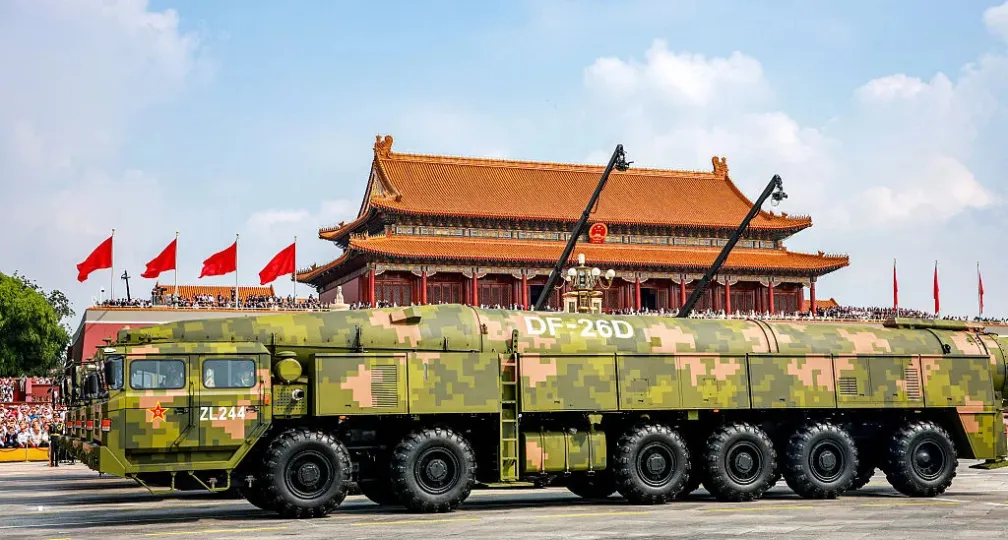
Second, China’s existing theater systems are not yet highly flexible. The DF-26, often dubbed the “Guam killer,” reportedly carries warheads of up to 300 kilotons. Such yields are difficult to classify as “limited” in practice; for instance, a strike on America’s Andersen Air Force Base in Guam would inevitably cause massive civilian damage and sharply escalate the conflict. Although Beijing may pursue sub-10-kiloton options in the future, the number of plausible fixed military targets remains limited — making robust conventional air and missile defenses a viable countermeasure.
Third, even if Japan acquired nuclear weapons, escalation management would remain uncertain. Recent research based on interviews with former senior U.S. defense officials suggests that many would prefer conventional responses to adversary nuclear use. If Washington were reluctant to escalate alongside Tokyo, Japan would require not only tactical nuclear systems but a full-spectrum deterrent — up to and including strategic capabilities. Such a course would entail enormous costs and likely undermine conventional modernization.
Flexible strategy
Given these considerations, Japan should, at least for the foreseeable future, prioritize strengthening conventional forces.
First, Japan must enhance its initial response capabilities to prevent rapid fait accompli scenarios under the stability-instability paradox.
Second, missile defense capabilities must be expanded both quantitatively and qualitatively. In addition to increased production of SM-3 interceptors, early deployment of SM-6 systems, continued development of upgraded indigenous Type-03 surface-to-air missiles and acceleration of the joint U.S.-Japan Glide Phase Interceptor program are critical.
Third, passive defense measures — such as hardened aircraft shelters, balloon decoys and dispersal of key assets — can contribute to avoiding the exhaustion of valuable interceptors directed against conventional missile strikes and complicate adversary targeting. Distributed basing and resilience will reduce the effectiveness of nuclear coercion.
Fourth, enhancements to U.S. theater nuclear options, including the proposed sea-launched nuclear cruise missile, may improve theater nuclear balance. While it remains uncertain whether Japan would host such systems, Tokyo can contribute by strengthening anti-submarine warfare capabilities to ensure operational freedom for U.S. nuclear submarines in the region.
These priorities are not immutable. Should China intensify theater nuclear coercion against Japan, Tokyo’s calculus could shift. Indeed, the existing literature suggests that nuclear blackmail often incentivizes nuclearization rather than compliance, making overt coercion a double-edged sword for Beijing.
Japan’s debate over nuclear deterrence must therefore remain flexible — open to all options, yet grounded in sober assessments of resource constraints and strategic realities. For now, a robust, resilient conventional posture — backed by credible extended deterrence — offers the most prudent response to China’s evolving nuclear challenge in a Taiwan contingency.
[Note] This article was posted to the Japan Times on April 7, 2026:
https://www.japantimes.co.jp/commentary/2026/04/07/japan/japan-response-chinas-nuclear-threat/
Geoeconomic Briefing
Geoeconomic Briefing is a series featuring researchers at the IOG focused on Japan’s challenges in that field. It also provides analyses of the state of the world and trade risks, as well as technological and industrial structures (Editor-in-chief: Dr. Kazuto Suzuki, Director, Institute of Geoeconomics (IOG); Professor, The University of Tokyo).
Senior Research Fellow
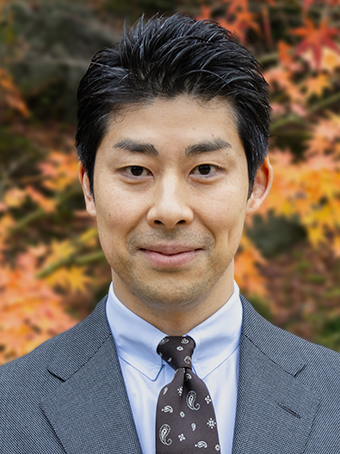
Hirohito Ogi is a senior research fellow at the Institute of Geoeconomics (IOG) studying military strategy and Japan’s defense policy. Before joining the IOG, Mr. Ogi had been a career government official at the Ministry of Defense (MOD) and Ministry of Foreign Affairs (MOFA) for 16 years. From 2021 to 2022, he served as the Principal Deputy Director for the Strategic Intelligence Analysis Office, the Defense Intelligence Division at the MOD, where he led the MOD’s defense intelligence. From 2019 to 2021, he served as a Deputy Director of the Defense Planning and Programming Division at the MOD. He holds a Master’s degree in international affairs from the School of International and Public Affairs (SIPA), Columbia University, and a Bachelor’s degree in arts and sciences from the University of Tokyo. He is the author of various publications including Comparative Study of Defense Industries: Autonomy, Priority, and Sustainability (co-authored, Institute of Geoeconomics, 2023).
View Profile-
 How should Japan respond to China’s nuclear threat?2026.04.09
 - Takaichi is right to call for a ‘new technology-driven nation’2026.04.07
- The Geopolitics of Ports and Pipelines: The Case of The Strait of Hormuz -The Struggle Over Chokepoints-2026.04.06
-
 India's Semiconductor Moment2026.04.03
 - Redesigning U.S.-Japan security in a ‘two-peer’ nuclear era2026.04.02



 Is the Iran Operation Really About China?2026.03.12
- Orbán in the Public Eye: Anti-Ukraine Argument for Delegitimising Brussels2026.02.04
- India's Rising Gravitational Pull2026.03.06
- War in the Persian Gulf means volatility in the global energy market2026.03.26
- Don’t Count on U.S. Domestic Politics to Constrain Trump on Iran2026.03.27