
Challenges for Japan During the U.S.-China ‘Truce’
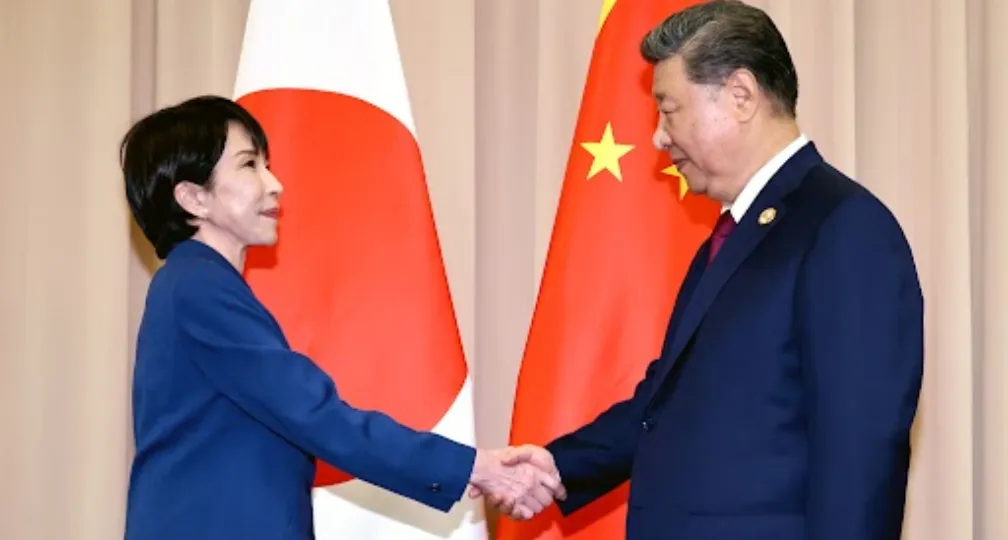
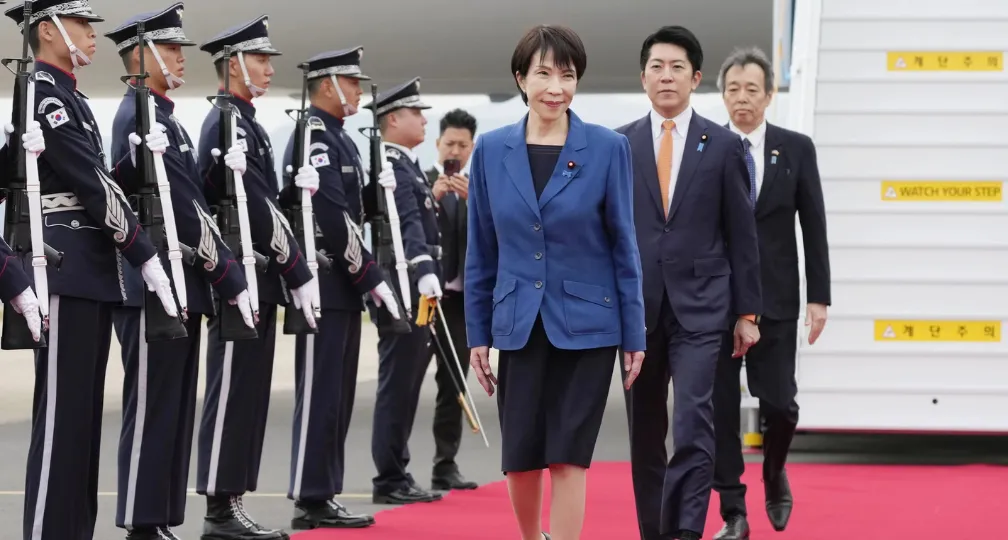
Following her victory at the polls on Sunday, and the mandate that clearly represents, Prime Minister Sanae Takaichi should give top priority to restructuring Japan’s strategy with China. The central challenge facing her administration is how to strengthen deterrence against China while simultaneously seeking stability — or even improvement — in bilateral Japan-China relations. Resolving this difficult puzzle will depend largely on the trajectory of U.S. strategy in East Asia.
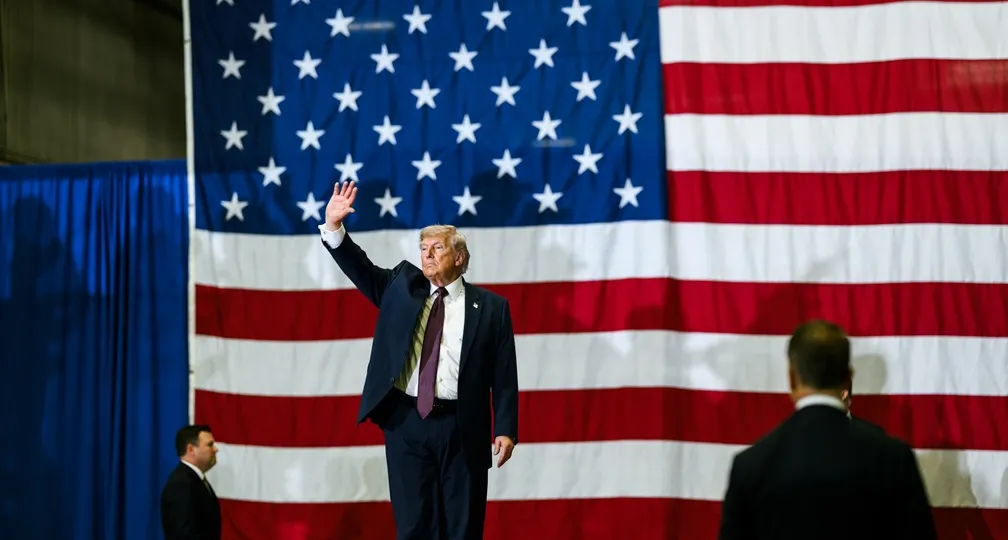
The Trump administration has halted the tariff war with China while prioritizing homeland defense and the Western Hemisphere—an approach that U.S. President Donald Trump has called the “Donroe Doctrine.” China, by contrast, is pursuing a long-term strategy aimed at prevailing in competition with the United States. Beijing seeks to leverage economic power to erode U.S. global influence in order to reshape the international system, values and norms.
For China, which aims to establish a sphere of influence in Asia, the extent of U.S. disengagement from regions beyond the Western Hemisphere serves as a key indicator for its next moves. Under this U.S.-China “truce,” Japan and South Korea sit at the forefront of Beijing’s strategic maneuvering. By drawing the administration of South Korean President Lee Jae closer while applying pressure on Tokyo, China seeks to introduce fissures into the Japan-U.S.-South Korea framework and tilt the regional environment in its favor.
Repeated pressure on Japan has three aims. Domestically, it functions as a “public-opinion war” designed to weaken support for the Takaichi administration. Internationally, it advances a narrative portraying Japan as a dangerous state pursuing “new militarism.” Strategically, it serves as a litmus test of how — and how far — the Trump administration is prepared to respond.
How, then, should Japan approach China? To answer that it’s important to distinguish between immediate “events” requiring prompt responses and deeper “structural” dynamics demanding a longer-term strategic approach.
Among the immediate “events,” swift but measured responses have been required. Following Takaichi’s Nov. 7 parliamentary remarks regarding a possible “threat to Japan’s survival,” Chinese officials overinterpreted her comments as “military intervention in the Taiwan issue.” Beijing actively internationalized this interpretation, including through letters to U.N. Secretary-General Antonio Guterres, while sustaining economic pressure such as restrictions on group tourism to Japan.
Opinion war
Several other signaling actions followed. In early December, a Chinese J-15 fighter reportedly locked radar onto a Japanese Air Self-Defense Force F-15. On Jan. 6, China announced tighter export controls on dual-use items bound for Japan. At the same time, Beijing’s criticism increasingly targeted Prime Minister Takaichi personally. In a letter to the U.N. Secretary-General on Dec. 1, China’s ambassador warned of Japan’s “military expansion” and alleged ambitions to “revive militarism.”
Such framing was likely intended to resonate with Japan’s domestic opposition and left-leaning constituencies, implicitly suggesting that the issue would dissipate if Takaichi were to retract her remarks. Economic measures — ranging from tourism restrictions and advisories discouraging study in Japan to continued bans on seafood imports — gradually expanded. Yet they failed to trigger anti-Japanese demonstrations within China. Many Japanese firms operating there reported limited friction with partners or customers.
In short, Beijing appears to have carefully calibrated its pressure on Tokyo. China’s own economic slowdown constrained its room for escalation, but equally important was the apparent aim of fostering divisions within Japan by amplifying arguments against further deterioration in bilateral relations. This calibrated approach reflects a classic “opinion war.”
The deeper question is why China escalated criticism of Japan at this particular juncture. A central factor stems from changes in U.S.-China relations. In reviewing Chinese diplomacy in 2025, Foreign Minister Wang Yi spoke of advancing a “new type of major-power relations,” signaling renewed confidence in a vision of U.S.-China co-leadership of the global order.
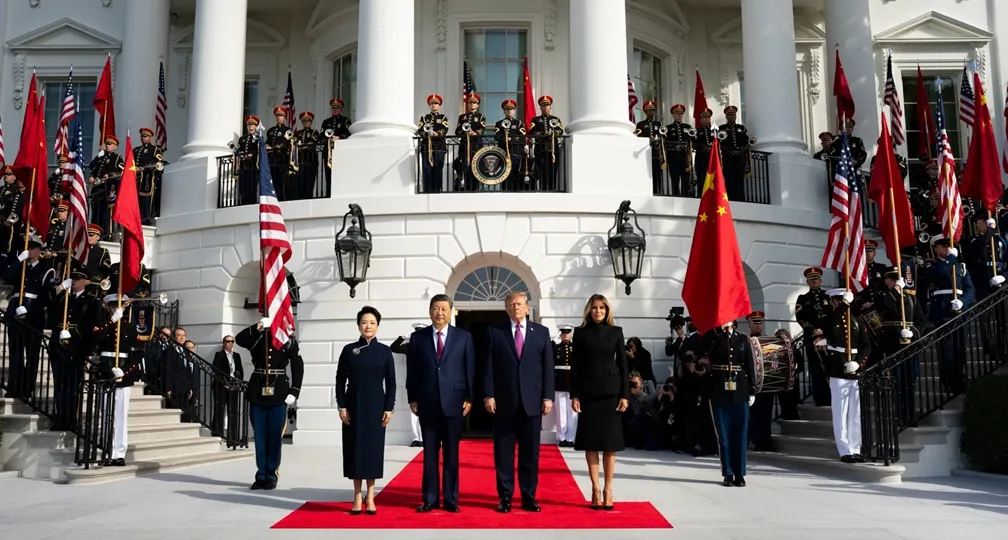
That confidence was reinforced by last October’s U.S.-China summit in South Korea, which agreed to suspend tariffs, sanctions and export controls for one year. By December, the Trump administration had gone further, permitting exports of Nvidia’s H200 AI semiconductors to China—highlighting the leverage created by China’s rare-earth export restrictions.
When rivalry with Washington was intense, Beijing had incentives to avoid worsening relations with Tokyo. As U.S.-China tensions ease, however, China gains diplomatic space to adopt a tougher posture toward Japan. Yet structurally, stable Japan-China relations that preserve economic cooperation would still appear preferable for Beijing. Why then the shift?
The answer lies in China’s effort to project an image of itself as a “global leader” amid strategic competition with the United States. In this narrative, Japan has been cast as a convenient antagonist.
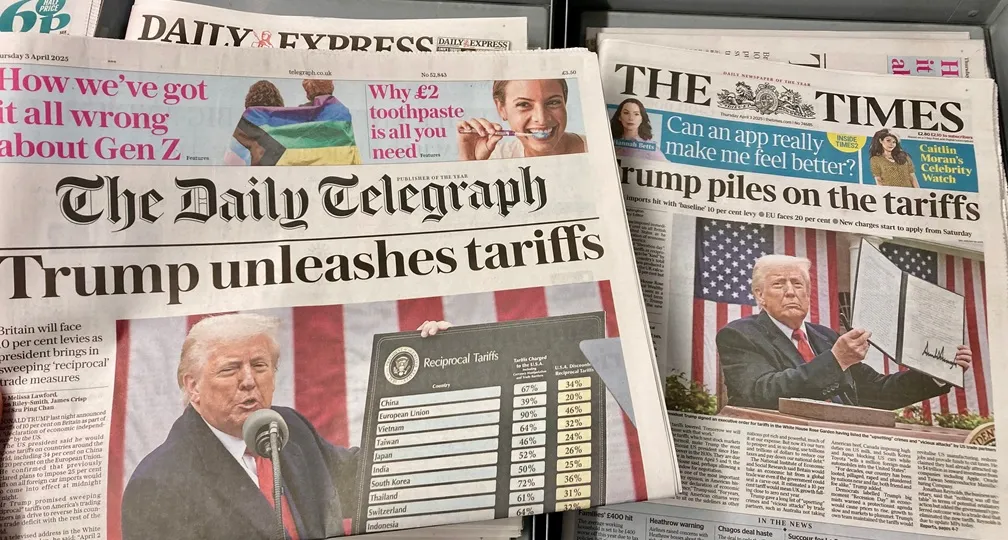
Two political moments in 2025 illustrate this approach. The first was China’s response to the Trump administration’s announcement of sweeping tariff measures in April. Beijing treated the move as a strategic opportunity, combining retaliatory measures with sharper criticism of Washington while intensifying outreach to neighboring states and the Global South.
The second was the Shanghai Cooperation Organization (SCO) summit in late summer. China advanced proposals for an SCO development bank and exclusive economic support mechanisms, emphasizing cohesion among member states. President Xi Jinping also promoted the “Global Governance Initiative,” signaling China’s ambition to lead reforms of the international system.
Originally, Beijing had argued that Western countries monopolized “discourse power,” leaving China structurally disadvantaged. Today, amid a shaken international order and China’s relative rise, Beijing sees an opportunity to expand its own narrative influence. From this perspective, developments such as Russia’s invasion of Ukraine and the second Trump administration have produced a structural shift in global perceptions. Within this environment, criticism of Japan functions as a diplomatic tool for redefining China’s self-image and mobilizing third countries.
Japan image
Japan has responded by carefully explaining the logical flaws in China’s criticism to the international community. This approach is effective as a response to immediate “events,” but insufficient for addressing deeper “structural” challenges. Continuing to engage China on the same discursive terrain is unlikely to stop the deterioration of relations.
What Japanese diplomacy requires is not merely explanation, but a strategy for articulating its own self-image. Japan has long emphasized values such as freedom, democracy and the rule of law, as well as concepts like a “Free and Open Indo-Pacific.” While broadly shareable, these frameworks do not in themselves convey Japan’s national identity.
What kind of “Japan image” can encompass these narratives while projecting a persuasive and positive vision? As a starting point, three points merit consideration: a peaceful nation, a moderate society and a maritime state. Japan’s political and social systems function at a high level, characterized by respect for the rule of law, low corruption and universal health coverage — strengths that overlap with the type of state China itself aspires to become. Meanwhile, identifying as a maritime state supports Japan’s strategy to revitalize its shipbuilding industry and provides a shared identity with other maritime nations, including the United Kingdom, South Korea, Australia and the Philippines.
Articulating what “Japan” is in its own terms does more than counter China’s villain-casting narrative; it also prompts the Japanese public to consciously reflect on their national identity. Whatever concepts ultimately prevail, the essential task is for the Japanese themselves to define and consolidate the discursive ground on which Japan’s image is built.
(Photo Credit: The Asahi Shimbun / Getty Images)
[Note] This article was posted to the Japan Times on Feb 11, 2026:
https://www.japantimes.co.jp/commentary/2026/02/11/japan/us-china-truce-japan-challenge/

Geoeconomic Briefing
Geoeconomic Briefing is a series featuring researchers at the IOG focused on Japan’s challenges in that field. It also provides analyses of the state of the world and trade risks, as well as technological and industrial structures (Editor-in-chief: Dr. Kazuto Suzuki, Director, Institute of Geoeconomics (IOG); Professor, The University of Tokyo).
Disclaimer: The opinions expressed in this Geoeconomic Briefing do not necessarily reflect those of the International House of Japan, the Institute of Geoeconomics (IOG) or any other organizations to which the author belongs.

Visiting Senior Fellow
Naoko Eto is a professor in the Department of Political Science at Gakushuin University. Her main research interests include East Asian affairs and Japan-China relations. She is a member of the Expert Committee on Industrial and Technological Infrastructure Strengthening for Economic Security at the Ministry of Economy, Trade and Industry (METI), Industrial Structure Council, METI and the Customs and Foreign Exchange Council at the Ministry of Finance (MOF). She was also a visiting research fellow at the School of International Studies, Peking University, the East Asian Institute, Singapore National University, and a visiting senior fellow at the Mercator Institute for China Studies. [Concurrent Position] Professor, Department of Political Science, Gakushuin University
View Profile-
 Rebalancing Bilateral Trade or Reordering Global Production?2026.10.23
 - Connecting Europe and the Indo-Pacific: Why Japan and Germany Need Stronger Space Security Cooperation2026.10.20
- China’s Calculus Behind the State Visit to the U.S.: Different Visions of “Stability”2026.10.16
- Trump Faces a Reckoning in the Midterms, but it Might Not Matter for Tariffs2026.10.09
-
 BRICS in India2026.10.09