
Is the Iran Operation Really About China?
The latest regulatory developments on economic security & geoeconomics
By Paul Nadeau, Visiting Research Fellow, Institute of Geoeconomics (IOG)
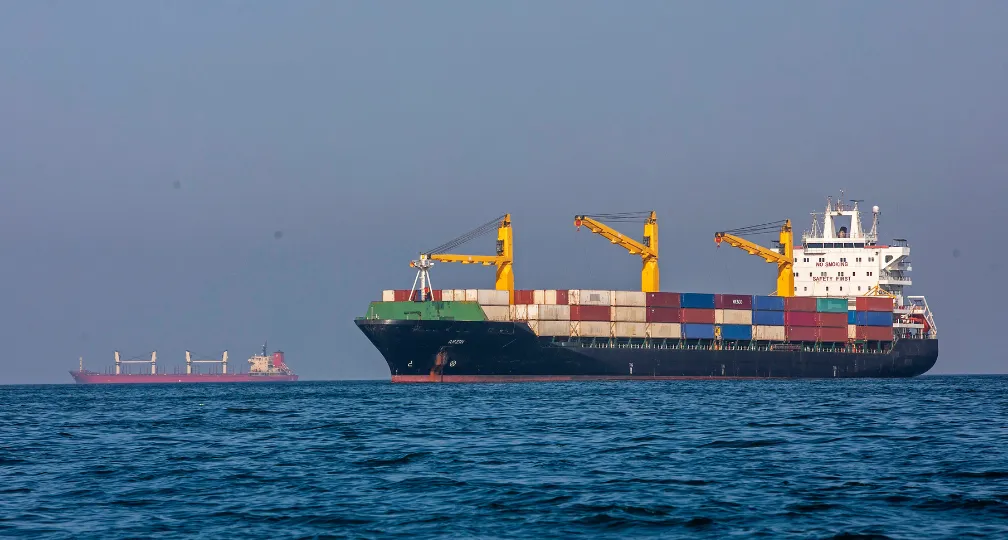
Iran War Stirs Economic Trouble: The Israeli – U.S. war against Iran, launched on February 28, has had a series of economic policy impacts, largely resulting from the Persian Gulf’s role in energy markets and the Strait of Hormuz as a chokepoint in energy shipments. Several major container shipping companies have suspended transit through the area as a result of the conflict. Oil and liquified natural gas (LNG) prices have spiked, leading to concerns about higher energy costs and inflation, particularly in East Asia which relies on the Middle East for much of its energy. The Trump administration directed the Development Finance Corporation to provide insurance for losses up to $20 billion in the Strait of Hormuz.
Countries Mark Anniversary of Russian Invasion with New Sanctions: In commemoration of the fourth anniversary of Russia’s invasion of Ukraine on February 24, several countries marked the event with new measures directed towards Russia, including:
・Australia’s Foreign Affairs Ministry announced it would lower the price cap on Russian gas US$47.60 a barrel to US$44.10 and would sanction 180 targets across a variety of sectors including cryptocurrency entities that enable cross-border payments to facilitate sanctions circumvention.
・The Canadian government announced it would impose sanctions on 21 individuals and 53 entities, as well as 100 vessels from Russia’s shadow fleet and would also lower its price cap for Russian crude oil from US$47.60 to US$44.10 per barrel.
・New Zealand’s government announced that it would sanction 100 shadow fleet vessels alongside alternative payment providers, malicious cyber actors, and those supporting Russia’s war effort, and would lower the price cap on Russian crude oil.
・The United Kingdom’s Foreign, Commonwealth, and Development Office announced nearly 300 new sanctions against Russia, targeting its energy revenues. Specifically, the new measures target PJSC Transneft, an oil pipeline company responsible for transporting 80 percent of Russia’s oil exports, sanctioning 175 companies in the “2Rivers” oil network, one of the largest shadow fleet operators, as well as banks, actors in Russia’s LNG industry, civil nuclear energy sector, and more.
・The U.S. State Department issued sanctions for the first time under the Protecting American Intellectual Property Act (PAIPA) against a Russia-based cyber exploits broker network in connection with the theft of trade secrets from U.S. persons. Concurrently, the U.S. Treasury Department designated additional individuals and entities in the network operating in Russia, Uzbekistan, and the UAE.
・Furthermore, Hungary vetoed a European Union effort to impose a 20th round of sanctions against Russia. However, the European Council imposed restrictive measures on eight individuals responsible for shuman rights violations, the repression of civil society and democratic opposition, and for undermining democracy and the rule of law in Russia.
Treasury Announces Further Sanctions on Iran: On February 25, the U.S. Treasury Department sanctioned more than 30 individuals, entities, and vessels enabling illicit Iranian petroleum sales and Iran’s ballistic missile and advanced conventional weapons production.
Treasury Lifts Sanctions on Mali Officials: On February 26, the U.S. Treasury Department announced that it had lifted sanctions targeting three senior Malian officials – Defense Minister Sadio Camara and senior military officials Alou Boi Diarra and Adama Bagayoko – for their relationship with Russia’s mercenary group Wagner. The announcement comes amidst a wider thawing of relations between Mali and the United States.
OFAC Sanctions Rwanda Defense Force: On March 2, the U.S. Treasury Department’s Office of Foreign Assets Control (OFAC) announced that it had sanctioned the Rwanda Defense Force and four of its senior officials for actively supporting, training, and fighting alongside the March 23 Movement, a U.S.- and U.N.-sanctioned armed group responsible for human rights abuses and a mass displacement crisis in the Democratic Republic of the Congo.
CIT Orders IEEPA Tariff Refunds: On March 4, the U.S. Court of International Trade (CIT) issued an order that tariffs collected as part of the International Emergency Economic Powers Act (IEEPA) were unlawful and should be refunded. As a result, the CIT directed U.S. Customs and Border Protection (CBP) to liquidate unliquidated entries (entries whose tariff payments have not yet been finalized) without IEEPA tariffs and, for liquidated entries that are not yet final, reliquidate those entries without IEEPA tariffs for all importers, not only those that have filed lawsuits to secure refunds. The U.S. Department of Justice and CBP are expected to appeal the ruling, arguing that refunds should be issued only to importers who sue rather than to all importers, but suggested it could begin issuing refunds in April after updating its technology.
States Sue Trump over Section 122 Tariffs: A group of 24 U.S. states has sued the Trump administration’s imposition of 10 percent tariffs under Section 122, Trump’s initial effort to restore tariffs following the U.S. Supreme Court’s decision to block tariffs under the International Economic Emergency Powers Act (IEEPA). The plaintiffs argue that the provision Trump has turned to is intended to respond to short-term monetary imbalances and not chronic trade deficits. The suit has been filed with the U.S. Court of International Trade (CIT) which has jurisdiction over trade issues.
Analysis: Is the Iran Operation Really About China?
By Andrew Capistrano, Visiting Research Fellow, Institute of Geoeconomics (IOG)
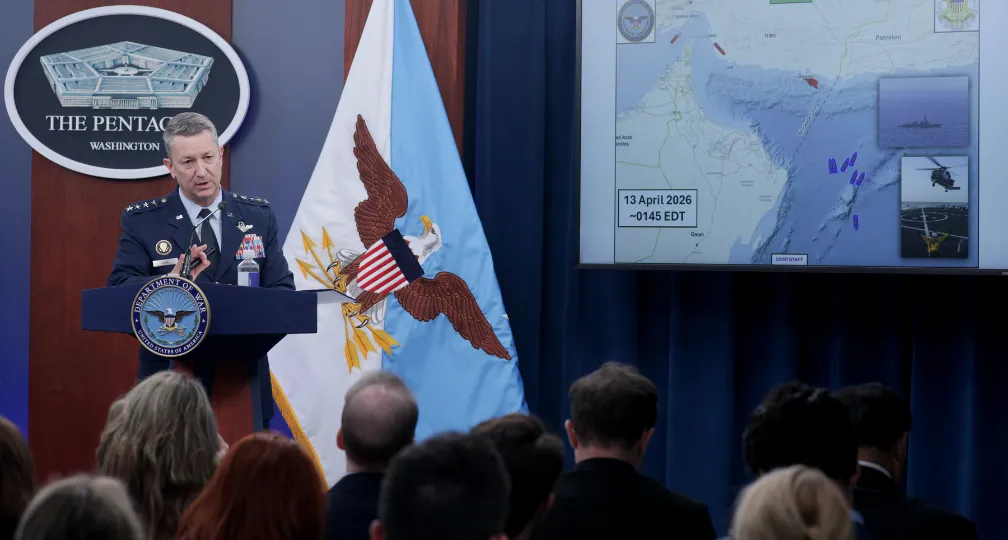
Conflicts in the Persian Gulf rarely remain regional in their consequences. The coordinated US-Israeli strikes against Iran that began on 28 February are a case in point, as they immediately sparked a debate about the Trump administration’s wider strategic intentions. Some analysts interpret the air campaign as fundamentally regional, aimed at destroying Iran’s nuclear program, missile arsenal, drone production, and naval capabilities after years of failed diplomacy. Others see the operation as an indirect US blow against China—disrupting its access to discounted Iranian oil, weakening a key partner in its diplomatic network, and reinforcing US influence over critical energy routes.
Each of these interpretations captures part of the story, but neither fully explains the strategic implications of the conflict. As the administration has stated, the immediate drivers of the operation lie in Iran itself: exploiting its weakened military capabilities (and the dismantling of its regional proxy network) following the 12-day war with Israel in 2025 to finally neutralize a future threat to US security interests. Yet the geography of global energy flows means disruptions in the Gulf reverberate across the international economy. In a strategic environment increasingly shaped by US-China competition, the geoeconomic ripple effects of such a conflict are unlikely to have been overlooked in Washington even when they are not the primary motivation for action.
Three questions help clarify the relationship between the Iran operation and the larger US-China dynamic. First, does the conflict significantly weaken China’s position, particularly its energy security? Second, does it strengthen US geoeconomic leverage through influence over energy flows and strategic chokepoints? And third, could the weakening—or even collapsefof Iran’s regime ultimately create opportunities for China, whose deeper economic interests lie not in Iran itself but in the broader Gulf region?
The answers depend partly on the level of analysis applied to the conflict. At the tactical level, the operation is overwhelmingly about Iran. At the regional level, it reshapes the balance of power across the Gulf, potentially opening up a pathway to further operationalize Trump’s “Abraham Accords”. At the global level, however, disruptions in energy markets and maritime chokepoints will inevitably intersect with US-China strategic and geoeconomic competition.
Indeed, the strikes were rooted in longstanding US concerns about Iranian military capabilities, and these motivations are sufficient to explain the decision to use force. Iran has for years occupied a position at the intersection of multiple regional pressure points: maritime energy routes in the Persian Gulf, logistical corridors connecting the Middle East and Central Asia, and proxy networks capable of introducing instability at key nodes of global commerce. From Washington’s perspective, degrading these capabilities reduces the likelihood of recurring crises that repeatedly draw US attention back to the Middle East at a moment when strategic planners increasingly identify the Indo-Pacific as the primary theater of competition.
If the weakening of Iran ultimately contributes to a more stable regional balance—one in which Israel, the Gulf states, and other Middle Eastern partners assume greater security responsibilities—that outcome would align with a wider set of priorities visible in the Trump administration’s approach. There would also be more bandwidth to pursue initiatives aimed at reindustrializing the domestic economy and strengthening control over key corridors and supply chains, while reinforcing US advantages in energy and the dollar system, securing access to critical minerals, and expanding investment in advanced technologies and strategic infrastructure.
At the same time, China’s own ambitions in the region are unfolding in a geopolitical landscape constrained by US military bases and alliance networks. From this standpoint, Iran, as a BRICs and SCO member, forms part of China’s broader effort to cultivate political and economic networks outside the US-led international order through infrastructure projects linked to the Belt and Road Initiative, port and logistics investments, and continued economic engagement with sanctioned states such as Russia and Venezuela. To the extent that the Iran operation weakens one of the most prominent members of that network, it could represent a setback for China’s wider diplomatic strategy.
Still, the broader implications of the conflict for the US-China dynamic arise less from the regional balance itself than from the geoeconomic structure in which it unfolds. For policymakers in Washington, these were unlikely to have been incidental, since economic security has become central to how the US approaches competition with China.
During Trump’s second term, US strategy has increasingly focused on securing critical nodes of global trade and supply chains, including maritime chokepoints such as the Panama Canal and the Suez-Red Sea corridor—locations whose control can safeguard vital flows while potentially denying access to rivals and shaping how the costs of disruption are distributed among major economies. The Persian Gulf remains one of the central nodes of the global energy system: the Strait of Hormuz alone carries roughly one-fifth of global seaborne oil shipments, along with significant volumes of LNG and petrochemical feedstocks, so disruptions in this region have cascading effects across energy markets, shipping routes, and industrial supply chains, even when some shipments continue to move. The longer the conflict lasts, the clearer these second-order effects will become.
Such effects matter not only for global energy stability but also for technological competition, since access to energy increasingly underpins the industrial foundations of strategic power. Semiconductor fabrication and AI data centers, for example, depend on large and reliable energy supplies. Energy geography continues to shape the dynamics of economic and technological competition between major powers, with dominance over energy systems conferring advantages that are unevenly distributed across the system.
In this respect, the conflict highlights features of the geoeconomic landscape that may favor the US: it occupies a uniquely strong position in global energy markets as both a major producer and exporter of oil and LNG. Periods of disruption in the Persian Gulf can redirect demand toward US exports and reinforce the central role of dollar-denominated energy markets, while simultaneously constraining experiments with alternative settlement systems built around the RMB.
Controlling energy flows also generates leverage. Greater influence over Middle Eastern energy markets could therefore strengthen the US position in its negotiations with China, particularly as Trump prepares for his trip to Beijing in less than a month. For this reason, even if policymakers in Washington did view the geoeconomic consequences of the Iran operation through the lens of US-China competition, there would be little advantage in stating such a rationale publicly. Framing the conflict primarily in terms of Iran’s military capabilities and regional destabilization avoids unnecessary escalation with China while preserving diplomatic flexibility.
In this context, energy leverage also intersects with another domain of strategic competition: critical minerals. China dominates the global processing of rare earth elements and has previously threatened to restrict exports during political disputes. Of course, greater influence over Middle Eastern energy flows would not eliminate US vulnerabilities in critical mineral supply chains, but it could provide countervailing leverage. In a prolonged economic confrontation, control over energy supplies and control over critical minerals may increasingly function as two sides of the same geoeconomic equation.
This broader geoeconomic perspective helps explain why some analysts argue that the Iran operation is “about China”. Beyond the political impact of shifting regional balances, China’s position in the global energy system does create exploitable vulnerabilities: it relies heavily on imported energy, with roughly 70% of its oil consumption supplied from abroad. The Middle East remains China’s most important external source, accounting for nearly half of its crude imports. And Iranian oil has played a meaningful role within this structure. In 2025, China imported approximately 1.38 million barrels per day from Iran—around 13-14% of its seaborne crude imports and more than 80% of Iran’s total exports. Much of this oil moved through sanctions-evading networks and was purchased in RMB at discounted prices, part of China’s effort to conduct energy trade outside the dollar system, similar to its smaller but still significant imports from Venezuela.
Disruptions to Iranian production or exports therefore carry immediate implications for China’s position within global energy markets. Any sustained interruption of shipping through the Strait of Hormuz would place additional pressure on an economy already experiencing deflation and slower growth, while supply uncertainty complicates contingency planning for potential crises elsewhere. At the same time, if Iran’s capabilities to disrupt shipping are degraded and maritime security in the Gulf becomes more tightly managed by US-aligned forces, influence over energy flows through this chokepoint could shift in ways that affect China’s energy security in the future.
Yet despite the conflict, reports indicate that some Iranian shipments may still be reaching China. Rather than completely cutting off all oil flows through the Strait of Hormuz, Iran has suggested that restrictions are directed primarily at US and Israeli vessels. Even if some cargoes continue to move, however, the scale and reliability of these flows remain uncertain. Insurance costs, shipping risks, and the broader disruption to Gulf traffic could still reduce the volume of oil reaching Chinese refineries; and the strategic significance of the conflict lies less in current shipments than in the longer-term question of control over the Strait itself.
China has nevertheless spent years preparing for precisely such shocks. Strategic petroleum reserves have expanded significantly, with stockpiles estimated to cover roughly three months of imports under emergency conditions. In 2025 alone China reportedly added around 400 million barrels to its reserves. China has also diversified suppliers, importing substantial volumes of crude from Russia while maintaining long-term energy partnerships with major Gulf producers such as Saudi Arabia and the UAE. Domestic coal production and rapidly expanding renewable capacity provide additional buffers against volatility in global oil markets, allowing China to hedge against vulnerabilities in seaborne energy supply chains and limit its dependence on Russia.
Within this broader pattern of diversification, Russia is also likely to benefit from the shifts in global energy markets created by the conflict. Higher oil prices increase revenue from Russian exports, while disruptions to Gulf shipping could deepen China’s reliance on Russian crude delivered through pipelines and overland routes that are less exposed to maritime chokepoints such as the Strait of Hormuz. In this sense, the conflict may reinforce Russia’s position as China’s critical energy partner, even as it simultaneously strengthens the strategic role of US energy exports in global markets.
Although disruptions to Iranian exports affect Chinese energy flows, these factors—particularly Russia’s ability to mitigate the impact—suggest that the notion of the Iran conflict as a decisive blow against China is overstated. Added to this, Iran occupies a somewhat paradoxical position in China’s Middle Eastern strategy. Politically, Tehran serves as a useful Belt and Road Initiative partner to challenge aspects of the US-led international order; economically, however, China’s deeper interests lie elsewhere in the region.
Trade and investment patterns illustrate this distinction. China’s commercial relationships with the Gulf monarchies dwarf its economic ties with Iran. Saudi Arabia has frequently ranked as China’s largest external oil supplier, and bilateral trade between the two countries has exceeded $100 billion annually in recent years. The UAE functions as a major logistics and financial hub for Chinese firms operating across the Middle East, while Iraq and Kuwait supply additional volumes of crude that anchor China’s long-term energy strategy.
This wider Gulf orientation means that China’s economic interests do not necessarily rely on the survival of Iran’s current regime. A government in Tehran less isolated from international markets might eventually integrate more fully into regional trade networks, potentially expanding rather than constraining China’s economic options. In short, China may lose a politically aligned partner in efforts to expand non-dollar energy settlement if Iran’s current leadership weakens dramatically. Yet its long-term economic priorities—stable energy imports, expanding trade with Gulf states, and secure maritime routes—do not depend on Iran alone.
The debate over whether the Iran operation was “about China” therefore rests on the level of analysis applied to the conflict, and on how one interprets the strategic logic behind the US decision to use force. Attacking Iran may indeed place short-term pressure on China’s energy position while simultaneously strengthening certain forms of US geoeconomic leverage. Over the longer term, however, the consequences may prove more ambiguous, particularly if changes in Iran ultimately stabilize Gulf energy flows and expand China’s economic opportunities in the region.
In the end, conflicts that begin with regional security objectives increasingly unfold within a global system defined by energy flows, supply chains, and geoeconomic rivalry—ensuring that their consequences shape the strategic environment in which major powers compete, even when they were not the primary targets of the conflict itself.
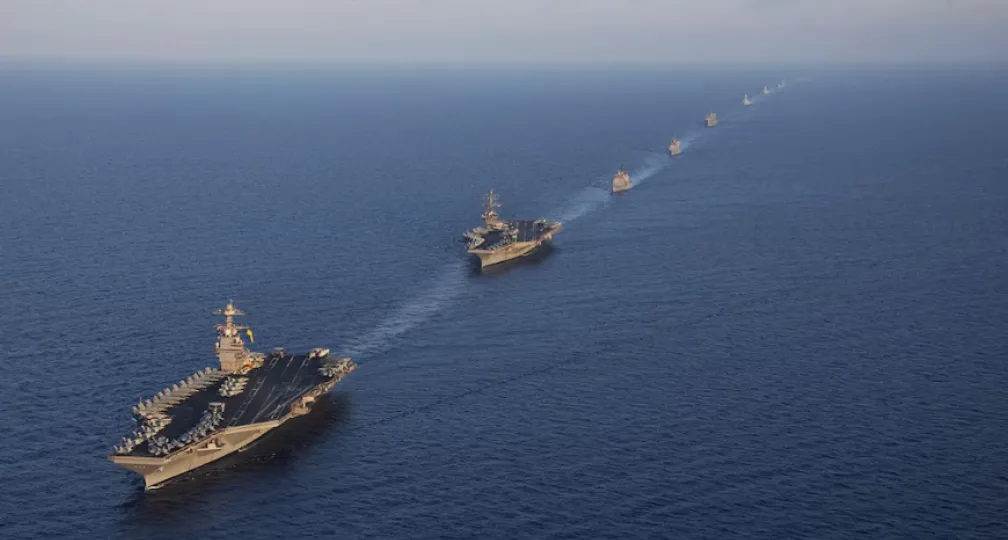
(Photo: US Department of Defense Website, Navy Petty Officer 2nd Class Jacob Mattingly)
Disclaimer: The views expressed in this IOG Economic Intelligence Report do not necessarily reflect
those of the API, the Institute of Geoeconomics (IOG) or any other organizations to which the author belongs.
API/IOG English Newsletter
Edited by Paul Nadeau, the newsletter will monthly keep up to date on geoeconomic agenda, IOG Intelligencce report, geoeconomics briefings, IOG geoeconomic insights, new publications, events, research activities, media coverage, and more.


Visiting Research Fellow
Andrew Capistrano is a geopolitical risk consultant based in Tokyo, and Director of Research at PTB Global Advisors in Washington, DC, where he specializes in industrial policy, international trade and capital flows, and US-China relations. He is also a visiting scholar at the Waseda Institute of Political Economy and a visiting lecturer at the School of Political Science and Economics, Waseda University. Previously, he worked at the US Embassy’s American Center Japan, and as a research associate at the Rebuild Japan Initiative Foundation/Asia-Pacific Initiative. Dr Capistrano holds a BA from the University of California, Berkeley; an MA in political science (international relations and political economy) from Waseda University; and a PhD in international history from the London School of Economics. His academic work focuses on the diplomatic history of East Asia from the mid-19th to the mid-20th centuries, applying game-theoretic concepts to show how China's economic treaties with the foreign powers created unique bargaining dynamics and cooperation problems. During his doctoral studies he was a research student affiliate at the Suntory and Toyota International Centres for Economics and Related Disciplines (STICERD) in London.
View ProfileVisiting Research Fellow
Paul Nadeau is an adjunct assistant professor at Temple University's Japan campus, co-founder & editor of Tokyo Review, and an adjunct fellow with the Scholl Chair in International Business at the Center for Strategic and International Studies (CSIS). He was previously a private secretary with the Japanese Diet and as a member of the foreign affairs and trade staff of Senator Olympia Snowe. He holds a B.A. from the George Washington University, an M.A. in law and diplomacy from the Fletcher School at Tufts University, and a PhD from the University of Tokyo's Graduate School of Public Policy. His research focuses on the intersection of domestic and international politics, with specific focuses on political partisanship and international trade policy. His commentary has appeared on BBC News, New York Times, Nikkei Asian Review, Japan Times, and more.
View Profile-
 Iran: A ‘War of Choice’ No Longer Worth the Cost2026.08.21
 - Why the Strait of Hormuz Is a Warning for Japan2026.08.18
- Tariff Tracker: A Guide to Tariff Authorities and their Uses2026.08.17
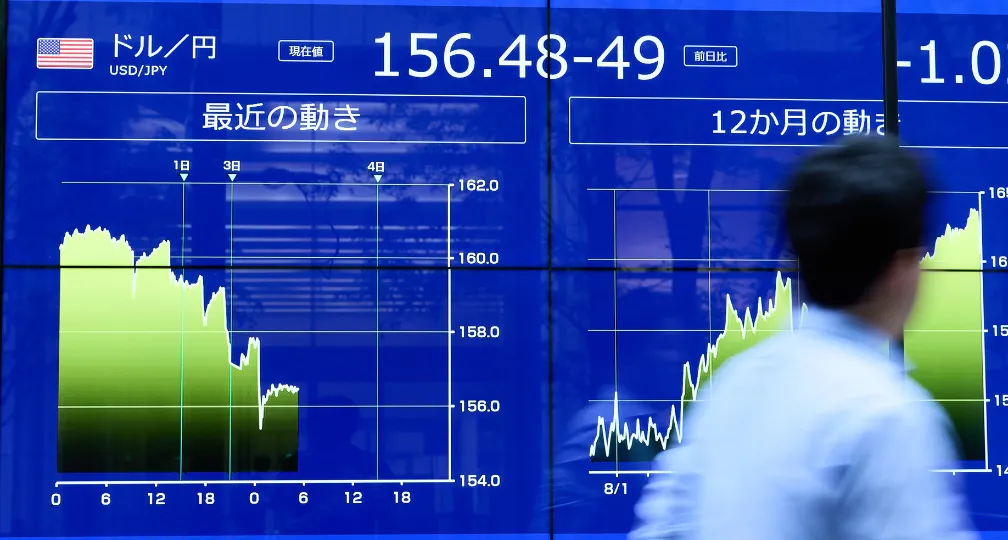
- FX Statecraft: Another Explanation for the Yen Intervention2026.08.14
- Why Takaichi Can’t Be the Next Shinzo Abe2026.08.13