
India’s Semiconductor Moment
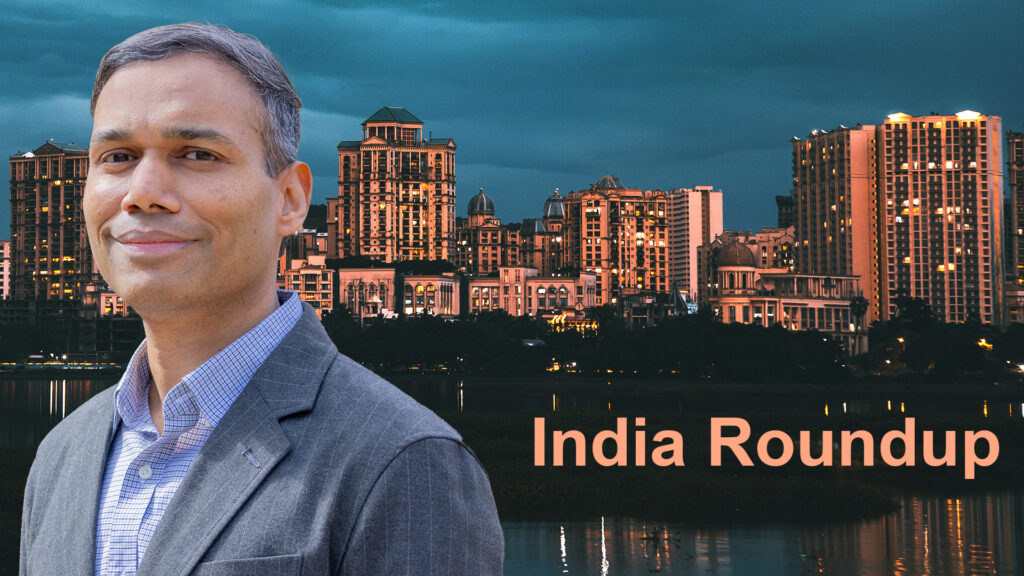
On March 31, in the industrial corridor of Sanand, Gujarat, Prime Minister Narendra Modi inaugurated the Kaynes Semicon OSAT facility, a plant designed to test and package six million semiconductor chips per day. A month earlier, at a neighbouring site, he had switched on commercial production at Micron Technology’s assembly plant, making it the first US-headquartered chipmaker to manufacture on Indian soil. The state of Gujarat now hosts the early infrastructure of what India hopes will become a global semiconductor corridor.
It is a live commercial opportunity, reinforced in March by a surge of India-Japan institutional activity and by the formal launch, in the Union Budget, of India Semiconductor Mission (ISM) 2.0.
1.The Chip Push
India’s semiconductor ambitions are not new. The original India Semiconductor Mission, launched in 2021 with a commitment of ₹76,000 crore (roughly ¥1.35 trillion), was designed to lure fabrication, assembly, and packaging plants through large fiscal incentives. The results have been tangible: as of March 2026, ten semiconductor units have been approved, including two fabrication plants and eight ATMP/OSAT facilities, and investment commitments have reached approximately ₹1.6 trillion ($17.3 billion). One unit, Micron’s Sanand plant, has begun commercial production. Three others are running pilot lines.
What changed in this year’s Budget is the ambition’s centre of gravity. ISM 2.0, shifts focus from attracting individual fabs to building the surrounding ecosystem: semiconductor equipment and materials manufacturing, full-stack indigenous chip design IP, supply chain resilience, and research-and-development centres. A budgetary provision of ₹1,000 crore has been allocated for FY 2026-27, with the broader Modified Programme for Semiconductor and Display Manufacturing receiving ₹8,000 crore. The Tata-Powerchip fabrication plant in Gujarat (₹91,000 crore), the Tata ATMP facility in Assam (₹27,000 crore), and CG Power’s joint venture with Japan’s Renesas for an OSAT plant (₹7,600 crore) remain the headline projects. Commercial chip production from these facilities is targeted for late 2026.
The strategic logic is straightforward. India currently imports nearly all of its semiconductors. Its domestic market is projected to reach $63 billion by 2026. And global supply chain disruptions, from pandemic-era shortages to the US-China technology decoupling, have made chip sovereignty a matter of national security for every major economy. India’s argument is that it already has the design talent (roughly 20% of the global semiconductor chip design workforce operates from India) and the demand. What it lacks is the manufacturing middle: equipment, materials, and packaging at scale.
The Japan Connection: Equipment, Materials, and Shared Vulnerability
This is precisely where Japan fits. A recent report published by the Observer Research Foundation in March 2026, makes the bilateral case explicitly. Drawing on a Track 1.5 conference held in New Delhi in December 2025, the report argues that India and Japan share a structural interest in diversifying semiconductor supply chains away from concentrated East Asian nodes. Japan brings world-class semiconductor equipment firms, specialty chemical producers, and advanced materials expertise. India brings scale demand, an expanding design workforce, and a policy architecture now actively courting ecosystem players.
The Renesas-CG Power OSAT partnership is the clearest commercial proof point. But the opportunity set runs deeper: ISM 2.0’s emphasis on equipment and materials manufacturing is, in effect, a structured invitation to the Japanese supply chain. EE Times noted in February that the approach “mirrors trends in the U.S., Europe, and Japan, where long-term competitiveness is increasingly shaped by ecosystem depth rather than the presence of individual fabs.” For Japanese firms evaluating India as a production base, the semiconductor ecosystem offers a new, high-value entry point beyond the automobile sector that has traditionally anchored the bilateral economic relationship.
2.A Month of Japan-India Institutional Intensity
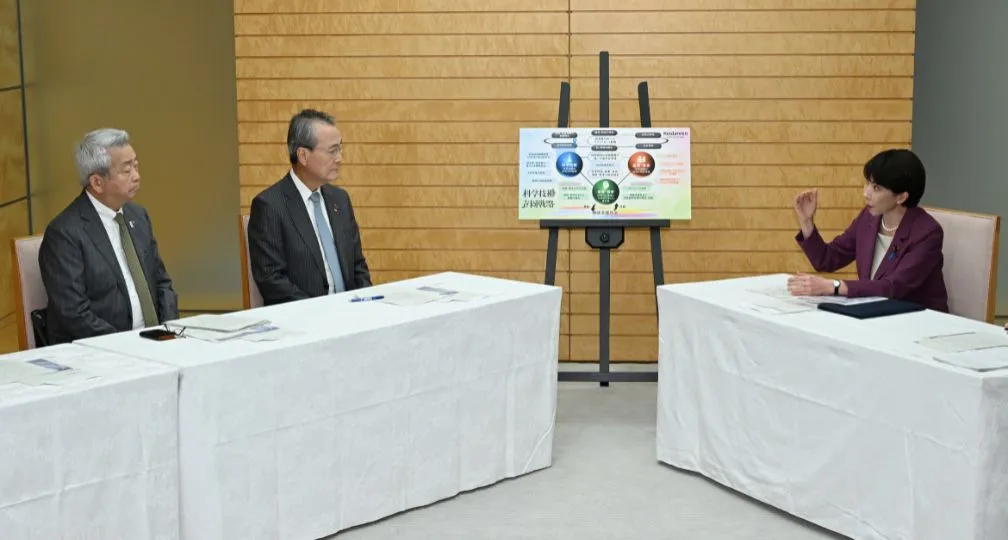
March 2026 was, by any measure, an unusually dense month for India-Japan institutional engagement, and it involved a structural signal. Japan’s Ministry of Foreign Affairs established a dedicated office to coordinate India-related policy, an administrative move that reflects the growing strategic weight New Delhi carries in Tokyo’s foreign policy calculus. For a bureaucracy not known for hasty reorganisations, the decision is significant.
On March 2, the 7th meeting of the Joint Committee under the Japan-India Comprehensive Economic Partnership Agreement (CEPA) convened in Tokyo. The two sides reviewed the operation of the nearly fifteen-year-old CEPA and discussed deepening cooperation across sectors, a conversation given fresh urgency by India’s recent EU and US trade deals, which are reshaping the competitive landscape for Japanese exporters. Two days later, on March 4, the Reserve Bank of India and the Bank of Japan renewed their Bilateral Currency Swap Arrangement for three years, maintaining the facility at $75 billion, a financial safety net that proved prescient as the Iran crisis roiled energy markets later that month.
The diplomatic tempo continued: Special Advisor to the Prime Minister of Japan, Oue Sadamasa, visited India on March 4–6; State Minister for Foreign Affairs Horii had visited on March 2; Indian Members of Parliament called on State Minister Kunimitsu on March 5; and the Business Co-operation Committees of both countries met with senior Japanese officials on March 13. On March 24, Japan and India exchanged notes on four new ODA-funded projects worth approximately ¥276 billion: Bengaluru Metro Phase 3, Mumbai Metro Line 11, healthcare infrastructure in Maharashtra, and sustainable horticulture in Punjab. The month closed with External Affairs Minister S. Jaishankar addressing the 7th India-Japan Indo-Pacific Forum and the 10th Track 1.5 Dialogue on March 31, where he noted that while the 5-trillion-yen investment target by 2027 remains on track, bilateral trade figures “still fall below expectations.”
The message, read cumulatively, is that both governments recognise the relationship’s strategic potential outpaces its commercial delivery, and are working, with increasing institutional machinery, to close the gap.
3.The Hormuz Shock
The most consequential external development of March was the escalation of the Iran conflict following ‘Operation Epic Fury’ on February 28 and Iran’s subsequent blockade of the Strait of Hormuz. For India (the world’s third-largest crude importer, dependent on the West Asia for roughly half its crude and 90% of its LPG imports) the impact was immediate. Brent crude surged 35% from pre-conflict levels, the rupee slumped to a record low of 94.78 against the dollar, and LPG supply disruptions triggered rationing of commercial supplies and government invocation of the Essential Commodities Act. On March 27, Finance Ministry announced a ₹10-per-litre cut in central excise duties on petrol and diesel, alongside new export duties on diesel and jet fuel.
The International Energy Agency described the situation as the “greatest global energy security challenge in history.” For Japan, the stakes are comparable: Asian economies account for 75% of oil and 59% of LNG exports transiting the strait, and QatarEnergy declared force majeure on LNG contracts after Iranian strikes damaged the Ras Laffan complex. The India-Japan currency swap, renewed days before the crisis erupted, now functions as more than a symbolic pillar of trust, it is an active stabilisation mechanism in a region facing coordinated energy stress.
4.Macro Snapshot: Strong Start, Cautious Close
India’s economy entered 2026 with formidable momentum. The OECD’s March Interim Outlook projected 7.6% real GDP growth for FY26, making India the fastest-growing major economy. The first advance estimates pegged growth at 7.4%, supported by robust consumption, government capital expenditure, and a strong services sector. However, March data marked a turning point. The HSBC Flash Composite PMI fell to 56.5 from 58.9 in February, the slowest expansion since October 2022. E-way bill generation declined month-on-month. The Finance Ministry’s March Economic Review acknowledged that “the balance of risks remains tilted to the downside,” citing external shocks from West Asia as the primary concern. SBI (State Bank of India) Research estimates that a sustained $10-per-barrel crude price increase could widen India’s current account deficit by 36 basis points and raise retail inflation by 35–40 basis points.
5.GDP Rebased, Statistics Refreshed
On February 27, India’s National Statistics Office released a new GDP series with FY23 as the base year, replacing the 2011–12 series. The revision introduces updated methodology and broader sectoral coverage. Under the new series, post-COVID growth rates have been recalibrated: FY24 at 9.2%, FY25 at 6.5%, FY26 (first advance estimate) at 7.4%. For analysts benchmarking India’s performance, the new series provides a more contemporary picture of the economy’s structural composition, particularly the rising weight of digital services and formalised enterprise.
6.Monetary Policy: The RBI’s Tightrope
After reducing the policy rate to 5.25% in December 2025 to support growth, the Reserve Bank of India now faces the reverse pressure. The OECD anticipates a possible temporary rate hike in April–June 2026 to counter oil-driven inflationary pressures. Retail inflation has begun edging up, driven by food prices, while the full pass-through of crude oil costs has yet to be reflected. MUFG Research warns that if oil sustains at $100/barrel, the rupee could weaken to 95.50 by year-end. Fitch Ratings projects inflation rising to 4.5% by December 2026. The RBI’s challenge is classic for an oil-importing emerging economy: tighten too early and choke a growth cycle; wait too long and lose the inflation anchor.
7.India-EU Aviation Pact and Airbus in Karnataka
India and the European Union signed an aviation production agreement to enhance safety and regulatory cooperation, with plans for Airbus helicopter assembly in Karnataka. The deal follows the landmark India-EU Free Trade Agreement concluded on January 27, covering tariff liberalisation on over 96% of traded goods, mobility and migration agreements, and a security and defence partnership. For Japanese aerospace suppliers already present in India, the Airbus assembly line represents a potential integration point into European supply chains operating from Indian soil.
Looking Ahead
The coming month will be shaped by three variables: the duration of the Hormuz disruption and its inflationary trajectory; the RBI’s April policy decision; and the progress of India-US trade agreement negotiations following the Supreme Court’s invalidation of IEEPA tariffs. For corporates, the semiconductor ecosystem story is one to track with particular attention: ISM 2.0’s equipment and materials focus is, functionally, an open door.
Disclaimer:The views expressed in this India Roundup do not necessarily reflect those of the API, the Institute of Geoeconomics (IOG) or any other organizations to which the author belongs.
IOG English Newsletter
Subscribe to the English IOG Newsletter to stay up to date on IOG’s activities across various briefings, op-eds, YouTube videos, podcasts, as well as new publications, events, research activities, and more.
Visiting Research Fellow
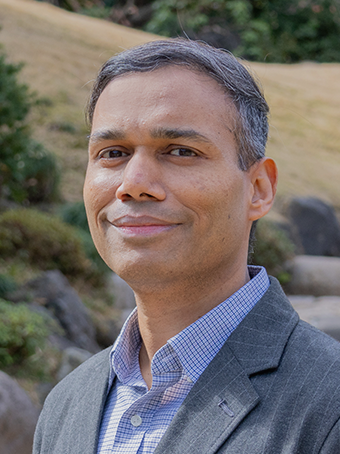
Manish Sharma is an ex-investment banker, with over two decades of experience spanning academia, consulting, think tank and corporate finance. His academic journey includes research and teaching positions at renowned institutions including Jawaharlal Nehru University, University of Tokyo, London School of Economics, and Doshisha Business School. Currently, he is a professor of economics, at Hosei University in Tokyo. Until 2012, Dr. Sharma served as Director (M&A) in the Corporate Finance Department at Daiwa Capital Markets' Tokyo headquarters, providing strategic financial guidance to major corporations. He subsequently transitioned to full-time academia, bringing his extensive practical knowledge to universities across Asia. His other notable experiences include 13 years of radio newscasting with NHK World, and running an investment advisory. His teaching and research interests cover Indian/ASEAN markets, tech sector, corporate finance, investments, valuation, geoeconomics and day-trading. Dr. Sharma holds a Ph.D. in Financial Economics.
View Profile