
India’s Indo-Pacific Pivot
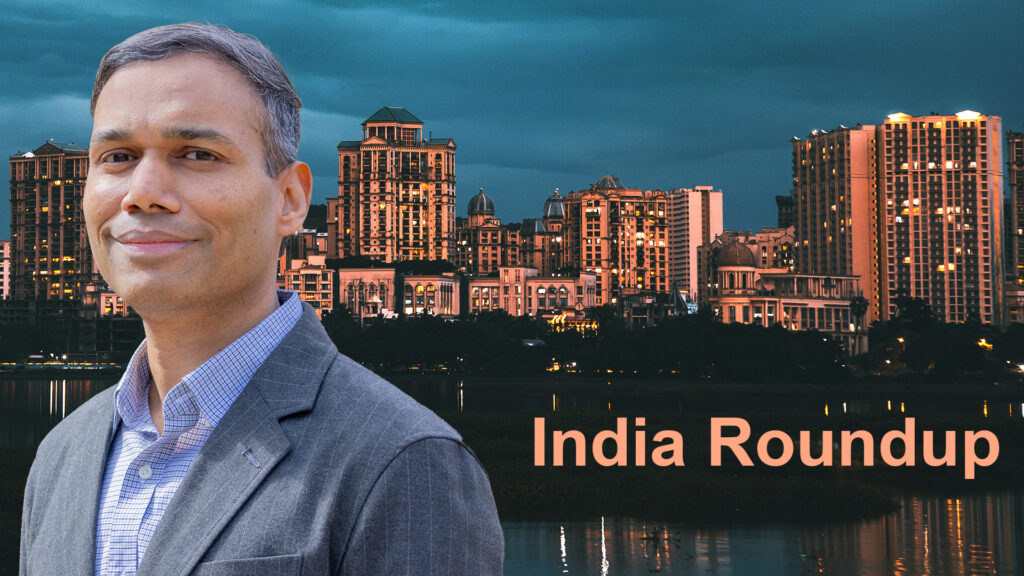
This report examines the visit and its strategic logic; the intensifying energy and tariff squeeze between Washington, Moscow and New Delhi; the macroeconomic backdrop; the student protests that tested the government at home; and shorter notes on capital markets, and the renewables.
Modi in Indo-Pacific
Backdrop:
Modi undertook the trip at a juncture when the United States has grown less predictable on trade and alliance questions, and China has become more assertive in the maritime periphery. India’s response has been to broaden its own network of partners – an emerging power posture that trades on India’s scale, its manufacturing ambitions and its willingness to supply security goods, all while eschewing a rigid alliance with any bloc.
The tour:
1. Indonesia. The highlight of the Jakarta leg (7 July) was a contract for Indonesia to acquire India’s BrahMos supersonic cruise missiles, making Jakarta the third customer after the Philippines and Vietnam, alongside a Bharat Dynamics-Republikorp pact on Astra air-to-air missiles. In all, the two sides signed 14 agreements spanning critical minerals, steel supply chains, maritime security, space and food security. India will invest in nickel, steel and rare-earth permanent-magnet production in Indonesia — a direct hedge against Chinese control of magnet supply. The two sides also evinced interest in the joint development of the strategically located Sabang port overlooking the Strait of Malacca. The governments also discussed a raft of trade pacts.
2. Australia. In Melbourne (8-10 July), India and Australia concluded a landmark uranium supply arrangement under the 2015 civil-nuclear pact, underwriting long-term fuel for India’s target of 100 GW of nuclear capacity by 2047. The two Quad partners also launched a new defence-cooperation framework and a Joint Maritime Security Collaboration Roadmap, pledged to fast-track a comprehensive trade agreement, and expanded space and critical-technology ties.
3. New Zealand. The Wellington stop was the first visit by an Indian prime minister in forty years, extending India’s Indo-Pacific footprint into the South Pacific.
Salience:
A. India’s emergence as a security partner in the Indo-Pacific, with BrahMos now anchoring defence ties across Southeast Asia.
B. Resource security. Australia (uranium) and Indonesia (nickel and rare earths) join a network of trusted partners to reduce dependence on China.
C. Port and maritime cooperation. Sabang port to the maritime roadmap with Canberra, offers a chokepoint-aware strategy for the sea lanes.
Limits: Several of the trade talks, including the India-ASEAN FTA review, the India-Australia CEPA, an Indonesia PTA (Preferential Trade Agreement), are yet to be concluded. Indonesia is careful to preserve its strategic balance and would not want to join an anti-China alignment. The test lies in the gap between announcement and the delivery.
The Energy and Tariff Squeeze
US tariffs. On 24 July, Washington imposed an additional 10% Section 301 tariff on non-exempt Indian goods (covering roughly 55% of exports) citing forced-labour concerns. New Delhi secured a better outcome than China (12.5%) by introducing pre-emptive measures. About 45% of exports, including generic pharmaceuticals, smartphones, steel, aluminium and auto components, stayed exempt. But diamonds, gold, textiles, machinery and organic chemicals now face effective duties of 51-59%. India has signalled it will keep negotiating a bilateral trade agreement rather than retaliate.
Russian crude and the sanctions. India’s July crude imports exceeded 5 million barrels a day, with Russia supplying around 2.6-2.7 mbd, even after a US sanctions waiver lapsed mid-July. The Ministry of External Affairs insisted energy policy would be guided by national priorities. The risk is a bipartisan US Senate bill threatening 100% tariffs on the largest buyers of Russian oil, India and China among them.
The oil shock underneath. Both pressures trace back to the West Asia conflict. Renewed US-Iran fighting and subsequent disruptions drove Brent up roughly 24%, raising the risk premium on the Dubai/sour grades that make up about three-quarters of India’s crude imports and deepening reliance on discounted Russian barrels.
This nexus (an energy spike, a new US tariff and a sanction threat) is India’s central geoeconomic vulnerability heading into the autumn.
India’s Macroeconomic Story
The domestic economy stayed resilient through the shock. Rating agency ICRA estimated Q1 FY27 (April-June) GDP growth at 6.4-6.6%, cooling from 7.8% the prior quarter but still robust, with the official data due on 31 August. Industrial production accelerated to 7.3% in June, GST receipts rose 15.4% to Rs 2.11 trillion (a 14-month high), bank credit grew 17.7%, passenger-vehicle sales set a Q1 record, and the composite PMI held firmly in expansion at 54.3.
Inflation, however, split sharply. Retail CPI climbed to an 18-month-high 4.38% in June, still within the RBI’s band. The wholesale inflation jumped to 9.87%, driven by a 27.4% surge in fuel and power. The Reserve Bank held its repo rate at 5.25% with a neutral stance; a Reuters poll ahead of the 5 August decision showed the overwhelming majority expecting no change, with the risk balance tilted hawkish given oil, a patchy monsoon and firming WPI.
The external accounts bore the strain. The rupee closed July near 95.5 to the dollar (touching 96.88 intra-month), the June merchandise trade deficit widened to a record $30.4 billion on a 31% jump in imports, and foreign-exchange reserves recovered to $682.2 billion. Yet portfolio flows turned: foreign investors bought Indian equities for the first time in four months, taking total July FPI inflows to about Rs 40,000 crore, the strongest of 2026.
That flow powered the best equity month of the year. The Nifty 50 closed at 24,383.60 (+2.2%) and the Sensex at 78,094.64 (+2.1%), the first back-to-back monthly gains of 2026. The markets were led by a roughly 17% surge in IT as a global rotation out of AI and chip names pushed money into Indian software services. On the fiscal side the April-June deficit ran at 18.2% of the full-year target, while SEBI eased securities-transmission rules and restored the stock-exchange route for buybacks.
Student Protests and Political Stability
The month’s most serious domestic-political challenge was a sustained wave of student protests. Beginning in early June at Delhi’s Jantar Mantar and led by the newly formed, Gen-Z ‘Cockroach Janata Party’ movement alongside established left-wing student groups, it was triggered by leaks of the NEET medical-entrance examination that affected some two million candidates in May and were linked to several student suicides. The activist Sonam Wangchuk’s indefinite hunger strike from 28 June galvanised the protests, which broadened into wider anger over exam integrity, graduate unemployment and inequality. On 20 July, police used tear gas and batons against a march on parliament, injuring more than 100 students.
Impact and outlook. The government defused the crisis through concessions. After assurances on paper-leak reform, compensation and no legal action, Wangchuk ended his strike on 23 July, education minister Dharmendra Pradhan resigned on 25 July, and the protests were called off. The episode dented the BJP’s image and exposed a strain of Gen-Z discontent, but it poses no immediate threat to a government that retains a comfortable parliamentary majority. The more durable questions are whether the youth mobilisation consolidates into a lasting political force, and whether the underlying jobs-and-opportunity grievances resurface.
A Blockbuster IPO Season
India’s primary market is in the middle of a record run. July’s curtain raiser IPO (to raise Rs 97.9 billion) of SBI Funds Management was oversubscribed 42 times. Next in line are the National Stock Exchange and Reliance’s Jio Platforms. Jio’s share issue is set to be the largest in Indian history when it lists in the August-October window. With a pipeline estimated near $50 billion, 2026 is shaping up as a landmark year for Indian equity issuance, underpinned by deep domestic liquidity.
Domestic Players Bet Big on Renewables
India’s largest conglomerates are racing to build clean-energy scale, increasingly through acquisition. The Aditya Birla Group agreed to buy Shell’s Indian renewables arm, Sprng Energy, for $1.8 billion, more than doubling its renewable capacity to nearly 10 GW. It joins Adani Green – which added 5 GW in FY26 to reach 19.3 GW en route to a 50 GW target by 2030; Tata Power (aiming for around 20 GW by FY30) and Reliance (green hydrogen and solar) in a dash for scale, backed by global capital such as BlackRock’s GIP. Despite the ambition, the execution, grid connectivity and financing remain the real constraints.
IN SUM: India this month tells the story of an emerging power projecting confidence abroad while managing an energy-and-tariff squeeze, and a newly assertive youth, at home.
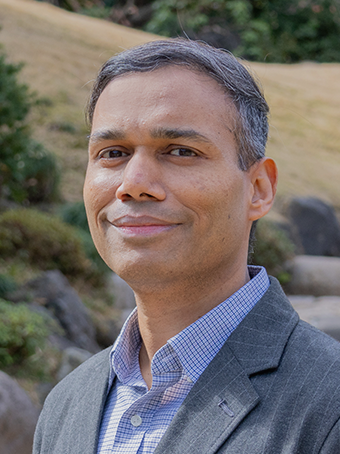
Visiting Research Fellow
Manish Sharma is an ex-investment banker, with over two decades of experience spanning academia, consulting, think tank and corporate finance. His academic journey includes research and teaching positions at renowned institutions including Jawaharlal Nehru University, University of Tokyo, London School of Economics, and Doshisha Business School. Currently, he is a professor of economics, at Hosei University in Tokyo. Until 2012, Dr. Sharma served as Director (M&A) in the Corporate Finance Department at Daiwa Capital Markets' Tokyo headquarters, providing strategic financial guidance to major corporations. He subsequently transitioned to full-time academia, bringing his extensive practical knowledge to universities across Asia. His other notable experiences include 13 years of radio newscasting with NHK World, and running an investment advisory. His teaching and research interests cover Indian/ASEAN markets, tech sector, corporate finance, investments, valuation, geoeconomics and day-trading. Dr. Sharma holds a Ph.D. in Financial Economics.
View Profile-
 India's Indo-Pacific Pivot2026.08.07
 -
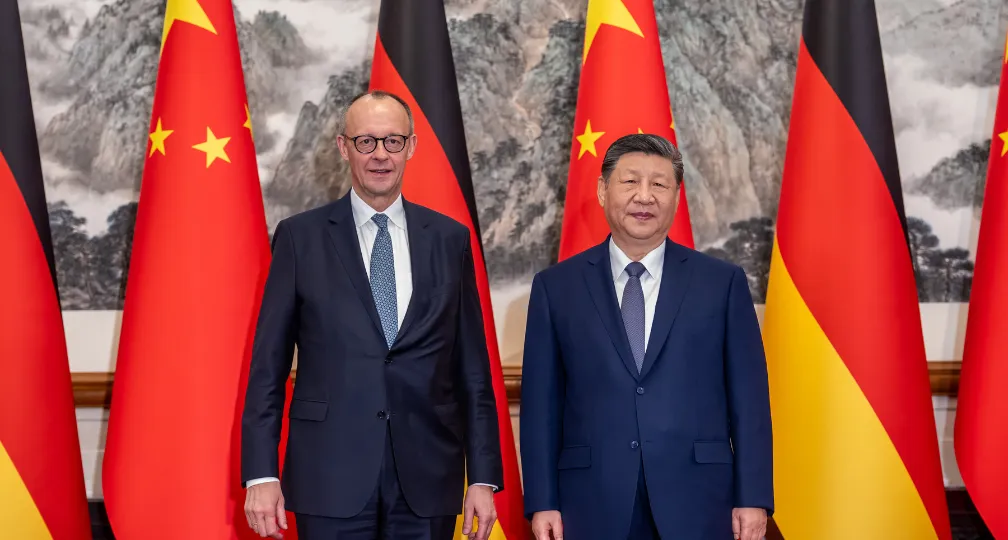
 Merz’s China Policy: Adjustment Under Constraint – From De-Risking Rhetoric to Managed Engagement2026.08.07
 - What Ukraine and Iran Teach Us About Deterrence2026.08.03
- USMCA Renewal Is a Pothole, Not a Cliff – Right?2026.07.30
-
 Trump’s new world order and what it means for Japan2026.07.30
 Why Pax Silica Is About More Than AI Chips2026.07.15
 Japan and India: Historic Strategic Convergence2026.07.07
- China’s Rare Earth Export Controls: “International Rules” Orientation and the Avant-Garde Use of Security Exceptions2026.07.03
- USMCA Renewal Is a Pothole, Not a Cliff – Right?2026.07.30
- Sovereign AI After Fugu: From Vertical Dominance to Horizontal Resilience2026.06.24