
Japan’s space systems face growing cybersecurity threats
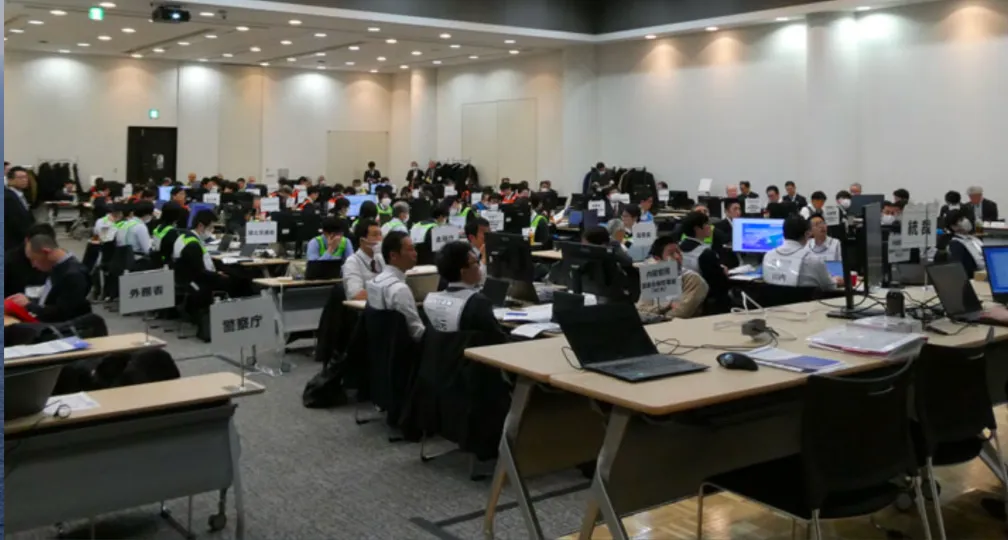
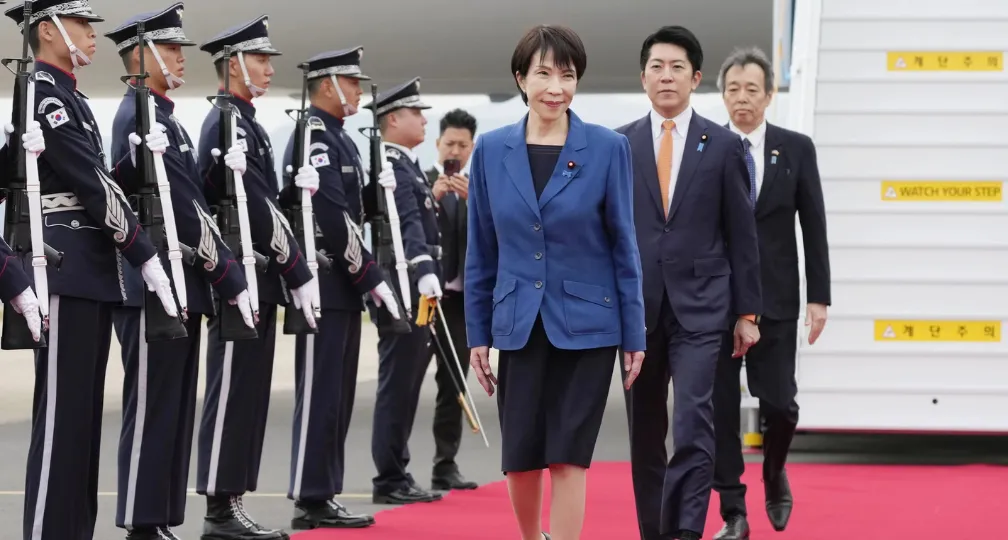
To that end, she and her Cabinet identified 17 strategic sectors — including artificial intelligence, semiconductors, quantum technologies, aerospace, digital and cybersecurity — for priority investment in crisis management and economic growth. Many of these technology areas are deeply interconnected, meaning policies focused on individual sectors may be insufficient.
The space sector provides a clear example. Space systems are increasingly linked with emerging technologies such as quantum-secured communications and AI-driven data processing. Crucially, space systems depend on data links between satellites and ground infrastructure, making them inherently tied to cybersecurity.
Recent conflicts highlight the risks of this convergence. In February 2022, at the start of Russia’s invasion of Ukraine, Russia launched a major cyberattack on the commercial satellite communications network operated by U.S. company Viasat. The attack disrupted communications, including for Ukrainian military units, just hours before the ground invasion began.
This incident brought a new challenge to light: ensuring the cybersecurity of space systems. It is necessary to examine the overlap between space and cybersecurity, fields requiring specialized expertise.
Cyberattacks
Cyberattacks have evolved from targeting specific industries to becoming a risk for society as a whole. Space systems are not exempt.
Several incidents illustrate this trend. In 2014, the U.S. National Oceanic and Atmospheric Administration experienced a cyberattack that disrupted satellite weather data systems, forcing service suspensions. In 2022, a Russia-linked group claimed responsibility for a distributed denial-of-service attack on Starlink, SpaceX’s satellite communications network.
Even more concerning is the potential use of cyberattacks on space systems during gray-zone conflicts and full-scale wars. A wargame by U.S. think tanks found that states might use cyberattacks on space systems early in conflicts, seeing them as low-escalation tactics. However, such attacks could also increase tensions and accelerate conflict escalation.
The Russia-Ukraine war has underscored these risks. A Swiss think tank reported at least 124 cyber incidents targeting the space industry from February 2022 to September 2024 linked to the conflict.
Securing space systems is complicated by several factors:
・Space operations historically relied on closed networks, but digital transformation and cloud computing now expose systems to more attack points.
・Satellite operators must manage both mission-critical operation systems and corporate IT, each with different cybersecurity needs.
・The strategic importance of space systems makes them targets for sophisticated attacks, including state-sponsored ones. For example, in 2024, Japan Aerospace Exploration Agency (JAXA) disclosed a data breach involving advanced malware and zero-day vulnerability exploits.
Japanese response
Japan’s government agencies and independent institutions follow unified cybersecurity standards based on a national strategy. In addition, JAXA has developed dedicated cybersecurity management standards for space systems.
For commercial satellite operators, Japan’s Ministry of Economy, Trade and Industry has issued cybersecurity guidelines and promotes industry adoption.
However, cybersecurity is inherently asymmetric. Attackers choose targets and timing, while defenders must prepare for all possibilities. Perfect protection is unrealistic. Instead, organizations focus on collecting and analyzing threat intelligence specific to their environments to guide responses.
Because no single organization can do this alone, sharing cyber threat intelligence — like attacker IP addresses and other indicators of compromise — between public and private sectors is critical.
Japan’s National Cybersecurity Strategy calls for a “bidirectional and proactive information-sharing cycle” between government and industry. Government-wide monitoring systems collect and share cyber threat information across agencies and institutions.
Intelligence sharing
Existing cybersecurity information-sharing frameworks in Japan mainly address conventional corporate IT threats and may not be enough for space-specific cyber risks.
Like operational technologies in energy and finance, the methods used by attackers against space systems can differ widely from typical IT attacks.
To address this, the government created the Public-Private Council on Strengthening the Stability of Space Systems and conducts annual tabletop exercises, including simulating cyberattacks on satellite infrastructure, to improve information sharing and mission assurance.
In 2024, the Japan Space ISAC (Information Sharing and Analysis Center) was launched by multiple space companies to facilitate threat intelligence sharing. International cooperation is also growing. The U.S.-based Space ISAC, which inspired Japan’s initiative, has regional hubs in Australia and the United Kingdom and plans to establish one in Japan.
These efforts show growing recognition of the need for space-sector-specific cyber threat sharing.
Future challenges
Japan’s designation of space as a strategic sector highlights its importance and the need to address cybersecurity threats.
We must assume state-sponsored cyber actors are ready to target Japan’s space systems during peacetime, gray-zone situations and full conflict. Current efforts are a start but remain insufficient.
Establishing information-sharing frameworks and sector-specific ISACs is important but not enough. The government must strengthen these mechanisms and support cooperation among stakeholders.
Threat intelligence must be effectively used by all participants. As cyber threats grow more sophisticated — especially with AI in cyber operations — government agencies, JAXA and private operators must prioritize cybersecurity.
This requires a clear, holistic approach, including increased funding and personnel, enhanced authority for security teams and career pathways for specialists.
Takaichi’s growth strategy identifies cybersecurity as a cross-cutting issue crucial to all 17 strategic sectors. The cybersecurity of space systems clearly exemplifies this integration of “space” and “cyber” domains. Strengthening efforts by both government and private space operators is essential.
[Note] This article was posted to the Japan Times on May 1, 2026:
https://www.japantimes.co.jp/commentary/2026/05/01/world/japan-space-systems-cybersecurity-threats/
(Photo Credit: Cabinet Office)
Geoeconomic Briefing
Geoeconomic Briefing is a series featuring researchers at the IOG focused on Japan’s challenges in that field. It also provides analyses of the state of the world and trade risks, as well as technological and industrial structures (Editor-in-chief: Dr. Kazuto Suzuki, Director, Institute of Geoeconomics (IOG); Professor, The University of Tokyo).
Disclaimer: The opinions expressed in this Geoeconomic Briefing do not necessarily reflect those of the International House of Japan, the Institute of Geoeconomics (IOG) or any other organizations to which the author belongs.

Senior Research Fellow
Kota Umeda is a research fellow at the Institute of Geoeconomics at the International House of Japan. From 2015 to 2025, he worked at the Japan Aerospace Exploration Agency (JAXA), where he focused on researching U.S. space policy, coordinating with other space agencies, and developing JAXA's cybersecurity policy and incident response strategies. From 2019 to 2022, Mr. Umeda served as JAXA's liaison officer in Washington, D.C., collaborating with the U.S. government, industry leaders, and various stakeholders to promote Japan-U.S. space cooperation. Prior to his career in the space sector, Mr. Umeda spent five years at the Japan Ministry of Defense, where he researched military activities surrounding Japan and contributed to the formulation of arms control and disarmament policies. He holds a Master of Laws from Kyoto University and a Bachelor's degree in Policy Studies from Kwansei Gakuin University.
View Profile-
 Iran: A ‘War of Choice’ No Longer Worth the Cost2026.08.21
 - Why the Strait of Hormuz Is a Warning for Japan2026.08.18
- Tariff Tracker: A Guide to Tariff Authorities and their Uses2026.08.17
- FX Statecraft: Another Explanation for the Yen Intervention2026.08.14
- Why Takaichi Can’t Be the Next Shinzo Abe2026.08.13