
Trump’s new world order and what it means for Japan
A year and a half into Trump’s second term, what changes has his administration brought to the world? How does today’s international environment differ from the one before Trump’s return to power? Although the administration has yet to reach the midpoint of its term and much remains uncertain ahead of the midterms, enough has occurred to warrant a broader assessment. Understanding these changes is essential to grasping the transformation of the international order now underway.
U.S.-China shift
At the center of the Trump administration’s foreign policy lies a fundamental question: How should the United States manage its relationship with China?
The modern era of U.S.-China relations was shaped by the concept of “great-power competition,” first articulated in the Trump administration’s 2017 National Security Strategy. After years of counterterrorism-focused policy following the Sept. 11 attacks, Washington increasingly viewed the rise of China — and, to a lesser extent, India and Russia — as the defining strategic challenge of the 21st century. Great-power competition, particularly strategic competition with China, became the organizing principle of U.S. national strategy.
This framework continued under the Biden administration. Concerns over economic security, supply chains, advanced technologies and military modernization further intensified rivalry between Washington and Beijing across economic and security domains.
The second Trump administration, however, has introduced a new element. Trump has repeatedly described Xi Jinping as “my friend” and argued that “great deals” can be reached with China. His assertion that “everything is negotiable” has raised concerns among U.S. allies and partners — including Taiwan, South Korea and Japan — that vital interests could be sacrificed in a bilateral bargain struck over their heads.
The possibility of a shift from U.S.-China competition to U.S.-China deal-making became more pronounced following the Trump-Xi summit in Beijing in May 2026, the first visit by a U.S. president to China since 2017. The change was also reflected in the administration’s 2025 National Security Strategy, which removed earlier descriptions of China as America’s most serious geopolitical challenge and omitted language characterizing it as a direct threat.
Yet reports of the end of strategic competition would be premature. China remains Washington’s most formidable long-term rival and the only power capable of challenging American primacy across multiple dimensions. Strong support remains within the U.S. government for a tougher approach toward Beijing. Rather than replacing great-power competition, Trump’s transactional diplomacy has added uncertainty to an already complex relationship.
The result is not the disappearance of competition, but the coexistence of rivalry and negotiation.
Post-liberalism
The transformation is not limited to foreign policy. It also has an ideological dimension, reflected in the retreat of liberalism and the rise of post-liberal thinking.
The first manifestation is the erosion of free trade. On April 2, 2025, Trump signed an executive order introducing so-called reciprocal tariffs, sharply raising tariffs on imports from virtually all countries and territories. In a White House Rose Garden speech, Trump openly criticized free trade and defended a more protectionist economic model.
Washington appears to be turning the clock back by a century, abandoning many assumptions that underpinned the liberal trading order. As BBC News observed at the time, the United States appeared to be withdrawing from the global trading system it had helped create. Economic nationalism is increasingly replacing liberal globalization.
A second manifestation is the administration’s rejection of liberal social norms deeply embedded in American public life. On his first day in office, Trump signed an executive order terminating federal diversity, equity and inclusion programs across government agencies. The move symbolized a broader effort to reverse social and cultural policies associated with previous Democratic administrations.
The implications extend beyond domestic politics. Liberal values concerning human rights, gender equality, environmental protection and diversity have long formed part of America’s international identity. Their erosion weakens the normative foundations of the liberal international order.
At the same time, Trump’s criticism of immigration, willingness to use military force and relatively accommodating attitude toward authoritarian leaders have widened the gap between the United States and many democratic allies. In some respects, Washington now appears ideologically closer to leaders in Beijing and Moscow in its critique of liberalism than to traditional Western partners.
Spheres of influence
Another major shift concerns America’s conception of its role in the world.
The administration’s 2025 National Security Strategy emphasized a renewed focus on the Western Hemisphere — a policy sometimes described as the “Donroe Doctrine,” a modernized version of the 19th-century Monroe Doctrine. The concept marks a substantial departure from the global leadership role the United States embraced throughout much of the 20th century.
Combined with Trump’s recurring suggestions that the United States could reconsider its commitment to NATO, this hemispheric focus has generated uncertainty about the future of American engagement abroad.
More fundamentally, the approach resembles the traditional logic of spheres of influence. Under such a framework, the United States would dominate the Western Hemisphere, Russia would exercise primacy in Europe and China would enjoy a privileged position in East Asia. Mutual recognition of these spheres would echo the geopolitical thinking of the imperial era.
This logic occasionally surfaces in Trump’s comments on Russia’s invasion of Ukraine, in which he has at times appeared more sympathetic to Moscow’s perspective than to Kyiv’s. The resulting vision is one in which major powers divide regions among themselves, often at the expense of smaller states.
The implications are profound. The post-Cold War era was characterized by American primacy and global leadership. The emerging model is one in which the United States increasingly acts like other great powers, using military force to secure its sphere of influence rather than uphold a universal international order.
The military operation in Venezuela in January 2026 and the joint U.S.-Israeli strikes on Iran the following month illustrate this shift in practice.
Japan’s dual strategy
How should Japan respond to these transformations? Tokyo has already been compelled to adopt what might be called a dual strategy.
The first component is maintaining close cooperation with the United States, Japan’s only treaty ally and the cornerstone of its security. As China’s power grows and the regional balance becomes increasingly unstable, Japan remains dependent on American extended deterrence. Under these conditions, complete strategic autonomy remains unrealistic.
The second component is preserving some distance from Washington when values, norms and international rules are at stake. Japan has a strong interest in defending the rule of law and preventing a world in which major powers ignore international law and reshape rules solely according to their interests.
Tokyo therefore should not automatically endorse American actions that undermine international norms. When the United States and Israel launched military strikes against Iran in February 2026 without broad international support, Japan stopped short of explicitly endorsing the operation.
In such situations, cooperation with other liberal democracies becomes increasingly important. Strengthening ties with like-minded partners allows Japan to defend international norms while preserving its U.S. alliance.
The world has changed significantly during the first 18 months of the second Trump administration. A return to the previous international environment appears unlikely in the foreseeable future.
Japan must therefore assess these transformations and continue pursuing its dual strategy: cooperating with the United States where necessary while preserving sufficient autonomy to defend its interests and the principles of a rules-based international order.
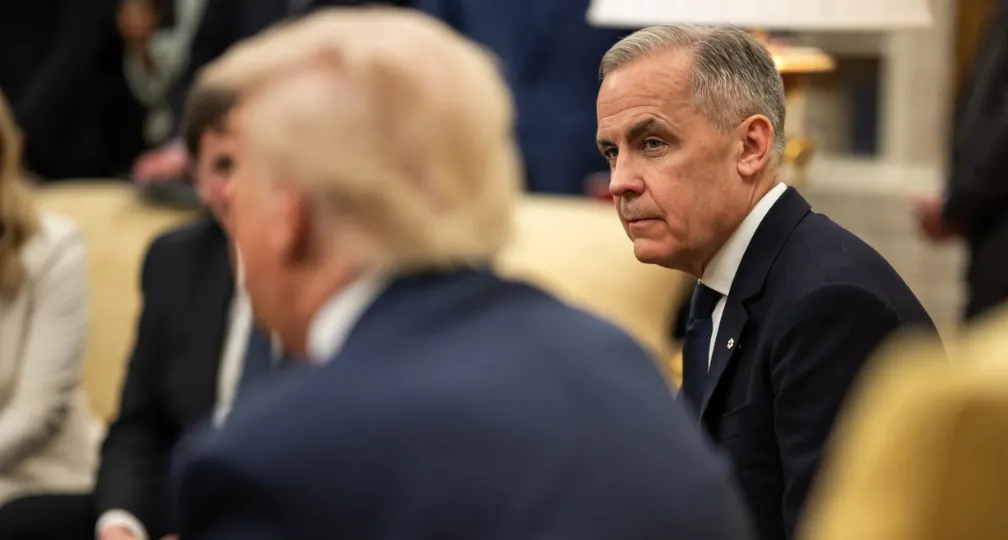
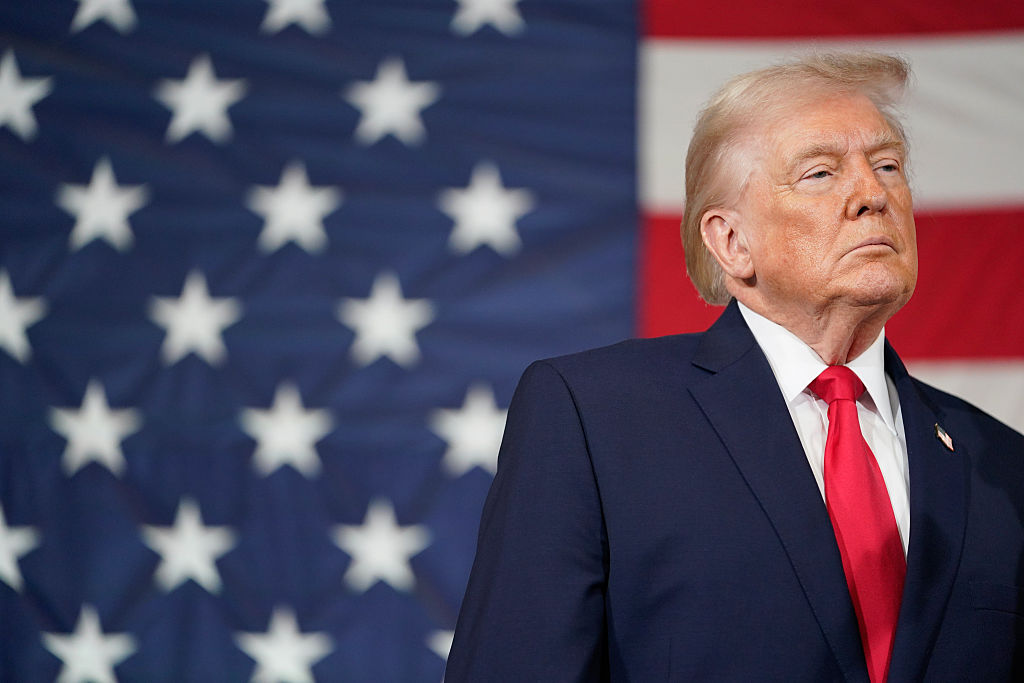
(Photo Credit: Nathan Howard / Getty Images)
[Note] This article was posted to the Japan Times on July 28, 2026:
https://www.japantimes.co.jp/commentary/2026/07/28/world/japan-trumps-new-world/

Geoeconomic Briefing
Geoeconomic Briefing is a series featuring researchers at the IOG focused on Japan’s challenges in that field. It also provides analyses of the state of the world and trade risks, as well as technological and industrial structures (Editor-in-chief: Dr. Kazuto Suzuki, Director, Institute of Geoeconomics (IOG); Professor, The University of Tokyo).
Disclaimer: The opinions expressed in this Geoeconomic Briefing do not necessarily reflect those of the International House of Japan, the Institute of Geoeconomics (IOG) or any other organizations to which the author belongs.
Director, International House of Japan
Group Head, Europe & Americas,
Director of Research, Asia Pacific Initiative
Director, International House of Japan
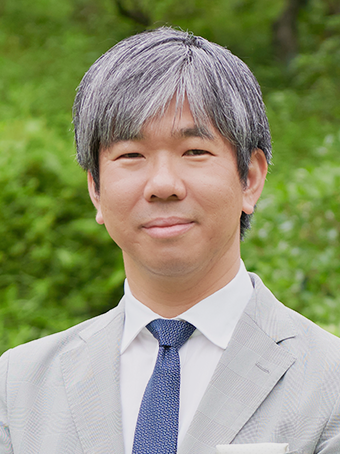
Yuichi Hosoya is professor of international politics at Keio University, Tokyo. Professor Hosoya was a member of the Advisory Board at Japan’s National Security Council (NSC) (2014-2016). He was also a member of Prime Minister’s Advisory Panel on Reconstruction of the Legal Basis for Security (2013-14), and Prime Minister’s Advisory Panel on National Security and Defense Capabilities (2013). Professor Hosoya studied international politics at Rikkyo (BA), Birmingham (MIS), and Keio (Ph.D.). He was a visiting professor and Japan Chair (2009–2010) at Sciences-Po in Paris (Institut d’Études Politiques) and a visiting fellow (Fulbright Fellow, 2008–2009) at Princeton University. [Concurrent Position] Professor, Faculty of Law, Keio University
View Profile