
Why Takaichi Can’t Be the Next Shinzo Abe
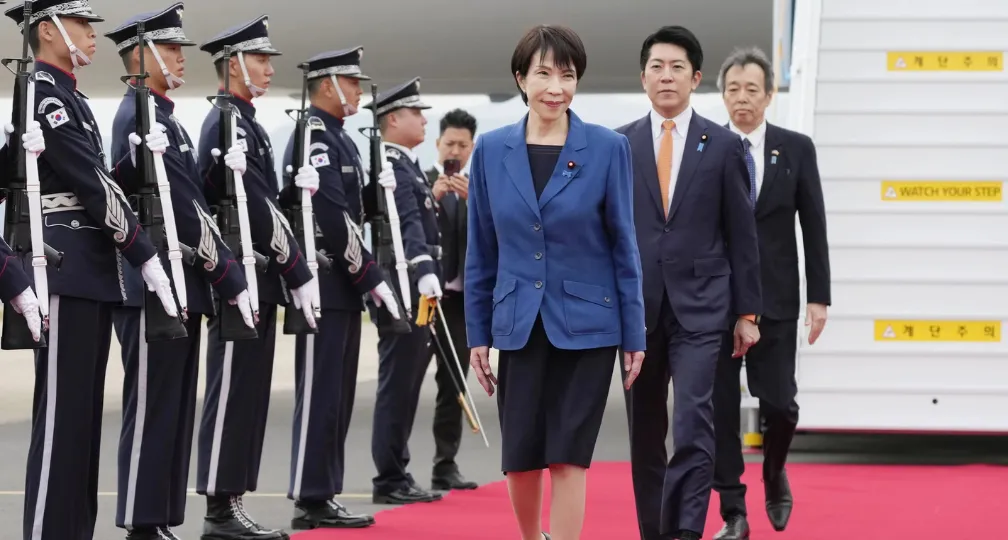
Japan's first female prime minister has embraced Abe's foreign policy legacy from the outset. After winning the Liberal Democratic Party (LDP) leadership in October 2025, she rebuilt a governing coalition following the collapse of the LDP's 26-year alliance with Komeito and, after a decisive victory in the February 2026 snap general election, secured the parliamentary mandate to pursue her agenda with far greater confidence.
Among the five candidates in the LDP leadership race, Takaichi was widely regarded as the party's most conservative contender and Abe's clearest ideological successor. Her ascent has divided opinion. Progressive critics question her nationalist views and historical revisionism, while conservatives welcome her emphasis on economic security, constitutional reform and a more assertive foreign policy. Although her election strengthened her political authority, tensions within the LDP and with coalition partner Nippon Ishin no Kai continue to complicate governance.
The more important question, however, lies beyond domestic politics. The issue is not whether Takaichi will continue Abe's foreign policy, but whether Abe's strategic framework can succeed in an Indo-Pacific transformed by mounting regional security challenges and growing uncertainty over America's long-term role.
Continuity with Abe
If there is a single anchor for Takaichi’s diplomacy, it is her stated commitment to inheriting and advancing Abe’s foreign policy. Her 2024 book, “Protecting and Enriching Japan,” opens with the declaration, “Carrying on the will of former Prime Minister Shinzo Abe!” signaling both ideological continuity and policy ambition. In public speeches, including her first policy address to the Diet, she has emphasized Japan’s aspiration to “flourish at the center of the world,” echoing Abe’s emphasis on proactive international leadership.
Personnel decisions reinforce this message. Takaichi reversed a diplomatic appointment to install Keiichi Ichikawa — a key architect of the Free and Open Indo-Pacific (FOIP) under Abe — as National Security Secretariat director. She also brought back Naoya Imai, Abe’s closest aide, as a special adviser. These moves signal that the command center of Japan’s security and foreign policy will again be shaped by figures deeply embedded in Abe-era strategy.
Her first summit with U.S. President Donald Trump on Oct. 28, 2025, further underscored this alignment. Boarding the USS George Washington together, Takaichi secured Trump’s affirmation that the U.S.-Japan alliance remains “the most exceptional,” symbolically reinforcing alliance credibility at a time of heightened regional tensions.
Takaichi’s early speeches have repeatedly placed FOIP and the Comprehensive and Progressive Agreement for Trans-Pacific Partnership (CPTPP) at the center of her diplomatic strategy. But unlike in the Abe era, Japan today faces a far harsher security environment and a significantly altered regional balance of power. Continuity with Abe, therefore, is necessary but not sufficient; evolution is now indispensable.
Revitalizing FOIP
The heart of Takaichi’s diplomacy will likely be a reinvigorated FOIP. During the LDP leadership race, she repeatedly invoked FOIP as a signature initiative that both reassures the international community and unifies her domestic political base.
Inside the LDP, FOIP has also become a political signal. In May 2025, the party launched a new FOIP Strategy Headquarters led by former Deputy Prime Minister Taro Aso, with Takaichi as deputy leader. Senior figures central to Abe’s foreign policy, including former Vice Foreign Minister Takeo Akiba, were brought in as advisers. While some media framed this as pre-positioning for post-Ishiba political realignments, it also reflects strong institutional support behind FOIP’s revival.
FOIP now serves as the “spine” of Takaichi’s foreign policy and as the framework through which she can demonstrate leadership continuity while evolving the strategy to match new realities, including deepening ties with like-minded partners and expanding engagement with the Global South.
Early crisis
Despite a stable start, Takaichi’s diplomacy has already encountered a major challenge. Her remarks in the Diet on Nov. 7, 2025, affirming that a Taiwan contingency could constitute a “survival-threatening situation” for Japan, triggered sharp criticism from Beijing. Japanese media sympathetic to the Abe administration acknowledged the logic of her position but warned that Abe, by contrast, exercised extreme caution and meticulous internal deliberation when addressing Taiwan-related matters.
President Trump and Chinese President Xi Jinping held their first summit of the second Trump administration during the APEC meeting in South Korea, where Trump hailed the talks as a “12 out of 10” and praised the two leaders’ “very good relationship,” raising concerns that closer relations may come at Taiwan’s expense.
Trump’s state visit to Beijing in May, during which Trump described the two powers as “the G-2” and said their meeting represented “a very important moment in history,” have fueled concerns that Washington increasingly views its relationship with Beijing through the prism of great-power accommodation, heightening uncertainty for U.S. allies over the future direction of U.S.-China relations.
In such a volatile environment, Japan faces dual risks: On one hand, heightened Chinese diplomatic pressure; on the other, increasing ambiguity in U.S. policy toward Taiwan and the Indo-Pacific. This uncertainty places a premium on stability, restraint and careful signaling — all essential to reinforcing a rules-based order rather than exacerbating regional insecurity.
Inheritance and adaptation
Takaichi’s diplomacy, at this stage, is defined by two intertwined objectives. First, inheriting and reinforcing the core architecture of Abe’s foreign policy — a strong U.S.-Japan alliance, a revitalized FOIP and proactive regional engagement. Second, adapting these principles to a more polarized and unpredictable Indo-Pacific environment where power balances have shifted and U.S.-China relations are in flux.
If Takaichi can uphold Abe’s strategic pragmatism while navigating new geopolitical risks, she may succeed in positioning Japan as a stabilizing force and a proactive shaper of the regional order. But doing so will require not only continuity but also careful evolution, balancing assertiveness with diplomatic finesse at a moment when missteps carry unusually high stakes.
It is telling that the United States has dropped “Indo” from the name of what was formerly the Indo-Pacific Command. The Indo-Pacific that shaped Abe’s grand strategy no longer exists. Takaichi’s success will ultimately depend not on becoming the next Shinzo Abe, but on proving that his strategic legacy can evolve to meet a new era.
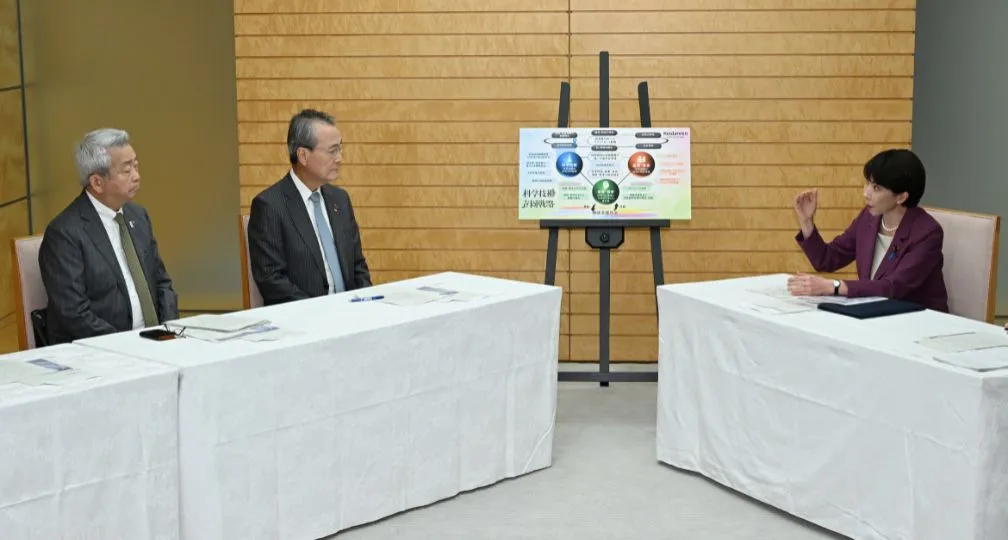
(Photo Credit: Kyodo News / Getty Images)
[Note] This article was posted to the Japan Times on August 12, 2026:
https://www.japantimes.co.jp/commentary/2026/08/12/japan/takaichi-not-next-shinzo-abe/

Geoeconomic Briefing
Geoeconomic Briefing is a series featuring researchers at the IOG focused on Japan’s challenges in that field. It also provides analyses of the state of the world and trade risks, as well as technological and industrial structures (Editor-in-chief: Dr. Kazuto Suzuki, Director, Institute of Geoeconomics (IOG); Professor, The University of Tokyo).
Disclaimer: The opinions expressed in this Geoeconomic Briefing do not necessarily reflect those of the International House of Japan, the Institute of Geoeconomics (IOG) or any other organizations to which the author belongs.
Director, International House of Japan
Group Head, Europe & Americas,
Director of Research, Asia Pacific Initiative
Director, International House of Japan
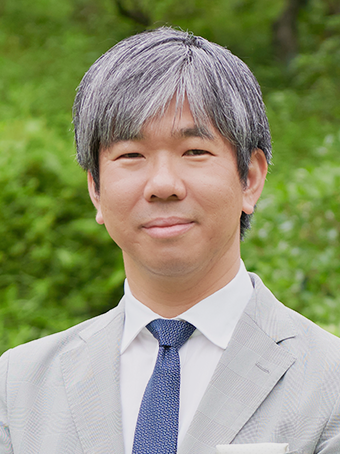
Yuichi Hosoya is professor of international politics at Keio University, Tokyo. Professor Hosoya was a member of the Advisory Board at Japan’s National Security Council (NSC) (2014-2016). He was also a member of Prime Minister’s Advisory Panel on Reconstruction of the Legal Basis for Security (2013-14), and Prime Minister’s Advisory Panel on National Security and Defense Capabilities (2013). Professor Hosoya studied international politics at Rikkyo (BA), Birmingham (MIS), and Keio (Ph.D.). He was a visiting professor and Japan Chair (2009–2010) at Sciences-Po in Paris (Institut d’Études Politiques) and a visiting fellow (Fulbright Fellow, 2008–2009) at Princeton University. [Concurrent Position] Professor, Faculty of Law, Keio University
View Profile