
Sizing Up the New Tariff Wall
The latest regulatory developments on economic security & geoeconomics
By Paul Nadeau, Visiting Research Fellow, Institute of Geoeconomics (IOG)
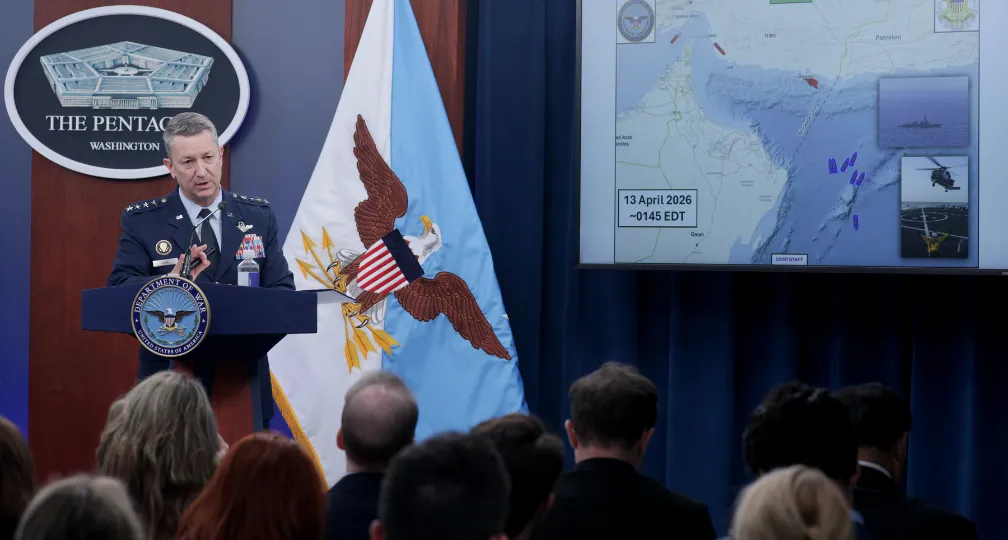
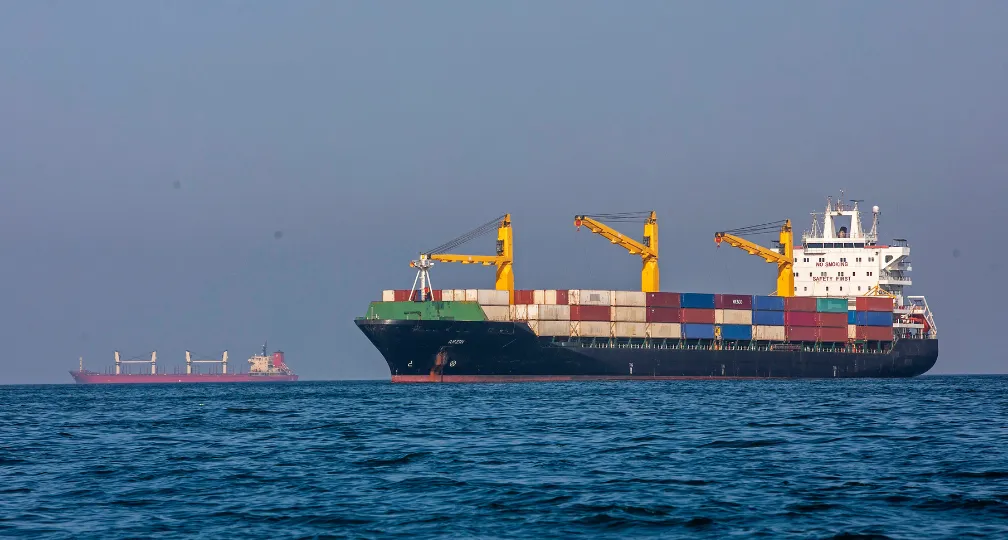
Strait of Hormuz Update: As of Sunday, August16, the seven-day moving average of ships passing through the Strait is 4 according to the International Monetary Fund’s Portwatch. The seven-day moving average at this time last year was 76.
U.S. Targets Iranian Cryptocurrency: On August 7, the U.S. Treasury Department’s Office of Foreign Assets Control (OFAC) designated two major digital asset exchanges used by Tehran, along with the ringleader of a network of front companies operating across multiple jurisdictions involved in facilitating illicit cryptocurrency activity and sanctions evasion. In a separate announcement, OFAC sanctioned multiple networks spanning several countries for enabling Iran’s rahbar banking system to move hundreds of millions of dollars.
EU Sanctions Russian Defense Industry Figures: On August 7, the European Council sanctioned five individuals who hold senior positions in Russian companies active in the country’s defense and military technology sectors, producing precision electromechanical components, ballistic missiles, and the development of software for unmanned aerial vehicles and space-related military technologies.
Canada Sanctions Defense Manufacturer Supporting Russia: On August 10, Global Affairs Canada announced sanctions on Streit Group, a defense manufacturer that produces armored vehicles and other military equipment following reports that the Russian National Guard has used vehicles manufactured by the company in the ongoing war against Ukraine.
United States Extends Jones Act Waiver: On August 10, the Trump administration announced that it would extend the waiver for the Jones Act for 90 days, taking effect on August 17 through November 15. The Jones Act (formally named the Merchant Marine Act of 1920) requires that all goods transported by water between U.S. ports be carried on ships that have been constructed in the United States, fly the U.S. flag, are owned by U.S. citizens, and are crewed by U.S. citizens and are permanent residents. The waiver will allow non-U.S. flagged ships transport energy products and other commodities between U.S. ports amid supply shocks from the closure of the Strait of Hormuz. The U.S. Department of Homeland Security (DHS) issued a follow up guidance to the waiver explaining that firms interested in using the waiver to ship between U.S. ports must now submit information on their voyage to the Pentagon and the U.S. Maritime Administration, which will then open a “market survey” for 24 hours to determine if any Jones Act-qualified vessels are able to pick up the cargo, and the Department of Defense will decide whether to grant an individual waiver, according to the new DHS guidance.
Switzerland Expands Russia Sanctions: On August 11, the Swiss government adopted European Union (EU) sanctions against nine individuals and 45 organizations, including Russian defense manufacturers, drone producers, shadow fleet oil tanker operators, and foreign suppliers in China and Belarus. In a separate announcement, the Swiss government added six Moldovan and Russian nationals tied to Ilan Shor’s network that were previously sanctioned by the EU for disinformation, vote-buying, and interference in Moldova’s 2025 parliamentary elections.
United States Places New Tariffs on Drones: On August 13, the Trump administration issued a proclamation placing new tariffs on drones and their components following a report by the Secretary of Commerce pursuant to Section 232 of the Trade Expansion Act of 1962 which allows the president to impose tariffs if a set of imports may endanger national security. The new tariffs include a 100 percent ad valorum tariff for heavy lift drones, excluding drones for agricultural use, civilian delivery, and for the Department of Defense, while remaining drones will be tariffed at 25 percent beginning in February. Drones and components from countries that signed a tariff agreement with the United States, including the European Union, Japan, Korea, Taiwan, and Switzerland will face a 15 percent tariff while the United Kingdom will face a 10 percent tariff, both inclusive of other tariffs. The U.S. Commerce Department is also authorized to grant tariff exemptions to countries that onshore production in the United States.
Canada Sanctions Iranian Officials: On August 14, Global Affairs Canada sanctioned five senior Iranian officials, including members of the Islamic Revolutionary Guard Corps (IRGC), for their activities that have threatened a critical international waterway and obstructed navigation rights in and around the Strait of Hormuz.
U.S. Sanctions ICC Officials: On August 18, the U.S. State Department announced sanctions on two officials of the International Criminal Court (ICC) pursuant to Executive Order 14203, “Imposing Sanctions on the International Criminal Court.” The officials, ICC president Tomoko Akane of Japan and ICC senior trial lawyer Abdoulaye Seye of Senegal, are alleged to “have directly engaged in efforts by the ICC to investigate, arrest, detain, or prosecute officials whose government has not consented to ICC jurisdiction.”
United States Sanctions IRGC Couriers: On August 20, the U.S. Treasury Department’s Office of Foreign Assets Control (OFAC) sanctioned 10 individuals constituting a network affiliated with Iran’s Islamic Revolutionary Guard Corps (IRGC) and Hezbollah that uses couriers to move up to hundreds of millions of dollars, providing an avenue outside the formal financial system for Hezbollah to obtain foreign currency and evade sanctions.
United States Sanctions Ecuador-Based Criminal Networks: On August 20, the U.S. Treasury Department’s Office of Foreign Assets Control (OFAC) designated 15 Ecuador-based individuals and entities associated with the Los Choneros and Los Lobos criminal organizations, along with 10 vessels involved in covertly shipping thousands of kilograms of cocaine each month.
United States Expands Cuba Sanctions: On August 20, the U.S. State Department designated three leaders of the Cuban Institute of Friendship with the Peoples (ICAP) as well as nine entities supporting the Cuban government.
China, Switzerland to Expand Trade Relationship: On August 20, China and Switzerland announced an agreement that will give 99.8 percent of Switzerland’s current exports to China tariff-free treatment and will grant easier access for Swiss investment in China. China agreed to stricter rules on labor rights and environmental issues in a revised sustainability chapter of the original 2014 agreement and would include a reference to the Universal Declaration of Human Rights in the updated text. The agreement is intended to be signed by the end of the year followed by the domestic ratification processes.
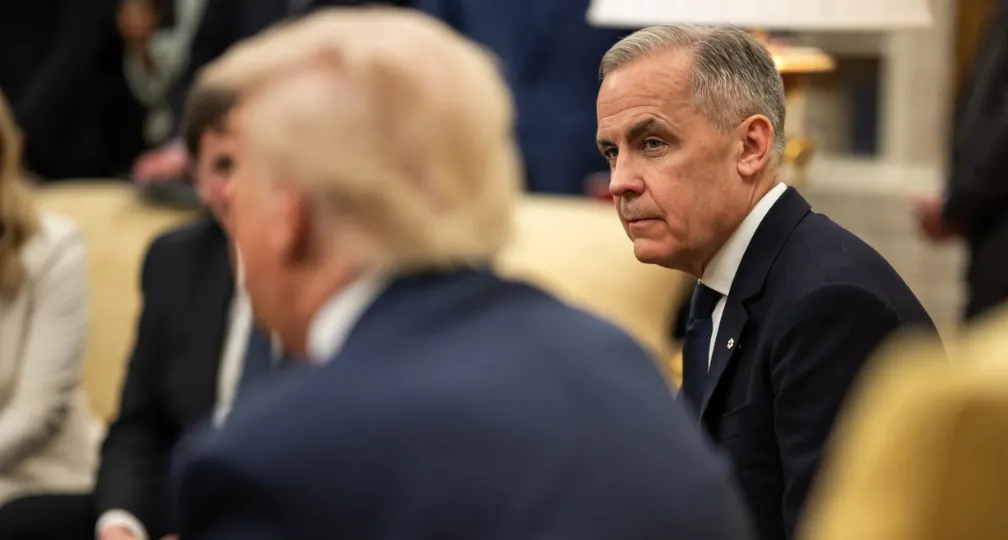
U.S. Escalates its Trade War with Canada: The United States imposed tariffs of 50 percent on a range of Canadian goods on August 22 following the collapse of talks between negotiators from the two countries. The tariffs, which are imposed under Section 338 of the Trade Act of 1930 (popularly known as Smoot-Hawley) will be applied to goods covering roughly 5 percent of Canadian trade with the United States including wine, dairy, cement, hockey equipment, and more regardless of U.S.-Canada-Mexico Agreement (USMCA) protections. Canadian Prime Minister Mark Carney announced retaliatory tariffs on August 25, covering 6 percent or $20 billion of U.S. exports to Canada, roughly matching Trump’s tariffs dollar-for-dollar. Canada will specifically double existing countertariffs on steel and aluminum to 50 percent, while new 50 percent tariffs will be applied to milk, furniture, clothing, video-game consoles, smartphones, and other electronics, covering more than 700 U.S.-made products in total and will take effect on September 8.
U.S. Announces “Operation Economic Outcast” against Iran: On August 24, U.S. Treasury Secretary Scott Bessent announced “Operation Economic Outcast” against Iran issuing sanctions against 60 new entities, covering digital assets, technology, gold, aviation and shipping. He also threatened unilateral U.S. economic punishment against any country doing business with Iran but did not offer specifics. The Treasury Department also announced that its Office of Foreign Assets Control (OFAC) would suspend general licenses that authorized certain remittance payments to Iran and Iranian access to the U.S. cultural and academic system.
Analysis: Sizing Up the New Tariff Wall
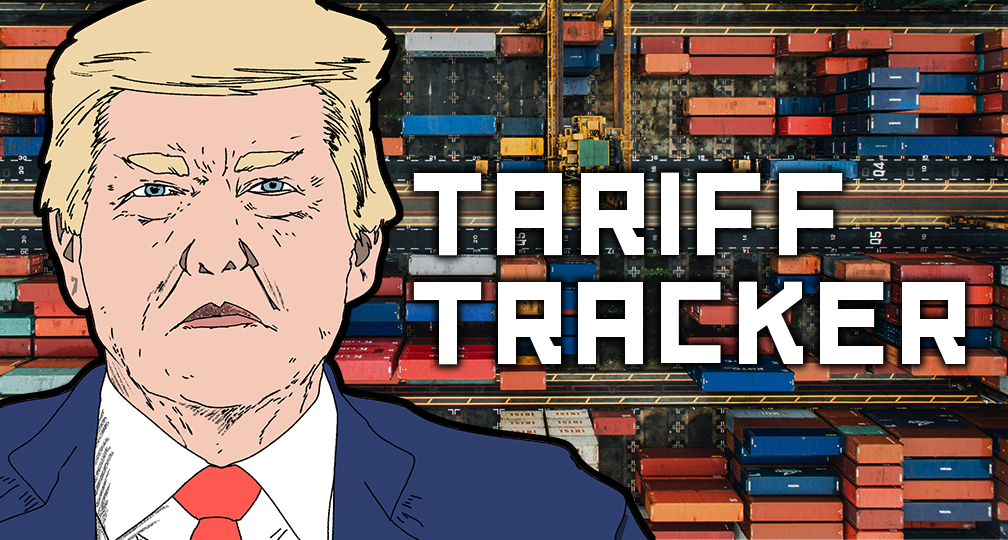
As expected, at the end of July the Trump administration replaced one set of expiring tariffs in response to the U.S. balance of payments deficit, which themselves replaced the original set of tariffs invalidated by the Supreme Court in February, with a new set of tariffs which are in response to the challenge of forced labor in supply chains. If there was any remaining doubt, Donald Trump is determined to build a tariff wall around the U.S. economy and any justification – forced labor, trade deficits, drug trafficking, excess capacity, national security – are simply pretexts to the broader goal of controlling access to the U.S. market. Given Trump’s latest effort to build his tariff wall, it’s worth asking whether this will be any more effective or resilient than the one last year that was invalidated by the Supreme Court.
It’s still too early to fully assess the economic impact of Trump’s tariff regime since data is distorted by firms stockpiling goods in advance of tariff deadlines and the fact that investments in manufacturing facilities (and the jobs that come with them) will take more than a year to materialize. While the tariffs imposed under the International Economic Emergency Powers Act (IEEPA) may have been invalidated, the investment agreements that were reached with U.S. trading partners while the tariffs were enforced remain in effect, so it’s possible that those investments could support economic growth and manufacturing expansion.
But analyses of Trump’s tariffs from the first term have revealed no meaningful gains in manufacturing employment, contrary to Trump’s stated goals for his tariffs. The signs of the current tariff regime repatriating manufacturing jobs aren’t encouraging either. The U.S. trade deficit has expanded rather than shrunk, manufacturing employment has declined over the past year, and manufacturing’s share of the economy has also declined. They also appear to be contributing to inflation and affordability issues in the United States, and the Yale Budget Lab estimates that the high U.S. tariffs costs each U.S. household approximately $1,100. It might be fair to say that certain aspects of Trump’s implementation of the tariff wall have been counterproductive by adding uncertainty to firms’ plans through the scrambled nature of their rollout after April 2, 2025, and the fact that the coercive nature of the tariff program has led many countries – including close economic partners and allies of the United States – to begin to hedge their economic bets by diversifying their connections beyond the United States. It’s easier to demonstrate that tariffs have failed in their goal to bring in more revenue to the United States government, another one of Trump’s stated goals. Most of the revenue collected in 2025 is being refunded after the Supreme Court blocked the IEEPA tariffs – but even if the U.S. government had retained the revenue, it has been more than offset by the various corporate and individual tax cuts.
In terms of the legality of the new measures, the legal case for Section 301 tariffs may be stronger than the case for IEEPA but still might not be airtight. The case could be stronger because Section 301 authorizes the Executive Branch to impose tariffs under certain conditions, while IEEPA included no such language, leading to its invalidation at the Supreme Court. At the same time, the Trump administration isn’t using Section 301 as it was intended – the authorization was never designed to build a tariff wall, but to create leverage with negotiating partners to address a particular issue in the trading relationship which would be withdrawn once the point of contention had been addressed. If a tariffed country were to hypothetically address the forced labor concerns that initiated the tariff, those tariffs would presumably need to be removed. It’s not clear if the process would work that smoothly and it seems to be a matter of time for someone to take this approach and see how it might work out.
Furthermore, the substantive findings on forced labor are weak, with only cursory findings on forced labor in supply chains and little evidence that these issues provide a burden on U.S. commerce. The result is a situation where Switzerland has higher tariffs for forced labor practices than Bangladesh and Pakistan, while the United States has opened itself up to possible retaliation for its own issues with forced labor in its supply chains. There’s also the fact that forced labor concerns in supply chains is an issue that could be handled multilaterally given the chronic problem across global supply chains (a fact acknowledged by the USTR report), rather than something handled unilaterally. In any case, the Section 301 investigation may be weak on substance but are strong on process, having at least satisfied the various procedural requirements which should be enough to satisfy a court system that will probably defer to the administration on substance. Lawsuits have already been filed, and while litigation will take time, it’s reasonable to expect that the tariffs will remain in place while the lawsuits progress through the courts as they did with the IEEPA tariffs.
Meanwhile, the Section 301 investigation into manufacturing overcapacity in 16 U.S. trading partners is still pending. It’s possible that the resulting tariff rates from that investigation are applied in a way that restores the rates of the discarded IEEPA tariffs. For example, the overcapacity tariffs on China would be 7.5 percent to reflect the 20 percent cap that Donald Trump and Xi Jinping agreed upon in Busan in October 2025 (and reaffirmed at their summit in May), or Japan’s would be 2.5 percent to reflect the 15 percent tariff cap reached in Japan’s agreement with the United States in July 2025. U.S. commitment to the terms of these agreements has been shown in applying the agreed caps to other tariff announcements. That would be a strange outcome on substance given that China is by far the party most responsible for excess capacity issues and it’s unlikely that a tariff of 7.5 percent would be enough to compel China to change its behavior, but it would at least build the tariff wall back to where it was. The overcapacity tariffs could also be kept in a kind of suspended animation, where the results of the investigation are issued but tariffs are suspended, only to be applied as leverage or as punishment for “bad behavior”. Whatever the case, it’s unclear when the results of the overcapacity investigation will be announced – the Office of the U.S. Trade Representative is stretched thin and the Trump administration may want to avoid announcing new tariffs before a midterm election where affordability is one of the main issues.
Some of Trump’s other tariff measures may see a challenge as well. Section 338, the authority that Trump used to impose his tariffs against Canada, can’t be used arbitrarily – as Mona Paulsen of the London School of Economics points out, the language of the statute requires the president to make fact-based determination that there have been unreasonable limitations or discriminations placed upon U.S. commerce that place it at a disadvantage relative to the commerce of another country, with findings provided by the Tariff Commission, known since 1975 at the International Trade Commission, a step that Trump hasn’t taken in imposing tariffs on Canada. As with Section 301, there may be a legal challenge to this. The Section 338 tariffs are also in violation of the U.S.-Canada-Mexico Agreement (USMCA) which is a binding treaty obligation of the United States. Section 232, the authority used to impose tariffs on steel & aluminum, autos, and more, may see the “derivative” tariffs (where tariffs are applied to products made from tariffed products) challenged if those tariffs stray too far from the intended purpose of protecting national security.
With all that in mind, it can’t be said that the new system will be stable. On one hand, a benefit of the Section 301 tariffs is to lock in a degree of stability for U.S. tariff levels. Doing business with the United States might be more expensive, but at least the direction of travel is a little clearer now. On the other hand, Trump’s threat to use Section 338 shows a willingness to turn to other tariff tools to impose leverage or coerce partners to achieve desired outcomes, while the announcement that the United States would scale back defense exercises with South Korea in part because of Trump’s dissatisfaction with the progress of South Korea’s investment commitments shows the Trump administration’s possible willingness to link issues. In any case, the tariff wall may not be completely solid, but Trump will make sure it stands one way or another.
Disclaimer: The views expressed in this IOG Economic Intelligence Report do not necessarily reflect those of the Institute of Geoeconomics (IOG) or any other organizations to which the author belongs.
(Photo Credit: Shutterstock)
IOG English Newsletter
Subscribe to the English IOG Newsletter to stay up to date on IOG’s activities across various briefings, op-eds, YouTube videos, podcasts, as well as new publications, events, research activities, and more.

Visiting Research Fellow
Paul Nadeau is an adjunct assistant professor at Temple University's Japan campus, co-founder & editor of Tokyo Review, and an adjunct fellow with the Scholl Chair in International Business at the Center for Strategic and International Studies (CSIS). He was previously a private secretary with the Japanese Diet and as a member of the foreign affairs and trade staff of Senator Olympia Snowe. He holds a B.A. from the George Washington University, an M.A. in law and diplomacy from the Fletcher School at Tufts University, and a PhD from the University of Tokyo's Graduate School of Public Policy. His research focuses on the intersection of domestic and international politics, with specific focuses on political partisanship and international trade policy. His commentary has appeared on BBC News, New York Times, Nikkei Asian Review, Japan Times, and more.
View Profile- Sizing Up the New Tariff Wall2026.08.28
-
 Iran: A ‘War of Choice’ No Longer Worth the Cost2026.08.21
 - Why the Strait of Hormuz Is a Warning for Japan2026.08.18
- Tariff Tracker: A Guide to Tariff Authorities and their Uses2026.08.17
- FX Statecraft: Another Explanation for the Yen Intervention2026.08.14