
Why the Strait of Hormuz Is a Warning for Japan
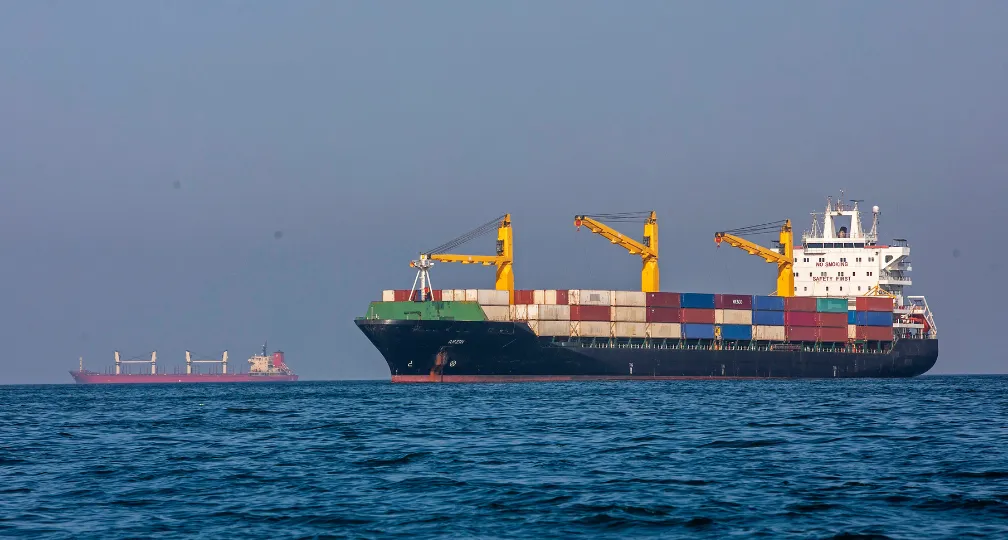
The Strait of Hormuz crisis raises two questions: What did it reveal about the resilience of the global maritime order, and what does it mean for the security of Japan's sea lanes in the Indo-Pacific?
The maritime order has two aspects: a vertical order based on hegemony and command of the sea, and a horizontal order based on norms and rules agreed upon among nations. In the late 20th century, the United States has maintained global maritime dominance through its unrivaled naval capabilities. Meanwhile, the United Nations Convention on the Law of the Sea, or UNCLOS, which entered into force in 1994, has become the standard rule of the international society.
The 2026 Strait of Hormuz crisis tested both of these aspects.
Political scientist Barry Posen described U.S. maritime dominance as “command of the commons” — the ability to secure the world’s oceans, airspace and outer space for military operations. The Hormuz crisis can be seen as a partial challenge to this dominance.
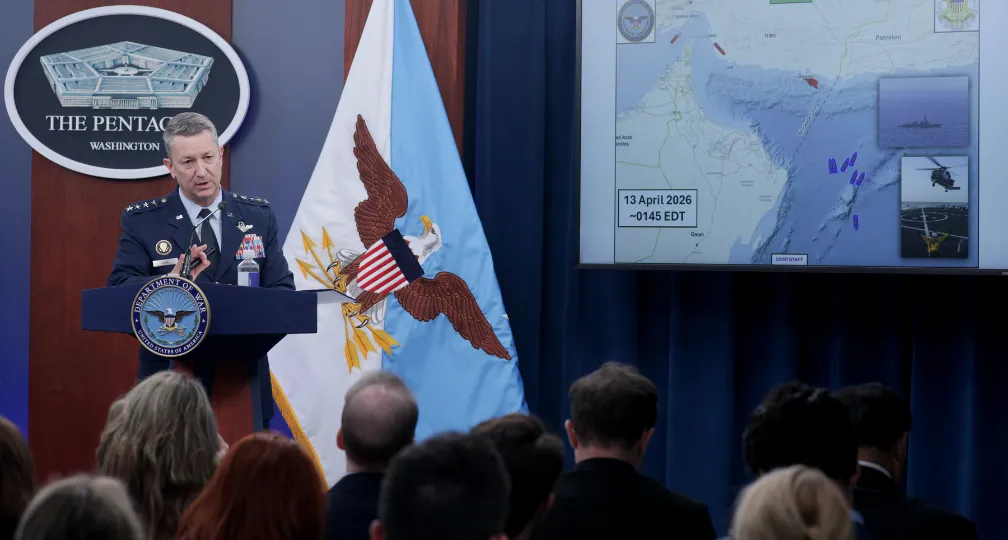
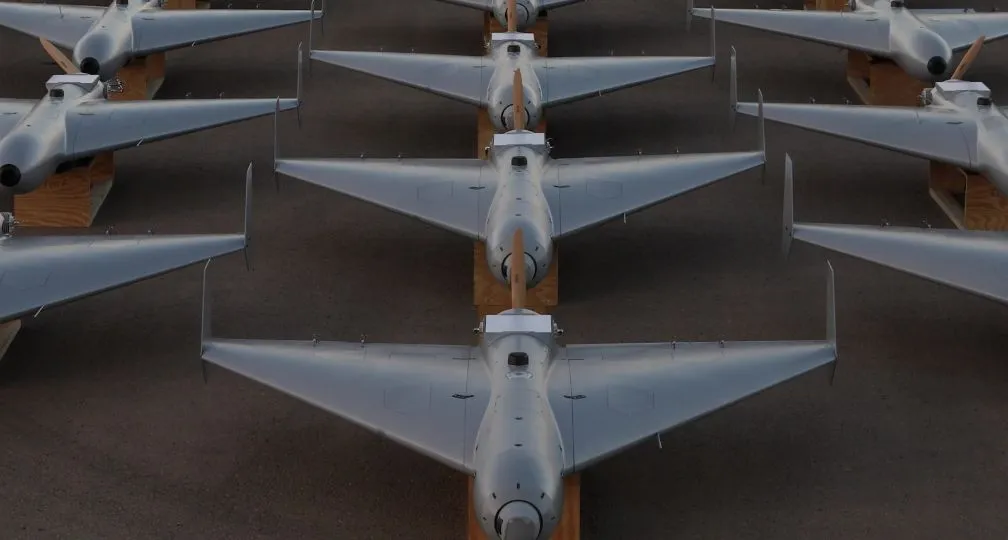
Iran relied on relatively inexpensive tools — drones, anti-ship missiles and GPS jamming — to make commercial shipping unsafe. Although U.S. naval superiority remained intact, Washington was unable to guarantee safe passage through the strait by military means alone. The crisis showed that even a dominant naval power can struggle to secure civilian shipping at strategically vital chokepoints.
International norms also came under strain. UNCLOS guarantees the right of transit passage through international straits used for international navigation. Although Iran has not ratified the convention, the Strait of Hormuz is widely recognized as an international strait under customary international law because of its indispensable role in global energy transportation. By obstructing commercial navigation, Tehran challenged long-standing international norms protecting freedom of navigation.
The implications extend well beyond the Persian Gulf.
One of Japan’s greatest security concerns is the vulnerability of its maritime transportation network in the nearby waters of Japan.
The Strait of Hormuz crisis disrupted shipping near the source of global energy exports, where crude oil and liquefied natural gas terminals are concentrated. On the other hand, the challenge Japan faces in the nearby waters is completely different. Rather than protecting a single chokepoint, it must safeguard an expansive network of sea lanes stretching across the Indo-Pacific.
Japan depends on maritime routes linking it to North and South America across the Pacific, to Europe, the Middle East, Africa and India through the Straits of Malacca and Singapore, and to Australia through the western Pacific. Although these routes are geographically diverse, they converge as they approach Japan, increasing the consequences of any disruption.
Unlike energy imports, which can be diversified to a limited extent, Japan cannot diversify the waters surrounding the archipelago. The Hormuz crisis demonstrated that an adversary does not need to achieve command of the sea to disrupt maritime commerce. A conflict near Japan could render vast surrounding waters too dangerous for commercial shipping, even without direct control of those sea lanes.
The consequences would extend well beyond energy. Roughly 99% of Japan’s trade is transported by sea. A prolonged disruption would threaten not only energy supplies but also food imports, industrial production and the daily lives of Japanese citizens.
As the global maritime order becomes less stable and the risk of sea-lane disruption grows, Japan must rethink how it contributes to security across the Indo-Pacific. Given its resources and constitutional constraints, Japan cannot aspire to achieve its own version of America’s “command of the commons.” Instead, it should focus on strengthening what might be called the “awareness of the commons” — improving maritime transparency by detecting, monitoring and sharing information about threats, in order to support safe navigation of the vessels.
The foundation of that effort should be Maritime Domain Awareness (MDA), the collection, analysis and sharing of information about activities at sea. MDA already plays an important role in Japan’s security strategy, but the Hormuz crisis suggests it should become the centerpiece of a broader maritime resilience strategy.
Three priorities stand out.
First, Japan should further integrate MDA with its Official Security Assistance (OSA) program. Beyond helping partner nations build their own maritime capabilities, Tokyo should work toward a regional information-sharing network that enables governments to exchange maritime data more effectively. A multilateral framework would improve early warning, strengthen regional cooperation and enhance the resilience of the Indo-Pacific as a whole.
Second, Japan should expand MDA to include underwater situational awareness. Current government initiatives focus primarily on activities on or above the sea surface. Yet the growing use of submarines and unmanned underwater vehicles makes the underwater domain increasingly important. Integrating underwater sensors and surveillance into Japan’s MDA architecture would significantly strengthen its ability to detect emerging threats.
Third, Japan should establish mechanisms for sharing information with the private sector during crises. Shipping companies, insurers and port operators all depend on timely security information to make operational decisions. While governments must protect sensitive intelligence, advance planning can identify what information can be shared, with whom and under what circumstances. Better coordination between the public and private sectors would strengthen the resilience of Japan’s maritime transportation network.
As a maritime nation, Japan has consistently supported freedom of navigation and the rule of law at sea, which can be seen in its Free and Open Indo-Pacific vision.
While the global maritime order becomes unstable and the risk of sea lane disruption emerges, Japan should contribute to the global maritime order by enhancing “awareness of the commons,” which aims to improve maritime transparency.
Photo Credit: Majid Saeedi / correspondent(Gettyimages)
[Note] This article was posted to the Japan Times on August 17, 2026:
https://www.japantimes.co.jp/commentary/2026/08/17/japan/hormuz-warning-for-japan/
Geoeconomic Briefing
Geoeconomic Briefing is a series featuring researchers at the IOG focused on Japan’s challenges in that field. It also provides analyses of the state of the world and trade risks, as well as technological and industrial structures (Editor-in-chief: Dr. Kazuto Suzuki, Director, Institute of Geoeconomics (IOG); Professor, The University of Tokyo).
Disclaimer: The opinions expressed in this Geoeconomic Briefing do not necessarily reflect those of the International House of Japan, the Institute of Geoeconomics (IOG) or any other organizations to which the author belongs.

Visiting Research Fellow
Yuki Goto is a Visiting Research Fellow at the Institute of Geoeconomics. He has led the intelligence of external affairs at Japan Petroleum Exploration, Co., Ltd. His research focuses on security risks associated with the maritime transportation of energy resources. He holds a Bachelor of Arts in Policy Management from Keio University. He completed the Senior Executives in National and International Security program at Harvard Kennedy School in December 2025. He has held his current position since October 2025.
View Profile-
 Connecting Europe and the Indo-Pacific: Why Japan and Germany Need Stronger Space Security Cooperation2026.10.20
 - China’s Calculus Behind the State Visit to the U.S.: Different Visions of “Stability”2026.10.16
- Trump Faces a Reckoning in the Midterms, but it Might Not Matter for Tariffs2026.10.09
-
 BRICS in India2026.10.09
 - Can Japan build a defense-startup ecosystem?2026.10.07