
Iran: A ‘War of Choice’ No Longer Worth the Cost
This raises an important question: Why, in the past six months, have military gains failed to translate into strategic advantage? One answer lies in viewing the conflict through the lens of a "war of choice." The Iran strikes can be assessed across four dimensions: strategic objectives, economic costs, effects on alliances and escalation management. When a war of choice begins from mistaken assumptions, its strategic payoff deteriorates rapidly. Around the Strait of Hormuz, geoeconomic constraints accelerated that process.
Tactical success, strategic failure
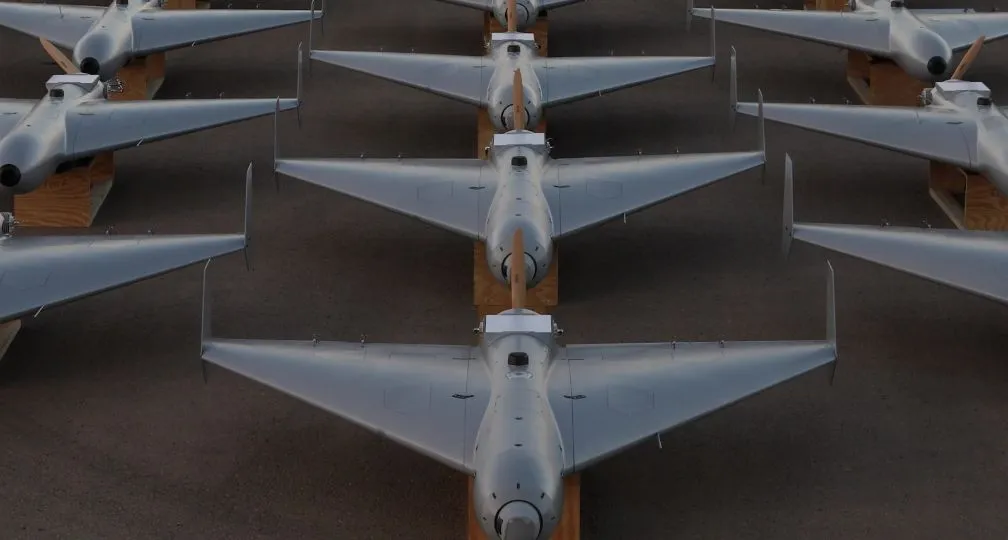
The U.S. military combined integrated intelligence, surveillance and reconnaissance, cyber capabilities and long-range precision strikes to inflict serious damage on Iran’s command-and-control functions and military infrastructure within a short period. Yet the results were neither one-sided nor decisive. Reports of the U.S. Navy’s Fifth Fleet moving rearward and continuing drone attacks point to remaining defensive challenges.
More important, these tactical achievements have not produced strategic advantage. Iran has maintained its underground and dispersed missile forces and used the Strait of Hormuz as leverage, converting military inferiority into economic pressure.
This failure to convert early tactical gains into strategic success reflects the interactive nature of war: Advantages are constantly relativized by the adversary’s adaptation. As a result, expected benefits do not materialize, costs accumulate and the strategic payoff begins to deteriorate. If the war drags on, domestic support also weakens, making strategic objectives still harder to achieve.
Consequently, initial goals such as regime change or a fundamental resolution of the nuclear issue have not been achieved, leaving Iran with room to negotiate. This gap between expectations and outcomes is a common feature of wars of choice based on mistaken assumptions. In this case, the costs were further amplified by the geoeconomic consequences surrounding the Strait of Hormuz.
Underestimating costs
The Trump administration appears to have initially assumed that the problem could be solved through a short, decisive campaign. Instead, the war became prolonged, and risks to the global economy expanded. Washington was forced to search for ways to contain the situation while the outcome of the conflict remained uncertain.
Behind this lies the particular structure of a war of choice. Unlike wars fought in response to an imminent existential threat, wars of choice are launched to secure policy gains or with the expectation of regime change. Not all wars of choice end the same way. The January operation against the Maduro regime in Venezuela, for instance, achieved limited political and military objectives in a relatively short period. Yet such successes can foster excessive expectations and optimistic assumptions about future uses of force.
The problem, therefore, is not the category of a war of choice itself but the assumptions made at the outset.
Before the war, the U.S. military and intelligence agencies reportedly understood the difficulty of eliminating Iran’s nuclear capabilities and the risks of regional escalation. Nevertheless, political decision-making appears to have relied heavily on expectations of regime collapse or short-term success. Similar expectation-driven judgments were visible in the Iraq War and Russia’s invasion of Ukraine.
As the military theorist Carl von Clausewitz argued in On War, his unfinished treatise on military strategy, war is inherently uncertain and interactive. In line with what Edward Luttwak, an American strategist and author, has called the “paradoxical logic” of strategy, advantages are offset as adversaries adapt. Defenders rarely allow attackers to achieve the quick resolution they expect. As a result, anticipated benefits fail to appear while the costs of prolonged conflict rise.
Poor investment
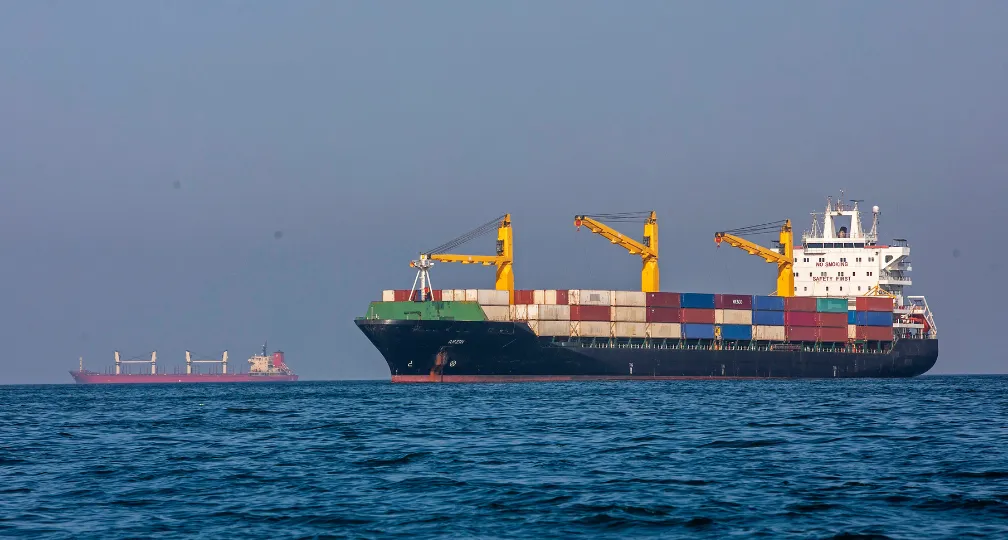
The knowledge that wars of choice can become poor investments is not new. What distinguished the Iran strikes was that the costs became visible in an extremely short time because of the Strait of Hormuz, a critical geoeconomic chokepoint.
A central lesson of this war is that military superiority alone cannot secure strategic outcomes. The Strait of Hormuz is a vital artery for global energy transport; its destabilization immediately transformed a regional conflict into a global economic problem. Iran exploited this structure to compensate for its military inferiority.
Responses to drone attacks against Gulf states also relied on support from European countries and lessons from the war in Ukraine. The war thus shows that sustaining defense capabilities and securing access depend on cooperation with allies and partners. It reaffirms the strategic value of alliances in an era of geoeconomic interdependence.
Weinberger doctrine
The Iran war also recalls the continuing relevance of the Weinberger doctrine, developed after the Vietnam War. The doctrine holds that force should be used only when vital national interests, achievable objectives and domestic support align.
In this operation, multiple political objectives coexist: resolving the nuclear issue, pursuing regime change and strengthening deterrence. Yet their priorities remain unclear. The lack of congressional authorization and insufficient explanation of the “imminent threat” have also weakened the legitimacy of the use of force.
When political objectives are ambiguous, it becomes difficult to select military means appropriate to them. This war has again demonstrated the importance of aligning political purposes, strategic goals and military instruments.
Limits of unilateralism
First, U.S. policy toward Iran should avoid excessive political objectives, including regime change. Assigning maximal goals to limited threats invites strategic incoherence and rising costs.
Second, alliance policy must be reassessed. In an era of geoeconomic interdependence, access to bases, logistical support and intelligence-sharing are as important as military power itself. This war showed that alliances are strategic foundations, not merely instruments of military cooperation.
Third, decision-making principles that align political objectives with military means remain essential. Policymakers must examine in advance whether vital national interests are at stake, whether objectives are achievable, and whether domestic and international support can be sustained.
Cost-benefit balance
Clearly, the unfavorable cost-benefit balance of wars of choice is not a new phenomenon. In any era, once a gap emerges between expected benefits and the costs of fighting, the strategic return deteriorates.
In the Iran strikes, however, the interdependence surrounding the Strait of Hormuz has made those costs visible with unusual speed through energy markets, insurance markets and alliance access. Whether the United States will return to a more coordinated, rules-based approach remains uncertain. This experience nevertheless demonstrates that military power alone cannot sustain access or continued operations.
The most important lesson of the Iran war is the need to move away from overconfidence in short-term military success and toward strategic judgment grounded in geoeconomic constraints and the value of alliances.
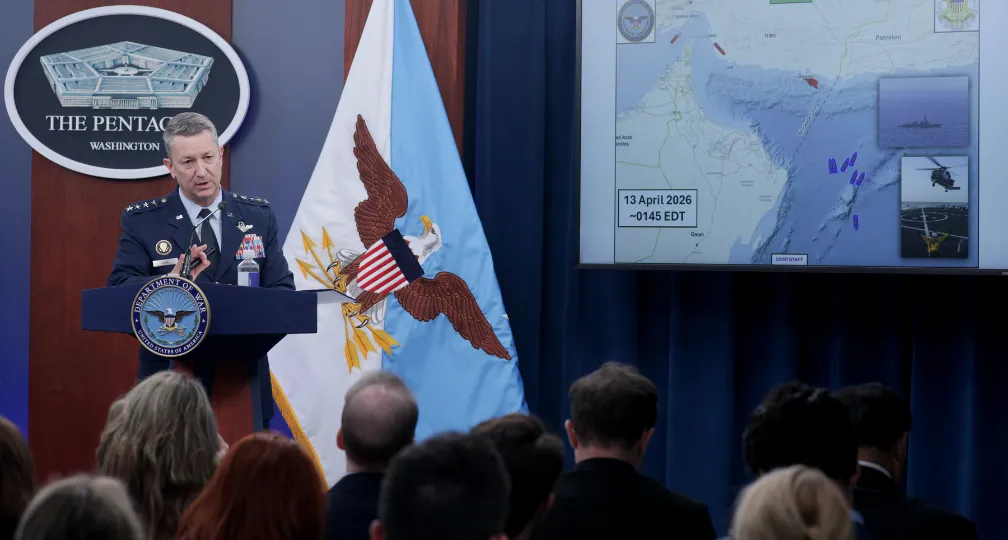
(Photo Credit: Alex Wong / Staff, Gettyimages)
[Note] This article was posted to the Japan Times on August 21, 2026:
https://www.japantimes.co.jp/commentary/2026/08/20/world/iran-a-war-of-choice/

Geoeconomic Briefing
Geoeconomic Briefing is a series featuring researchers at the IOG focused on Japan’s challenges in that field. It also provides analyses of the state of the world and trade risks, as well as technological and industrial structures (Editor-in-chief: Dr. Kazuto Suzuki, Director, Institute of Geoeconomics (IOG); Professor, The University of Tokyo).
Disclaimer: The opinions expressed in this Geoeconomic Briefing do not necessarily reflect those of the International House of Japan, the Institute of Geoeconomics (IOG) or any other organizations to which the author belongs.

Group Head, International Security Order / Visiting Senior Research Fellow
Born in 1964, Kuniharu Kakihara graduated from the National Defense Academy and holds master’s degrees in Regional Studies from the University of Tsukuba and in National Security Strategy from the National Defense University in the United States. Additionally, he completed the Senior Executives in National and International Security Course at the John F. Kennedy School of Government at Harvard University. A retired Lieutenant General of the Japan Air Self-Defense Force (JASDF), Kakihara served in key leadership roles, including Commander of the Air Development and Test Command and Chief of Staff at the Air Defense Command. [Concurrent Positions] Principal Research Director, National Security Institute, Fujitsu Defense & National Security, Ltd
View Profile-
 Connecting Europe and the Indo-Pacific: Why Japan and Germany Need Stronger Space Security Cooperation2026.10.20
 - China’s Calculus Behind the State Visit to the U.S.: Different Visions of “Stability”2026.10.16
- Trump Faces a Reckoning in the Midterms, but it Might Not Matter for Tariffs2026.10.09
-
 BRICS in India2026.10.09
 - Can Japan build a defense-startup ecosystem?2026.10.07