
Trump Faces a Reckoning in the Midterms, but it Might Not Matter for Tariffs
The latest regulatory developments on economic security & geoeconomics
By Paul Nadeau, Visiting Research Fellow, Institute of Geoeconomics (IOG)
U.S. Targets Cuba’s Mining, Defense Sectors: On September 17, the U.S. Department of State designated eight entities and three individuals involved in the Cuban government’s nickel mining sector and defense sector.
Russia Sanctions Bill Becomes Law: On September 19, Donald Trump signed the Lindsey O. Graham Sanctioning Russia and Iran Act of 2026 into law, having passed the House of Representatives in September and the Senate in August. The bill grants the presidency new authorities to increase economic pressure on Russia amidst its invasion of Ukraine, including new sanctions on Russia’s shadow fleet, defense industry, energy industry, and banks, and allows the president to impose sanctions of 100 percent on the top five global purchasers of Russian energy (the criteria to qualify as a “top five” purchaser is unclear but likely includes China, India, Brazil, Japan, and EU states).
U.S. Imposes Visa Restrictions on Cybercriminals: On September 21, the U.S. State Department took steps to impose visa restrictions on 32 individuals responsible for or complicit in defrauding Americans through cybercrime, cyber-enabled crime, and related activity, a majority of whom are affiliated with the Prince Group, a U.S.-designated transnational criminal organization.
Canada Expands Iran Sanctions: On September 23, Global Affairs Canada announced that it had sanctioned ten entities and individuals to maintain pressure on the Iranian government for its continued human rights violations, including restrictions on freedoms of expression, peaceful assembly, and association, both online and offline.
Australia Expands Russia Sanctions: On September 24, the Australian government announced that it had imposed additional sanctions on Russia, designating 68 individuals and entities as well as 38 vessels. The announcement came as part of the new Australia–Ukraine Bilateral Security Agreement.
EU Sanctions Russian Media Figure: On September 24, the European Union sanctioned Xenia Fedorova, a Russian media figure and former senior executive of Russia Today (RT) France for her role in Russia’s continued hybrid activities, particularly for engaging in foreign information manipulation and interference.
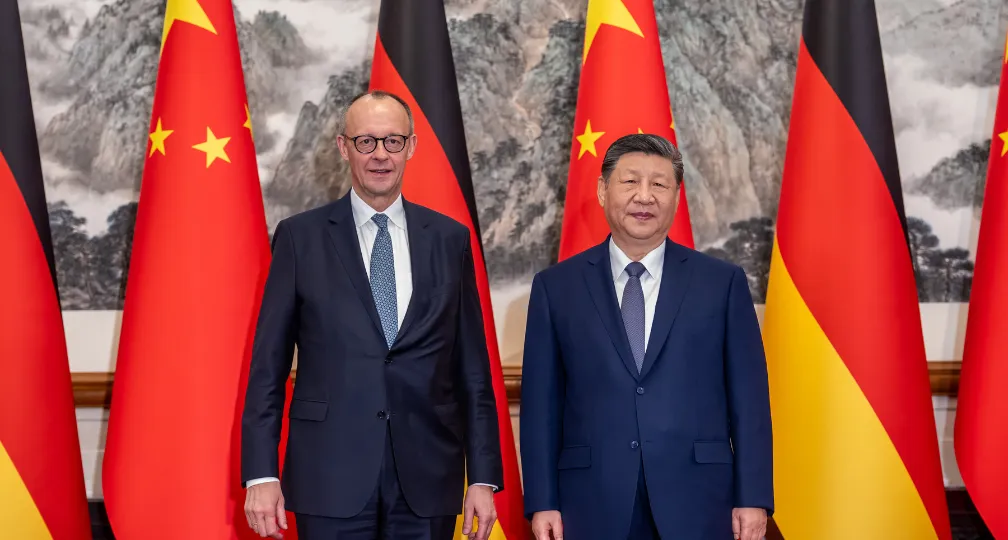
Xi, Trump Meet in Washington: Following Xi Jinping’s state visit to Washington, DC to meet Donald Trump, the White House released a fact sheet summarizing the outcome of the meeting on September 25. The announcement included an agreement to lower tariffs on $30 billion of “noncritical goods” including agricultural and energy products, and to begin new talks on artificial intelligence (AI) described as an “AI Force”. On September 24, U.S. Treasury Secretary Scott Bessent announced that U.S. President Donald Trump and China’s Xi Jinping had agreed to extend their trade truce for another two months, extending the agreement until late December or early January.
EU Expands Russia Sanctions: On September 28, the European Council announced the adoption of sanctions against ten individuals for undermining democracy and the rule of law in Russia, including multiple judges and an official involved in the decision to bar a political party from participating in the September 2026 elections to the State Duma and prosecute the party’s leaders. In a separate announcement on September 28, the Council announced that it had added 10 individuals and 17 entities to its sanctions list for involvement in the systematic unlawful deportation and forcible transfer of Ukrainian children to Russia.
OFAC Targets Criminal and Drug Networks: On September 29, the U.S. Treasury Department’s Office of Foreign Assets Control (OFAC) sanctioned 10 targets involved in a fraud scheme run by Tren de Aragua (TdA) where criminals deployed malware to force U.S. ATMs to drain cash, as well as a high-ranking TdA leader directing operations in multiple South American countries. In a separate announcement on September 29, OFAC designated nearly 50 targets who serve as leaders or facilitators of the Sinaloa Cartel, including cartel leader Ismael Zambada Sicairos, members of his innermost circle, and Tijuana-based cell leaders, money launderers, and corrupt politicians.
Treasury Department Issues Alert on Cuba Sanctions Risks: On September 29, the U.S. Treasury Department’s Office of Foreign Assets Control (OFAC) issued an alert to highlight increased sanctions risks associated with transactions involving Cuba for both U.S. and non-U.S. persons from new sanctions authorities and amended regulations.
UK Expands Russia Sanctions: On October 1, the United Kingdom’s Foreign, Commonwealth, and Development Office announced a package of sanctions which designate 23 individuals and eight entities and in order to stem funding for Russia’s war effort, disrupt disinformation networks, and go after those responsible for torturing Ukrainian civilians and deporting Ukrainian children.
Operation Economic Outcast Updates:
・On September 14, the U.S. Treasury Department’s Office of Foreign Assets Control (OFAC) designated a prominent Russian financial institution, VTB Bank, for its involvement in Iranian sanctions evasion, including establishing correspondent relationships with sanctioned Iranian banks.
・On September 17, the U.S. Treasury Department’s Office of Foreign Assets Control (OFAC) designated a digital assets exchange controlled by Babak Zanjani, a financier for the Iranian regime, as well as its software developer and three associates of Zanjani.
・On September 29, the U.S. Treasury Department’s Office of Foreign Assets Control (OFAC) announced sanctions against 10 individuals and entities in multiple jurisdictions that have procured weapons and weapons components for Iran’s Ministry of Defense and Armed Forces Logistics (MODAFL).
・On October 1, the U.S. Treasury Department’s Financial Crimes Enforcement Network (FinCEN) announced that it has proposed a rule that would prohibit transmittals of funds regarding transactions involving the A7 Network’s, a shadow banking network, sub-agents; issuing an alert to help financial institutions detect and report suspicious activity related to the A7 Network; and sanctioning the A7 Network as a significant transnational criminal organization.
・On October 1, the U.S. Treasury Department’s Office of Foreign Assets Control (OFAC) announced sanctions against what it described as “some of the last significant elements” of Iran’s industrial infrastructure and issued two additional sectoral sanctions determinations targeting Iran’s automotive and rail sector.
Analysis: Trump Faces a Reckoning in the Midterms, but it Might Not Matter for Tariffs
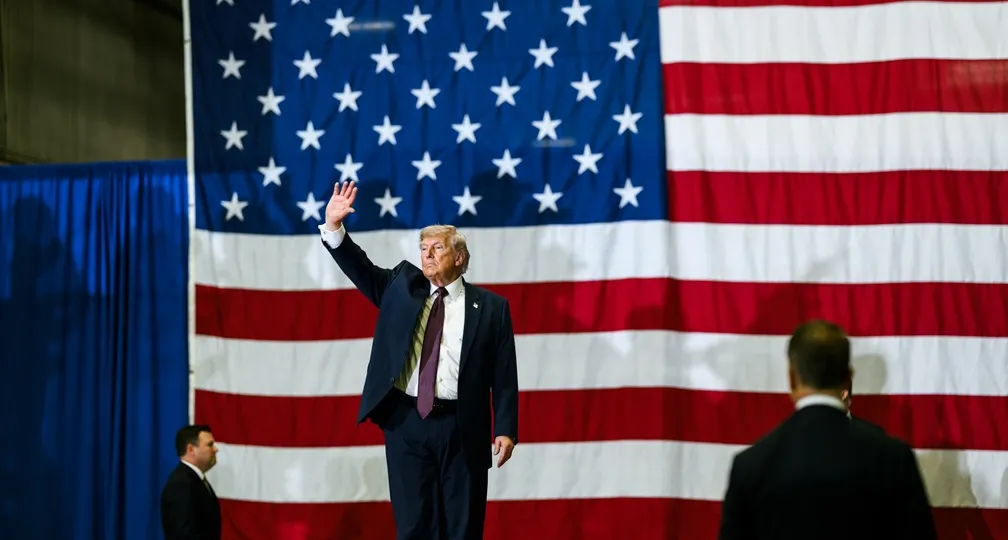
In about a month, American voters will return to the polls for the midterm elections – elections that occur in the two years in between presidential election years where voters will select their members of the House of Representatives and roughly one-third of the Senate. While these elections may have a significant impact on the remaining two years of Donald Trump’s presidency, international audiences hoping for tariff relief or a change of course on U.S. international economic policy – or even greater clarity – will be disappointed. The centralization of tariff-making authority under the White House leaves Congress largely sidelined on tariff policy, and the biggest impact of the midterms would be a change in tone in Washington that would be more partisan and confrontational as Democrats begin investigations and likely even impeachments of Trump administration officials.
Historically, midterm elections are seen as a referendum on the current presidency since while the president may not be on the ballot, voters can still use the election to express their satisfaction or dissatisfaction with the current administration. Typically, voters have expressed dissatisfaction, with the president’s party losing an average of 28 seats in the House of Representatives and 4 seats in the Senate from 1934-2018 – if this historical average was applied to the November midterms, Democrats would win both chambers of Congress in November (even accounting for the ten-seat advantage Republicans secured through gerrymandered redistricting).
So far, signs point to the historical trends holding up and most prediction models show Democrats on track to win both chambers of Congress. Trump is deeply unpopular and there is little public support for his handling of issues like the Iran War, energy prices, affordability, and more. Democrats are showing more enthusiasm for voting than Republicans and have been showing strong turnout in special elections and primary elections. Having the election serve as a “referendum” on Trump serves Democrats well but puts Republicans in a bind – they need to show loyalty to Trump to protect their conservative support base but also need to keep enough distance to connect with independent voters who won’t want to enable an unpopular president. And Republicans will probably need support from independent voters since there may not be enough base MAGA supporters to get Trump over the line – an approval rating in the low-30s and even high-20s is well below the typical “floor” of 38-39 percent that he’s enjoyed for most of his presidency.
In terms of issues, affordability is the key issue voters appear to be concerned about. Trump’s tariffs, particularly those on Canada, have complicated the races in trade-dependent swing states in November, including Alaska, Maine, Michigan, Ohio, and Texas, while the Iran War’s impact on energy prices has compounded concerns about affordability and farmers are seeing higher fertilizer prices which are also driving up costs. With no easy solution for these issues (for now, Trump seems uninterested in a negotiated settlement with Iran that would reopen the Strait of Hormuz and trade negotiations with Canada remain on hold), Trump may look for smaller “wins” to signal attention on the issue, such negotiating for potash imports with Belarus or China, or certain trade concessions, such as those reached during Xi Jinping’s visit to Washington in September. Or Trump might even expand tariffs as a show support to his base – politically, tariffs and trade wars matter if voters want to see their president fighting for them rather than delivering economically. Immigration will be another key issue and one that plays well with Trump’s conservative base and is more likely to drive Republicans to vote than tariffs, but immigration is also more likely to drive Democrats to vote. Wildcards could always appear that could add even more complications to the math – some have already been seen like insurgent Democrat Graham Platner dropping out of the Senate race in Maine or Lindsey Graham’s sudden death. Concerns about election manipulation, ICE being deployed to polling stations (which is illegal), and the full impact of redistricting won’t be known – and can’t be – until voting takes place in November. There is also the strong possibility of delayed vote tallies and lawsuits challenging the results that will at least make the final seat count unknown for a few weeks to a couple months. If such a challenge occurs in a “chokepoint” race that determines control of one of the chambers, the ensuing high-stakes battle could become fraught.
If the outcome of the midterm elections go as most expect, then Democratic control of one or both chambers of Congress would change the dynamics of Washington. Once in power, Democrats would certainly begin to launch investigations of the Trump administration’s practices, particularly some of its deals, settlements, and other agreements. Some particular sectors and issues that may be targeted include the administration’s relationship with the tech and artificial intelligence (AI) sectors, its oil deals with Venezuela, corporate mergers, how oil firms may be benefiting from high oil prices, and pharmaceuticals and drug pricing. The House of Representatives would likely begin impeachment proceedings against Trump and maybe other administration officials, though the high threshold to convict makes it unlikely that Trump would be expelled from office. Japan would probably not be directly affected by these developments since there generally support in Washington for Japan and its relationship with the United States among both parties. It’s unlikely that Democrats would scrutinize the July 2025 agreement unless there are major revelations of malfeasance in the investments, and both Democrats and Republicans see value in U.S. bases and defense posture in the Indo-Pacific. The questions about the implementation of the investment commitments would remain, but broadly Democrats and Republicans will have too much in front of them for this to divert their attention, so the portfolio will mostly remain under the purview of the White House and largely leaving the agreement in place unless Trump decides to press for changes.
Beyond that, the impact of Trump becoming a “lame duck” president is hard to gauge but could be significant. The last two years of George W. Bush’s presidency from 2007-2009 followed a massive Democratic takeover of Congress and he suffered from similarly low approval ratings resulting from challenging wars in the Middle East, mismanagement of disasters like Hurricane Katrina, and economic concerns culminating in the 2008 Financial Crisis. He was almost entirely sidelined by the conclusion of his presidency, even by Republicans. Trump may find himself in a similar situation and it’s not clear what that will mean – he could insert himself in the process or govern without involving Congress, he may lose interest in the presidency and focus on construction projects, or run down the clock until retirement. Here Japan could be at risk if Trump grows dissatisfied with the 2025 agreement or chooses to impose additional tariffs out of new concerns about imports but by now the Japanese government has experience in managing these risks. His relationship with Xi Jinping continues to raise questions about whether Trump shares Japan’s concerns about Chinese coercion which might be more difficult to manage, and whil Trump is mostly isolated in his apparent ambivalence, it may take some effort by policymakers in Tokyo and Washington to make sure that Trump does not concede too much in his relationship with Xi.
For their part, few Republicans are willing to break with Trump before the midterms, even on issues where they may be materially affected, like agriculture and trade. That may change after November if Trump’s approval ratings don’t improve and Republicans up for election in 2028 won’t want to overextend themselves for someone who won’t be on the ballot and won’t be in office following the election (to that end, Trump’s loose talk of a “third term” may help keep Republicans in line but the legal impossibility of a third term means the threats will have diminishing returns). Democratic control of one or both chambers of Congress may paradoxically help by giving MAGA and Republicans an opportunity to lash out at Democrats and rediscover their motivating anger – it’s hard to be angry with the elites when your own people are the elites, but fear of Democrats and “democratic socialists” may make up the difference. Raising concerns about Democratic extremists is already a key part of the Republican midterm strategy that lets them avoid potentially awkward connections to Trump, and they will almost certainly rely on the strategy again in the lead up to the 2028 elections. Among other things, this will make it more challenging for the parties to work together or cooperate on areas of common interest.
But one issue area that’s relatively easy to predict is the future of tariffs and U.S. international economic strategy since Congress is mostly out of the picture on these issues. While Congress, not the Executive Branch, has fundamental authority over tariffs and international trade policy in the U.S. Constitution, the president has their own tariff authority in cases where Congress has explicitly granted him such authority for specific situations. Outside of the International Economic Emergency Powers Act (IEEPA) which the Supreme Court blocked in February, the powers that Trump has used to build his tariff wall – Section 121, Section 232, Section 301, and Section 338 – are powers that Congress granted to the presidency through legislation. While the Trump administration may be using those powers inappropriately (something which courts will decide), the measures that he’s using are within his authority and which leave Congress on the outside.
That’s not to say nothing will change. If Democrats take control of Congress, it may make it less likely that Trump would, for example, bring a renegotiated USMCA agreement to Congress for ratification as his did in his first administration, instead implementing the agreement through Executive Branch authorities such as making revisions to Section 232, Section 301, or Section 338 tariffs, or by concluding a series of side letters on specific issue areas. But that is to say that while a change of parties in Congress could theoretically change the dynamics of Trump’s tariff policy, in reality, there’s little to no chance that it will. The key reason is the deepening of political polarization – members of Congress do not see themselves as members of a separate and coequal branch of government as they did in the 1970s when both parties worked to constrain Executive Branch authority in the aftermath of the Watergate crisis. Instead, they now see themselves more as an extension of their president’s party, placing partisan alignment ahead of the Constitutional system of checks-and-balances. A Republican Congress has supported their president with few efforts to check his authority, and a Democratic Congress will try to check his authority but will lack the seat numbers to implement meaningful changes – even lame duck George W. Bush was able to implement his surge policy in Iraq after Democrats swept the midterms in 2006. For that reason, the policy impact of the midterm elections will be relatively small – the seats may switch and the tone may change, but the day-to-day of dealing with the United States won’t be meaningfully different.
(Photo Credit: Rawpixel.com / Shutterstock.com)
Disclaimer: The views expressed in this IOG Economic Intelligence Report do not necessarily reflect
those of the API, the Institute of Geoeconomics (IOG) or any other organizations to which the author belongs.
IOG English Newsletter
Subscribe to the English IOG Newsletter to stay up to date on IOG’s activities across various briefings, op-eds, YouTube videos, podcasts, as well as new publications, events, research activities, and more.

Visiting Research Fellow
Paul Nadeau is an adjunct assistant professor at Temple University's Japan campus, co-founder & editor of Tokyo Review, and an adjunct fellow with the Scholl Chair in International Business at the Center for Strategic and International Studies (CSIS). He was previously a private secretary with the Japanese Diet and as a member of the foreign affairs and trade staff of Senator Olympia Snowe. He holds a B.A. from the George Washington University, an M.A. in law and diplomacy from the Fletcher School at Tufts University, and a PhD from the University of Tokyo's Graduate School of Public Policy. His research focuses on the intersection of domestic and international politics, with specific focuses on political partisanship and international trade policy. His commentary has appeared on BBC News, New York Times, Nikkei Asian Review, Japan Times, and more.
View Profile- Trump Faces a Reckoning in the Midterms, but it Might Not Matter for Tariffs2026.10.09
-
 BRICS in India2026.10.09
 -
 Can Japan build a defense-startup ecosystem?2026.10.07
 - Economic security in health and medicine through strategic alignment2026.10.06
-
 Inside Japan’s New Growth Strategy: The Economic Security Implications2026.10.01