
Economic security in health and medicine through strategic alignment
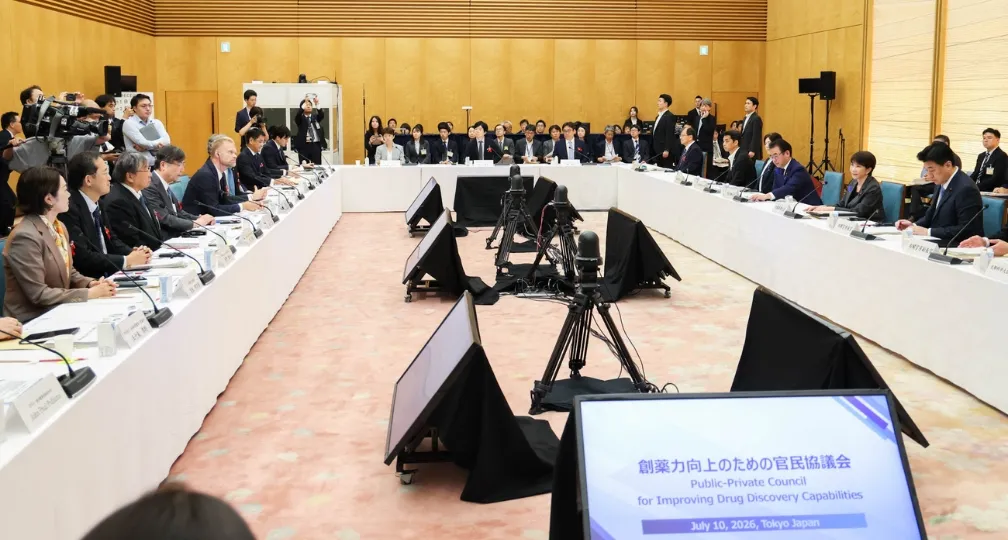
Prime Minister Sanae Takaichi's administration approved the Japan Growth Strategy in July, designating 17 strategic sectors. Two concern health and medicine: synthetic biology and biotechnology, and drug development and advanced medicine. The administration has made the latter a particular focus of its economic-growth strategy, seeking to strengthen health and medical security through greater public and private investment.
Yet pharmaceuticals face a problem that many other strategic sectors do not. Japan's postwar regulatory and official drug-pricing systems were designed primarily to ensure the safety, affordability and stable supply of medicines — not to promote the industry as a strategic economic asset. The challenge now is to align those objectives.
Japan's pharmaceutical industry once ranked second in the world behind the United States. Its position has since declined as global drug development shifted toward biologics and antibody drugs and Japanese companies struggled to keep pace. At the same time, efforts to contain health care costs have put sustained pressure on drug prices.
The question is no longer simply how Japan can spend more on pharmaceuticals. It is how government, industry and academia can align their interests to rebuild Japan's capacity for innovation while strengthening economic security.
Regulation and drug pricing
In the postwar period, Japan placed greater emphasis on regulating pharmaceuticals than promoting them. Because prescription drugs provided through insured medical care were funded by insurance premiums, it was considered necessary not simply to reimburse market prices set by companies, but to establish official drug prices under the Ministry of Health and Welfare. In the 1950s, the drug price standard system was launched through the Central Social Insurance Medical Council.
A major turning point came in 1961 with the introduction of universal health insurance. Once approved prescription drugs were listed in the drug price standard, insured medical care spread nationwide, creating a vast and stable pharmaceutical market supported by insurance premiums and public funds.
Japan’s pharmaceutical industry peaked in the 1980s and 1990s, becoming the world’s second-largest producer after the United States. Japanese companies developed anticancer drugs, antibacterial agents and other medicines.
Yet the drug-pricing system, once a source of stable profits, later drew criticism from the U.S. Trade Representative as a nontariff barrier amid wider U.S.-Japan trade friction. From the 1990s onward, it also became a constraint on Japanese companies. As health insurance finances deteriorated, drug spending came under pressure for reduction. While Japan’s social security spending rose from around 10% of GDP in the 1980s and 1990s to more than 20% in the 2010s, drug spending was held to the upper 1% range of GDP. Uniform annual price cuts have since become standard practice.
At the same time, global drug development shifted from small-molecule drugs, where Japan had advantages, toward biologics and antibody drugs. Many Japanese companies fell into the “innovator’s dilemma” and failed to keep pace.
Industrial policy
In response, pharmaceutical industrial policy began to take shape. Full-fledged industrial policy emerged after the 2001 reorganization that created the Ministry of Health, Labor and Welfare. Beginning with the Pharmaceutical Industry Vision issued in 2002, MHLW continued to formulate and revise visions for the pharmaceutical and medical device industries.
Health and medical industrial policy became a major government agenda after COVID-19. Japan was unable to create effective vaccines or therapeutics domestically and had to procure them from the United States and Europe at a cost of several trillion yen. Under the Kishida administration, Health Minister Keizo Takemi positioned pharmaceuticals as a national “core industry” and called for a global drug discovery ecosystem. Kishida himself stated in 2024 that the government would strongly promote measures to make pharmaceuticals a core industry supporting Japan’s future growth.
The Takaichi administration inherited this momentum, making health and medical security one of its missions and identifying pharmaceuticals as a key product in the Japan Growth Strategy. Yet the industry’s structural constraints — pharmaceutical regulation and official drug pricing — remain.
“Innovation 25”
An intriguing aspect of the Japan Growth Strategy is that many targeted health and medical products and technologies overlap with “Innovation 25,” formulated by Takaichi herself in 2007 when she served as minister for science, technology and innovation policy under the first Abe administration.
Innovation 25 was a long-term strategic guideline envisioning desirable innovation through 2025 in fields including medicine, engineering and information technology. It imagined a society of lifelong health and safety and worked backward to design policy road maps.
By coincidence, Takaichi became prime minister in 2025, the very year Innovation 25 was projected to become a reality. Many innovations imagined at the time, such as telemedicine and health management devices, have already materialized. But Japan’s life sciences sector, a central focus of Innovation 25, continued to decline: Among the world’s top 100 pharmaceutical products by sales, Japan’s share fell from 13 in 2008 to eight in 2024.
Strategic alignment
As Japan seeks to revive health and medical industries such as pharmaceuticals and medical devices, the process used to formulate the Japan Growth Strategy’s public-private investment road map is significant. It combines bold, future-oriented vision, as seen in Innovation 25, with coordination among politics, government, business and academia.
Companies are the main actors in economic security. Yet governments, firms and academia pursue fundamentally different objectives. Japan must therefore strengthen “strategic alignment”: the ability to share missions and strategic objectives and cooperate effectively — domestically among politics, government, business and academia, and internationally with the United States and other like-minded countries.
For pharmaceuticals, one option is for the government and Self-Defense Forces to support domestic production of crisis-management products outside the drug-pricing system. Strengthening pull incentives, such as strategic stockpiles purchased to ensure stable supply, would also be effective.
Regulators should move beyond simply waiting for company applications. They should engage companies from the R&D stage, align expectations on regulatory requirements, improve predictability, increase approvals and strengthen drug-discovery capacity. Public-private cooperation in building rational rules for new drugs, medical devices and services is not only regulatory reform; it can also support international standard-setting. It is, in effect, proactive rule shaping.
In December 2025, the U.S. Congress passed the BIOSECURE Act, accelerating moves to exclude Chinese genetic testing companies and contract development and manufacturing organizations (CDMOs) from government procurement. Behind this lies China’s pharmaceutical advancement. The Xi Jinping administration is cultivating innovative pharmaceuticals, alongside AI and robotics, as a new strategic export industry.
Drawing on the lessons of COVID-19, Japan has steadily developed domestic CDMO sites. Strengthening Japan’s pharmaceutical manufacturing capacity expands trusted supply chain options for the United States and reinforces economic security for both countries.
These efforts are not limited to pharmaceuticals. Until now, economic security policy has had two strategic objectives: strategic autonomy and strategic indispensability. Prime Minister Takaichi now repeatedly emphasizes “new public-private cooperation.” What matters going forward is connecting actors at home and abroad.
In other words, Japan must strengthen strategic alignment as a third strategic objective.
[Note] This article was posted to the Japan Times on October 5, 2026:
https://www.japantimes.co.jp/commentary/2026/10/05/japan/japan-wants-pharma-boom/
(Photo Credit: Cabinet Public Affairs Office, Cabinet Secretariat)

Geoeconomic Briefing
Geoeconomic Briefing is a series featuring researchers at the IOG focused on Japan’s challenges in that field. It also provides analyses of the state of the world and trade risks, as well as technological and industrial structures (Editor-in-chief: Dr. Kazuto Suzuki, Director, Institute of Geoeconomics (IOG); Professor, The University of Tokyo).
Disclaimer: The opinions expressed in this Geoeconomic Briefing do not necessarily reflect those of the International House of Japan, the Institute of Geoeconomics (IOG) or any other organizations to which the author belongs.
Senior Research Fellow
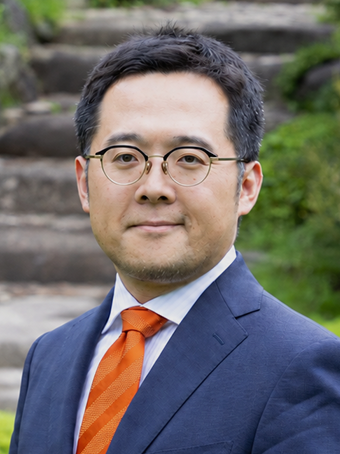
Yoshiyuki Sagara is a senior research fellow at the Asia Pacific Initiative (API), where he focuses on economic security, sanctions, health security policy including COVID-19 response, international conflicts, and Japan’s foreign policy. Before joining API in 2020, Mr. Sagara had 15 years of career experience working in the United Nations system and the Japanese government, as well as in the tech industry. From 2018 to 2020, he served as Assistant Director of the Second Northeast Asia Division (North Korea desk) at the Ministry of Foreign Affairs of Japan. From 2015 to 2018, he served in the Guidance and Learning Unit within the Policy and Mediation Division of the UN Department of Political Affairs in New York, where he analyzed and disseminated best practices and lessons learned from UN preventive diplomacy and political engagements, such as in Nigeria, Iraq, and Afghanistan. From 2013 to 2015, he served in the International Organization for Migration Sudan, based in Khartoum. As a project development and reporting officer in the Chief of Mission’s Office, he developed and implemented peacebuilding and social cohesion projects in conflict-affected areas of Sudan, especially Darfur. While serving in the Japan International Cooperation Agency (JICA) Headquarters from 2012 to 2013, he managed rural and fishery development projects in Latin America and the Caribbean region. From 2005 to 2011, he worked at DeNA Co., Ltd. in Tokyo and engaged in expanding tech businesses. Mr. Sagara has been widely published and spoke on public policy, including in the Japan Times. He coauthored a report, The Independent Investigation Commission on the Japanese Government’s Response to COVID-19 (API/ICJC): Report on Best Practices and Lessons Learned (Discover 21, 2021). He holds a Master of Public Policy from the Graduate School of Public Policy at the University of Tokyo, and a BA in law from Keio University.
View Profile-
 Rebalancing Bilateral Trade or Reordering Global Production?2026.10.23
 - Connecting Europe and the Indo-Pacific: Why Japan and Germany Need Stronger Space Security Cooperation2026.10.20
- China’s Calculus Behind the State Visit to the U.S.: Different Visions of “Stability”2026.10.16
- Trump Faces a Reckoning in the Midterms, but it Might Not Matter for Tariffs2026.10.09
-
 BRICS in India2026.10.09