
Can Japan build a defense-startup ecosystem?
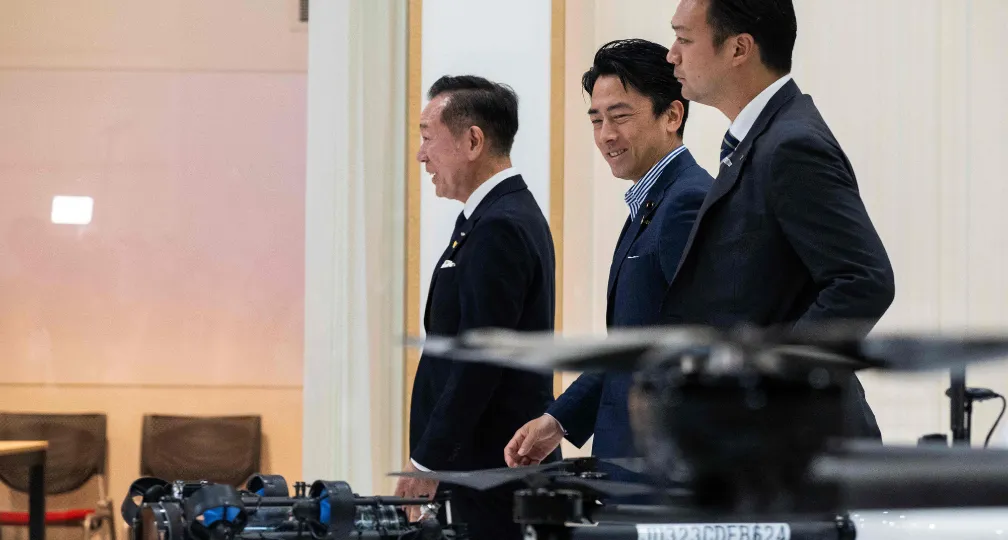
The government has also identified advanced technology, R&D and a stronger defense industrial base as priorities. With drones and other low-cost systems proliferating and software becoming increasingly important on the battlefield, Japan needs more than traditional defense contractors. Is Japan entering an era in which defense startups can emerge—and what role can government play in their growth?
As defense-startup policy accelerates, government and startups need to understand each other’s logic. In civilian markets, startups can search freely for customers, set prices and adapt products to customer needs. In defense, however, the customer is essentially the state. Sales opportunities are shaped by Ministry of Defense and ATLA demand, budget allocations, technical evaluations and operational priorities. Demonstration processes can be lengthy, and high levels of confidentiality are required. Startups therefore need to develop products with public procurement constraints in mind.
These constraints also affect investment. When startups raise capital from venture capital firms and other investors, their value is assessed partly on projected future cash flows, which depend on market size and growth potential. For a defense-only startup, those cash flows depend largely on government contracts. Overseas sales are possible, but they, too, depend on contracts with foreign governments.
One-off demonstrations or small research contracts are not enough to create the growth investors expect. Investors also need to know whether a technology can move into mass production and operational use. Because the defense market is comparatively predictable, however, its limited size can constrain valuations. This raises a fundamental question for VC firms seeking substantial investment returns: Can defense startups generate sufficient growth?
Dual-use strategies
In practice, it will be difficult for defense-only startups to survive on government contracts alone, given cash-flow constraints and limited opportunities for technical validation. Many will therefore seek civilian demand, making dual-use development particularly important.
VCs invest money raised from institutional investors and corporations and must comply with agreements with their limited partners. Some agreements restrict military-related investments, while corporate venture-capital arms may face similar restrictions. As a result, VCs can often invest only in businesses with both civilian and defense applications.
Startups consequently need to demonstrate growth potential beyond defense. Government agencies seeking to foster them must understand the logic of both startups and VCs and communicate concrete demand: relevant technology areas, the timeline from demonstration to procurement, performance and operational requirements, and expectations for mass production.
In-Q-Tel
Government’s role in defense extends beyond that of a buyer. It identifies technical problems and serves as the initial customer that evaluates technologies. Through early investment and procurement, government can demonstrate a technology’s strategic importance and the existence of demand, sending a signal to private markets.
In the United States, In-Q-Tel, established by the CIA in 1999, uses venture capital to identify and develop emerging technologies for national-security applications, connecting startups with government demand. Its investments help make government demand visible and can attract private capital.
Japan would benefit from a similar government-backed investment mechanism that plays a catalytic role like In-Q-Tel does in the U.S. Many Japanese startups are not manufacturers of complete products but suppliers of parts, components and technologies. Government support can strengthen their credibility, facilitate partnerships with established companies and potentially lead to acquisitions by incumbents.
If Japan seeks greater strategic autonomy in defense, it will also need an ecosystem built around open architecture and interoperability. Startup technologies must be able to connect with existing equipment and command-and-control systems. In the United States, the Department of Defense promotes the Modular Open Systems Approach (MOSA), which modularizes systems and establishes open standards and interfaces. This can encourage new entrants and reduce vendor lock-in.
Even technically superior startup solutions cannot be implemented if connection specifications are opaque. Interface development, data standardization and clear security requirements are therefore essential. A transparent technical-verification process can help startups enter domains dominated by established vendors.
This is ultimately a government responsibility. Decisions about what should be modularized and which interfaces should be standardized will determine whether new technologies can actually be integrated. Enabling startup entry therefore requires reform of closed systems that favor incumbents.
Government-led ecosystem
Ukraine’s Brave1 offers another useful lesson. The government-led defense-technology platform connects government, the military, investors and startups, linking battlefield needs with technology development and integration. It identifies operational needs and provides companies with opportunities for validation.
Of course, wartime Ukraine and Japan cannot be treated as equivalent cases. Ukraine has an urgent need for battlefield testing and receives immediate feedback from combat. What Japan can learn from Brave1 is not its wartime posture but its institutional design: integrating demand identification, technical evaluation, demonstration, financing, procurement and operational feedback.
The Ministry of Defense and ATLA are already pursuing new measures, including agile procurement that brings units and startups together in rapid feedback cycles. To make these initiatives more effective, the government should understand the logic of startups and VCs and use its signaling power to mobilize private capital. Startups, for their part, need growth strategies that extend beyond defense-only markets.
For many startups, defense-industry specifications remain unfamiliar. If Japan wants startup participation to become more than a temporary wave of interest, the government will need to provide active guidance, clearer demand signals and a procurement system that allows promising technologies to move from demonstration to deployment.
The emergence of a Japanese defense-startup ecosystem will ultimately depend on whether government can create the conditions for private capital and entrepreneurial talent to see defense not simply as a difficult market, but as a viable long-term opportunity.
(Photo Credit: AFP/ Aflo)
[Note] This article was posted to the Japan Times on October 6, 2026:
https://www.japantimes.co.jp/commentary/2026/10/06/japan/japan-defense-startup-ecosystem/

Geoeconomic Briefing
Geoeconomic Briefing is a series featuring researchers at the IOG focused on Japan’s challenges in that field. It also provides analyses of the state of the world and trade risks, as well as technological and industrial structures (Editor-in-chief: Dr. Kazuto Suzuki, Director, Institute of Geoeconomics (IOG); Professor, The University of Tokyo).
Disclaimer: The opinions expressed in this Geoeconomic Briefing do not necessarily reflect those of the International House of Japan, the Institute of Geoeconomics (IOG) or any other organizations to which the author belongs.
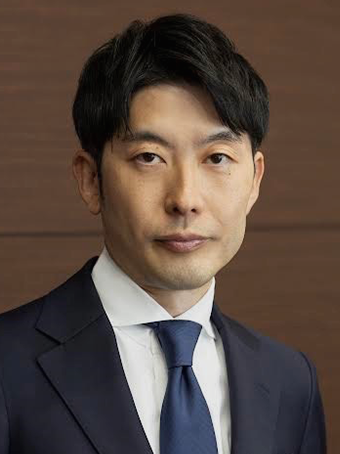
Group Head, Emerging Technologies,
Director of Management
Makoto Shiono holds a B.A. in Political Science from the Faculty of Law at Keio University and a Master of Laws (LLM) from Washington University (St. Louis) School of Law. He served as a member of the planning committee of the Intellectual Property Strategy Headquarters, Cabinet Office; the Working Group on Key and Strategic Areas, National Standards Strategy Subcommittee, Cabinet Office; and the Working Group of the Green Innovation Project Subcommittee of the Industrial Structure Council. He also participated in drafting the Ethics Guidelines (2017) as a member of the Ethics Committee of the Japanese Society for Artificial Intelligence. [Concurrent Positions] Co-Managing Director & CLO, IGPI Group Director & Managing Director, Industrial Growth Platform, Inc. (IGPI) Member, Startup Investment Committee, Japan Bank for International Cooperation(JBIC) Executive Officer, JBIC IG Partners
View Profile- Can Japan build a defense-startup ecosystem?2026.10.07
-
 Economic security in health and medicine through strategic alignment2026.10.06
 - National Security and the Stakes of ‘Technology Sovereignty’2026.09.24
- From Racing China to Pacing the AI Frontier2026.09.17
- The Takaichi Administration’s High-Stakes Growth Gamble2026.09.15