
BRICS in India
1. The 18th BRICS Summit
Composition: India chaired the summit in New Delhi, 12-13 September 2026, under the theme “Building for Resilience, Innovation, Cooperation and Sustainability.” The bloc comprises eleven members following the admission of Egypt, Ethiopia, Indonesia, Iran, Saudi Arabia and the UAE. Xi Jinping attended in person, his first India visit since 2019, alongside Vladimir Putin.
Declaration: Members adopted New Delhi Declaration by consensus, notwithstanding divergence between Iran and the UAE on West Asia. Principal provisions: Condemnation of unilateral tariffs and sanctions; support for WTO and UN Security Council reform; a call for “maximum restraint” in West Asia without attribution; and reaffirmation of a transitional role for fossil fuels.
Context: India convened the summit while subject to a US statutory threat of tariffs up to 100% on importers of Russian crude.
Monetary and Institutional Outcomes
Currency Settlement: The bloc again declined to endorse a common currency, favouring payment system interoperability and local currency settlement. Russian and Iranian leaders emphasised reduced dollar dependence; the declaration opposed economic coercion without specifying an alternative unit of account.
Institutional measures: Endorsed initiatives were institutional rather than monetary: a BRICS Incubator Network, a Startup Innovation Fund, a Grain Exchange framework, a logistics and supply chain cooperation framework, and a digital public infrastructure repository. Two working groups are created to build platforms around international taxation, transfer pricing and revenue data.
Relevance to India: Local-currency settlement functions as a hedge against secondary sanction exposure, consistent with the bilateral yen-rupee settlement mechanism separately under development with Japan.
Final Work on the summit: BRICS’ misalignment has deepened with the enlargement. The grouping lacks a permanent secretariat with dedicated expertise, funding and negotiating authority. Without the institutional core, it is hard to conceive outcomes and coordination to build cross-border revenue measurement and transfer pricing mechanisms.
Bilateral Tracks
The Modi-Putin meeting set a bilateral trade target of $100 billion by 2030; the Modi-Xi meeting addressed border stabilization and economic normalization. Neither resolved underlying disputes.
Implication: India’s hosting of Russia, China and Iran is consistent with its value as a supply chain diversification partner; a large non-aligned economy that balances China without full integration into any single bloc. The principal risk is that escalating US pressure over Russian crude raises the cost of India’s balancing position and increases the probability of a forced realignment.
2. The Market Picture
Monetary Policy
The Reserve Bank of India’s Monetary Policy Committee convened in the week of 6 October, with a 25-basis-point increase to 5.5% anticipated on 7 October – the first hike since early 2023 and a reversal of the prior easing cycle. CPI inflation rose to 4.82% in August from 4.45% in July, approaching the upper half of the 2-6% target band; the West Asia conflict is elevating oil-price risk.
Equity Flows
Net foreign portfolio outflows reached approximately $27.8 billion year-to-date. The Sensex fell to a 104-week low and the Nifty below 22,300, reportedly the longest consecutive decline in decades. Cited drivers are elevated US yields, higher oil prices, and domestic securities-transaction and capital-gains taxation. Sell-side views diverge: Morgan Stanley and Goldman Sachs maintain constructive twelve-month targets premised on an earnings recovery, whereas Bank of America projects foreign outflows persisting into 2027.
Exchange Rate
The rupee remained near its record low of approximately 97 per US dollar. The RBI intervened across spot and forward markets on a near daily basis, moderating rather than arresting depreciation. The drivers are oil linked import demand and risk aversion rather than capital flight. Continued depreciation reinforces the rationale for local currency settlement, via both BRICS mechanisms and the bilateral yen-rupee arrangement.
3. Electoral Contestation
The dispute: Nationwide protests intensified in the first week of October 2026 over the Election Commission’s Special Intensive Revision (SIR) of electoral rolls – a documentation-based verification exercise. A bombshell news report reveals selective deletion of opposition-leaning voters; the Election commission and government reject the allegation, framing removals as the elimination of duplicate and ineligible entries.
Scale: Reporting indicates about 13% of electorate were deleted. Peaceful protestors joined by youth and civil-society groups demand suspension of the revision and the removal of main election official.
Relevance: The dispute introduces institutional-credibility and policy continuity risk ahead of the 2027 state elections.
4. Other Headlines
GST 2.0 Receipts
September gross GST receipts were up 14% year-on-year, the first full month under the rationalised two-rate structure (5% and 18%, with 40% on demerit goods) and supported by festive demand.
Sumitomo Corp-Hero Future Energies
On 5th October Sumitomo Corporation agreed to acquire a 49% stake in a 500 MW wind and solar hybrid project with battery storage in Karnataka, developed with Hero Future Energies (51%); the deal value was undisclosed.
Electronics Exports
India origin iPhone exports reached approximately $13.2 billion over five months, with roughly one quarter of global iPhone assembly now located in India. It is the evidence of continued supply chain relocation from China under the production-linked incentive framework.
—
IN SUM: The BRICS summit confirms the breadth of India’s external options. The binding constraints are domestic (monetary tightening, currency depreciation, portfolio outflows, and contested electoral administration) compounded by US pressure on Russian-crude imports. Japanese direct investment continued to expand even as portfolio capital exited, indicating a divergence between strategic and financial flows.
(This report is based on information/data available as of October 6, 2026, and represents an analysis of geoeconomic trends. It is intended for informational purposes only and should not be construed as business advice.)
Visiting Research Fellow
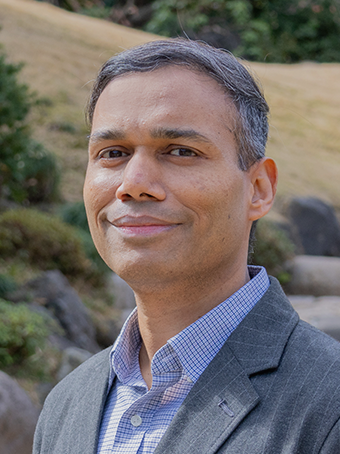
Manish Sharma is an ex-investment banker, with over two decades of experience spanning academia, consulting, think tank and corporate finance. His academic journey includes research and teaching positions at renowned institutions including Jawaharlal Nehru University, University of Tokyo, London School of Economics, and Doshisha Business School. Currently, he is a professor of economics, at Hosei University in Tokyo. Until 2012, Dr. Sharma served as Director (M&A) in the Corporate Finance Department at Daiwa Capital Markets' Tokyo headquarters, providing strategic financial guidance to major corporations. He subsequently transitioned to full-time academia, bringing his extensive practical knowledge to universities across Asia. His other notable experiences include 13 years of radio newscasting with NHK World, and running an investment advisory. His teaching and research interests cover Indian/ASEAN markets, tech sector, corporate finance, investments, valuation, geoeconomics and day-trading. Dr. Sharma holds a Ph.D. in Financial Economics.
View Profile-
 Trump Faces a Reckoning in the Midterms, but it Might Not Matter for Tariffs2026.10.09
 -
 BRICS in India2026.10.09
 - Can Japan build a defense-startup ecosystem?2026.10.07
- Economic security in health and medicine through strategic alignment2026.10.06
-
 Inside Japan’s New Growth Strategy: The Economic Security Implications2026.10.01