
Japan-India Cooperation Takes Off
The Bilateral Milestones
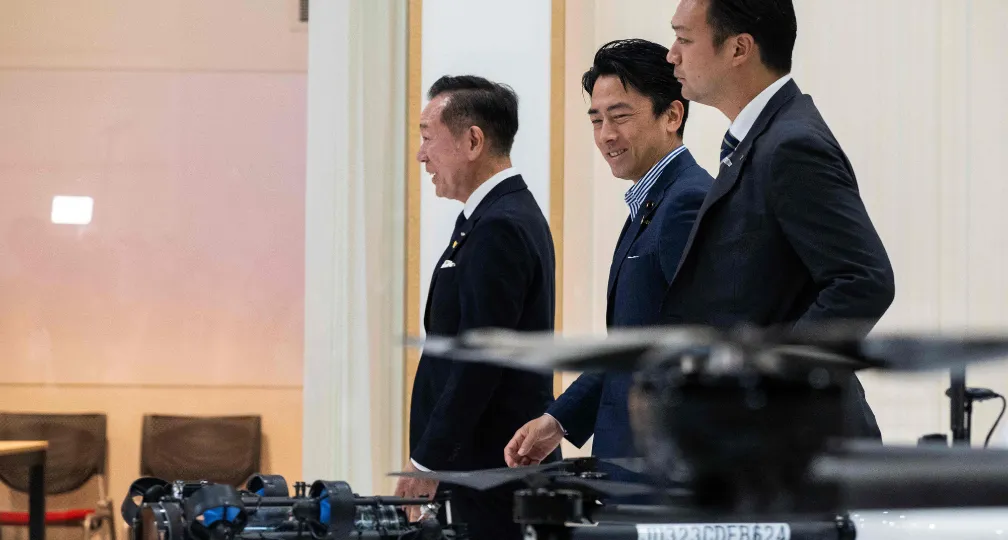
AI Strategic Dialogue (Mumbai, 21 April). The inaugural session brought officials and from both foreign ministries. The agenda covers large language models, joint research, industry-academia exchanges, and data centre development in India. The dialogue operationalises the AI Cooperation Initiative launched at the August Summit. The Mumbai session moved the dialogue to a structured working agenda.
Joint Working Group on Critical Minerals. Convened under the August 2025 MoC, JWG’s mandate covers rare earth elements (REEs), lithium, graphite, cobalt, and nickel; spanning exploration, processing technology, stockpiling, and recycling. Japan’s JOGMEC brings decades of stockpile management experience; India offers scale demand and underexplored reserves. The operating reference point is Toyota Tsusho’s rare earth refining facility in Andhra Pradesh, which processes REEs (Lanthanum, Cerium, Praseodymium and Neodymium) for export to Japan. The JWG’s near-term task is to convert framework commitments into co-financed midstream processing projects (the most concentrated and vulnerable segment of the global critical minerals value chain).
8th Army-JGSDF Talks (Tokyo, 22–24 April). The latest round of bilateral talks continues a defence relationship that now includes the Veer Guardian air force exercises, JIMEX maritime drills, the UNICORN antenna co-development programme (the first co-developed defence equipment between the two countries), and the operationalised Reciprocal Provision of Supplies and Services agreement.
Toyota’s ¥300 billion investment (early May).Toyota confirmed plans to build three new assembly plants in Maharashtra, investing approximately ¥300 billion ($1.91 billion) and tripling Indian production capacity to one million units annually by the 2030s. India will become Toyota’s fourth-largest production base globally, behind Japan, China, and the United States. The facilities will serve both domestic and export markets, including Africa and the Middle East. Combined Toyota-Honda-Suzuki commitments to India now exceed $11 billion; Japanese investment in India’s transport sector has grown roughly sevenfold since 2021.
ISRO-JAXA collaboration. Indian Space Research Organization (ISRO) engineers visited Tanegashima Space Center to inspect launch facilities and integration systems for the joint Lunar Polar Exploration mission (LUPEX / Chandrayaan-5). The mission pairs an Indian lander with a Japanese rover, launching on the H3 rocket to explore water ice at the Moon’s south pole. Launch is targeted for 2028.
Significance
Within six weeks, Japanese institutions — MOFA’s new India division (established 1st April), METI’s mineral resources office, JBIC, and the major automakers — moved in parallel with Indian counterparts across AI, minerals, defence, space, and manufacturing. The ¥10-trillion investment target is now supported by institutional mechanisms.
Two caveats apply. First, bilateral trade remains modest at approximately $18.5 billion, well below India’s trade with the US or EU. The investment trajectory outpaces the trade trajectory. Second, these are first meetings. The next twelve months will test whether the institutional momentum converts into commissioned projects and contracted output.
India’s Macro Position and Markets
The World Bank confirmed India as the fastest-growing major economy with FY26 growth at 7.6 percent but projected a FY27 slowdown to 6.6 percent on Middle East headwinds. The current account deficit stood at 1 percent of GDP.
The FY27 inflation projection was raised to 4.6 percent. The HSBC Manufacturing PMI recovered to 54.7 in April but input costs rose at their fastest pace in 44 months, driven by energy and chemicals spillover from the Middle East conflict. Export orders grew at their strongest since September.
The rupee fell to a record 95.33/USD on 30 April after Brent crude touched $111. The RBI has deployed over $100 billion in reserves this year, imposed a $100 million daily cap on banks’ net open currency positions, and restricted offshore NDF participation. RBI face the same dilemma as Bank of Japan: tighten into a growth slowdown, or tolerate currency depreciation and imported inflation.
State Elections (declared 4 May)
Results from the legislative elections in four states and one Union Territory (Assam, Kerala, Tamil Nadu, West Bengal, and Puducherry) reshape India’s political map. The BJP’s landslide victory in West Bengal, completes the party’s eastward expansion and consolidates national-level dominance ahead of the 2029 General Election. In Tamil Nadu, two-year-old TVK emerged as the single largest party with 108 seats and, is set to form a coalition government. Assam (BJP) and Kerala (UDF) returned predictable verdicts.
Implications:
Tamil Nadu, host to substantial Japanese, Korean, and Taiwanese manufacturing investment (including in autos and electronics), enters a period of political transition that warrants close monitoring of industrial policy continuity. The consolidation of BJP power at the state level reduces the federal friction that has occasionally complicated implementation of Centre-led economic reforms.
India-US Trade Talks (20–24 April)
India sent a delegation for trade discussions in Washington, covering market access, non-tariff measures, customs facilitation, investment, economic security alignment, and digital trade. The 18 percent reciprocal tariff remains in effect, but both sides describe the tempo as constructive. India’s parallel trade deals with the EU, UK, Oman, New Zealand, Australia, and Bahrain represent its most significant commercial diplomatic repositioning since 1991.
India-Italy Defence Partnership (30 April)
Italian Defence Minister Guido Crosetto made the first visit by an Italian defence minister to India. The two sides exchanged a Bilateral Military Cooperation Plan for 2026–27 covering military exchanges, training, and defence-industrial collaboration. The visit follows the India-EU Defence and Strategic Partnership signed in January. PM Modi is expected to visit Rome later this year.
Vietnamese President’s State Visit (5–7 May)
Vietnam’s General Secretary and President To Lam visited India, marking 10 years of the Comprehensive Strategic Partnership. Discussions covered defence, maritime security (including the South China Sea), critical technologies, and trade expansion. A business delegation engaged separately in Mumbai. Vietnam’s convergence with Japan on Indo-Pacific maritime stability gives this visit relevance beyond the bilateral frame.
Tata Semiconductor SEZ in Dholera (9 April)
The central government notified a Special Economic Zone for Tata Semiconductor in Dholera, Gujarat, the regulatory clearance for India’s first semiconductor fab, a $9.6 billion joint venture with Taiwan’s Powerchip Semiconductor (PSMC). The government confirmed four semiconductor units will be operational by end-2026, two more by 2027, and the Dholera fab by 2028. India targets top-six semiconductor nation status by 2032. For Japanese equipment and materials suppliers, the SEZ designation changes the commercial calculus on supply contracts and co-investment.
Looking Ahead
Three variables will shape the coming month. First, the US-Iran ceasefire remains fragile; renewed Hormuz disruption would force the RBI toward rate hikes. Second, the India-US trade agreement appears close to closure, its final terms will affect competitive positioning for all Asian exporters, including Japanese firms in India. Third, the follow-through on April’s bilateral working groups will determine whether institutional momentum converts to project-level delivery. The AI Dialogue needs joint research projects; the Critical Minerals JWG needs co-financed processing facilities.
The institutional architecture is now in place. Execution is the test.
Disclaimer:The views expressed in this India Roundup do not necessarily reflect those of the API, the Institute of Geoeconomics (IOG) or any other organizations to which the author belongs.
Visiting Research Fellow
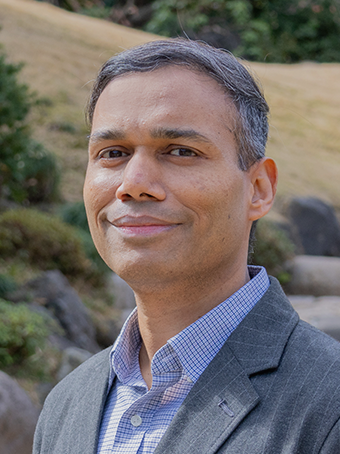
Manish Sharma is an ex-investment banker, with over two decades of experience spanning academia, consulting, think tank and corporate finance. His academic journey includes research and teaching positions at renowned institutions including Jawaharlal Nehru University, University of Tokyo, London School of Economics, and Doshisha Business School. Currently, he is a professor of economics, at Hosei University in Tokyo. Until 2012, Dr. Sharma served as Director (M&A) in the Corporate Finance Department at Daiwa Capital Markets' Tokyo headquarters, providing strategic financial guidance to major corporations. He subsequently transitioned to full-time academia, bringing his extensive practical knowledge to universities across Asia. His other notable experiences include 13 years of radio newscasting with NHK World, and running an investment advisory. His teaching and research interests cover Indian/ASEAN markets, tech sector, corporate finance, investments, valuation, geoeconomics and day-trading. Dr. Sharma holds a Ph.D. in Financial Economics.
View Profile-
 Connecting Europe and the Indo-Pacific: Why Japan and Germany Need Stronger Space Security Cooperation2026.10.20
 - China’s Calculus Behind the State Visit to the U.S.: Different Visions of “Stability”2026.10.16
- Trump Faces a Reckoning in the Midterms, but it Might Not Matter for Tariffs2026.10.09
-
 BRICS in India2026.10.09
 - Can Japan build a defense-startup ecosystem?2026.10.07