
From “Separating Politics and Economics” to “Balancing Politics and Economics”: Japan-China Relations in the Age of Economic Security
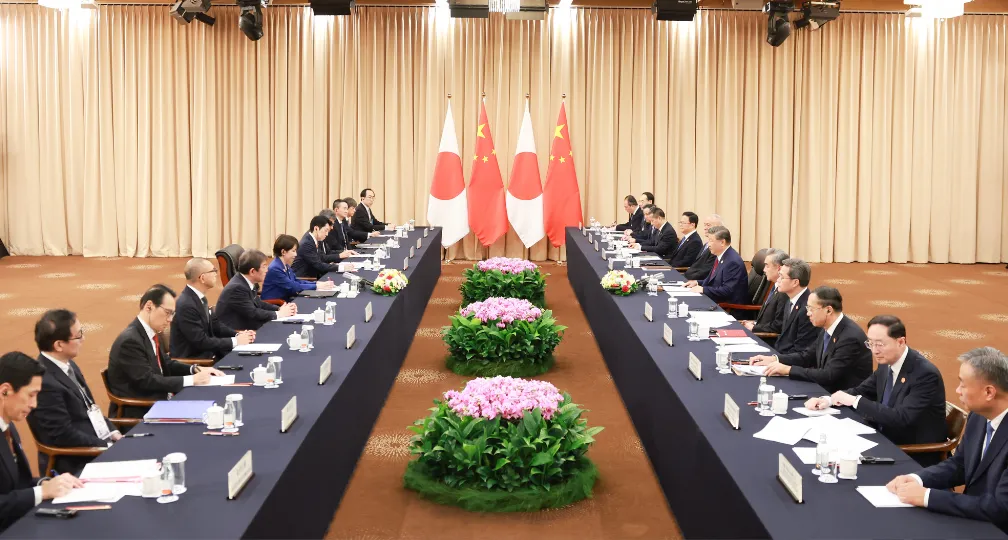
Despite its outwardly assertive rhetoric, China still seeks for a stable international environment to sustain further economic development. Beijing has therefore pursued what might be described as a “smile diplomacy” toward Western countries and neighboring states in an effort to reduce external risks. Japan should theoretically be no exception. However, China continues to criticize Japan relentlessly. How, then, should Japan approach China in this new era? Revisiting the history of bilateral ties offers important clues.
Japan’s China Policy of “Separating Politics and Economics”
Postwar Japan’s China policy was built on the principle of “separating politics and economics.” Before diplomatic normalization in 1972, Japan sought to expand economic relations with mainland China while shelving political disputes surrounding Taiwan. Even after normalization, under the so-called “1972 system,” Japan continued to pursue economic benefits from China—including through official development assistance (ODA)—while leaving political issues such as historical disputes strategically ambiguous.
Japan’s basic logic was clear: rather than allowing China to become an inward-looking and impoverished state like North Korea, Tokyo sought to encourage China’s integration into international society and support its economic growth in the hope that it would become a more open and stable country.
This approach suited postwar Japan well. Politically, Japan remained anchored to the U.S.-Japan alliance, making friction with China unavoidable. Economically, however, access to the Chinese market was also essential for Japan’s growth. Even the 2006 agreement to build a “Mutually Beneficial Relationship Based on Common Strategic Interests” effectively represented a modified version of this same principle: stabilizing bilateral ties from a strategic perspective while insulating economic cooperation from political tensions.
From an economic standpoint, this approach produced considerable success. Despite repeated political ups and downs in bilateral relations, China has remained Japan’s largest trading partner since 2007 and still accounts for roughly 20 percent of Japan’s total trade. Japanese firms have also consistently recorded some of their highest overseas investment returns in China, and many companies expanded significantly through access to the Chinese market. Japan’s ability to maintain its current economic position despite crises such as the collapse of the asset bubble and the global financial crisis owes much to its economic relationship with China.
China’s Declining Flexibility
Yet in the age of economic security, it is becoming increasingly difficult to separate economics from deteriorating political relations. In reality, China has never fully separated politics and economics: economic activity has long remained subordinate to political considerations. Historically, Beijing has repeatedly allowed political tensions to spill over into economic relations with Japan and has often attempted to influence politics through economic leverage under slogans such as “cold politics, hot economics.”
At the same time, however, China previously retained a degree of flexibility. For the sake of its own economic development, Beijing was often willing to prevent political disputes from fully undermining economic ties.
That flexibility is now eroding. Growing confidence in its economic power has made China increasingly willing to use economic tools for political purposes and employ economic coercion to advance its strategic interests. Beijing has also elevated national security and social stability above economic growth itself, even at the cost of slower development. Simultaneously, China’s emphasis on economic “self-reliance and self-strengthening” has made it more cautious about economic ties with politically contentious countries.
Just as Japan is attempting to reduce dependence on specific countries in certain strategic sectors, China is also reassessing economic relationships with countries it views as politically risky. China’s increasingly harsh rhetoric toward Japan appears partly intended as domestic political messaging. By portraying Japan as “militaristic” and tightening dual-use export controls toward Japan, Beijing is signaling to its domestic audience that economic engagement with Japan carries political risk.
The Case for “Janus”
The old model of “separating politics and economics” is no longer viable. Yet Japan cannot realistically pursue further growth without engaging China, its neighbor and the world’s second-largest economy.
At the same time, Japan remains heavily dependent on the U.S.-Japan alliance for security. As China’s global influence expands, the importance of ties with Washington has only increased, making political tensions with Beijing even more unavoidable. Japan therefore has little choice but to strengthen its resilience against political deterioration while continuing to engage the Chinese economy.
On the one hand, Japan must continue reducing excessive dependence on China by diversifying supply chains and enhancing strategic autonomy, as it has already begun doing. Efforts are underway with like-minded countries to diversify procurement sources for strategic goods. But on the other hand, Japan must simultaneously increase its own strategic indispensability by strengthening globally competitive industries and thereby improving its resilience against economic coercion.
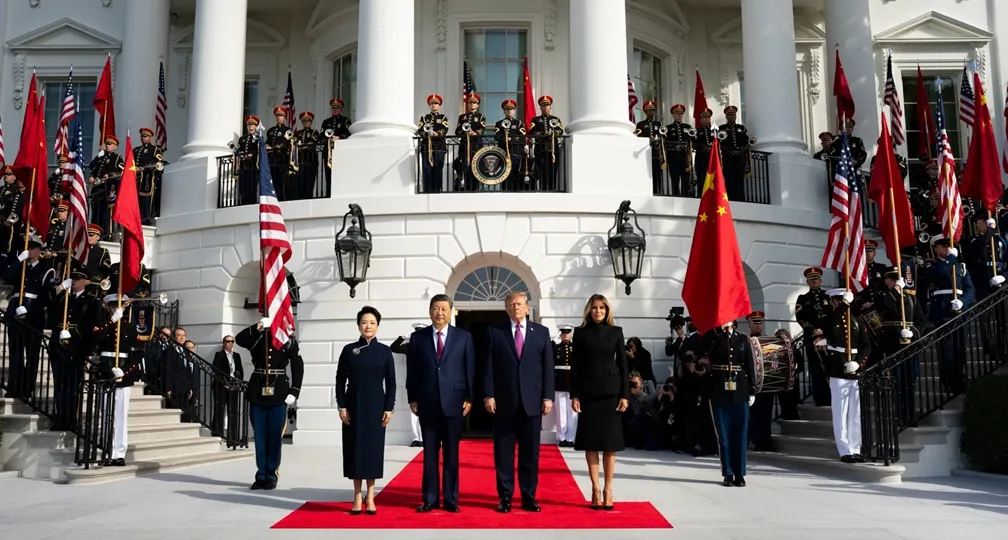
Paradoxically, achieving this latter goal requires continued engagement with China itself. China remains the world’s manufacturing powerhouse and one of the most competitive markets in the world. Even during President Trump’s recent visit to China, many major American business leaders accompanied him. The United States itself continues attempting to sharpen its competitiveness through access to the Chinese market.
For companies, the challenge lies in balancing two contradictory imperatives. From the perspective of strategic autonomy, dependence on China must be reduced. Yet from the perspective of strategic indispensability, active engagement with China remains necessary. The question is therefore not whether to engage China, but where and how.
The Japanese government must work closely with the United States and other like-minded partners to establish clearer “rules” regarding which sectors should involve competition with China, and which sectors should continue utilizing Chinese markets and production capabilities.
Japanese firms, meanwhile, must learn to operate simultaneously within both the American and Chinese economic systems. They must reduce excessive dependence on China while continuing to utilize China where advantageous in order to remain competitive globally. In this sense, Japanese companies increasingly resemble Janus, the two-faced god of Roman mythology. They must skillfully present different faces to Washington and Beijing alike—acting as insiders in both systems. In short, Japanese firms should confidently provide strategic goods to the United States while simultaneously using China’s competitive market to strengthen their capabilities.
This balancing act extends beyond economics and into politics as well: Japan must maintain carefully calibrated relationships with both Washington and Beijing without becoming overly dependent on either side.
For the Japanese government, maintaining strong economic ties between Japanese firms and China also serves as a form of deterrence. According to Chinese statistics, while China runs large trade surpluses with the United States and Europe, its trade balance with Japan remains comparatively balanced and occasionally even falls into deficit. China’s economic dependence on Japan therefore remains significant. One reason Beijing continues to employ harsh rhetoric without imposing more severe economic measures on Japan may lie precisely in this mutual interdependence.
Managing the Political Dimensions
In the age of economic security, China has made it increasingly clear that it will no longer allow countries to enjoy economic benefits while political relations deteriorate. Even if Japan attempts to separate politics from economics, such an approach no longer aligns with China’s worldview.
At the same time, China’s emergence as both a political and economic great power has made bilateral political disputes more difficult to manage. Japan must therefore strengthen not only its economic resilience but also its political strategy toward China.
Even the United States, despite intensifying strategic rivalry with Beijing, continues maintaining channels of communication. President Trump accepted political risks by visiting China and inviting President Xi Jinping to visit the United States. Europe, too, has continued high-level exchanges with Beijing while simultaneously deepening concerns over economic security risks and Chinese industrial overcapacity.
, mishandling Japan-related issues could create domestic political risks for the Chinese leadership, making them particularly sensitive for Beijing. Ahead of Trump’s recent visit, China repeatedly emphasized that Taiwan, democracy and human rights, political systems, and development rights constitute Beijing’s “four red lines.” During the visit, the United States largely avoided aggressively challenging China on these issues.
For Japan, one possible approach may be to raise politically sensitive issues through multilateral frameworks rather than bilaterally confronting China alone. Taiwan-related issues may similarly require more sophisticated diplomatic approaches.
Under the old framework of “separating politics and economics,” postwar Japan could prioritize economic interests while avoiding deep political entanglement with China. But as politics and economics become increasingly inseparable, both Japan and Japanese companies now face a new challenge: finding a sustainable balance that preserves economic interests without excessively sacrificing political principles or national strategic interests.
(Photo Credit: Xinhua News Agency / Aflo)

Geoeconomic Briefing
Geoeconomic Briefing is a series featuring researchers at the IOG focused on Japan’s challenges in that field. It also provides analyses of the state of the world and trade risks, as well as technological and industrial structures (Editor-in-chief: Dr. Kazuto Suzuki, Director, Institute of Geoeconomics (IOG); Professor, The University of Tokyo).
Disclaimer: The opinions expressed in this Geoeconomic Briefing do not necessarily reflect those of the International House of Japan, the Institute of Geoeconomics (IOG) or any other organizations to which the author belongs.

Visiting Senior Research Fellow
MACHIDA Hotaka is a visiting senior research fellow in Institute of Geoeconomics at International House of Japan. He joined the Institute in October, 2022. Prior to leaving his role in government, he served as a career diplomat in Japan’s Ministry of Foreign Affairs from 2001 to 2022, focusing on Japan-China relations. He studied at Nanjing University in China and Harvard University in the United States, followed by working at Embassy of Japan in China as second secretary from 2006-2008. After that, he was posted in China-Mongolia division in the Ministry and completed the negotiations with China over the issues of launching the “High-Level Consultation on Maritime Affairs” as well as finalizing the “Maritime Search and Rescue (SAR)” agreement. He also worked in Status of Forces Agreement (SOFA) division in the North America Bureau in the Ministry leading the negotiations with the US on SOFA-related issues. He was counsellor in the Permanent Mission of Japan to the United Nations (2017-2020) and Embassy of Japan in China (2020-2022) covering the Security Council reform and Japan-China economic relations respectively. He holds a M.A from the Graduate School of Arts and Science at Harvard University, and a Bachelor from Law Faculty at Tokyo University.
View Profile-
 Connecting Europe and the Indo-Pacific: Why Japan and Germany Need Stronger Space Security Cooperation2026.10.20
 - China’s Calculus Behind the State Visit to the U.S.: Different Visions of “Stability”2026.10.16
- Trump Faces a Reckoning in the Midterms, but it Might Not Matter for Tariffs2026.10.09
-
 BRICS in India2026.10.09
 - Can Japan build a defense-startup ecosystem?2026.10.07