
Japan positioned to link U.S. and Europe in a fragmented world
Freymann also notes the scale of the challenge. Even three U.S. aircraft carriers in the Middle East have struggled to secure shipping through the Strait of Hormuz, while the Taiwan Strait carries far greater daily traffic. Managing a crisis there would be beyond the capacity of the United States alone. Cooperation among allies is not optional — it is essential.
Yet since the start of U.S. President Donald Trump’s second term, adversarial relations between the U.S. and Europe have increasingly become the norm. At a May workshop at the European University Institute, experts from Japan, the U.S., Europe and South Korea discussed security diversification and economic resilience. European participants largely took hostile trans-Atlantic relations as a given.
American participants noted that Democrats had narrowed the Republican advantage ahead of November’s midterm elections. But strikingly absent from the discussion was any serious proposal for repairing U.S.-European ties.
The exchange underscored a growing contradiction. As Japan, the United States and Europe try to reduce dependence on Chinese supply chains and prepare for a possible Taiwan crisis, the trans-Atlantic relationship — the foundation of that effort — is weakening.
Against this backdrop, Japan’s role is evolving.
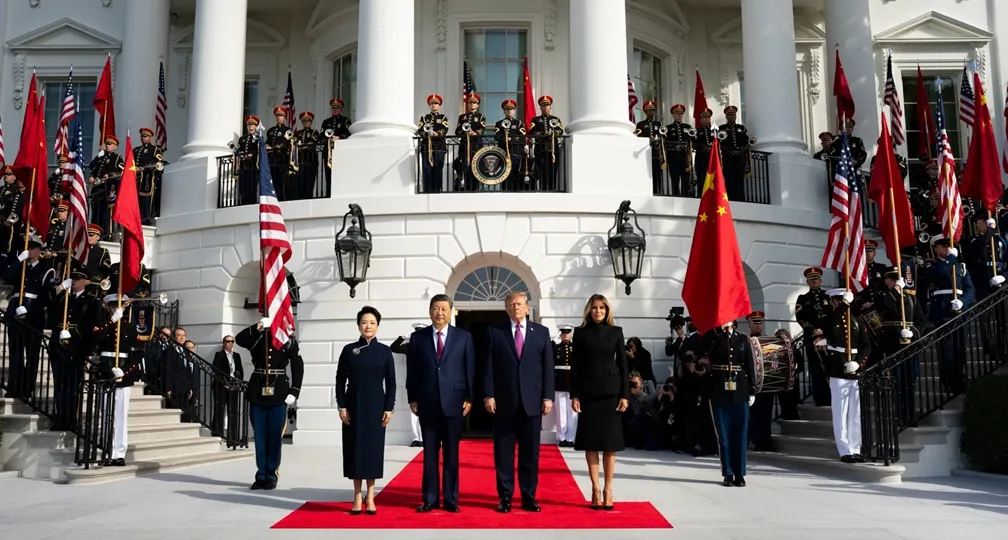
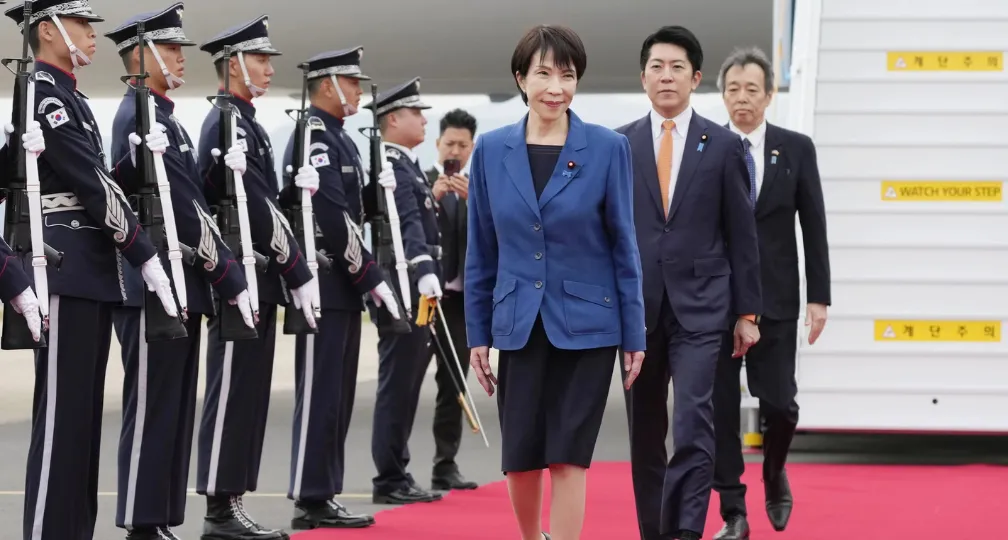
On May 15, following his visit to China, Trump held a 15-minute call aboard Air Force One with Japanese Prime Minister Sanae Takaichi. He briefed Tokyo on his talks in Beijing and reaffirmed two points agreed at the March summit: the need to stabilize the situation around Iran and the enduring strength of the Japan-U.S. alliance. Both leaders agreed to maintain close coordination through forums including the Group of Seven.
Such calls are typically arranged in advance, underscoring Japan’s efforts to communicate its position to Washington ahead of U.S.-China engagement.
Still, concerns remain. The temporary suspension of U.S. arms sales to Taiwan was reportedly intended to avoid provoking Beijing before Trump’s visit. China also reacted strongly to Takaichi’s November 2025 remark that a Taiwan contingency would pose a “survival-threatening situation” for Japan.
At the same time, Trump has largely refrained from publicly criticizing Japan in the way he has often rebuked European NATO members over burden-sharing, including maritime security operations in the Strait of Hormuz.
“Updated FOIP”
A key outcome of the March Japan-U.S. summit was renewed commitment to cooperation under the Free and Open Indo-Pacific framework, or FOIP. The initiative strengthens networks among Japan, the United States, South Korea, the Philippines, Australia and India.
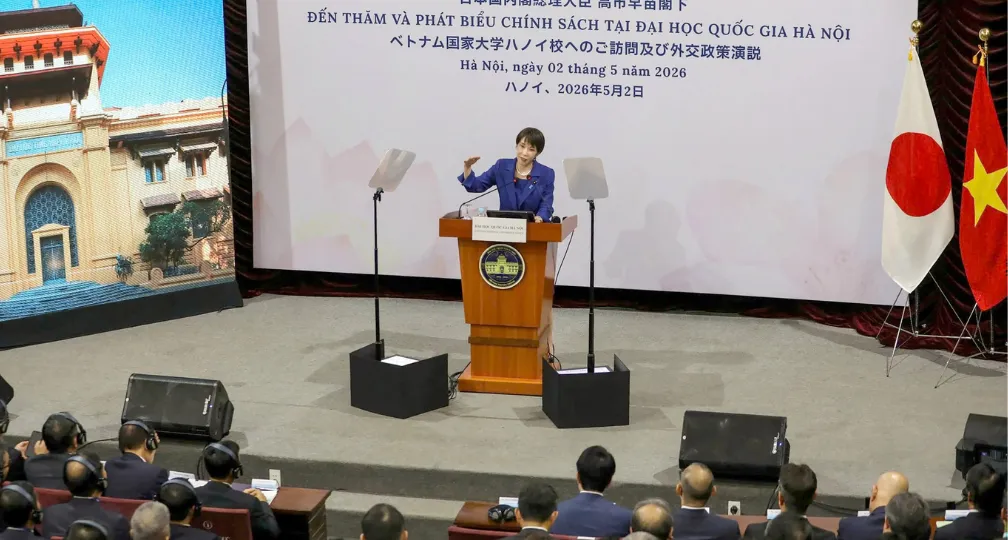
Two weeks before the Trump-Xi summit, Takaichi unveiled what she called an “updated FOIP,” a move that appeared timed to reinforce Japan’s strategic priorities ahead of U.S.-China talks.
Originally proposed by former Prime Minister Shinzo Abe at the 2016 Tokyo International Conference on African Development in Kenya, FOIP has been Japan’s central diplomatic vision linking Asia and Africa through three pillars: the rule of law, economic prosperity through connectivity, and peace and stability.
The updated FOIP reflects a sharper assessment of the global environment than earlier versions. The 2023 plan emphasized interconnected global challenges and technological disruption. The 2026 version places greater weight on technological competition, the rise of the Global South and intensifying geopolitical rivalry. Where competition was once one issue among many, it is now the organizing principle.
Without naming China directly, the strategy reflects growing concern about geoeconomic pressure. The earlier emphasis on “resilience and sustainability” has shifted toward “autonomy and resilience.” This shift is visible in the policy agenda, which now focuses on three priority areas.
The first is building the economic foundations of the artificial intelligence and data-driven era, including secure supply chains for energy and critical materials.
The second aims to expand growth through public-private cooperation while strengthening rule-making and connectivity. It calls for expanding the Comprehensive and Progressive Agreement for Trans-Pacific Partnership, deepening digital trade rules and supply chain standards, and working with the European Union and the Association of Southeast Asian Nations to counter market-distorting practices and economic coercion. These references point to concerns about China’s industrial overcapacity, particularly in sectors such as electric vehicles, and its use of rare earth export controls.
The third priority strengthens security cooperation to support regional stability, including maritime security assistance, infrastructure development and cyber resilience across Southeast Asia.
Economic security
The evolution of FOIP highlights how economic security has moved to the center of Japan’s strategy. Since the 2022 enactment of Japan’s Economic Security Promotion Act, economic security has shifted from a supporting role to a core pillar. At the same time, the framework implicitly acknowledges a more complex reality: the United States itself is increasingly seen as a potential source of geoeconomic risk.
Among the three major democratic centers — Japan, the U.S. and Europe — Japan and the European Union are increasingly aligned in support of open trade. In January, for example, the European Union signed agreements with Mercosur, a South American trade bloc comprising Argentina, Brazil, Paraguay and Uruguay, and concluded a long-delayed trade deal with India after nearly two decades of negotiations. Japan, for its part, launched talks with Mercosur in June. Its economic partnership agreement with India has been in force since 2011, while cooperation among Quad members on energy security and critical minerals has expanded.
Japan has also deepened cooperation with the Philippines on critical minerals, artificial intelligence capacity-building and digital connectivity under FOIP.
Together, these moves point to an emerging network of like-minded partners pursuing greater strategic autonomy without explicitly framing their efforts as containment of China.
Beijing’s response has so far been measured. Restrictions on rare earth exports to Japan have been the most visible step. But there are signs of a broader toolkit. Reports suggest Chinese authorities have declined to renew airport slot allocations for Japanese airlines without explanation — a move that may signal more subtle forms of pressure.
Europe presents its own challenges. The EU’s proposed Industrial Acceleration Act would require companies to diversify sourcing of critical materials, reducing dependence on China. While understandable, such measures risk tipping into protectionism and could conflict with Japan’s push to strengthen free trade through frameworks such as the Comprehensive and Progressive Agreement for Trans-Pacific Partnership.
A “spider’s thread”
Japan thus faces a delicate balancing act: demonstrating that supply chain resilience and economic security can coexist with openness.
Scholars have argued that the liberal international order, long shaped by the U.S. and Europe, has reached its limits and must evolve into something more inclusive. FOIP increasingly reflects that shift. Rather than imposing a rigid system, it offers flexible cooperation among like-minded partners, allowing countries to participate based on their interests and capabilities.
The central question is whether Japan can help prevent both the U.S. and Europe from drifting toward protectionism while building a framework that supports growth and can withstand major shocks. In this sense, FOIP may serve as a strategic adhesive — a “spider’s thread,” to borrow the central image from Ryunosuke Akutagawa’s 1918 short story of the same name, linking the world’s major democratic economies.
Japan’s task is to maintain pragmatic cooperation with the U.S. while strengthening ties with Europe, offsetting weaker transatlantic relations and buying time to build more resilient supply chains and security partnerships.
As the global order fragments, Japan’s ability to act as a bridge between the U.S., Europe and the Indo-Pacific may prove one of its most important strategic contributions.
(Photo Credit: AFP/ Aflo)
[Note] This article was posted to the Japan Times on July 5, 2026:
https://www.japantimes.co.jp/commentary/2026/07/05/japan/japan-links-us-europe/

Geoeconomic Briefing
Geoeconomic Briefing is a series featuring researchers at the IOG focused on Japan’s challenges in that field. It also provides analyses of the state of the world and trade risks, as well as technological and industrial structures (Editor-in-chief: Dr. Kazuto Suzuki, Director, Institute of Geoeconomics (IOG); Professor, The University of Tokyo).
Disclaimer: The opinions expressed in this Geoeconomic Briefing do not necessarily reflect those of the International House of Japan, the Institute of Geoeconomics (IOG) or any other organizations to which the author belongs.

Senior Research Fellow,
COO, LLC future mobiliTy research
Hitoshi Suzuki (PhD) was Associate Professor at the Graduate School of International Studies and Regional Development, University of Niigata Prefecture, Japan. He received his Ph.D. in History and Civilization from the European University Institute in December 2007 and has focused on Japan’s relations with the EC/EU, as well as Japan’s auto and aero-space industry in Europe. He was visiting fellow at the Monash European and EU Centre, the London School of Economics and Political Science. After serving as Deputy Director at the Economic Partnership Division, Economic Affairs Bureau of the Ministry of Foreign Affairs of Japan, and as a Research Committee Member of the Europe Study Group at the 21st Century Policy Institute of Keidanren (Japan Business Federation), he founded Mirai Mobility Research LLC in 2021. He currently serves as a Visiting Senior Research Fellow at the Makihara Laboratory, Research Center for Advanced Science and Technology (RCAST), the University of Tokyo, and as an Adjunct Lecturer at Ferris University. As of December 2021, he serves as a Visiting Fellow & Staff Director, CPTPP Project, Asia Pacific Initiative. His publications include "Thatcher and Nissan Revisited in the Wake of Brexit" (Palgrave Macmillan), “The New Politics of Trade: EU-Japan” Journal of European Integration 39(7), “Post-Brexit Britain, the EU and Japan” Europe and the World 4(1), and Suzuki et.al. “Japan and the European Union,” Oxford Encyclopedia of European Union Politics.
View Profile-
 Connecting Europe and the Indo-Pacific: Why Japan and Germany Need Stronger Space Security Cooperation2026.10.20
 - China’s Calculus Behind the State Visit to the U.S.: Different Visions of “Stability”2026.10.16
- Trump Faces a Reckoning in the Midterms, but it Might Not Matter for Tariffs2026.10.09
-
 BRICS in India2026.10.09
 - Can Japan build a defense-startup ecosystem?2026.10.07