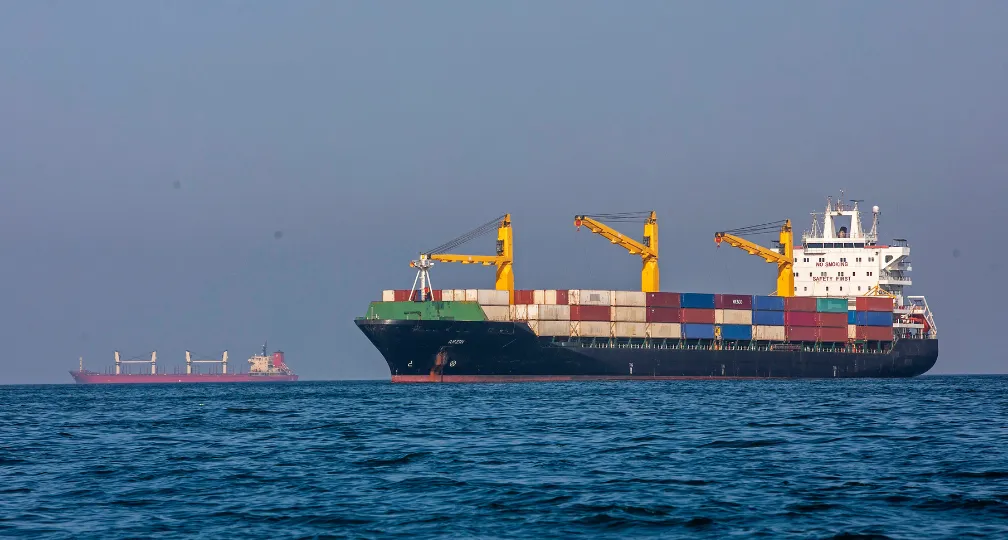

Shifting costs to allies won’t ‘restore’ U.S. maritime dominance
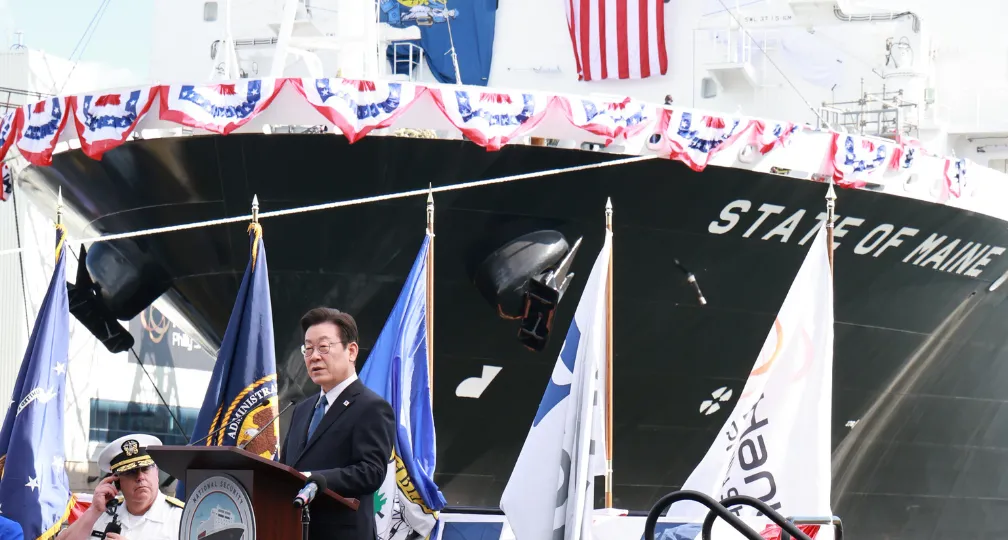
The longstanding maxim that “whoever controls the sea controls the world” reflects the central role of maritime power in ensuring the security and prosperity of maritime nations. Since the late 19th century, the United States has built formidable sea power—anchored in shipbuilding, shipping and naval capability—but in the post-Cold War era these foundations have gradually eroded, and the U.S. maritime industrial base has fallen significantly behind that of China.
Against this backdrop, U.S. President Donald Trump has pledged to rebuild America’s maritime industrial base. Yet just over a year since his April 9, 2025, executive order pledging to “Restore America’s Maritime Dominance,” the trajectory of U.S. maritime industrial policy appears to be drifting away from its original objective.
Trump’s strong push for maritime industrial policy rests on a bipartisan consensus that rebuilding America’s maritime sector is essential for national security. Until the 1980s, protectionist policies maintained the U.S. maritime industrial base for security reasons, but afterwards, cost considerations drove a contraction in both shipbuilding capacity and the merchant fleet. This was tolerated partly because foreign-built or flagged ships could still be subject to a degree of control if owned or operated by U.S. entities.
Since the early 2020s, however, concerns about China’s dominance in the maritime sector have become widespread in the policy community. Analysts increasingly warn that in a contingency the U.S. might be unable to exercise sufficient control over maritime transport. Even ships that are not directly linked to China may be difficult to mobilize in support of U.S. military operations during wartime and could be vulnerable to Chinese pressure. And U.S. and allied reliance on Chinese dual-use shipyards raises concerns that profits could support the expansion of the Chinese navy or the construction of civilian vessels that might be mobilized in a Taiwan contingency.
These concerns prompted the Biden administration to launch a Section 301 investigation into China’s maritime industry in April 2024. In Congress, bipartisan momentum also emerged behind the proposed SHIPS Act, demonstrating growing political support for strengthening the maritime industrial base, even though it ultimately was not passed.
After Trump returned to the White House, he issued the April 2025 executive order to rebuild the maritime industrial base, and used tariffs to encourage large-scale investment from Japan and South Korea. In February 2026 it also released the Maritime Action Plan (MAP), which reflected the SHIPS Act while outlining a comprehensive strategy including workforce development, demand creation for the U.S. merchant fleet, financial support, R&D, and regulatory reform.
Tariffs & investments
A defining feature of the Trump administration’s maritime industrial policy is its reliance on two mechanisms that effectively shift costs to other countries.
First, the U.S. used tariffs to induce allies such as Japan and South Korea to invest in U.S. shipbuilding capacity. Japan did not specify an explicit investment amount for shipbuilding in the U.S.-Japan tariff agreement, but included the sector within a broader $550 billion investment framework. South Korea, however, committed to invest approximately $150 billion in U.S. shipbuilding.
Second, the policy seeks to secure continuous funding from foreign shipping. Because building and operating merchant vessels in the U.S. is more expensive, artificial demand must be created. In this context, the MAP proposes introducing port fees on foreign-built vessels entering U.S. ports, with the proceeds directed to a Maritime Security Trust Fund to expand shipbuilding capacity and strengthen the merchant fleet. The measure also aims to raise the cost of using foreign ships and thereby stimulate demand for U.S.-built vessels. While the specific fee structure has not yet been finalized, MAP estimates that a levy of 25 cents per kilogram could generate approximately $1.5 trillion over 10 years. The policy also includes a U.S. Maritime Preference Requirement (USMPR), which would require exporting countries to use U.S.-built ships for a certain share of U.S.-destined trade.
At the same time, however, the administration has struggled to shift costs to China itself. Although the policy originated in the Section 301 investigation targeting China’s maritime sector, and the administration initially proposed levies on Chinese shipping companies and Chinese-built vessels, the measures planned for introduction in October 2025 were postponed amid U.S.-China trade negotiations. If the U.S.-China summit planned for mid-May proceeds smoothly, further delays appear likely.
Contradictory approach
These developments have created a policy structure in which the costs of U.S. maritime industrial policy fall disproportionately on allied countries, while the underlying risks posed by China remain only partially addressed.
In effect, the strengthening of the U.S. shipbuilding base could come at the expense of the shipbuilding industries of allies such as Japan and South Korea, as investment in the U.S. may redirect resources away from their own maritime industries. Moreover, U.S. policy risks eroding Japan’s maritime market share. The size of the Trump administration-envisioned merchant fleet remains unclear, but the Heritage Foundation estimates that approximately 1,300 vessels would be required to eliminate Chinese leverage in maritime transport. Meeting that demand entirely through U.S. shipbuilding would require expanding domestic capacity by more than an order of magnitude. Although demand is currently strong, shipbuilding is highly cyclical, and the risk of future overcapacity cannot be dismissed.
Under such long-term market conditions, the imposition of port fees on foreign-built vessels and the application of the USMPR to Japanese shipping—as well as Chinese shipping—could place Japan’s less price-competitive shipbuilding industry at a disadvantage. The policy would also impose additional costs on shipping companies and vessel owners operating on North American routes, effectively forcing them to use higher-cost U.S.-built vessels.
From the standpoint of the original security objective, this outcome would be counterproductive. In scenarios such as a Taiwan contingency, both the U.S. and its allies—including Japan—would likely play critical roles in ensuring maritime transport while preventing China from dominating global shipping. Policies that undermine allied shipbuilding capacity and merchant fleets could weaken the maritime capabilities of the alliance as a whole and ultimately increase security risks.
Japan’s strategy
Japan therefore needs to steer U.S. maritime industrial policy toward approaches that genuinely address China-related risks. For instance, Japan should advocate for allied-built ships to have significantly lower port fees than those built in China. In doing so, Japan should emphasize that maintaining a resilient maritime industrial base in both the U.S. and Japan is essential for allied security as a whole.
When investing in the U.S., Japan should focus on sectors that are strategically important but do not directly compete with South Korea, which is already expanding production of LNG carriers, roll-on/roll-off vessels, tankers, and container ships. Instead, Japan could focus on specialized vessels such as undersea cable-laying and repair ships or offshore resource drilling vessels—areas where South Korea has less presence. These sectors could also create synergies with other strategic initiatives identified in the Takaichi administration’s economic growth strategy.
Another promising avenue would be leading the development of unmanned vessels, whose importance is growing for both the U.S. and Japanese navies. By investing in R&D, shipbuilding capacity, and regulatory frameworks for unmanned maritime systems, Japan could strengthen its strategic position while supporting alliance security.
Ultimately, as long as the Trump administration pursues maritime industrial policy in ways that diverge from its original objective of reducing China-related risks, Japan must adopt a pragmatic approach—minimizing negative impacts on its own maritime industry, while leveraging U.S. policy in ways that advance its own national interests and security.
[Note] This article was posted to the Japan Times on May 7, 2026:
https://www.japantimes.co.jp/commentary/2026/05/07/world/restoring-us-maritime-dominance/
(Photo Credit: Yonhap News/Aflo)
Geoeconomic Briefing
Geoeconomic Briefing is a series featuring researchers at the IOG focused on Japan’s challenges in that field. It also provides analyses of the state of the world and trade risks, as well as technological and industrial structures (Editor-in-chief: Dr. Kazuto Suzuki, Director, Institute of Geoeconomics (IOG); Professor, The University of Tokyo).
Disclaimer: The opinions expressed in this Geoeconomic Briefing do not necessarily reflect those of the International House of Japan, the Institute of Geoeconomics (IOG) or any other organizations to which the author belongs.

Research Fellow
Rintaro Inoue is a Research Fellow at the Institute of Geoeconomics, International House of Japan, and a PhD student at Keio University. His research focuses on alliance network in the Indo-Pacific and strategic studies. He holds a B.A. and M.A. in Law from Keio University.
View Profile-
 Connecting Europe and the Indo-Pacific: Why Japan and Germany Need Stronger Space Security Cooperation2026.10.20
 - China’s Calculus Behind the State Visit to the U.S.: Different Visions of “Stability”2026.10.16
- Trump Faces a Reckoning in the Midterms, but it Might Not Matter for Tariffs2026.10.09
-
 BRICS in India2026.10.09
 - Can Japan build a defense-startup ecosystem?2026.10.07