
Japan’s manufacturing sector and the race for physical AI
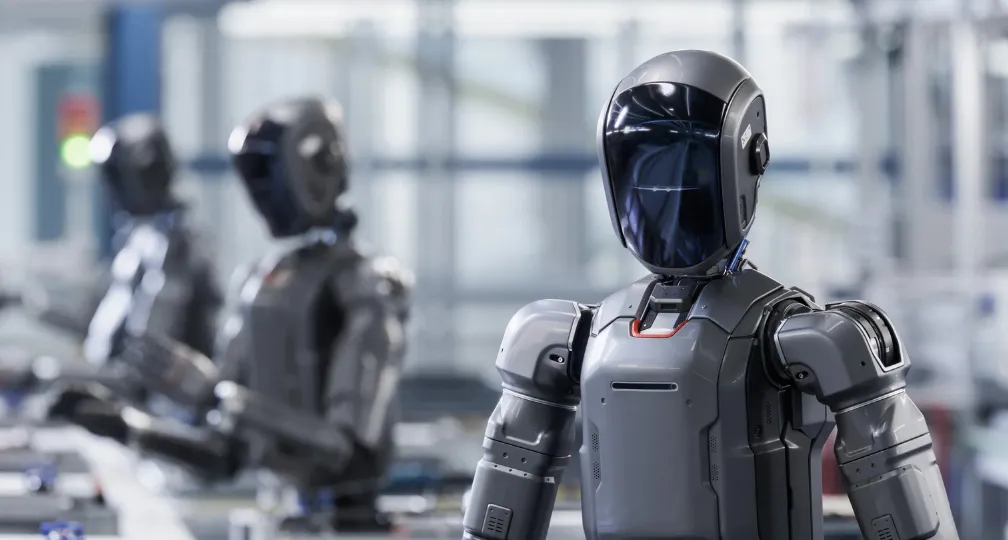
At her New Year’s news conference, Prime Minister Sanae Takaichi said Japan would harness decades of high-quality operational data from its manufacturing and service sectors to advance “physical AI” — systems that allow robots to autonomously support human workers with unprecedented precision. Around the same time, Nvidia CEO Jensen Huang told the CES technology show in Las Vegas that physical AI would define the next wave of innovation.
The concept is straightforward, even if the technology is not. It refers to systems that understand the real world’s spatial structure and physical laws and act accordingly. Techniques include imitation learning, reinforcement learning, and vision-language models, along with video-action models that generate behavior from video. Embedded in robots and linked to actuators, these systems enable autonomous real-world action.
In Japan, interest in this field has accelerated. The AI Robot Association was established in 2025 to develop foundation models for AI-powered robotics, while the New Energy and Industrial Technology Development Organization has launched research calls related to AI robotics and physical AI. With media coverage increasingly highlighting AI-enabled humanoid robots, Japanese companies — long competitive in manufacturing and industrial robotics — have intensified their focus on this emerging area.
Because physical AI represents a fusion of software and hardware, some observers argue that Japan — despite lagging in the global AI race — could leverage its manufacturing strengths to regain competitiveness. But value creation is increasingly shifting away from hardware and toward AI foundation models that serve as the “intelligence” of robotic systems. To understand the implications for Japan, it is necessary to examine changes in technological architecture, application domains and value chains.
The AI “brain”
Physical AI is not simply an extension of traditional industrial robotics. Conventional industrial robots excel in controlled environments, performing predefined tasks with high speed, precision and reproducibility. Physical AI, by contrast, is designed to function flexibly in unfamiliar environments or unexpected situations. This capability, often described as “zero-shot adaptation,” allows robots to adapt without explicit programming of every movement.
Technologically, physical AI places its center of gravity on AI models that integrate multimodal perception, diffusion models for high-fidelity data transformation and large language models, or LLMs. Hardware, in this architecture, becomes subordinate to the AI “brain.” In demonstrations by companies such as the U.S.-based startup Physical Intelligence, robots equipped with such models can retrieve clothes from a dryer, place them in a basket, carry the basket to a workspace and fold the clothes — tasks requiring general adaptability rather than rigid programming.
This shift underscores a key difference: While traditional industrial robots operate in tightly controlled environments, physical AI aims for general-purpose operation across diverse real-world contexts.
Japan’s position
If the primary application of physical AI is robotic control, the technological center of value lies in AI models rather than hardware. As noted in the Institute of Geoeconomics report “The Geoeconomics of the Generative AI Race,” Japan faces structural disadvantages in AI development due to limited computing resources, risk capital and research personnel relative to the United States and China. The same constraints apply to physical AI.
At present, the most advanced application of physical AI can be seen in the automotive sector, particularly autonomous driving. In this domain, AI systems continuously interpret changing environmental conditions and control hardware accordingly. End-to-end, or E2E, AI models capable of managing the entire driving process — from perception to vehicle control — are advancing rapidly. Yet Japanese automakers remain dependent on foreign AI companies for such technologies. In 2025, for example, Nissan conducted autonomous driving demonstrations in Tokyo’s Ginza district using E2E technology developed by the British firm Wayve. Meanwhile, Chinese companies such as Huawei, Momenta and Xpeng are developing similar capabilities.
Whether Japan’s accumulated manufacturing data can provide a meaningful advantage in AI development remains uncertain. The experience of Chinese autonomous driving companies suggests that large-scale, real-world data collection is critical. For Japan, leveraging manufacturing as a growth strategy will require major investments in AI training environments and institutional frameworks that enable large-scale collection and sharing of real-world data.
Defense sector
Drones represent another domain closely linked to physical AI. In the Russia-Ukraine war, unmanned aerial drones have become critical to modern warfare. Attack drones operate without onboard personnel, must adapt to rapidly changing environments, evade electronic interference and remain cost-effective for expendable use.
Traditional weapons systems require human operators to identify targets, guide weapons, make engagement decisions and execute strikes. AI-enabled drones can autonomously perform many of these functions. Their ability to adapt to unknown environments expands their operational scope. As the Takaichi administration prioritizes strengthening Japan’s defense industry, technological gaps in such capabilities could pose significant national security concerns.
At the same time, ethical debates surrounding lethal autonomous weapon systems, or LAWS, remain unresolved. AI-driven autonomy raises difficult legal and moral questions about accountability and legitimacy. Japan must therefore engage in discussions that address both technological development and regulatory frameworks.
Value chain
Because physical AI relies on foundation models trained on physical-world data, these models occupy the upstream and highest-value position in the value chain. Currently, companies capable of developing such models are concentrated in the United States and China. Manufacturers without their own foundation models — such as robotics or automotive firms — must rely on external platforms, which may eventually become standardized and commoditized.
Japanese companies therefore face strategic choices. One option is to focus on hardware development rather than compete directly in the costly race to build foundation models. Another is to engage in model customization and application-layer software development while leveraging proprietary operational data.
Physical AI also has potential applications in unstructured environments such as homes or retail spaces, though technical challenges remain in operating speed and endurance. In standardized manufacturing environments, by contrast, high-speed, high-precision repetition will remain essential. Japan’s industrial robotics sector is therefore likely to retain advantages in the near term.
Rather than fully autonomous systems, Japanese manufacturers may prioritize reducing the human labor required for robot programming, such as enabling natural-language instructions or simplifying robot teaching processes. Such developments could also reduce reliance on specialized processes within Japanese factories.
Meanwhile, platforms provided by companies such as Nvidia offer simulation and training environments for physical AI development. As robot development software becomes increasingly open, Japanese robotics manufacturers must determine how much control over hardware systems should be ceded to external AI platforms.
Ultimately, Japanese companies face a strategic choice: remain suppliers of reliable, precise hardware within the global value chain, or leverage proprietary operational data to expand into the AI software domain. At the same time, Chinese manufacturers are rapidly improving their hardware capabilities, intensifying competition through imitation and price pressure.
Japan still has an opportunity to advance data collection and AI training within its manufacturing sector. This moment may represent the last window for Japanese companies to play a meaningful role in the physical AI value chain beyond hardware alone. By leveraging industrial data and strengthening cooperation with allies and like-minded partners, Japan could position itself to provide trusted physical AI technologies in the global market.
(Photo Credit: Shutterstock)
[Note] This article was posted to the Japan Times on June 24, 2026:
https://www.japantimes.co.jp/commentary/2026/06/24/japan/japan-ai-manufacturing-sector/

Geoeconomic Briefing
Geoeconomic Briefing is a series featuring researchers at the IOG focused on Japan’s challenges in that field. It also provides analyses of the state of the world and trade risks, as well as technological and industrial structures (Editor-in-chief: Dr. Kazuto Suzuki, Director, Institute of Geoeconomics (IOG); Professor, The University of Tokyo).
Disclaimer: The opinions expressed in this Geoeconomic Briefing do not necessarily reflect those of the International House of Japan, the Institute of Geoeconomics (IOG) or any other organizations to which the author belongs.

Group Head, Emerging Technologies,
Director of Management
Makoto Shiono holds a B.A. in Political Science from the Faculty of Law at Keio University and a Master of Laws (LLM) from Washington University (St. Louis) School of Law. He served as a member of the planning committee of the Intellectual Property Strategy Headquarters, Cabinet Office; the Working Group on Key and Strategic Areas, National Standards Strategy Subcommittee, Cabinet Office; and the Working Group of the Green Innovation Project Subcommittee of the Industrial Structure Council. He also participated in drafting the Ethics Guidelines (2017) as a member of the Ethics Committee of the Japanese Society for Artificial Intelligence. [Concurrent Positions] Co-Managing Director & CLO, IGPI Group Director & Managing Director, Industrial Growth Platform, Inc. (IGPI) Member, Startup Investment Committee, Japan Bank for International Cooperation(JBIC) Executive Officer, JBIC IG Partners
View Profile-
 Can Japan build a defense-startup ecosystem?2026.10.07
 - Economic security in health and medicine through strategic alignment2026.10.06
- National Security and the Stakes of ‘Technology Sovereignty’2026.09.24
- From Racing China to Pacing the AI Frontier2026.09.17
- The Takaichi Administration’s High-Stakes Growth Gamble2026.09.15