
From Oil Shock to a Midterm Reprieve
This report covers how the oil shock is transmitting through India’s inflation, currency and reserves, and what the policy pivot implies for growth, markets and India’s external diplomacy, and whether the post-midterm turn in flows can last.
An Energy Shock Forces a Policy Pivot
Backdrop: The Iran war, now well into its eighth month, has disrupted flows through the Strait of Hormuz in what analysts call the worst oil supply disruption in the history. India imports over 85% of its crude, and roughly half came from the Middle East before the war. So far, New Delhi absorbed the shock with fiscal tools, including an excise duty cut that left pump prices unchanged while oil distribution companies carried the losses. September’s re-escalation, and Houthi attacks on Saudi Arabia that pushed Brent above $117, removed the room for that approach. The Indian crude basket reached $123.29 a barrel in late October (near 2012 highs), and state refiners’ diesel and petrol margins turned negative.
Centrepiece (the end of the easing cycle): On 7 October the central banks MPC voted unanimously to lift the repo rate to 5.50% and moved to a “calibrated tightening” stance. RBI Governor said cuts are off the table and that the next move can only be a hike or pause. RBI raised its FY27 CPI forecast to 5.2% and held growth at 7.1% and cited a weak monsoon and a strong El Nino as further risks to the crops.
Mechanism: The currency became the transmission channel. The rupee closed near 96.7 per dollar on 9 October, and corporates bought a record $77 billion of forward dollars in September, up 80% year on year. RBI responded on two fronts: From 12 October it supplies the full daily dollar needs of Indian oil companies directly from reserves. It also barred certain rupee derivative contracts. These curbs add 80 to 150 bps to hedging costs.
Long term implications: The episode exposes the cost of India’s energy dependence at a moment of otherwise strong GDP growth. It pushes the strategic case for diversified crude sourcing, strategic reserves, faster renewables, nuclear build-out and rupee-settlement mechanism. It also widens the policy gaps between a tightening RBI and a fiscal stance that is absorbing subsidy costs. Higher-for-longer rates will lift borrowing costs for rate sensitive sectors, such as auto and real estate.
The principal risk: Reserves are being spent to defend the currency. They fell about $60 billion between September and October. The direct dollar window will draw on them further if Brent holds above $110. Administrative curbs have historically bought time rather than changed fundamentals. Rupee’s path now depends on oil, foreign portfolio flows and Hormuz de-escalation.
Trade Diplomacy
US: The India-US bilateral trade agreement remains unfinished, with Indian finance minister confirming an impasse with little room for giving or taking. Talks never fully recovered since the US Supreme Court truck down the reciprocal tariffs in February. Agriculture and dairy remain red lines for New Delhi.
FTAs: The India-New Zealand FTA entered into force on 20 October, joining the UK and Oman agreements already in force this year. The India-EU deal, concluded in January is slated for signing in mid-December. In October, India and Mexico signed terms of reference to launch preferential trade negotiations, and the India-Canada CEPA is aiming for a year-end conclusion. India is focused on gaining market access that hedges against US risk.
Poland: Prime Minister Donald Tusk’s visit on 22 October produced a commitment to double bilateral trade in 2030, a proposed Defence Industry Dialogue, and work toward a critical mineral MoU and a classified information pact. Warsaw also backed India’s UNSC aspirations and called for early ratification of the EU FTA.
Sovereign AI
The contender: Bengaluru based Sarvam AI is trying to build full-stack platform for AI for India, in India. Its platform spans foundational models, speech technology and applications built for India’s languages and diverse needs. Built under IndiaAI mission and trained domestically, its inference platform handles 10 million API calls a day.
The funding: In June, Sarvam raised $234 million in Series B, at a $1.5 billion valuation, making it India’s newest AI unicorn. Indian IT firm HCLTech led the investment round.
Why it matters: It signals that Indian IT services companies increasingly see owning models as a strategic hedge. The capital raise came days after US restricted foreign access to frontier models.
The Macroeconomic Story
Growth and activity remain resilient. Q1 FY26 GDP growth was 7.8%, and the October flash composite PMI rose to 56.7 from 55.9. New export orders grew at their fastest pace in six months, and input cost inflation eased to a near one-year low.
Inflation is turning up. Retail CPI rose to 5.54% in September from 4.83%, with food inflation at 7.74%. Wholesale inflation jumped to 11.39% from 9.92%, with fuel and power at 25.85%. The gap between WPI and CPI is the pass through still to come, which is why RBI projects CPI near 6% in Q3.
What to watch in November: the trajectory of Brent and Hormuz shipping, weekly reserve data, the October WPI rate due on 16 November, EU FTA signing in mid-December. A sustained Brent above $115 would raise the odds of a further RBI hike and a renewed fiscal response.
Post-Midterm Rotation: Capital Turns Toward India
The trigger: Democrats won control of both chambers of US Congress in the 3 November midterms. Wall Street first welcomed the result as a check on policy shocks. On 5 November, however, US tech stocks suffered their steepest fall since April 2025 tariff shock. Voters had backed restrictions in 39 of 45 local data-centre ballot measures, and UBS estimated that about 30% of planned 2028 US data centre addition could be at risk. Analysts described money moving from tech to non-tech, and from US to non-US markets.
India as beneficiary: The election also lifted hopes of a diplomatic route out of the West Asia conflict, and Brent fell 8.7% in a single session to near $96, easing the pressure. Foreign investors, net sellers of $3.7 billion in October, bought $1.8 billion of Indian equities in one single day (5 November). India’s large, domestically focused sectors and IT services, became the destination for capital leaving US AI trades.
The rally: The Sensex surged by more than 2% on both 4 and 5 November. The capital inflow has strengthened rupee. Domestic investors are taking profit as foreign money returns.
Durability: The turn rests on oil staying below $100, a US-Iran diplomatic opening, and continued rotation out of US tech. If Brent rebounds or US sell-off turns into a global risk-off, the flows could reverse just as quickly.
Capital Markets
India’s largest ever IPO of Jio Platform was oversubscribed. It shows deep domestic and institutional demand for large tech assets is braving the macro stress.
—
IN SUM: October’s oil shock forced the RBI to defend the rupee with rates, reserves and capital flow curbs, but the post-midterm rotation of foreign capital into India offers the first real relief of the year.
(This report is based on information/data available as of November 7, 2026, and represents an analysis of geoeconomic trends. It is intended for informational purposes only and should not be construed as business advice.)
Visiting Research Fellow
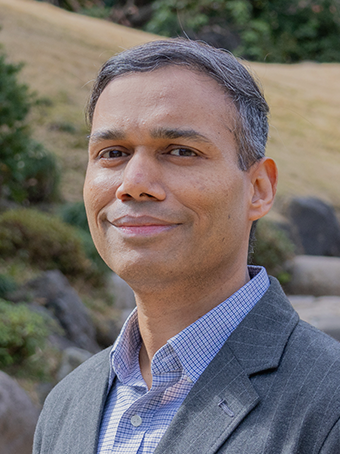
Manish Sharma is an ex-investment banker, with over two decades of experience spanning academia, consulting, think tank and corporate finance. His academic journey includes research and teaching positions at renowned institutions including Jawaharlal Nehru University, University of Tokyo, London School of Economics, and Doshisha Business School. Currently, he is a professor of economics, at Hosei University in Tokyo. Until 2012, Dr. Sharma served as Director (M&A) in the Corporate Finance Department at Daiwa Capital Markets' Tokyo headquarters, providing strategic financial guidance to major corporations. He subsequently transitioned to full-time academia, bringing his extensive practical knowledge to universities across Asia. His other notable experiences include 13 years of radio newscasting with NHK World, and running an investment advisory. His teaching and research interests cover Indian/ASEAN markets, tech sector, corporate finance, investments, valuation, geoeconomics and day-trading. Dr. Sharma holds a Ph.D. in Financial Economics.
View Profile-
 From Oil Shock to a Midterm Reprieve2026.11.13
-
 China’s innovation thrives on openness, even under authoritarian rule2026.11.11
- American Reject Trump - But Do They Reject His Tariffs?2026.11.06
- Will Chinese AI build a global advantage?2026.11.04
- China’s rare-earth success offers lessons in economic security2026.11.02