
China’s innovation thrives on openness, even under authoritarian rule
By Kai Kajitani, professor at Kobe University’s Graduate School of Economics
Understanding the reality of “innovation” in China and properly evaluating its technological capabilities is extremely difficult.
One reason lies in the ambiguity of the word “freedom” in Chinese society. While freedom of speech, especially speech concerning the legitimacy of the regime......(continues below)
Understanding the reality of “innovation” in China and properly evaluating its technological capabilities is extremely difficult.
One reason lies in the ambiguity of the word “freedom” in Chinese society. While freedom of speech, especially speech concerning the legitimacy of the regime, is strictly suppressed, the industrial sector is marked by vigorous competition and technological innovation among private companies.
Accurately assessing this coexistence is no easy task. This briefing will therefore focus on intense corporate competition premised on the “free use” of technology — that is, technological openness — and will examine how it has affected China’s innovation and industrial competitiveness.
When people hear “technological openness,” many likely think of open-source software such as Linux. In fact, open-source software can also help address economic security challenges.
In recent years, both China’s public and private sectors have focused on RISC-V, an open-source instruction set architecture. RISC-V has likely played a role in facilitating domestic semiconductor development in China, since U.S.-led restrictions on exports of advanced semiconductors and related technologies to Chinese companies have also affected the ISA field, where the U.K.’s Arm holds a major share.
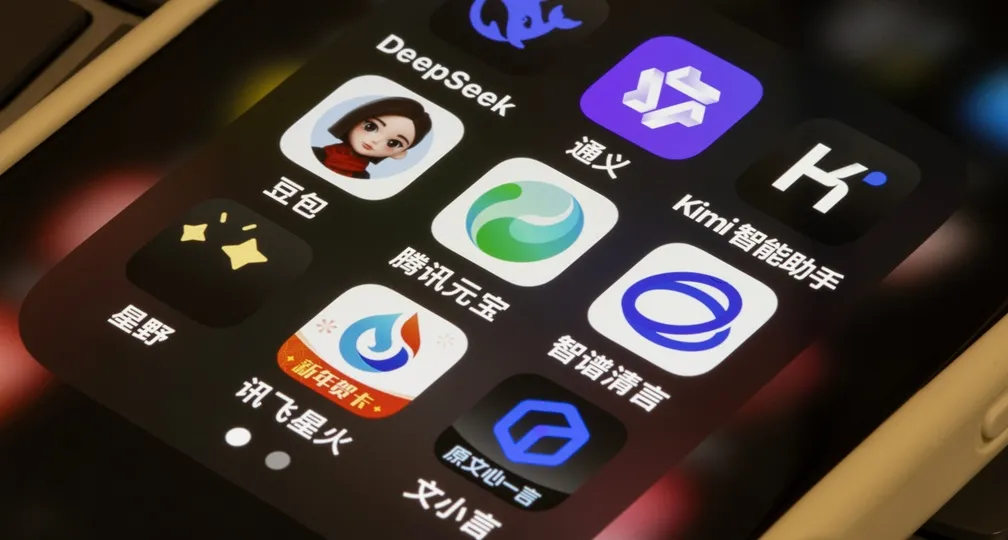
The power of technological openness has been even more evident in the rapid progress of AI developed by Chinese companies. After OpenAI released ChatGPT to the public in November 2022 and global attention on generative AI surged, the Chinese government quickly advocated a “battle of a hundred models.” By mid-2023, Chinese engineers had developed more than 130 large language models, accounting for roughly 40% of the global total. Most were open-weight models.
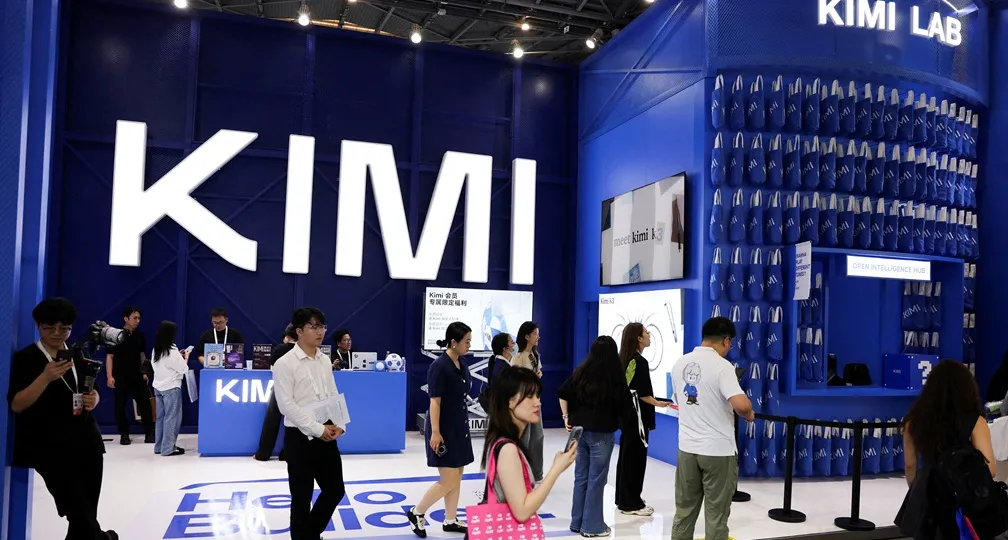
In January 2025, the success of DeepSeek’s open-weight LLMs, V3 and R1, shocked the world. In July 2026, Moonshot AI developed Kimi K3, a large language model that outperformed Anthropic’s top model, Claude Fable 5, in some benchmarks such as coding.
The latter in particular caused concern in the United States, raising fears that use of Chinese open-weight AI could be restricted there. In response, companies and organizations including NVIDIA and Microsoft issued a joint statement opposing excessive regulation.
The important point is that open-source technologies, whether software or AI, accelerate both adoption and diffusion. Open-weight LLMs can be installed on local computers and adjusted to run with smaller capacity through methods such as quantization.
In other words, open-weight models allow users to access similar levels of technology at lower cost and to transmit technology more quickly. As discussed below, this is especially significant for the development of physical AI, where AI and manufacturing are closely linked.
Indispensable strategy
The Chinese government appears to see technological openness as an indispensable strategy for industrial development. On July 17, at the opening ceremony of the World Artificial Intelligence Conference in Shanghai, President Xi Jinping objected to U.S. leadership in AI rule-making and called for the promotion of open-source technologies.
According to the 2025 China Open Source Annual Report published by Kaiyuanshe, China’s largest open-source alliance, the Chinese government has positioned open source as a strategic task for cultivating “new quality productive forces” and has built a national-level institutional framework through coordination among multiple ministries.
Representative examples include the national digital strategy, “AI Plus Action,” announced by the State Council in August 2025, and the “AI Plus Special Action,” announced in January 2026 by eight departments including the Ministry of Industry and Information Technology (MIIT).
The latter reportedly includes a special provision on “open-source openness,” emphasizing support for open-source licenses and communities so that China can control core AI technologies domestically, while promoting the release and sharing of models, tools and datasets.
The government’s commitment to open-source technologies is also evident in autonomous driving. The “Work Plan for the Stable Growth of the Automobile Industry, 2025-2026,” jointly issued in 2025 by multiple agencies including MIIT, explicitly calls for fully leveraging open-source advantages in key technologies such as automotive chips, in-vehicle operating systems and AI, and all-solid-state batteries.
The government appears to be seeking standardization not only in automobile production and sales, but also in foundational technologies such as software-defined vehicles, autonomous driving, in-vehicle AI and next-generation batteries.
Economies of scale
The opening of autonomous-driving technologies suggests that technological openness is particularly powerful in fields such as physical AI, where AI and IT merge with manufacturing. A key source of China’s manufacturing strength is cost reduction through economies of scale, and the clearest example is its electric-vehicle policy. The government provided subsidies to lower EV prices and supported infrastructure such as charging stations, expanding the market and creating conditions where scale economies could operate.
Yet the success of such industrial policy depends on vigorous entry by private companies. The pattern in which “the market expands first, and then private companies rush in” has strengthened China’s manufacturing supply chains and improved its technological capabilities. At the same time, it has also produced side effects: overcapacity and deteriorating profit margins, or “involution,” as seen in EVs and solar panels.
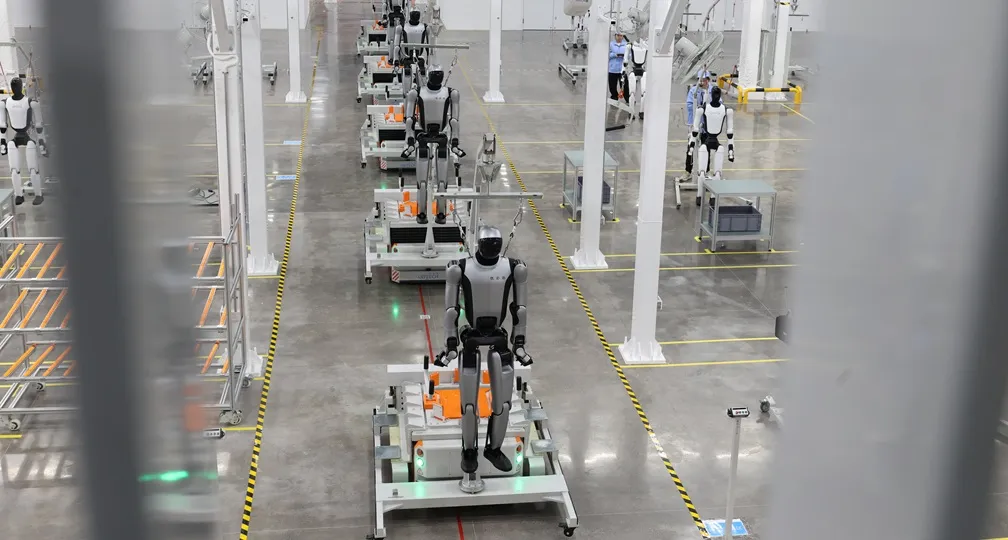
Technological homogenization and fierce competition have also emerged in the humanoid robot industry, where more than 150 manufacturers are said to have entered the market over the past two years. At the same time, the humanoid robot boom has rapidly strengthened and localized China’s domestic supply chains. At the recent World Robot Conference in Beijing, precision equipment and parts manufacturers producing core components such as joint modules, reducers and electromagnetic brakes filled the venue, suggesting their role in lowering production costs and expanding capacity.
The crucial point is that intense market competition in manufacturing, where economies of scale matter, is highly compatible with technological openness. At the beginning of this century, the global spread of cheap, no-brand mobile phones made in Shenzhen — known as shanzhai phones — was made possible by a de facto form of openness called gongkai, or “public opening,” based on the commodification of basic electronic components. By lowering component procurement costs, gongkai enabled the entry of many mobile phone and parts manufacturers, which in turn strengthened Shenzhen’s electronics supply chain.
Intellectual property
In China, the importance of intellectual property rights and their protection in the development and use of technology has long been more relative than in Europe or the United States. Chinese startups have grown by strategically using technological openness, supported by a manufacturing environment in which many private firms excel at combining effectively “opened” general-purpose technologies to produce low-cost, high-quality products.
Interestingly, debates over technological openness also resonate with a kind of socialist thinking in that they treat technology as something belonging to society as a whole. One could view this as a manifestation of sympathy with anarchist left-wing thought, including that of Russian thinker Peter Kropotkin, which was embedded in the early open-source software movement represented by Eric Raymond’s 1997 essay, later a book, “The Cathedral and the Bazaar,” which was a manifesto for decentralized collaboration and innovation without centralized control.
This is why we now see the paradoxical phenomenon of Xi — the leader of an authoritarian state that suppresses freedom of speech — presenting China’s AI development environment to the world as more “free and open.” Understanding this contradiction is essential as we consider how to engage with innovation originating in China and what it will bring.
(Photo Credit: Reuters/ Aflo)
[Note] This article was posted to the Japan Times on November 10, 2026:
https://www.japantimes.co.jp/commentary/2026/11/10/world/china-innovation-openness/

Kai Kajitani
Kai Kajitani is a professor at Kobe University’s Graduate School of Economics and co-author, with Koichi Takahashi, of “China Peaking Out: The Limits of an Economy of Crowding and Rational Bubbles” (2025).

Geoeconomic Briefing
Geoeconomic Briefing is a series featuring researchers at the IOG focused on Japan’s challenges in that field. It also provides analyses of the state of the world and trade risks, as well as technological and industrial structures (Editor-in-chief: Dr. Kazuto Suzuki, Director, Institute of Geoeconomics (IOG); Professor, The University of Tokyo).
Disclaimer: The opinions expressed in this Geoeconomic Briefing do not necessarily reflect those of the International House of Japan, the Institute of Geoeconomics (IOG) or any other organizations to which the author belongs.
- China’s innovation thrives on openness, even under authoritarian rule2026.11.11
-
 American Reject Trump - But Do They Reject His Tariffs?2026.11.06
- Will Chinese AI build a global advantage?2026.11.04
- China’s rare-earth success offers lessons in economic security2026.11.02
-
 Do Americans Really Support Trump's Tariffs?2026.10.30