
American Reject Trump – But Do They Reject His Tariffs?
The latest regulatory developments on economic security & geoeconomics
By Paul Nadeau, Visiting Research Fellow, Institute of Geoeconomics (IOG)
U.S. Defense Department Seeks to Support Domestic Pharmaceutical Production: On October 17, the U.S. Department of Defense’s Office of Strategic Capital (OSC) announced that it had made a conditional loan to Antheia, Inc., an American pharmaceutical firm, to scale the company’s domestic production of key starting materials (KSM) and active pharmaceutical ingredients (API) for generic pharmaceutical drugs as part of an effort to secure critical medical supply chains.
U.S. State Department Sanctions PRC Firms for IP Theft: On October 19, the U.S. Department of State sanctioned five China-based entities under the Protecting American Intellectual Property Act (PAIPA) in connection with the theft of trade secrets from U.S. persons.
Australia, U.S. Sanction DPRK for Cyber Activities: On October 20, Australia’s Department of Foreign Affairs and Trade added two North Korean technology companies and two individuals to its sanctions list. On October 28, the U.S. Treasury Department’s Office of Foreign Assets Control (OFAC) sanctioned 10 individuals and one entity for their roles in North Korean government-run information technology (IT) worker schemes that defraud U.S. businesses and generate revenue for North Korea’s weapons of mass destruction (WMD) and ballistic missile programs.
Trump Administration Adjusts Canada Tariffs to Support Collins Reelection Bid: On October 23, the Trump administration issued an executive order adjusting the tariffs imposed on Canada under Section 338 by exempting plywood sheets, some paper products, certain machinery and refrigeration equipment, packing crates and boxes, and fresh and dried seaweed, and adding tariffs on carpets, paints, waste, shampoos, cocoa powder, wooden coffins, ice cream sticks, air-conditioning machines, chest freezers, archery equipment and canoes to offset the removals. The adjustment is seen as an attempt to support Maine Senator Susan Collins’s bid for reelection by removing tariffs on products important to Maine industries.
USTR Extends Pause on Port Fees: On October 26, the Office of the U.S. Trade Representative announced the extension of a pause on port fees and tariffs tied to an investigation into China’s maritime and shipbuilding industries until January 9, 2027, part of a trade truce announced in September by U.S Treasury Secretary Scott Bessent.
UK Expands Sudan Sanctions: On October 26, the United Kingdom’s Foreign, Commonwealth, and Development Office sanctioned 15 senior commanders in Sudan from both the Rapid Support Forces and Sudanese Armed Forces for their involvement in suspected atrocities, including conflict-related sexual violence.
U.S. Treasury Department Sanctions Rwanda Actors: On October 28, the U.S. Treasury Department’s Office of Foreign Assets Control (OFAC) sanctioned Rwanda’s Ministry of Defence and the Zigama Credit and Savings Society, a Rwandan financial institution, for supporting both the March 23 Movement in the Democratic Republic of the Congo and its political wing, the Congo River Alliance.
Operation Economic Outcast Updates:
・On October 21, the U.S. Treasury Department’s Office of Foreign Assets Control (OFAC) announced that it had sanctioned Panama- and Greece-based law firm Karnakis and Karnakis for having registered companies owning Iranian shadow fleet vessels, along with five of its owners and employees, a ship manager, two shipping agents in Singapore and the UAE, and nine vessels. In a separate announcement, the Treasury Department’s Financial Crimes Enforcement Network (FinCEN) announced its first-ever administrative subpoena pursuant to the Bank Secrecy Act (BSA) to advance its investigation into a Greek bank’s potential ties to Iran and its proxies, and issued multiple requests for information concerning banks’ relationships with sanctioned Iranian financial institutions.
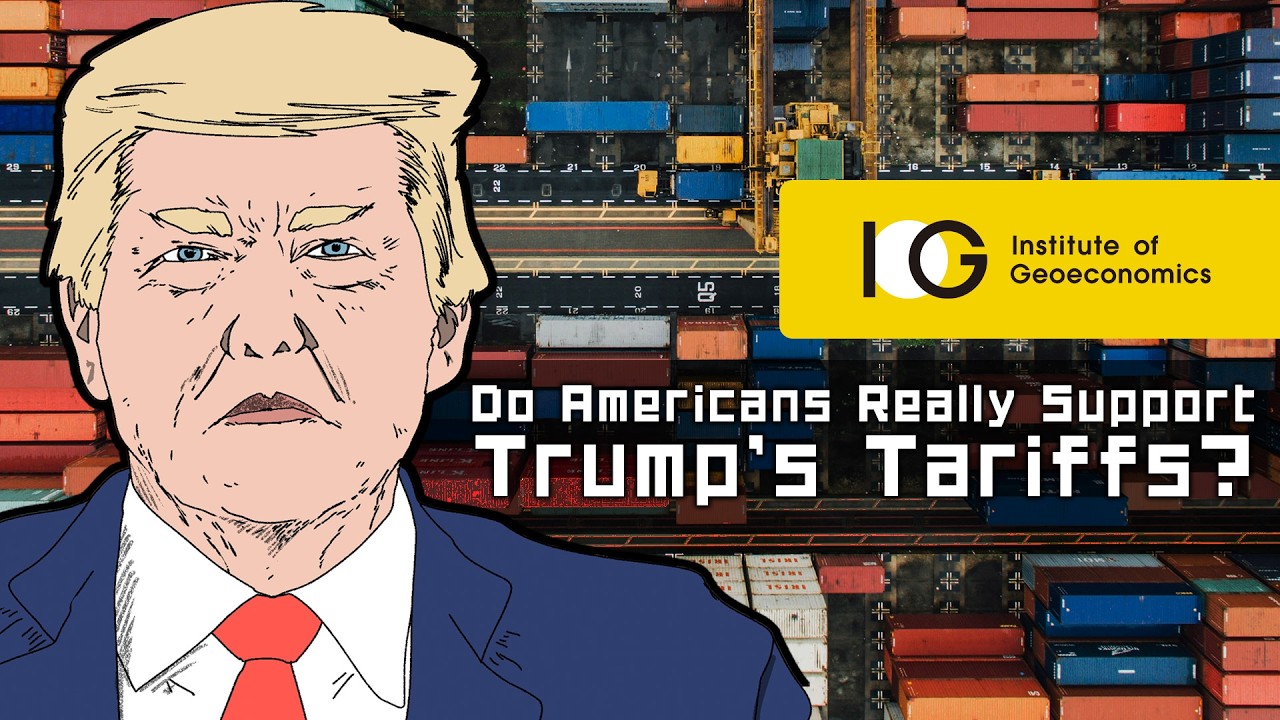
Analysis: American Reject Trump – But Do They Reject His Tariffs?
Midterm elections are typically referenda on the incumbent presidency, but few have delivered as decisive a verdict as the one American voters just sent Donald Trump. Central to that rejection was voter concerns about affordability and Trump’s role in that through the Iran War and his tariff program. But while voters’ rebuke of Trump is unmistakable, it’s much less likely that that will translate into tariff relief or a different approach to international economic engagement as long as Donald Trump is in power – or maybe beyond.
First of all, the election outcome shouldn’t necessarily be interpreted as a political rejection of tariffs. Despite the concerns about affordability and inflation, there’s very little evidence that voter preferences matter for policy or that voters even understand what tariffs are and how they work. For one, Christopher Achen & Larry Bartels’s book Democracy for Realists: Why Elections Do Not Produce Responsible Government lays out the ways in which elections mostly fail to turn policy preferences or issues – the relationship between voting behavior and policy preferences is essentially random. Alan Beatie of the Financial Times provides anecdotal support for this point when he reminds that Ohio voters first elected Democrat Sherrod Brown to the Senate in 2006 it was widely interpreted as an endorsement of Brown’s outspoken opposition to the free trade agreements pursued by the George W. Bush administration – four years later, Ohio voters elected Republican Rob Portman to the Senate after have served as U.S. trade representative under the George W. Bush administration and negotiated many of the agreements that Sherrod Brown had railed against.
If voters aren’t exactly coherent on what they think about tariffs, then what about decision makers? Democrats campaigned against Trump’s tariffs, linking them to voter concerns about affordability and inflation. Beyond campaign talking points, Democrats have also sponsored legislative efforts to rein in presidential tariff authorities. For example, Senator Ron Wyden of Orgon, ranking member of the Senate Finance Committee which has jurisdiction over trade issues in the Senate, introduced the Congressional Trade Powers Reform Act of 2026 which would, among other things, require congressional approval of new presidential tariffs, establish a bipartisan Joint Committee on Tariffs and Trade to review proposed actions, require congressional approval of trade agreements and increase congressional oversight of the Office of the U.S. Trade Representative. Democrats have introduced other efforts to repeal the tariffs imposed on Canada under Section 338 or repeal Section 338 entirely, while Chuck Schumer, Senate minority leader, introduced legislation that would repeal Trump’s Section 301 forced labor tariffs and would repeal Sections 122 and 338 entirely.
None of these were particularly likely to pass under a Republican-controlled Congress, but there’s now a question as to whether they might be more successful following the Democratic landslide. Democrats are still far short of veto-proof majorities (overriding a veto requires both chambers of Congress to secure a two thirds majority, or 290 votes in the House and 66 votes in the Senate), but if Trump’s tariffs are seen to be a key factor in the Republican defeat, Democrats may send legislation along these lines to the White House, either daring Trump to veto bills that may be seen as addressing affordability issues or counting on Republicans joining them in an effort to override the veto if they see Trump’s tariffs as endangering their reelection chances in 2028.
It’s also true that Trump could use tariffs to lash out in frustration or escalate trade conflicts to demonstrate that he still has authority, and he’ll still have the legal authority to pursue those options until and until Congress stops him. But it’s not clear if a chastised Trump will have the same leverage with foreign counterparts who will have seen his signature economic policy blamed for a major electoral defeat. Countries may be less willing to offer concessions if the president demanding those concessions is a lame duck and if his party, blaming tariffs in part for their loss, is more willing to join Democrats in curtailing his tariff authorities. Trump’s political space to use tariffs as leverage was almost unlimited in the first two years of his second term but shrunk dramatically overnight and foreign partners are sure to respond accordingly. For now, full tariff relief remains unlikely, meaning that exemptions and carve-outs are the best hope for anyone looking for tariff relief.
The bigger question about the future of U.S. tariffs and international economic policy more broadly is if things would change if a Democrat wins the presidency in 2028. On that, the outlook may be disappointing. Many Democrats still believe that winning working class voters in Rust Belt states like Ohio, Michigan, Pennsylvania, and elsewhere in the Midwest is key to winning the presidency given Electoral College vote allocations, and to that end they continue to support protections for domestic industries in those states, including tariffs. It’s hard to imagine that a Democratic president will lift the tariffs in the first week the way Trump ended U.S. participation in the Comprehensive and Progressive Trans-Pacific Partnership (CPTPP). It’s unlikely that a future Democratic presidency will center tariffs as strongly as Trump has – no possible candidate has shown the same inclination to tariffs that Trump has – but there’s a strong possibility that tariffs will be left in place. For example, Gavin Newsom, California governor and likely 2028 presidential candidate, has said that while Democrats’ foreign policy will be “nothing like” Trump’s, he can’t guarantee that tariffs will be lifted. Some tariffs, like the Section 338 tariffs on Canada, could be removed as a token of good will. Even so, while Democrats may be more willing to lift tariffs than Trump, they may want to see what they can get in exchange before they do.
Tariffs’ role as a revenue raiser shouldn’t be discounted either. Tariffs may not be significant revenue generators, but they still generate some revenue – maybe not as much as the economic activity generated by lower trade barriers, but still enough to be compelling for some. According to the Bipartisan Policy Center, tariffs have brought in $212 billion in revenue to the federal government in 2026, compared to $65 billion in 2024. With rising bond yields beginning to put pressure on the U.S. debt burden, there may be a greater appetite for Congress to find revenue wherever they can get it. Raising taxes is a political nonstarter, so it may be easier for Congress to justify using tariffs to raise revenue.
The issue remains that economic populism remains a more central assumption of modern U.S. politics than liberalization. Firms will increasingly become dependent on tariffs for their economic viability the longer they stay in place and form their business plans around them and will advocate politically to maintain a tariff wall. There might be louder skepticism of tariffs following the midterms, but certain tariffs, like those protecting sectors like steel & aluminum or automobiles, will have a constituency advocating to keep them on while others will argue for a “smarter” way to apply tariffs going forward. Given all the issues that make up modern international trade like national security and industrial policy, political and business stakeholders will expect an international economic strategy that is more concrete than simply tariff removal. Tariffs may not even be at the top of the list for many stakeholders.
At the very least, there won’t be a strong constituency to return to trade liberalization, meaning that some form of protectionism or another will remain as long as cross-party agreement on what the future of trade should look like is lacking. It’s possible that forming agreements with the goal of improving economic security and supply chain resiliency becomes a surrogate for liberalization. To that end, it will be valuable to build connections with the incoming Democratic caucus to understand their perspectives on key economic issues impacting the Indo-Pacific and to strengthen relationships if Democrats win the presidency in 2028. Whatever approach Democrats chose to take, the question is how much the gains of liberalization from the past in terms of welfare and economic development could be maintained in such a surrogacy where security takes precedence, but it might be the best that supporters of liberalization could hope for.
(Photo Credit: Douglas Rissing / iStock)
Disclaimer: The views expressed in this IOG Economic Intelligence Report do not necessarily reflect
those of the API, the Institute of Geoeconomics (IOG) or any other organizations to which the author belongs.
IOG English Newsletter
Subscribe to the English IOG Newsletter to stay up to date on IOG’s activities across various briefings, op-eds, YouTube videos, podcasts, as well as new publications, events, research activities, and more..
Click here to subscribe

Visiting Research Fellow
Paul Nadeau is an adjunct assistant professor at Temple University's Japan campus, co-founder & editor of Tokyo Review, and an adjunct fellow with the Scholl Chair in International Business at the Center for Strategic and International Studies (CSIS). He was previously a private secretary with the Japanese Diet and as a member of the foreign affairs and trade staff of Senator Olympia Snowe. He holds a B.A. from the George Washington University, an M.A. in law and diplomacy from the Fletcher School at Tufts University, and a PhD from the University of Tokyo's Graduate School of Public Policy. His research focuses on the intersection of domestic and international politics, with specific focuses on political partisanship and international trade policy. His commentary has appeared on BBC News, New York Times, Nikkei Asian Review, Japan Times, and more.
View Profile- American Reject Trump - But Do They Reject His Tariffs?2026.11.06
-
 Will Chinese AI build a global advantage?2026.11.04
- China’s rare-earth success offers lessons in economic security2026.11.02
-
 Do Americans Really Support Trump's Tariffs?2026.10.30
- Do Humanoids Dream of "The Chinese Dream"?2026.10.30