
Chips, Chokepoints, and the Jensen Huang Affair
The latest regulatory developments on economic security & geoeconomics
By Paul Nadeau, Visiting Research Fellow, Institute of Geoeconomics (IOG)
U.S. Targets MANPADS for Iran: On November 4, the U.S. State Department designated two individuals and one entity that have been involved in efforts to help the Iranian regime obtain man-portable air-defense systems (MANPADS).
Swiss Adopt EU Sanctions on Russia: On November 4, the Swiss Federal Council adopted most of the European Union’s 21st sanctions package against Russia and Belarus, adding 254 individuals and entities to its sanctions list and implementing a number of other restrictive measures.
U.S. Targets Scammers: On November 5, the U.S. Treasury Department’s Office of Foreign Assets Control (OFAC) designated four individuals and 41 entities that support the business network of the Prince Group, previously sanctioned for its role in cyber-enabled fraud, money laundering, and human trafficking, as well as a Malaysian individual who manages a network of Africa-based scammers targeting U.S. victims.
U.S. Increases Pressure on Cuba: On November 5, the U.S. State Department designated eight entities, two individuals, and five vessels in an action targeting the Cuban regime’s oil shipping networks, Cuban elites, state-owned import and technical-support entities, and China-based suppliers of the regime’s military forces. In a concurrent announcement, the U.S. Treasury Department issued a determination authorizing sanctions on foreign persons operating in Cuba’s manufacturing, technology, electronics, and marine sectors.
Australia Targets Sudan Forces: On November 5, the Australian Government imposed human rights sanctions and travel bans on four Sudanese individuals, including the leaders of the Sudanese Armed Forces (SAF) and the Rapid Support Forces (RSF), as well as financial sanctions on one entity over serious human rights abuses in Sudan’s ongoing conflict.
EU Launches Crypto Task Force: On November 6, the European Commission announced the launch of the EU Crypto Sanctions Task Force to strengthen the EU’s capacity to detect and tackle attempts to circumvent financial sanctions through crypto assets.
U.S. FinCEN Withdraws Cryptocurrency Rules: On November 6, the U.S. Treasury Department’s Financial Crimes Enforcement Network (FinCEN) withdrew a notice of proposed rulemaking that would have amended the Recordkeeping and Travel Rule regarding convertible virtual currencies and also would have lowered the threshold for funds transfers and transmittals of funds that begin or end outside the United States.
Canada Targets Russia’s Industrial Base: On November 9, Global Affairs Canada designated 38 entities and 24 individuals to further reduce Russia’s military capabilities by targeting elements of its defense industrial base, including actors involved in ballistic missile technology development and Russia’s cyber activities.
BIS Suspends Affiliates Rule through January: On November 9, the U.S. Commerce Department’s Bureau of Industry & Security (BIS) issued a final rule that extends the suspension of the BIS Affiliates Rule through Jan. 10, 2027.
Canada Tightens Iran Sanctions: On November 10, Global Affairs Canada reimposed sanctions against 11 Iranian entities, which had previously been delisted, for contributing to the Iranian regime’s proliferation-sensitive nuclear activities and ballistic missile program or to the financing of its malign activities.
UK Targets Russian LNG Sector: On November 12, the UK government announced that it would sanction nine entities, including major coal companies and oil producers, as well as 11 shadow fleet vessels involved in the transport of Russian oil and liquid natural gas (LNG).
Nvidia Scandal Draws Justice Department Interest: The U.S. Department of Justice is probing Alice Huang, the woman U.S. officials suspect as a possible spy targeting Jensen Huang, the former CEO of Nvidia, over whether entities linked to her were involved in efforts to smuggle products made by another U.S. technology company to China. Huang has resigned as CEO of Nvidia as a result of the allegations.
BIS Announces Rule Addressing Remote Access to Sensitive U.S. Tech: On November 16, the U.S. Commerce Department’s Bureau of Industry & Security (BIS) issued an interim final rule that ensures existing restrictions on access to sensitive American technology cannot be circumvented through remote computing arrangements involving data centers in third countries. The press release noted was “written by and at the direction of” the U.S. Treasury Department and U.S. National Security Council.
Operation Economic Outcast Updates:
・On November 4, the U.S. Treasury Department’s Office of Foreign Assets Control (OFAC) sanctioned an India-based network for supporting Iran’s shadow fleet by providing false flags and certifications to sanctioned vessels involved in transporting Iranian petroleum, including on behalf of the Iranian military and its proxies.
・On November 6, the U.S. Treasury Department’s Office of Foreign Assets Control (OFAC) designated eight money services businesses based in Canada that enable the Iranian regime, sanctioned entities associated with the regime, and other illicit actors that move assets into and out of Iran.
・On November 6, the U.S. Treasury Department’s Financial Crimes Enforcement Network (FinCEN) issued an order effectively cutting off a convertible virtual currency (CVC) exchanger’s access to the U.S. financial system for facilitating at least $16 billion in illicit transactions connected to Iranian, North Korean, and Russian sanctions evasion, as well as cybercrime, including by transacting directly with sanctioned actors.
Analysis: Chips, Chokepoints, and the Jensen Huang Affair
By Andrew Capistrano, Visiting Research Fellow, Institute of Geoeconomics (IOG)
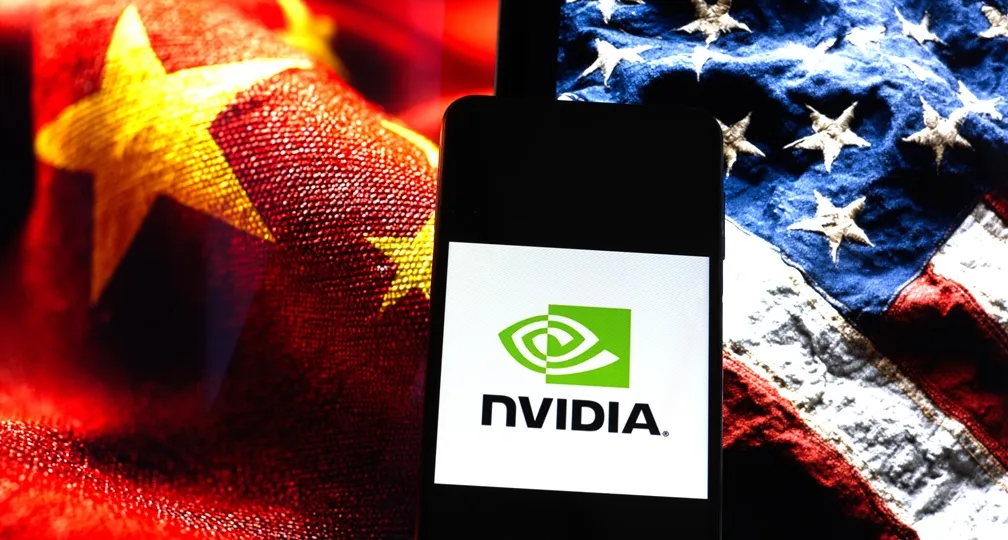
After a legendary three-decade run as Nvidia CEO, during which he built a small firm into the world’s premier AI chip designer, Jensen Huang’s downfall was stunning and swift. His resignation on 12 November followed revelations about alleged extramarital relationships, including an affair with Alice Huang, the former CEO of Singapore cloud provider and Nvidia customer Megaspeed, who has been accused in media reports of working for Chinese intelligence. But while the most sensational espionage allegations remain disputed, her precise affiliation may ultimately be less consequential than the economic security vulnerabilities the affair appears to expose. Indeed, the sordid episode offers a unique window into how competing commercial interests and national security priorities are shaping a longstanding dispute over US technology policy toward China.
If Jensen had a relationship with an executive at a firm suspected of evading existing US semiconductor export controls, that would give his opponents a powerful means of discrediting his preferred approach to sustaining America’s technology lead over China. This is because Jensen was not just a Silicon Valley titan; from his perch at the helm of Nvidia he had long been among the most prominent advocates of preserving selected Chinese access to US-designed chips.
The “selective access” argument proceeds in three steps. First, selling advanced chips short of the frontier would keep Chinese developers invested in Nvidia’s software tools, computing architectures, and compatible infrastructure. Second, their preference for Nvidia would sustain US corporate profits while depriving Chinese alternatives of customers, revenue, and feedback needed to improve. Third, slower Chinese substitution would give US firms like Nvidia time to extend their lead in advanced chips—sustaining Chinese dependence and thereby creating a valuable technological chokepoint the US could potentially exploit in bilateral bargaining.
But the opposing “restrictive access” argument follows a different chain. First, China has made it clear it will pursue strategic autonomy and technological self-reliance regardless of whether American chips remain available. Second, continued chip exports—even below the cutting edge—relieve China’s compute constraints and strengthen its AI capabilities while domestic hardware alternatives mature. Third, restricting exports could buy time for the same US lead to consolidate by constraining Chinese AI rather than prolonging its dependence. A loose alignment of prominent national security hawks and leading frontier AI labs therefore favors tighter controls: China’s chip dependence creates an opportunity to constrain its capabilities now, one that is more strategically useful than merely maintaining the chip chokepoint.
Jensen’s selective-access argument had found influential supporters within the Trump administration. But reports that Megaspeed arranged orders for Chinese buyers to obtain hundreds of thousands of advanced Nvidia chips, worth nearly $12 billion, have intensified concerns about circumvention, and Nvidia’s alleged export control evasion has undermined his credibility. Jensen’s departure could consequently strengthen those advancing the restrictive-access position, allowing them to convert their influence into expanded and more durable export controls.
As both the selective-access and restrictive-access camps frame their policy preferences in terms of national advantages, the question is whether these emerging political dynamics will strengthen—or weaken—the technological foundations of US geoeconomic power. Much depends on how access to American compute affects two Chinese ambitions: advancing its domestic AI models and applications, and building frontier semiconductor alternatives.
The relationship between these ambitions hinges on China’s dependence on foreign computing hardware. Addressing such vulnerabilities is central to Chinese industrial strategy: in April 2020, Xi Jinping explicitly described reducing China’s external dependence and increasing others’ reliance on China as complementary objectives, meaning the strategy predates the major US semiconductor export controls introduced in October 2022. Furthermore, Made in China 2025 and the subsequent 14th Five-Year Plan both emphasized industrial upgrading as well as frontier technological capabilities.
Yet China’s pursuit of hardware autonomy and frontier AI capabilities creates competing interests within its technology sector. On the one hand, the government’s drive to block foreign chip imports, including Nvidia’s, supports domestic accelerator producers such as Huawei. Recent guidance requiring new state-funded data centers to use domestic chips similarly channels purchases toward Chinese hardware suppliers, while asking their customers to bear the costs of substitution. On the other hand, AI model developers continue to seek Nvidia products to sustain their immediate competitiveness, and Huawei’s reported difficulty meeting domestic demand sharpens this tension. Chinese demand consequently supports direct purchases, smuggling, and business through overseas customers and data centers in Singapore and Malaysia—channels that can maintain access to American compute without resolving China’s dependence on foreign hardware.
In short, the division runs both between government and firms, and between hardware producers and model developers. These interests can overlap, but they differ over how quickly foreign technology can be replaced without compromising AI progress. As in the US policy dispute, restricting access promises strategic advantages while imposing commercial and technological costs. Therefore, neither US camp should treat China as a single actor: the government’s determination to substitute does not guarantee rapid success, and its AI developers’ preference for Nvidia does not guarantee lasting dependence.
A similar distinction runs through the US camps: benefiting commercially from China’s chokepoint dependence is different from converting it into geoeconomic leverage. The selective-access and restrictive-access camps also bring together interests that overlap without being identical. For instance, Nvidia benefits from continued purchases and platform adoption, while the US government might see those commercial relationships in the context of broader bargaining objectives. Similarly, frontier labs can benefit from constraints on Chinese competitors, while national security officials view slowing down Chinese AI labs as a strategic objective beyond protecting US firms from foreign competition. Agreement on chip-access policy, in other words, need not imply agreement on which strategic outcomes to prioritize, what concessions to seek, or which commercial costs to accept. As China’s internal divide illustrates, whether commercial competitiveness reinforces national strategic advantage depends on the firms, technologies, and policy choices involved.
The commercial divide extends from hardware to software, or from advanced chips to how AI capabilities reach users. Jensen favored open-weight models that firms can adapt and deploy themselves, broadening demand for Nvidia’s infrastructure even as they challenged proprietary model developers. This gives Nvidia a commercial reason to favor China’s selective access to chips as well as a wider diffusion of models: both sustain participation in an ecosystem built on its infrastructure. But proprietary frontier labs have a different commercial interest. Closed models preserve their control over access and commercialization, while restricting Chinese competitors’ access to compute can help protect the advantage they sell at the model layer. The point is that Anthropic and OpenAI’s support for stronger export controls can serve their competitive position alongside their AI safety or national security concerns.
Of course, commercial interests alone do not invalidate strategic arguments, and overlapping tendencies are not fixed political-economic alliances. What is actually at stake are competing visions of the next stage of US-China technology competition.
The selective-access vision emphasizes outcompeting China within an interconnected ecosystem: continued participation would reinforce US platforms and impede Chinese alternatives, while open models could spread AI capabilities into manufacturing, robotics, and other productivity-enhancing applications. Nvidia’s pioneering work on physical AI illustrates that ambition. The restrictive-access vision places greater weight on guarding a US-led ecosystem, pointing instead toward a more bifurcated technological order where China builds out a rival, alternative stack. Within that logic, restricting Chinese access would give American developers greater freedom to set the pace of AI development and deployment, turning technological separation into a lasting strategic advantage.
But while both camps aim to sustain America’s technological lead, neither operates on a playing field the US controls alone. Downstream American compute advantages coexist with US and allied dependence on upstream Chinese critical mineral processing. These reciprocal vulnerabilities can create a form of “mutual geoeconomic deterrence”, encouraging restraint while both countries invest in alternatives, and bilateral US-China negotiations have combined Chinese commitments on rare-earth exports with US concessions, including pauses in selected export-control measures. An implicit accommodation over GPU and rare-earth flows has even been rumored, although public agreements establish no direct exchange. If this is the case, the durability of such a “quid pro quo” would rely on something deeper than any Trump-Xi bargaining in Shenzhen—it would depend on which country ultimately reduces its vulnerabilities faster while preserving geoeconomic leverage over the other.
Against this backdrop, the Jensen Huang affair could shift the US approach to geoeconomic bargaining before the strategic trade-offs are resolved. Allegations of Nvidia chip diversion politically weaken the selective-access camp, exposing a practical vulnerability: selective access relies on enforcing the boundary between permitted sales and prohibited transfers. Restrictive-access proponents now have a political opening to pursue stronger enforcement and even expanded controls on US-designed advanced chips. Yet evidence of evasion does not settle whether broader denial would sustain US technological advantages; export controls would have to somehow slow Chinese AI development enough to outweigh the costs of retaliation and the incentives for China to build a rival hardware ecosystem. Because if China escapes the compute chokepoint while retaining its rare-earth chokepoint, US semiconductor restrictions would lose their relevance just as China’s mineral leverage becomes harder to counter.
The focus on chips can obscure the fact that US-China technology competition is a contest over time. And in the wake of Jensen’s resignation, Washington is increasingly betting that the best way to buy time is to tighten restrictions on Chinese compute. On November 16, the Bureau of Industry and Security (BIS) announced new licensing controls targeting Chinese access to advanced American chips through overseas data centers, extending restrictions beyond physical shipments into remote computing arrangements. BIS explicitly attributed the rule’s drafting to Treasury and the National Security Council, underscoring the influence of officials pressing for tighter controls. The response from China’s AI industry illustrates the competing strategic effects; most notably, Tencent President Martin Lau warned that reduced access to advanced compute would delay new AI models in the short run, while also accelerating the development of domestic chip supply chains. Lau’s assessment lends support to both camps’ arguments: tighter controls could slow Chinese AI development as restrictionists intend, while accelerating domestic substitution as selective-access advocates warn.
The question is which camp’s policy prescription buys more useful time, and for whom. Both approaches must be judged against their shared promise of sustaining US leadership as AI moves from frontier models into manufacturing, robotics, and wider industrial applications. And that might require a careful policy mix: constraining Chinese capabilities while preserving America’s capacity to innovate, coordinate investment, and spread productive technologies.
It will not be simple, and the Jensen Huang affair may augur shifting political winds in Washington that complicate finding the right mix. Whether that shift strengthens American geoeconomic power, however, rests on whether the resulting policies can deliver the technological lead and usable leverage that both camps claim to defend.
(Photo Credit: Below the Sky / Shutterstock.com)
Disclaimer: The views expressed in this IOG Economic Intelligence Report do not necessarily reflect
those of the API, the Institute of Geoeconomics (IOG) or any other organizations to which the author belongs.
IOG English Newsletter
Subscribe to the English IOG Newsletter to stay up to date on IOG’s activities across various briefings, op-eds, YouTube videos, podcasts, as well as new publications, events, research activities, and more.


Visiting Research Fellow
Andrew Capistrano is a geopolitical risk consultant based in Tokyo, and Director of Research at PTB Global Advisors in Washington, DC, where he specializes in industrial policy, international trade and capital flows, and US-China relations. He is also a visiting scholar at the Waseda Institute of Political Economy and a visiting lecturer at the School of Political Science and Economics, Waseda University. Previously, he worked at the US Embassy’s American Center Japan, and as a research associate at the Rebuild Japan Initiative Foundation/Asia-Pacific Initiative. Dr Capistrano holds a BA from the University of California, Berkeley; an MA in political science (international relations and political economy) from Waseda University; and a PhD in international history from the London School of Economics. His academic work focuses on the diplomatic history of East Asia from the mid-19th to the mid-20th centuries, applying game-theoretic concepts to show how China's economic treaties with the foreign powers created unique bargaining dynamics and cooperation problems. During his doctoral studies he was a research student affiliate at the Suntory and Toyota International Centres for Economics and Related Disciplines (STICERD) in London.
View ProfileVisiting Research Fellow
Paul Nadeau is an adjunct assistant professor at Temple University's Japan campus, co-founder & editor of Tokyo Review, and an adjunct fellow with the Scholl Chair in International Business at the Center for Strategic and International Studies (CSIS). He was previously a private secretary with the Japanese Diet and as a member of the foreign affairs and trade staff of Senator Olympia Snowe. He holds a B.A. from the George Washington University, an M.A. in law and diplomacy from the Fletcher School at Tufts University, and a PhD from the University of Tokyo's Graduate School of Public Policy. His research focuses on the intersection of domestic and international politics, with specific focuses on political partisanship and international trade policy. His commentary has appeared on BBC News, New York Times, Nikkei Asian Review, Japan Times, and more.
View Profile- Chips, Chokepoints, and the Jensen Huang Affair2026.11.20
-
 From Oil Shock to a Midterm Reprieve2026.11.13
-
 China’s innovation thrives on openness, even under authoritarian rule2026.11.11
- American Reject Trump - But Do They Reject His Tariffs?2026.11.06
- Will Chinese AI build a global advantage?2026.11.04



 American Reject Trump - But Do They Reject His Tariffs?2026.11.06
 From Oil Shock to a Midterm Reprieve2026.11.13
- Trump Faces a Reckoning in the Midterms, but it Might Not Matter for Tariffs2026.10.09
- Chips, Chokepoints, and the Jensen Huang Affair2026.11.20
- Why Pax Silica Is About More Than AI Chips2026.07.15