
China’s rare-earth success offers lessons in economic security
By Dr. Naoise McDonagh, Director of the MBA Program and Senior Lecturer in Geopolitics and International Trade at the School of Business and Law, Edith Cowan University
China’s rare-earth dominance reveals the strengths and vulnerabilities of its distinctive political economy — and offers lessons for competitors such as Japan.
In 2024, China mined 60% of global rare earths but produced 91% of refined oxides and 94% of sintered permanent rare-earth magnets. This dominance reflects more than geological luck, cheap labor and state subsidies, although each played a role.
China captured the rare-earth magnet supply chain through an evolving industrial policy that melded communist economic planning with capitalist market dynamics. The state set strategic direction and controlled critical gateways, while firms absorbed technology, cut costs and scaled production. This produced the world’s most complete and lowest-cost mine-to-magnet innovation ecosystem — and a formidable source of geoeconomic leverage.
Built and bound by the state
The distinction between “state-led” and “market-led” development obscures how China’s economy works. Reform and opening did not replace planning with a free market. Beginning in the late 1970s, Deng Xiaoping dismantled the rigid Soviet-style planned economy while expanding the role of private markets. But the goal was to embed markets within a Marxist-Leninist political system. In practice, China’s socialist market economy permits private initiative but often subordinates it to Party-state goals and steers capital toward strategic priorities. This institutional innovation suits China’s political system: Markets produce innovation, while the state retains extensive ownership in key sectors and the power to guide markets toward strategic goals.
The rare-earth magnet ecosystem offers an example. During the 1990s, Beijing designated rare earths as protected minerals, constrained foreign participation in mining and encouraged technology-bearing investment downstream. Policy incentives favored processing and manufacturing inside China. Policy later shifted toward environmental regulation, traceability and tighter control. Formal mining and separation quotas are now concentrated in two state-owned groups, giving Beijing tighter oversight of upstream feedstock and making its 2025 export control regime more enforceable.
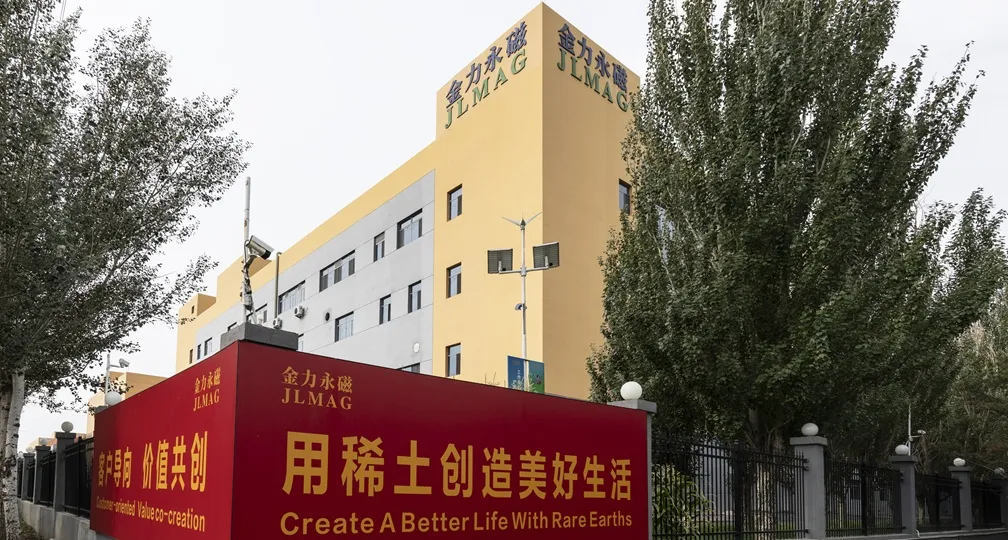
While the central government sets strategic direction, market firms still undertake much of the commercial discovery: determining production methods and which applications scale to market. China’s 2001 World Trade Organization accession turbocharged export opportunities. Domestic firms expanded capacity, absorbed foreign technology and developed export markets in rare-earth metallization and permanent magnets. Publicly listed firms such as Yantai Zhenghai Magnetic Materials and JL Mag Rare-Earth highlight the successes, with proprietary process knowledge and globally significant output of neodymium-iron-boron magnets for consumer, industrial and defense applications.
Yet the Party-state is never far away in strategic sectors. When JL Mag listed in Hong Kong in 2022, five cornerstone investors that took nearly half the offering included state-owned groups such as the China State-Owned Enterprises Mixed Ownership Reform Fund, China Resources, CITIC and China Merchants Group. This illustrates how nominally private firms can be state-invested: Private control coexists with state capital, creating channels of influence while preserving market incentives.
China’s rare-earth magnet ecosystem is thus a core example of its economic model: State capital accepted long time horizons and low initial returns while underwriting capacity across several stages simultaneously. Private and mixed-ownership firms supplied speed, experimentation and customer responsiveness.
Not an Asian Tiger
China’s model is not wholly alien to East Asia or Japan. During its high-growth era, Japan also directed finance, protected selected sectors and coordinated investment. However, China combines coordinating ambitions with far broader state ownership of strategic nodes, more extensive market-distorting fiscal support and market-shaping planning guidance. China has also sought, often successfully, to lead in new technological frontiers through Five-Year Plans and initiatives such as Made in China 2025.
Where China uses large-scale industrial planning to dominate entire industrial ecosystems, Japan’s response to the 2010 rare-earth shock illustrates key differences between their economic models. Rather than seek national control of the complete chain, Tokyo pursued resilience through overseas investment, long-term offtake, recycling and material substitution.
In 2011, the Japan Organization for Metals and Energy Security and Sojitz provided $250 million in debt and equity to Australia’s Lynas to build alternative supply. The International Energy Agency estimates that Japan’s total rare-earth demand is now 30% below its 2010 level.
Together, these measures diversify supply and curb demand rather than reproduce China’s vertically integrated dominance. Yet renewed Chinese restrictions in 2025-26 reveal the limits of this approach: Without sufficient alternative processing and magnet capacity, Japan remains vulnerable to supply disruption.
China’s limits
China’s economy does not run solely according to a grand master plan. While industrial planning can drive growth at a scale that allows a country to capture geopolitical chokepoints, profit-seeking behavior by firms also leads markets to develop in ways the Party views as politically or socially undesirable. This, in turn, leads the Party toward reactive rather than planned interventions that undermine commercial development. Thus, the melding of state planning and market incentives is often messy and wasteful and can lead to capital misallocation on a grand scale, along with excess capacity.
The latter distorts global trade and fuels domestic “involution,” as fiscal incentives drive destructive competition by unprofitable “zombie” firms. The European Central Bank estimates that 28% of Chinese industrial firms were loss-making in 2024, double the number in 2018. Diminishing returns on new fixed-asset investment also mean that China’s investment-led growth model is running out of steam and driving large increases in the country’s debt pile for diminishing returns. Credit to China’s nonfinancial sector in 2026 hit 200% of gross domestic product, far ahead of the U.S. level of 140%.
Excess capacity, high corporate and public debt, and low profitability threaten China’s long-term economic sustainability. Yet, as John Maynard Keynes noted, “In the long run we are all dead.” That is to say, despite its economic headwinds, Beijing continues to expand its share of global manufacturing and could manage domestic contradictions for a long period. Waiting for China to have an economic crisis is clearly not a strategy. Beijing’s use of economics for geostrategic goals has permanently changed international economic competition; its 2025 rare-earth export controls demonstrated the geoeconomic dividend of its industrial policy. Dominance of the rare-earth permanent-magnet ecosystem became powerful leverage over downstream industries worldwide.
Lessons for Japan
For Japan and its Group of Seven partners, the lesson is not to imitate China’s model but to mitigate its consequences. Developing forms of market coordination suited to market-led economies operating in an economic security era is critical. The state must underwrite new industrial capacity in strategic sectors; private firms are required to lead development but need credible commercial returns.
Australia’s strategic critical minerals policy offers an example. The government supported Lynas Rare Earths’ development of an intermediate rare-earth processing facility in Western Australia, which opened in 2024. Support for Iluka Resources includes a 1.65 billion Australian dollar nonrecourse loan to build one of the few non-Chinese rare-earth refineries capable of producing both light and heavy rare-earth oxides. The refinery, also in Western Australia, is expected to become operational in 2027. Arafura Rare Earths received 840 million Australian dollars in concessional loans and 200 million Australian dollars in equity investment from Australian government entities to advance a light rare-earth oxide project in the Northern Territory, with initial production planned for 2029. These investments will build Australia’s strategic indispensability to G7 efforts to diversify rare-earth supplies.
Australia’s critical minerals strategy highlights the crucial role of government support in reducing risks and mobilizing private capital in strategic sectors. The G7 partners and Australia should next integrate individual initiatives by concluding an economic security agreement to achieve the G7’s goal of reducing dependence on any one country to below 60% by 2030. Diversifying rare-earth supplies will require new state-market relationships and long-range planning to achieve goals that the market alone cannot deliver.
(Photo Credit: Bloomberg / Getty)
[Note] This article was posted to the Japan Times on October 29, 2026:
https://www.japantimes.co.jp/commentary/2026/10/29/japan/lessons-chinas-rare-earth-success/

Dr. Naoise McDonagh
Dr. Naoise McDonagh is the Director of the MBA program and Senior Lecturer in geopolitics and international trade at the School of Business and Law, Edith Cowan University, Australia. He is a non-resident fellow in economic security at the United States Studies Centre, University of Sydney and the managing editor of the academic journal Law & Geoeconomics. Dr. McDonagh has over 50 publications in scholarly and policy outlets and has worked extensively on the nature and consequences of strategic economic competition in the international system. He regularly engages keynote speaking and media appearances. He earned his PhD at the University of Auckland, New Zealand and MA at the University of Galway, Ireland.

Geoeconomic Briefing
Geoeconomic Briefing is a series featuring researchers at the IOG focused on Japan’s challenges in that field. It also provides analyses of the state of the world and trade risks, as well as technological and industrial structures (Editor-in-chief: Dr. Kazuto Suzuki, Director, Institute of Geoeconomics (IOG); Professor, The University of Tokyo).
Disclaimer: The opinions expressed in this Geoeconomic Briefing do not necessarily reflect those of the International House of Japan, the Institute of Geoeconomics (IOG) or any other organizations to which the author belongs.
- China’s rare-earth success offers lessons in economic security2026.11.02
-
 Do Humanoids Dream of "The Chinese Dream"?2026.10.30
- What Doraemon can teach Canada about resilience2026.10.27
- The key to Japan’s growth strategy: ‘Proactive’ economic security2026.10.27
- Rebalancing Bilateral Trade or Reordering Global Production?2026.10.23


 Trump Faces a Reckoning in the Midterms, but it Might Not Matter for Tariffs2026.10.09
 Japan and India: Historic Strategic Convergence2026.07.07
- BRICS in India2026.10.09
- Orbán in the Public Eye: Anti-Ukraine Argument for Delegitimising Brussels2026.02.04
- Why Pax Silica Is About More Than AI Chips2026.07.15