
The key to Japan’s growth strategy: ‘Proactive’ economic security

In June, Japanese Prime Minister Sanae Takaichi unveiled a long-term economic development plan calling for more than ¥370 trillion ($2.3 trillion) in public and private investment in 17 “strategic sectors” through 2041. The plan aims to create a “strong and prosperous investment framework” and earmarks ¥101.6 trillion for artificial intelligence and semiconductors alone, alongside investments in defense, space, shipbuilding and other strategic industries.
The challenge now is to turn that ambition into sustainable growth by strengthening economic security and developing technologies and industries that can compete globally. The 17 sectors span national defense, critical infrastructure, emerging technologies such as quantum computing and fusion, and food, health and energy security. Their breadth reflects the range of capabilities essential to Japan’s security.
The strategy encompasses “crisis-management investment,” including disaster preparedness, as well as economic security. It is also intended to drive economic growth. This dual purpose is both its strength and its challenge.
Achieving one objective does not automatically advance the other. Economic security may require measures that conventional cost-benefit calculations cannot fully justify, such as diversifying procurement to prepare for contingencies and managing sensitive technologies over the medium to long term. These measures can increase costs.
The strategy therefore faces a structural tension between economic growth and economic security. Yet, if approached correctly, it could create a virtuous cycle. If economic security is central to crisis-management investment, Japanese companies must find ways to turn it into a source of growth.
The key is “proactive” economic security. Business leaders may hesitate to adopt economic security measures because they appear to add costs. Some argue that such measures should be treated as investments rather than expenses. But investment requires an expected return, and few executives can justify spending solely on the grounds that it serves economic security.
Proactive economic security means investing in ways that create new businesses and generate stable revenue.
Although some Japanese companies have used subsidies under the Economic Security Promotion Act, few have developed new business models around economic security. Japan’s debate remains focused largely on protection and risk avoidance, almost as if its postwar doctrine of “exclusively defense-oriented policy” had been extended to the economic sphere. Too much emphasis is placed on protection and too little on proactive measures.
Japanese companies should anticipate changes in the external environment and build businesses around products and services in which they have lasting advantages. They should protect their core technologies while moving beyond one-time product sales by integrating control software, maintenance, data and related services to generate recurring revenue. By embedding these strengths in other countries’ industrial and social systems, they can make their products and services indispensable.
The government can help turn these corporate strengths into strategic assets through research and development support, standardization, public procurement, bilateral diplomacy and international cooperation. Overseas dependence on Japanese products and services would provide companies with a stable revenue base while potentially giving Japan leverage in responding to economic coercion.
Corporate indispensability does not automatically translate into a government policy tool. The government must develop mechanisms to turn commercial strengths into strategic leverage. But without companies first establishing that indispensability, policymakers have little to build on. This is essential to both national economic security and corporate growth.
Physical AI
In artificial intelligence, U.S. hyperscalers such as Amazon and Microsoft are investing enormous amounts of capital and computing power, while China is advancing rapidly. Establishing Japan as a third center of AI dominance will be difficult. But software alone cannot move robots or machines. As AI enters the physical world, robotics and mechanical components become increasingly important.
Physical AI takes many forms, but humanoid robots may prove particularly important because the world is designed around human bodies and movement. Specialized robots will also continue to advance in their respective fields.
Humanlike movement requires high-performance components, including durable motors, precision reducers, actuators and sensors capable of extremely fine movements, even in the fingers. These components draw on technologies Japan has developed through decades of manufacturing. Comparable performance, quality and reliability are difficult to replicate quickly.
If Japanese companies can protect their core technologies, develop modular components for physical AI, supply them to global robot manufacturers and use feedback data to improve performance, they could make Japanese components indispensable. This would advance both industrial policy and economic security by positioning Japan as a critical supplier in the physical AI era.
Some may argue that other countries already lead in robotics. But abandoning the field from the outset would undermine the Growth Strategy. The “physical intelligent systems” identified in the public-private investment roadmap represent an effort to seize this opportunity.
Advanced semiconductors
In semiconductors, Japan is working to establish domestic manufacturing capacity for advanced chips. Domestic production can build technological expertise, develop talent, strengthen related industries and support regional economies. But proactive economic security also requires Japan to export advanced chips and products incorporating them that can compete globally.
This is the significance of Rapidus and its plans to manufacture cutting-edge chips in Japan. The initiative could advance economic security and economic growth simultaneously. By developing and exporting products the world needs, Japan’s semiconductor industry could generate revenue while strengthening the country’s strategic position.
Smarter materials
Japan has strengths in semiconductor materials, including silicon wafers, photoresists and high-purity chemicals. Companies protect their competitive advantages by keeping material compositions, additives and manufacturing conditions confidential. But if they simply continue selling finished materials, competitors may eventually analyze them, conduct their own experiments and develop substitutes.
Materials informatics — the use of data and AI to accelerate materials development — offers another approach. Competitiveness depends on accumulated data on testing, material properties, manufacturing conditions and production yields. Other countries can also use AI to identify optimal solutions, but Japanese companies possess decades of data that could give them an advantage. Combining this data with customers’ information on usage conditions and production yields could accelerate the development of next-generation materials and improve its accuracy.
Japan should explore business models that combine materials with data services, including inspection, quality prediction and energy-saving recommendations to improve production yields. Rather than simply selling materials, companies could offer subscription-based services that help maintain performance and quality in exchange for recurring revenue. This would make it harder for customers to switch suppliers based on price alone.
Embedding Japanese materials and associated services in overseas production systems would generate stable revenue while strengthening Japan’s position against economic coercion.
To achieve both crisis-management objectives centered on economic security and broader economic growth, Japan’s Growth Strategy requires companies to pursue proactive economic security. They must turn their strengths into assets that are difficult to imitate and build business models that give other countries lasting reasons to depend on Japanese products and services. This would support growth while creating strategic leverage and helping deter economic coercion.
In business, building a competitive advantage is both the most effective offense and the strongest defense. Risk avoidance remains important, but Japanese companies must look beyond protection and embrace proactive economic security.
(Photo Credit: NanoStockk / iStock)
[Note] This article was posted to the Japan Times on October 26, 2026:
https://www.japantimes.co.jp/commentary/2026/10/26/japan/japan-proactive-economic-security/

Geoeconomic Briefing
Geoeconomic Briefing is a series featuring researchers at the IOG focused on Japan’s challenges in that field. It also provides analyses of the state of the world and trade risks, as well as technological and industrial structures (Editor-in-chief: Dr. Kazuto Suzuki, Director, Institute of Geoeconomics (IOG); Professor, The University of Tokyo).
Disclaimer: The opinions expressed in this Geoeconomic Briefing do not necessarily reflect those of the International House of Japan, the Institute of Geoeconomics (IOG) or any other organizations to which the author belongs.
Visiting Senior Research Fellow
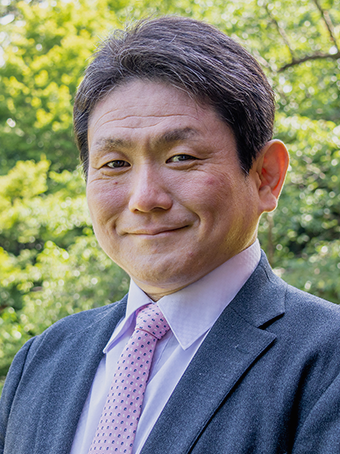
Eiki Tagami is a visiting senior research fellow in Institute of Geoeconomics at International House of Japan from May 2024. With over 30 years of experience at a Japanese trading house, Mr. Tagami has specialized in risk management and industry analysis. From 2006 to 2017, he worked at a think tank within the trading house, covering a wide range of industry analysis work with a particular focus on value-chain analysis. In 2021, he was appointed to be in charge of economic security in the trading house. He completed the Executive Management Program at the University of Tokyo and holds a BA in Political Science from Waseda University
View Profile-
 China’s rare-earth success offers lessons in economic security2026.11.02
- Do Humanoids Dream of "The Chinese Dream"?2026.10.30
- What Doraemon can teach Canada about resilience2026.10.27
- The key to Japan’s growth strategy: ‘Proactive’ economic security2026.10.27
- Rebalancing Bilateral Trade or Reordering Global Production?2026.10.23



 Trump Faces a Reckoning in the Midterms, but it Might Not Matter for Tariffs2026.10.09
 Japan and India: Historic Strategic Convergence2026.07.07
- BRICS in India2026.10.09
- Orbán in the Public Eye: Anti-Ukraine Argument for Delegitimising Brussels2026.02.04
- Why Pax Silica Is About More Than AI Chips2026.07.15