
How attaches can strengthen defense cooperation
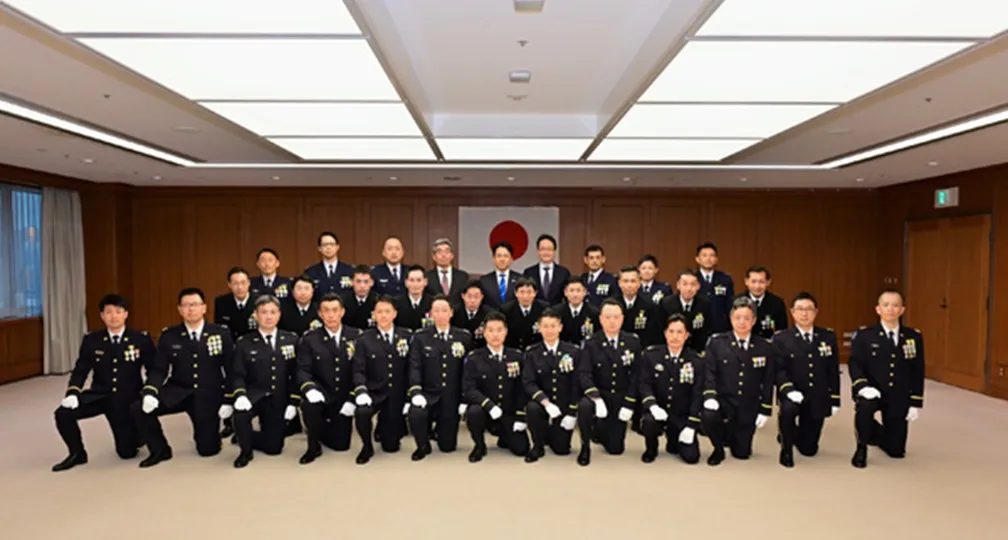
A quarter century later, Powell’s words still hold true and, while in a different setting, apply to Japan’s defense attaches: the Self-Defense Forces (SDF) officers stationed at embassies who gather military intelligence and liaise with host-country armed forces. Indeed, as Japan’s defense equipment and technology cooperation expands, their role is becoming increasingly important.
Since adopting the Three Principles on Transfer of Defense Equipment and Technology in 2014, Japan has accumulated experience in equipment transfers and international joint development. The abolition in April of five restrictions limiting arms exports to specific purposes — rescue, transport, warning, surveillance and minesweeping — is expected to strengthen the deterrence and response capabilities of allies and like-minded partners while safeguarding Japan’s domestic production capacity.
Sharing production, supply, maintenance and logistics with countries operating interoperable equipment could also diversify supply sources against attacks on domestic facilities, bolstering Japan’s ability to sustain operations.
Given these changes, how should defense attaches use their knowledge from the field to advance these objectives while balancing multiple responsibilities?
An expanding role
Defense attaches have long facilitated equipment and technology cooperation through their relationships with host-country militaries. Their tasks include identifying requirements, arranging meetings and coordinating negotiations. Japan’s transfer of air-surveillance radars to the Philippines in 2023 — the first overseas transfer of complete domestically produced defense equipment — required coordination among industry, the Acquisition, Technology & Logistics Agency, Japan’s embassy and the SDF, which trained personnel. Masahito Goto, then ATLA’s director general of aerial systems, identified personal ties between Japanese and Philippine defense attaches as a factor in its success.
Equipment transfers also require continued training, technical assistance, maintenance capabilities and reliable spare-parts supply. In April 2026, a Japanese contract for three frigates for Australia was announced, within a prospective acquisition and deployment of 11 vessels, including locally built ships and long-term maintenance cooperation. Multiple projects may proceed simultaneously: Japan is supporting radars and TC-90 training aircraft transferred to the Philippines while considering transfers of retired Abukuma-class destroyer escorts and shore-to-ship missiles. Discussions about the Abukuma class cover training, maintenance and appropriate post-transfer management.
Calls to reinforce overseas support are growing. A 2024 expert panel on strengthening Japan’s defense capabilities proposed assigning additional attaches to equipment transfers. Indeed, South Korea, a more established defense exporter, has already mobilized military, government and private-sector personnel around embassy defense offices to cultivate markets and military relationships and secure contracts.
Three challenges
But longer and more diverse partnerships create three challenges: obtaining decision-relevant information, evaluating results and setting priorities.
First, insufficient local intelligence risks mistimed proposals or unsuitable cooperation. In 2023, the U.S. Government Accountability Office criticized shortcomings in assessments of recipients’ capacity to absorb and maintain equipment, and in procedures for incorporating State Department and embassy expertise into assistance planning. In 2025, the Japan Business Federation, or Keidanren, likewise called for attaches to monitor local defense markets and for mechanisms to share commercially relevant intelligence between government and industry. Beyond stated requirements, Japan needs to understand operational conditions, procurement decision-making, budget cycles and competitors. Without such intelligence, officials cannot design appropriate cooperation and companies cannot assess commercial viability.
Second, visible milestones such as signed agreements can eclipse actual outcomes. Research examining Japanese Defense Ministry policy evaluations from fiscal 2014 through 2022 found an emphasis on consultations and agreements rather than effects on Japan’s defense industrial base. Evaluation should ask which partner capabilities have improved and how cooperation strengthens Japan’s production, maintenance and supply-chain resilience. Clear outcomes would also guide attaches’ information collection.
Third, expanding duties without priorities can undermine sustained engagement. Former ATLA equipment policy chief Yoshitoshi Nakamura observed that companies depend on attaches for overseas intelligence, yet ceremonial obligations leave them little time for equipment transfers. Competing requests from ministries and departments cannot realistically be reconciled by individual officers alone.
Field intelligence
The priority is a continuous feedback loop between embassies and Tokyo. Headquarters should specify intelligence requirements; attaches should collect and report findings, including warning signs such as declining partner interest or inadequate maintenance capacity. Officials should combine those reports with information from agencies and companies, decide whether to proceed or adjust cooperation, communicate decisions back to the field and update their questions.
First of all, this will require clear country-specific objectives. Japanese Foreign Minister Toshimitsu Motegi has advocated coordinating Official Development Assistance, Official Security Assistance and defense cooperation under country-level diplomatic strategies. Equipment and technology projects should likewise complement exchanges, training and capacity-building. Japan must specify both the partner capabilities it seeks to develop and the benefits to its own production and maintenance base. Shared objectives would help attaches focus their inquiries. The Foreign and Defense Ministries, working with other agencies, should assess outcomes against those objectives and decide when to revise projects or goals.
Second, Tokyo must establish country-specific mission priorities and provide institutional support. Some postings demand intelligence gathering above all; others place greater weight on cooperation and exchanges. The Foreign and Defense Ministries should consolidate requests across government and direct attaches toward the most important information and coordination tasks at each project stage.
Embassies also need coordinated teams. Under each ambassador, defense attaches and economic sections should divide responsibilities and exchange information with agencies and businesses in Japan. An independent administrative agency now under consideration to promote defense exports and strengthen Japan’s defense industrial base should also participate. Tokyo should provide specialists with appropriate expertise, whether stationed locally or dispatched as needed, and strengthen headquarters support. Where sustained military-to-military engagement is essential, Japan should consider appointing or increasing attaches dedicated primarily to equipment and technology cooperation.
Defense attaches can translate military expertise and trusted relationships into practical understanding of what equipment partners want, why they need it and how they intend to operate it. Tokyo must define objectives, prioritize missions and resource this work. Only through such coordination can wisdom from the field strengthen partners’ deterrence and response capabilities — and Japan’s ability to sustain its own defense.
(Source: The Japan Ministry of Defense website)
[Note] This article was posted to the Japan Times on November 22, 2026:
https://www.japantimes.co.jp/commentary/2026/11/22/japan/japan-strengthen-defense-cooperation/
Geoeconomic Briefing
Geoeconomic Briefing is a series featuring researchers at the IOG focused on Japan’s challenges in that field. It also provides analyses of the state of the world and trade risks, as well as technological and industrial structures (Editor-in-chief: Dr. Kazuto Suzuki, Director, Institute of Geoeconomics (IOG); Professor, The University of Tokyo).
Disclaimer: The opinions expressed in this Geoeconomic Briefing do not necessarily reflect those of the International House of Japan, the Institute of Geoeconomics (IOG) or any other organizations to which the author belongs.
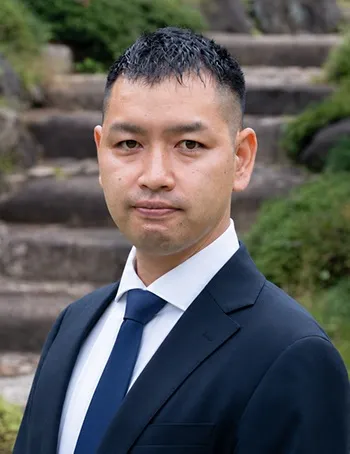
Visiting Research Fellow
Graduate of the U.S. Army Command and General Staff College, holding a Master of Military Art and Science (MMAS). Also completed the Strategic Studies Program and the Indo-Pacific Regional Studies Certificate Program (IPRSCP) at the College.
View Profile- How attaches can strengthen defense cooperation2026.11.24
-
 Chips, Chokepoints, and the Jensen Huang Affair2026.11.20
-
 From Oil Shock to a Midterm Reprieve2026.11.13
- China’s innovation thrives on openness, even under authoritarian rule2026.11.11
- American Reject Trump - But Do They Reject His Tariffs?2026.11.06


 American Reject Trump - But Do They Reject His Tariffs?2026.11.06
- Chips, Chokepoints, and the Jensen Huang Affair2026.11.20
 From Oil Shock to a Midterm Reprieve2026.11.13
- Trump Faces a Reckoning in the Midterms, but it Might Not Matter for Tariffs2026.10.09
- Why Pax Silica Is About More Than AI Chips2026.07.15