
Digital Currencies and Monetary Hegemony, Part I of III: Financial Weaponization and the Burden of Reserve Currency Status
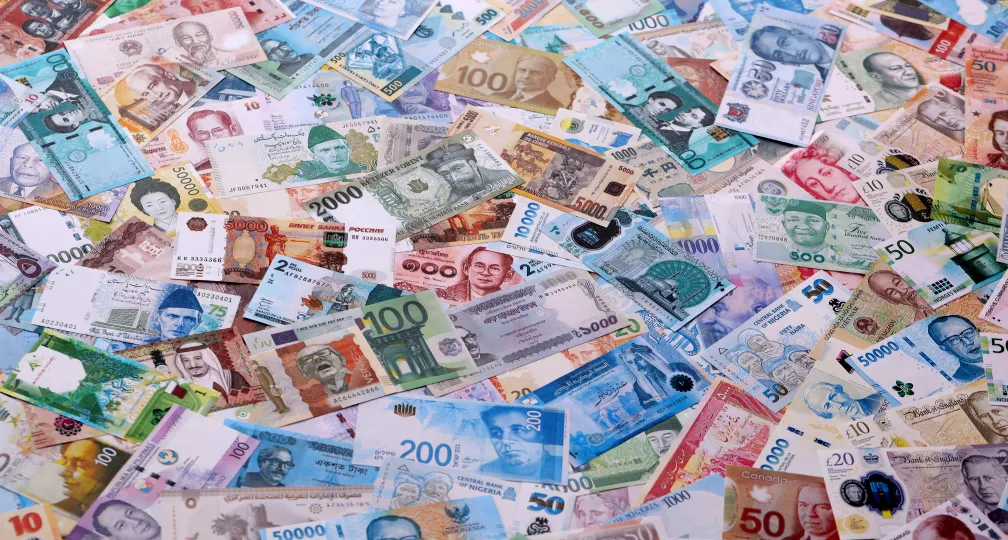
Financial and currency matters have traditionally been viewed as economic phenomena. While this remains true, the emergence of what is often described as an “age of geoeconomics”—in which economic tools are increasingly deployed to achieve geopolitical objectives—means greater attention must be paid to the strategic dimensions of financial and monetary systems.
Against this backdrop, this three-part series examines the intersection of digital currencies and monetary hegemony. As digital currencies evolve, what geoeconomic significance do they carry, and how might they reshape the structure of global currency power? This first installment focuses on the weaponization of finance and currency and the burdens borne by reserve currency issuers. Part II will examine the rise and spread of digital currencies, and Part III will assess their implications for dollar hegemony.
1: The Weaponization of Finance and Currency: History and Contemporary Developments
1.1 Finance as a Tool of Information Gathering
Economic interdependence is increasingly being leveraged as a tool of statecraft. Restrictions on rare earth exports and limits on technology transfers are now commonplace instruments for achieving geopolitical goals. This “weaponization” extends beyond trade and technology into the realm of finance and currency. Financial sanctions—such as restricting lending, freezing assets, or limiting access to financial systems—are widely used. In theory, even U.S. Treasury securities could be implicated: U.S. authorities might suspend payments to sanctioned states, while holders of Treasuries might reduce exposure to mitigate such risks or, in extreme scenarios, seek to undermine the dollar’s value through large-scale sales.
For intance, on February 9, 2026, Bloomberg reported that Chinese regulators had advised financial institutions to curb their holdings of U.S. Treasury securities. According to sources, this reflected concerns about exposure to volatility in U.S. bond prices. While it would be premature to interpret this move solely as a geopolitical challenge to dollar dominance, it illustrates how economic decisions can carry strategic overtones in today’s interconnected global economy.
Thus, even domains typically analyzed through a purely economic lens must now be understood in geoeconomic terms, with attention to their potential as instruments of power.
1.2 SWIFT Exclusion and Financial Sanctions
The most prominent example of financial “weaponization” is the use of the SWIFT network. Established in 1973 and headquartered in Belgium, SWIFT (Society for Worldwide Interbank Financial Telecommunication) is a global messaging system that facilitates communication between financial institutions. Although often misunderstood as a payment system, it is in fact a critical infrastructure for transmitting financial transaction information.
SWIFT’s strategic role became evident after the September 11, 2001 attacks, when the United States pressured the organization to provide financial data to support counterterrorism efforts. SWIFT complied, enabling ongoing intelligence collection.
Beyond information gathering, SWIFT has also been used as a tool of coercion. In 2012, the United States and the European Union moved to exclude Iranian banks from SWIFT as part of efforts to curb Iran’s nuclear program. Similarly, following Russia’s invasion of Ukraine in February 2022, Western countries—including Japan—announced sanctions that removed several Russian banks from SWIFT and froze Russian financial assets abroad.
More broadly, the weaponization of finance is not limited to SWIFT. The global dominance of the U.S. dollar plays a central role. Most cross-border financial transactions are denominated in dollars and cleared through U.S.-based correspondent banks. This gives the United States jurisdiction over a vast share of global financial activity, enabling it to intervene in transactions deemed contrary to its interests. In effect, dollar hegemony provides the United States with an asymmetric and powerful tool of economic statecraft.
2: The Burden of Reserve Currency Status
While reserve currency status confers significant advantages, it also entails costs. This section examines both sides of this debate.
2.1 The “Exorbitant Privilege”
As the issuer of the world’s primary reserve currency, the United States enjoys substantial benefits. In addition to its ability to weaponize finance, it benefits from strong global demand for dollar-denominated assets. Because holding large amounts of cash yields no interest, many foreign actors invest in U.S. assets such as Treasury securities. This sustained demand allows the United States to borrow at relatively low interest rates.
In macroeconomic terms, capital inflows from abroad—reflected in a capital account surplus—finance persistent current account deficits. In other words, the United States can sustain higher consumption than domestic savings would otherwise allow. In the 1960s, French Finance Minister Valéry Giscard d’Estaing famously criticized this advantage as an “exorbitant privilege.” Even today, the prevailing view is that reserve currency status provides net benefits, a position echoed repeatedly by U.S. policymakers, including President Donald Trump.
2.2 The “Burden” Argument
However, some analysts argue that the costs of reserve currency status are underestimated. One prominent voice is Stephen Miran, now a member of the Federal Reserve Board, who in a 2024 paper challenged conventional assumptions. Miran contends that the borrowing cost advantage enjoyed by the United States is smaller than often claimed. While acknowledging the strategic benefits of financial dominance, he argues that the more significant issue is the overvaluation of the dollar.
Persistent capital inflows, he suggests, strengthen the dollar, undermining the competitiveness of U.S. manufacturing and other tradable sectors. To address this imbalance, Miran proposes measures such as higher tariffs to reduce trade deficits and a multilateral agreement—modeled on the 1985 Plaza Accord—to weaken the dollar. This proposed “Mar-a-Lago Accord” would involve coordinated sales of dollar denominated assets, combined with mechanisms to prevent sharp increases in long-term U.S. interest rates through pressuring foreign U.S. bondholders to transfer their holdings i to longer-duration Treasuries, including 100-year so-called “century-bonds”.
While the feasibility of such proposals is uncertain—and Miran himself has clarified that his paper does not represent official policy—they reflect a broader shift in thinking. Increasingly, some policymakers view reserve currency status not as an unambiguous benefit but as a source of structural imbalance. Importantly, this perspective does not advocate abandoning the dollar’s central role but rather calls for burden-sharing among partner countries.
This debate echoes the long-standing “Triffin dilemma,” which highlights the tension between supplying global liquidity and maintaining confidence in the currency. However, the current discourse places greater emphasis on domestic economic consequences, particularly the impact on industrial competitiveness.
Conclusion
This first installment has examined the growing role of finance and currency as instruments of geopolitical power, the advantages conferred by reserve currency status, and the emerging argument that such status also imposes significant burdens.
Part II will turn to the rise and evolution of digital currencies, analyzing their various forms and trajectories. Part III will then assess how these developments may reshape the international monetary order, with particular attention to the future of dollar hegemony.
(Photo Credit: Shutterstock)
Disclaimer: The views expressed in this IOG Commentary do not necessarily reflect those of the API, the Institute of Geoeconomics (IOG) or any other organizations to which the author belongs.

Visiting Senior Research Fellow
Mr. Oya assumed current position from November 2024. Prior to that, he worked at the Japan Bank for International Cooperation (JBIC), where he was involved in financing infrastructure and resource projects and launching a carbon fund, and also served as head of JBIC New Delhi office and Director, head of the European Bank for Reconstruction and Development (EBRD) Tokyo office. Chief Analyst of Sojitz Research Institute from August 2024. Master of Laws, Boston University Master of Finance, George Washington University
View Profile