
India’s China dilemma: engagement vs. dependence
Just eight months later, in June 2020, on a frozen ridgeline in the Galwan Valley along the disputed Himalayan frontier, Indian and Chinese soldiers beat each other to death with rocks and iron rods wrapped in barbed wire.
It was the first fatal clash on the Line of Actual Control, the de facto border, since 1975. The violence punctured the mood of informal summitry and exposed it as diplomatic theater over a relationship whose underlying structure had not changed.
For years, China had been constructing what strategists call the String of Pearls: a network of ports, bases, and financial dependencies with India at its geometric center. The network included China’s “all-weather” friendship with Pakistan, anchored by the China-Pakistan Economic Corridor; Hambantota, the Sri Lankan port leased to China for 99 years; Gwadar, the deep-water facility near the Persian Gulf; as well as China’s charm offensive in Maldives, Nepal and Bangladesh — all intended to erode India’s traditional sphere of influence. The pattern was consistent: The gradual encirclement of a rival without a direct conflict.
The unthinkable
India’s response to Galwan was firm and deliberate. New Delhi decided to treat the relationship as a strategic competition with costs it was willing to impose and absorb. More than 300 Chinese apps, including TikTok, were banned. Investment rules were tightened to require government approval for Chinese capital. Direct flights were halted. India accepted real economic pain as a form of signaling.
Then New Delhi did something previously unthinkable: it began selling weapons into China’s neighborhood. The BrahMos supersonic cruise missile was exported to the Philippines, ending years of reluctance to provoke Beijing.
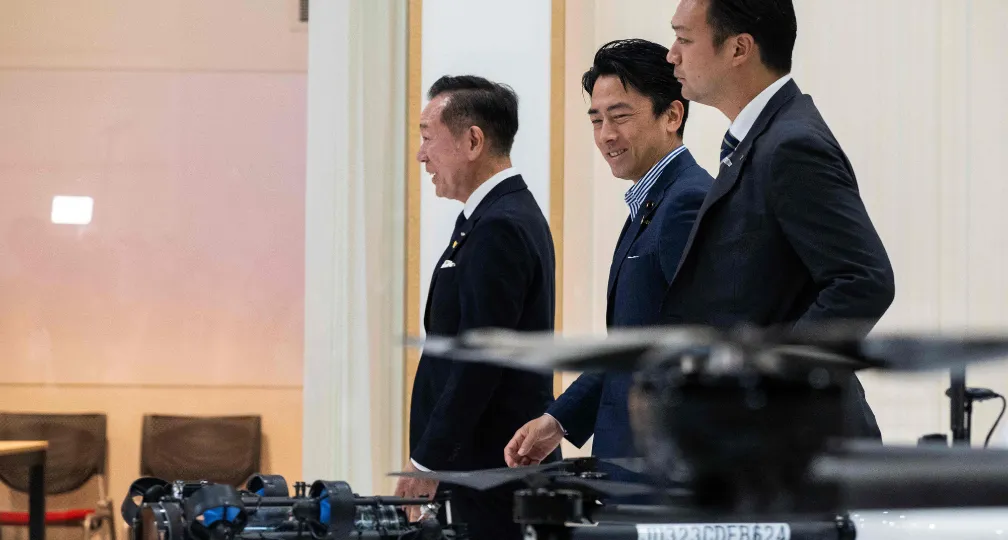
India also approached “the Quad” security dialogue — comprising Japan, Australia, India and the U.S. — with new seriousness. As a result, New Delhi-Tokyo ties assumed greater strategic importance, far beyond mere ceremony. The Malabar joint naval exercises in the Bay of Bengal expanded in scope and complexity. For a time, India appeared to be constructing a durable lattice of partnerships to impose costs on Chinese assertiveness across the Indo-Pacific.
The Trump shock
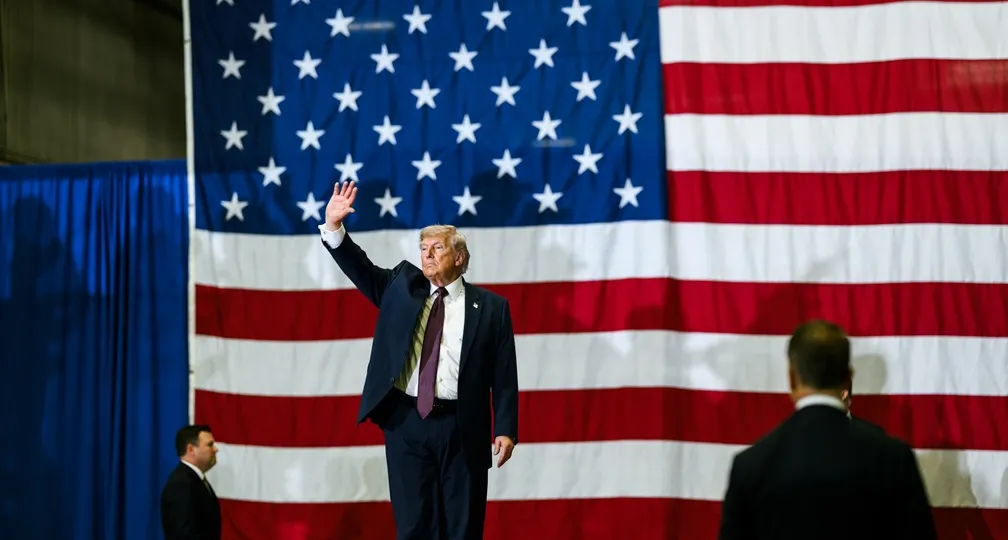
Then U.S. President Donald Trump returned to the White House. His tariff regime, applied broadly to allies and competitors alike, jolted India’s calculus. The Quad began to lose momentum; no leaders summit has been held since.
Indian officials were unsettled by the administration’s rhetoric toward India. New Delhi forcefully denied any U.S. role in its 2025 ceasefire with Pakistan after a brief border crisis. That denial, coupled with reports of a cryptocurrency-linked deal involving Trump family interests and the Pakistani military, appeared to pull Islamabad closer to Washington.
Beijing watched with unease. Pakistan had long been China’s most reliable partner, a southern anchor against India. A Pakistan courted by Washington for rare earth access and strategic alignment was no longer one Beijing could fully take for granted. In an indirect way, U.S. policy created space for a recalibration between India and China.
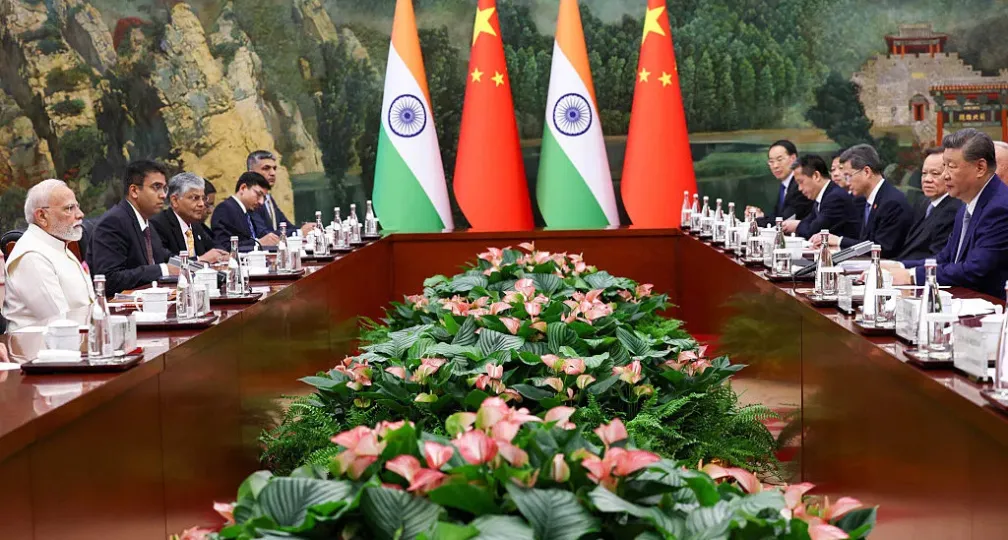
At the same time, Beijing, facing a deepening trade confrontation with the United States, had an interest in avoiding simultaneous tensions on multiple fronts. For both capitals, the costs of sustained hostility began to exceed the costs of limited accommodation. Modi and Xi met again in Tianjin in the summer of 2025, projecting public warmth meant to signal a thaw.
The contradiction
In March 2026, India’s Cabinet adjusted Press Note 3, easing restrictions for global investors with minor Chinese stakes and fast-tracking approvals in selected manufacturing sectors. The logic was clear: India’s industrial ambitions cannot advance while excluding the world’s largest manufacturing ecosystem.
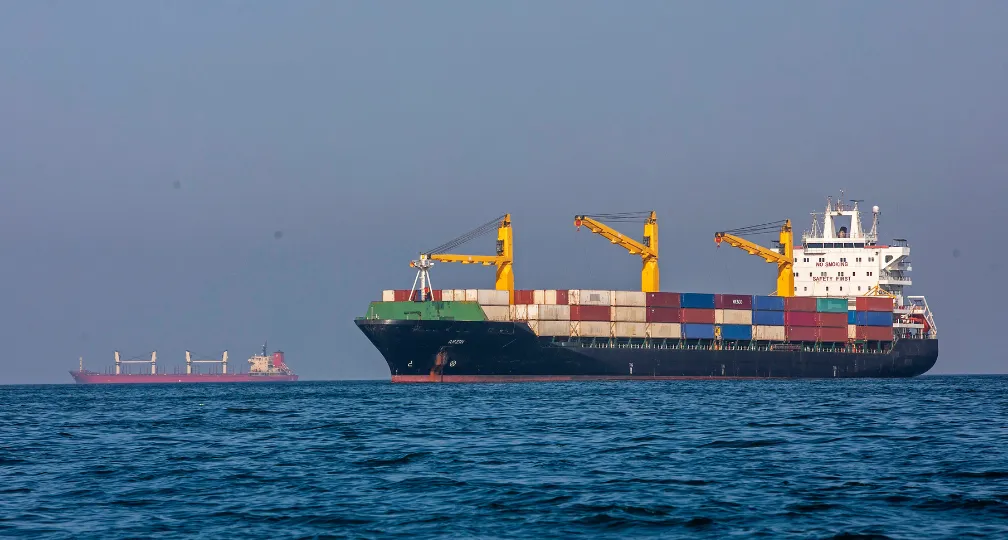
Trade data underscores the structural reality. Bilateral trade reached a record $155.6 billion in 2025. India’s deficit with China climbed to $116 billion, nearly 10% of China’s global trade surplus of $1.19 trillion. India has become one of Beijing’s most important surplus-generating markets, alongside the United States and Europe. As U.S. demand contracts under tariffs and European growth softens, India’s role as an absorber of Chinese output becomes more critical.
Dependence runs both ways. Yet accommodation does not translate into frictionless ties. As Apple has sought to shift iPhone production to India, Chinese authorities have delayed shipments of key manufacturing equipment. Foxconn reportedly recalled about 300 Chinese engineers from Indian operations in 2025 following government objections in China. Sub-assembly, component sourcing and decades of supplier development remain anchored in China.
India’s attempt to reduce dependence on China, for now, requires deeper engagement with China. This is the central contradiction shaping the relationship.
Two deficits define it. The trade deficit reflects India’s reliance on Chinese manufacturing inputs, from active pharmaceutical ingredients to electronics. The trust deficit, hardened by Galwan and reinforced by China’s support for Pakistan during periods of military tension, is older and more resistant to policy fixes.
One deficit grows because the economies are intertwined. The other persists because strategic interests diverge. Neither can be eliminated without significant cost. Restrict trade too sharply, and industrialization slows. Rebuild trust too quickly, and India risks accommodating a neighbor whose behavior justifies caution.
The options
India’s policy has evolved into calibrated risk management. Press Note 3 has been relaxed only at the margins; sensitive sectors and majority Chinese ownership remain restricted. In November 2025, the government approved an $800 million program for rare earth permanent magnets. It opened monazite mining to private players and expanded participation in the Minerals Security Partnership and the Quad’s critical minerals initiatives.
New Delhi has also pursued supply diversification through agreements with Australia, Argentina, Zambia, Mozambique and Peru. On the security front, BrahMos exports continue, naval exercises with Japan and Australia have intensified, and strategic reserves of critical minerals are being built.
Collaboration with Japan on rare earth processing, defense procurement and dual-use technologies is increasingly viable and deserves further exploration. At the same time, limits in domestic industrial competitiveness constrain India’s appetite for deeper multilateral trade commitments.
Low ceiling
The structural ceiling on any genuine India-China reset remains low. The border dispute shows no sign of resolution. The relationship is held together less by trust than by the absence of better alternatives and the recognition that neither side can absorb the costs of maximalist positions.
Even multilateral forums reflect this tension. BRICS has grown less cohesive as the India-China fault line cuts through its agenda. The war involving Iran has further exposed divisions within the broader grouping, undermining its strategic coherence in the near term.
The great power competition of this century may not resolve into rigid blocs or culminate in decisive crises. Instead, it may settle into something more ambiguous: relationships that are adversarial and functional at the same time, sustained not by trust but by the gravitational pull of geography, demography and integrated supply chains.
India and China, both nuclear-armed, are managing rivalry with the same bureaucratic patience they apply to commerce. It is an uneasy equilibrium — one defined by simultaneous deterrence and dependence.
Grudging acceptance of these twin deficits is neither stable nor inspiring. But it may be the only workable arrangement for two countries whose futures are entangled more deeply than policy alone can untangle.
(Photo Credit: Anadolu / Getty Images)
[Note] This article was posted to the Japan Times on June 6, 2026:
https://www.japantimes.co.jp/commentary/2026/06/04/world/indias-china-dilemma/

Geoeconomic Briefing
Geoeconomic Briefing is a series featuring researchers at the IOG focused on Japan’s challenges in that field. It also provides analyses of the state of the world and trade risks, as well as technological and industrial structures (Editor-in-chief: Dr. Kazuto Suzuki, Director, Institute of Geoeconomics (IOG); Professor, The University of Tokyo).
Disclaimer: The opinions expressed in this Geoeconomic Briefing do not necessarily reflect those of the International House of Japan, the Institute of Geoeconomics (IOG) or any other organizations to which the author belongs.

Visiting Research Fellow
Manish Sharma is an ex-investment banker, with over two decades of experience spanning academia, consulting, think tank and corporate finance. His academic journey includes research and teaching positions at renowned institutions including Jawaharlal Nehru University, University of Tokyo, London School of Economics, and Doshisha Business School. Currently, he is a professor of economics, at Hosei University in Tokyo. Until 2012, Dr. Sharma served as Director (M&A) in the Corporate Finance Department at Daiwa Capital Markets' Tokyo headquarters, providing strategic financial guidance to major corporations. He subsequently transitioned to full-time academia, bringing his extensive practical knowledge to universities across Asia. His other notable experiences include 13 years of radio newscasting with NHK World, and running an investment advisory. His teaching and research interests cover Indian/ASEAN markets, tech sector, corporate finance, investments, valuation, geoeconomics and day-trading. Dr. Sharma holds a Ph.D. in Financial Economics.
View Profile-
 Connecting Europe and the Indo-Pacific: Why Japan and Germany Need Stronger Space Security Cooperation2026.10.20
 - China’s Calculus Behind the State Visit to the U.S.: Different Visions of “Stability”2026.10.16
- Trump Faces a Reckoning in the Midterms, but it Might Not Matter for Tariffs2026.10.09
-
 BRICS in India2026.10.09
 - Can Japan build a defense-startup ecosystem?2026.10.07