
Canada’s China recalibration: Rapprochement or risk-hedging?
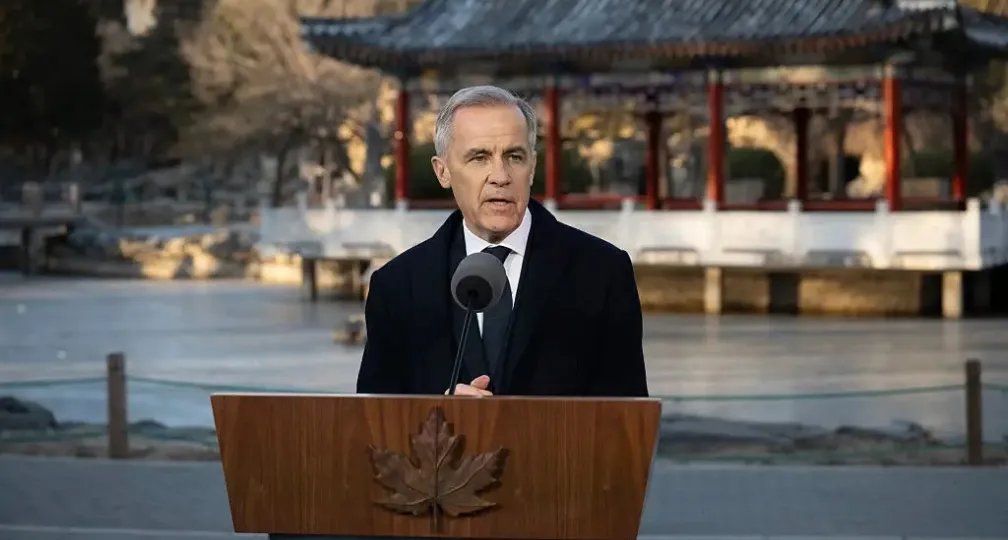
While Carney emphasized the importance of middle powers in his Davos speech, he also cited the establishment of a “new strategic relationship” with China as a diplomatic achievement, prompting criticism that Canada is pursuing rapprochement with China or distancing itself from the United States. In reality, Canada’s recalibration of relations with China can be understood less as a strategic shift toward Beijing than as a cautious form of geoeconomic risk hedging, undertaken in response to the country’s structural dependence on the U.S. and the volatility of the second Trump administration.
Trump 2.0
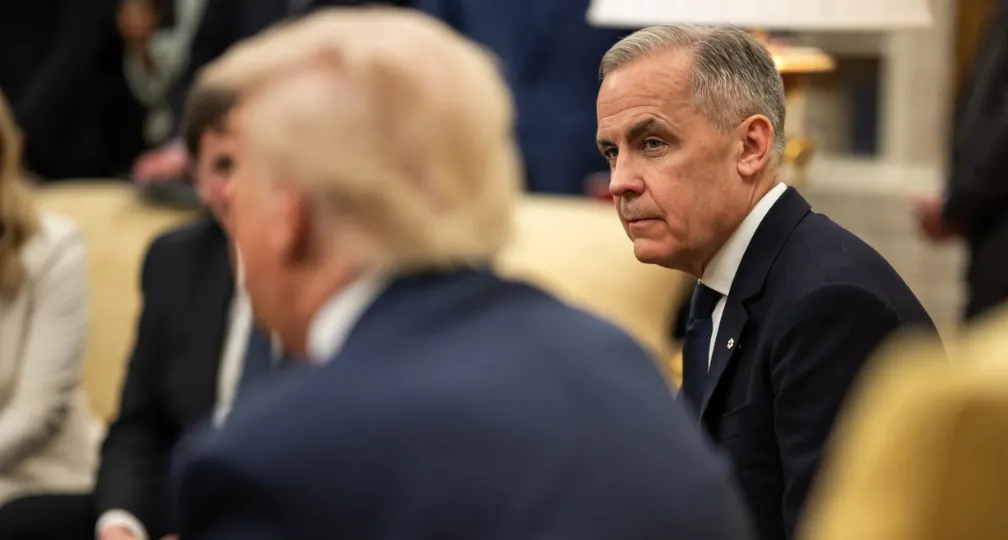
Deeply intertwined with the United States both geographically and institutionally, Canada’s economy is also highly dependent on the United States, with more than 70% of exports and roughly 60% of imports tied to its southern neighbor. However, following the return of the Trump administration in 2025, Canada became one of the primary targets of U.S. tariff measures and faced repeated rounds of additional levies. U.S. President Donald Trump also made a series of remarks that appeared to dismiss Canadian sovereignty, including suggestions that Canada should become “the 51st state.”
The imposition of additional tariffs by Washington and retaliatory measures by Ottawa significantly heightened tensions between the two countries. Amid these pressures, Carney — who became prime minister in March 2025 succeeding Justin Trudeau, who resigned earlier that year — adopted a stance that balanced resistance with strategic distance from Washington rather than simple alignment with U.S. policy. This approach helped him consolidate domestic support and ultimately led the ruling Liberal Party, weakened by the unpopularity of Trudeau, to victory in the April 2025, general election.
Deteriorating relations
Relations between Canada and China deteriorated sharply after the 2018 arrest in Canada of Meng Wanzhou, then chief financial officer of Huawei, and China’s subsequent detention of Canadian citizens. Since then, the relationship has been characterized by a cycle of sanctions and trade restrictions.
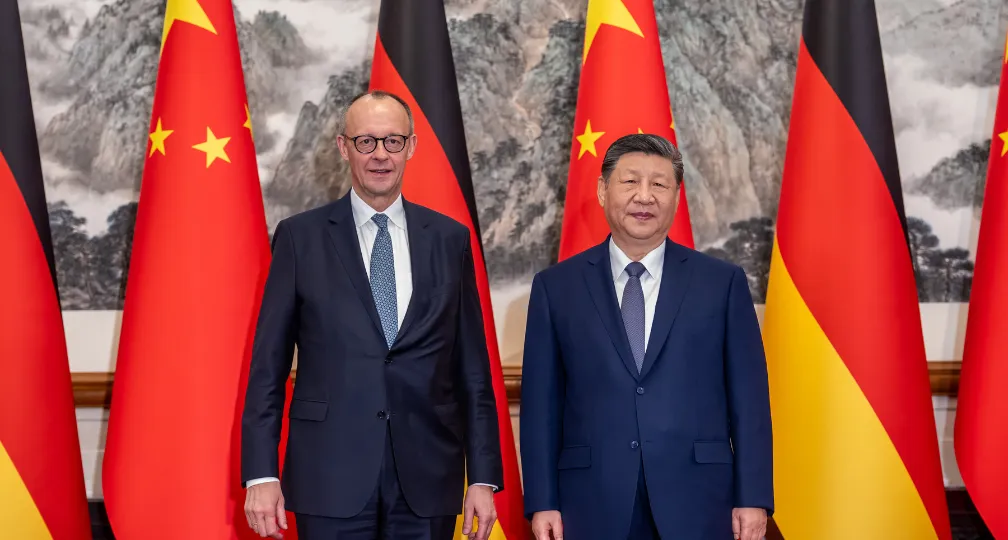
Against this backdrop, Carney visited Beijing early this year, from Jan. 14-17, meeting with Chinese leader Xi Jinping and announcing a new strategic partnership that signaled a thaw in bilateral relations. Cooperation was relaunched across a wide range of areas — including the economy, energy, public security, law enforcement cooperation and people-to-people exchanges — while also reaffirming commitments to multilateralism and global governance.
In structural terms, the two economies retain significant complementarity. Carney emphasized that bilateral relations have historically created “substantial opportunities for both sides.” He also suggested that relations with China may, given recent developments, in some respects prove to be more predictable than those with the United States, expressing hope that stable dialogue and incremental progress could help rebuild trust.
One of the most visible flashpoints in recent bilateral economic tensions involved Canada’s 100% tariff on Chinese electric vehicles introduced in 2024 in coordination with the United States and China’s retaliatory anti-dumping measures on Canadian canola products. Following Carney’s visit, these measures were effectively defused in what Chinese online commentators described as an “EV-for-canola exchange.” Canada agreed not to impose the full 100% tariff within certain limits while China reduced anti-dumping duties on Canadian canola from levels that had been rumored to reach as high as 80% during the investigation phase to a final rate of 5.9%.
Limited cooperation
An important factor in assessing Canada’s rapprochement with Beijing is its relatively low level of economic dependence on China. Canadian exports to China account for roughly 4% of total exports, while imports from China amount to slightly more than 10% — structurally different from Japan, where China accounts for roughly 20% of trade. From this perspective, Canada’s recent recalibration represents less a deepening of dependence and more a partial recovery from the deterioration in relations that began in 2018.
Prime Minister Carney has also emphasized the need to establish “guardrails” in the bilateral relationship. Restrictions introduced under the Trudeau administration — such as the exclusion of Huawei and ZTE from Canada’s 5G networks and the prohibition of WeChat on government devices — remain in place.
Cooperation with China is therefore deliberately selective and limited. Canada has carefully excluded sensitive sectors such as artificial intelligence, cybersecurity and robotics from the scope of cooperation, maintaining clear boundaries in areas closely tied to national security. Even in areas of economic engagement, the relationship is tightly managed. For example, Canada has capped the number of Chinese electric vehicles eligible for low tariff treatment at 49,000 units, limiting their share of the Canadian auto market to roughly 3% and mitigating potential impacts on domestic industry.
Canada’s evolving foreign-policy strategy extends beyond recalibrating ties with China and reflects a broader effort to diversify partnerships and expand strategic options. From Feb. 27 to March 2, Carney visited India for the first time in eight years and agreed to pursue a comprehensive economic partnership agreement within 2026. On March 5, Canada announced expanded cooperation with Australia in critical minerals, defense and artificial intelligence. The following day, it elevated relations with Japan to a comprehensive strategic partnership. Taken together, these moves suggest that Carney’s diplomacy is aimed not at alignment with China but at diversifying partnerships to hedge against geoeconomic risks.
China, for its part, is not overly optimistic about the durability of the rapprochement. Bilateral relations were relatively positive in the mid-2010s before deteriorating rapidly after the Meng Wanzhou affair. The current improvement rests on an unstable equilibrium shaped by shifting geopolitical conditions.
Double-edged sword?
Canada’s outreach to China can also be interpreted as a form of leverage in negotiations with the United States. At a time when the Trump administration emphasizes power politics through tariffs and economic pressure, signaling stronger ties with other partners may serve as a bargaining position. Within Canadian politics, the preservation of the trade agreement known domestically as the Canada-United States-Mexico Agreement (CUSMA) — the Canadian name for the USMCA — remains a bipartisan priority ahead of its scheduled review in July.
The relationship with the United States therefore remains indispensable and the China card may serve as a means of counterbalancing U.S. pressure. Yet it is also a double-edged sword: If pushed too far, it could provoke Washington and weaken Canada’s negotiating position.
Ultimately, Canada’s recalibration toward China appears driven less by tactical maneuvering than by structural necessity. While Carney’s Davos speech has often been interpreted as anti-American, its core message concerned how middle powers can navigate an increasingly polarized world shaped by great-power rivalry.
Carney’s distrust extends not only to Washington but also to Beijing. In a context where the unpredictability of U.S. policy has increased, maintaining confrontational relationships with both major powers simultaneously would place an unsustainable burden on Canadian diplomacy.
Chinese observers have likewise expressed skepticism toward Carney’s call for middle-power coordination. From Beijing’s perspective, the concept refers primarily to Western countries excluding the United States and does not encompass China or the Global South — an approach seen as nostalgic for a Western-centric order and incompatible with China’s diplomatic vision.
Canada’s structural dependence on the United States, its geographic distance from China and its security environment differ significantly from Japan’s. As such, criticisms that Canada’s recalibration represents appeasement toward China or deepening dependence do not fully capture the reality. Ottawa continues to manage trade relations with China within a framework of “de-risking,” including moderated tariff policies on Chinese electric vehicles.
Nevertheless, geoeconomic risk does not depend solely on aggregate trade dependence, but also on sector-specific vulnerabilities. In agriculture, for example, Canadian canola exports remain highly exposed to Chinese market leverage — a risk underscored by China’s past use of agricultural imports as a negotiating tool.
Despite these vulnerabilities, Canada has pursued improved relations with China partly because confronting a second Trump administration that prioritizes power politics requires strengthening its own strategic position. Rather than simply accommodating Washington by seeking to avoid provoking Trump, Canada appears to be experimenting with a distinctive form of middle-power geoeconomic risk hedging. Whether this approach proves effective may first be tested in the upcoming July review of CUSMA.
[Note] This article was posted to the Japan Times on May 11, 2026:
https://www.japantimes.co.jp/commentary/2026/05/11/japan/ottawas-playing-the-china-card/
(Photo Credit: Getty/Bloomberg)
Geoeconomic Briefing
Geoeconomic Briefing is a series featuring researchers at the IOG focused on Japan’s challenges in that field. It also provides analyses of the state of the world and trade risks, as well as technological and industrial structures (Editor-in-chief: Dr. Kazuto Suzuki, Director, Institute of Geoeconomics (IOG); Professor, The University of Tokyo).
Disclaimer: The opinions expressed in this Geoeconomic Briefing do not necessarily reflect those of the International House of Japan, the Institute of Geoeconomics (IOG) or any other organizations to which the author belongs.

Senior Research Fellow
Senior Research Fellow of the China Group at the Institute of Geoeconomics (IOG). Doi specializes in China and the world (geoeconomic issues, such as development finance and emerging technologies), and global governance in the social development sectors, including education and health. He graduated from the University of Kitakyushu with a B.A. in International Relations (Contemporary China Studies) and a Master of Public Policy from the University of Tokyo. Doi joined the Japan International Cooperation Agency (JICA) in 2008, where he worked on the implementation of the Japanese government’s foreign aid to China at the JICA Beijing Office and conducted financial investments in economic and social infrastructure, sovereign credit risk analysis and research on China’s development cooperation with the Global South at the Africa Department. In 2018, he began his doctoral studies in the Department of Education Economics at Peking University in China, where he received his PhD in Public Policy in 2022. Doi served as a senior researcher and advisor at Diinsider Co., Ltd, a China-based international development consultancy, and as an adjunct researcher at the Center for the Study of International Cooperation in Education, Waseda University, before being appointed to his current position in August 2024. His research has been published in books by international publishers, including Routledge and Springer Nature, as well as in international peer-reviewed journals such as Development Policy Review, Educational Review, Higher Education Research & Development, Public Health Action, and Compare. [Concurrent Positions] Adjunct Researcher, Center for the Study of International Cooperation in Education, Waseda University, Japan. (2023-Present) Visiting Lecturer, Department of International Business and Management, Kanagawa University, Japan. (2025-2026).
View Profile